Experiencing Hajj – in virtual reality
Digital companies Bigitec Studio and Labbaik VR are creating an 'emotional experience' with digital walk-throughs of Makkah's holy sites
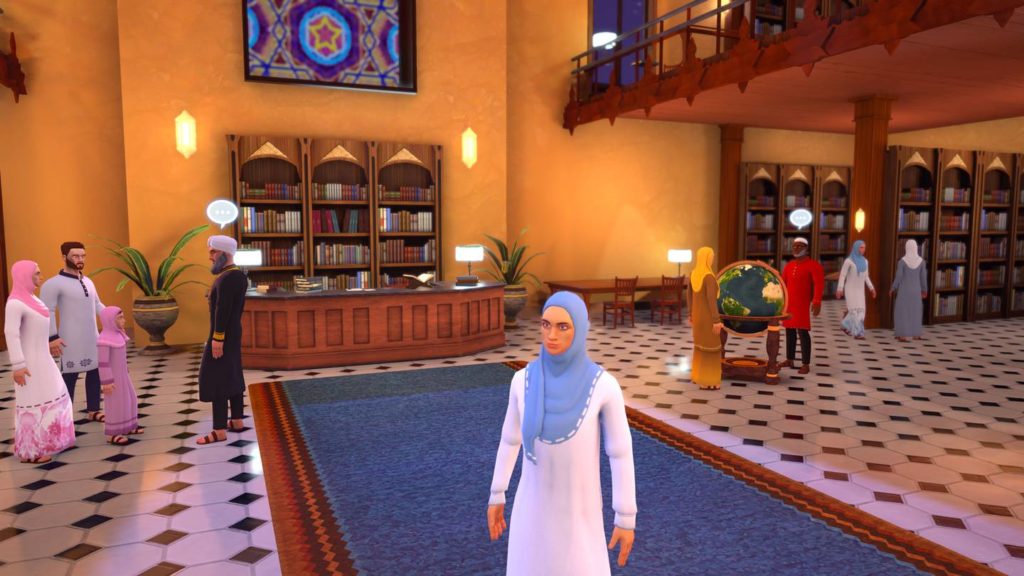
While the annual Hajj pilgrimage to Makkah in Saudi Arabia has been drastically scaled back for the second year running, due to the pandemic, a growing library of software is giving Muslims a digital opportunity of spiritual connection with the holy sites.
This new category of apps aims to recreate the experience of visiting the holy city and its sites through digital simulations.
In 2019, Bigitec Studio, a German developer of several Islamic-focused apps, including Muslim 3D, released a virtual demo of the Great Mosque in Makkah. The mosque surrounds the Kaaba, the sacred cube-shaped building.
The subsequent closure of the Great Mosque due to Covid-19, boosted the popularity of the app, which has now been downloaded more than a million times.
See the full story here: https://www.thenationalnews.com/world/uk-news/2021/07/08/experiencing-hajj-in-virtual-reality/
Osso VR raises $27 million to turn surgery into a video game
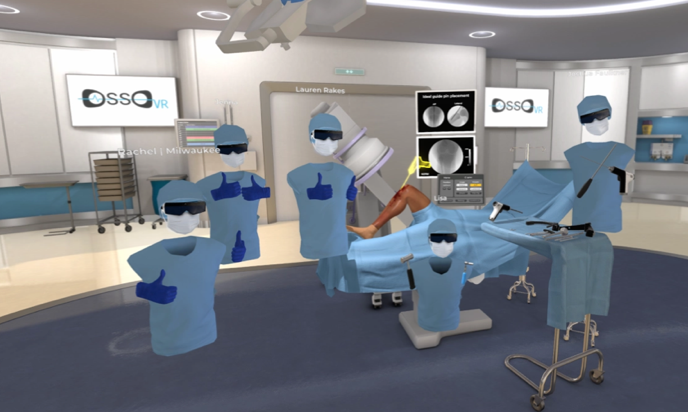
Osso VR is looking to upend modern surgical instruction with a virtual reality-based solution that allows surgeons to interact with new medical devices in 3D space, “performing” a surgery over and over on a digital cadaver from the comfort of anywhere they have enough room to stretch out their arms. Osso’s efforts are particularly useful to its medical device customers who can use the platform to boost familiarity with their solutions while helping surgeons gain proficiency in implanting them.
One of the startup’s broader aims is to bring video games’ multiplayer mechanics into the virtual operating room, allowing surgeons and medical assistants to collaborate in real-time so they not only know their responsibility but how they fit into the whole of each operation.
Osso VR’s platform runs on Facebook’s Oculus Quest 2 headset through the company’s Oculus for Business program.
See the full story here: https://techcrunch.com/2021/07/07/osso-vr-raises-27-million-to-turn-surgery-into-a-video-game/
How Virtual Reality Unveiled a Unique Brain Wave That Could Boost Learning
Within a brain region, neurons often form “governments” that tackle local issues. For example, the visual cortex has multiple layers that gradually process what we see.
For multiple brain areas to come together, however, the brain has a trick: electrical waves that oscillate over different regions.
But for memory researchers, theta waves are the crux. These are relatively slow waves that spark in the brain as you daydream, or in the middle of a great run, or in the shower with a totally relaxed mind. Theta waves, which wash over the hippocampus, trigger a state in the brain that’s prone to a flow of ideas—à la “shower thoughts.”
VR opens up a whole world of experiences, in a virtual space, that could “retrain” the hippocampus. By tapping into theta waves, the authors guessed, we might be able to dampen cognitive damage in people with dementia.
As the rats ran faster in VR—rodents do love a good run—their hippocampi began undulating with a peculiar pattern, one half as slow as normal theta waves. The authors dubbed this an “eta band,” something barely seen before. Eta acted as an internal FitBit of sorts, only coming online if the rats were running, but then disappearing once they plopped down into couch potato mode.
One idea, the authors said, could be that VR had different sensory inputs than the real world. When physically exploring our world, we have inputs from our skin, vision, nose, ears, and a multitude of other senses, which VR doesn’t have. This makes it all the more freaky that VR can stimulate theta waves—and the slower eta wave—because in VR we mainly rely on vision for feedback.
See the full story here: https://singularityhub.com/2021/07/06/how-virtual-reality-unveiled-a-unique-brain-wave-that-could-boost-learning/?fbclid=IwAR3IYdLtCfLmVq9GAcTM90_5IFwRJecxDqUO_pfgalXZSr9wUCB23yrGDr4

World’s first VR music festival on Ethereum goes live this Sunday
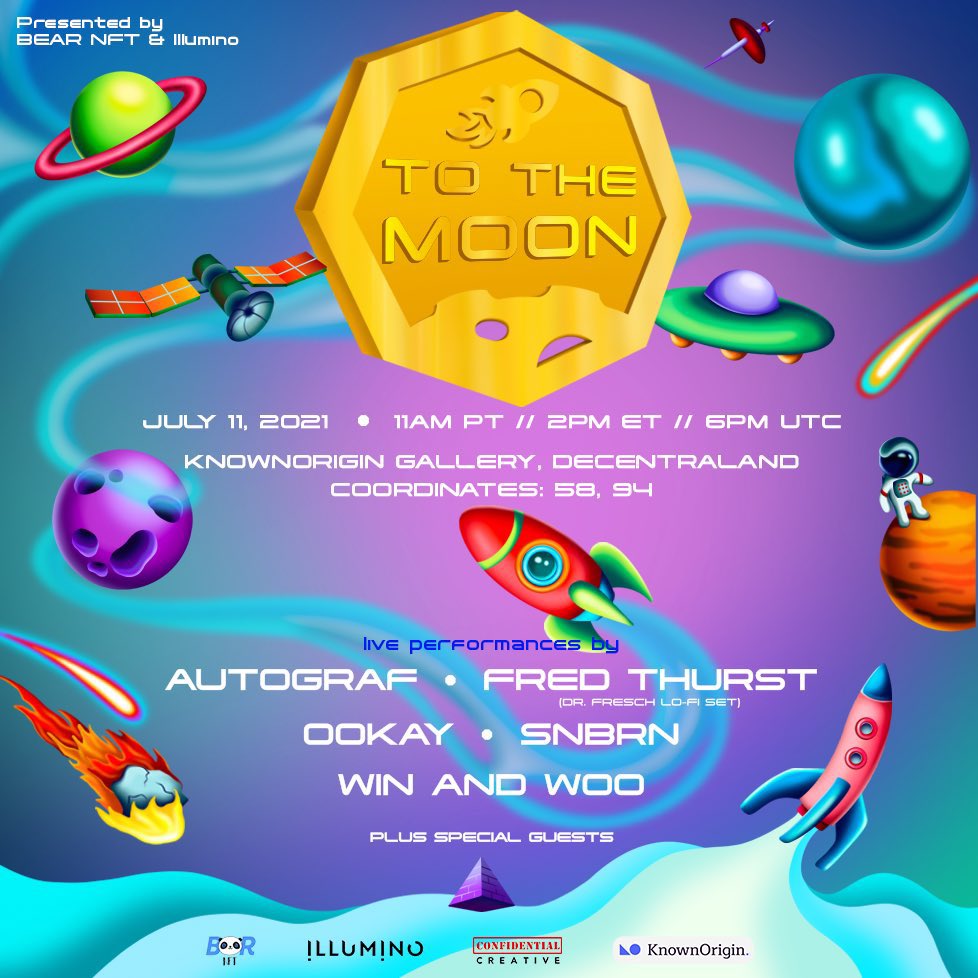
To The Moon, the world’s first music festival hosted virtually and live using Ethereum technology, will be held this Sunday in Decentraland.
The festival project is the brainchild of a group from within the non-Fungible Token (NFT) community resulting from a partnership between leading NFT marketplace KnownOrigin, NFT agency BEAR NFT, and the Illumino NFT collective.
The festival will be hosted in KnownOrigin’s virtual headquarters in Decentraland – an Ethereum-based virtual reality world – and will present a number of live online musical performances including artists such as Ookay, Fred Thurst, SNBRN, Autograf, and Win and Woo.
Attendees can anticipate more than just music, with organisers announcing a collection of exclusive NFTs available during the course of the festival.
They will also be able to claim a virtual token for their Decentraland account utilising Proof of Attendance Protocol (POAP) technology, alongside exclusive avatar items such as virtual hats.
The festival begins at 6pm UTC on Sunday July 11.
See the full story here: https://finance.yahoo.com/news/world-first-vr-music-festival-140919845.html
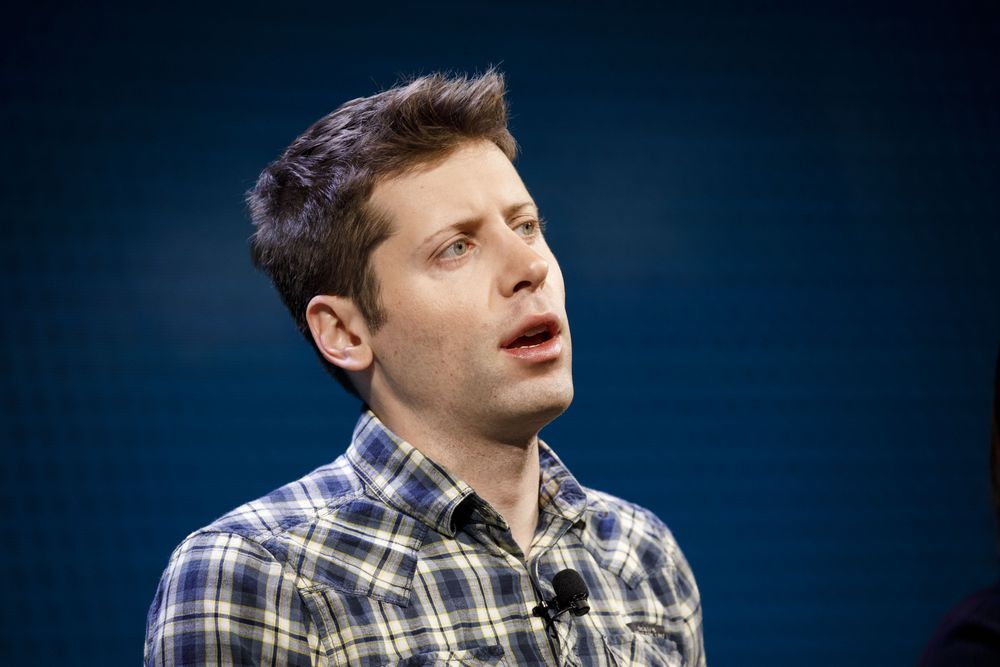
Sam Altman Wants to Scan Your Eyeball in Exchange for Cryptocurrency
Among the many parts of its plan, Worldcoin has designed an orb-shaped device that would scan a person’s iris to construct a unique personal identifier.
The company is backed by Andreessen Horowitz, the venture capital arm of Coinbase Global Inc.,LinkedIn founder Reid Hoffman and Day One Ventures. It recently raised about $25 million from investors.
The intention was to use cryptocurrency to spread money around equitably, inspired by the trendy economic theory known as universal basic income.
The head of the venture is Alexander Blania, 27, a former student of theoretical physics at the California Institute of Technology and the Max Planck Society. He co-founded Worldcoin with Altman and Max Novendstern, who previously worked at Ray Dalio’s investment firm Bridgewater Associates LP and at money-transfer startup Wave.
With Worldcoin, the startup promises “a new global digital currency that will launch by giving a share to every single person on earth,” according to an online job description. The company aims to help economies transition to cryptocurrencies “through a novel approach: a dedicated hardware device ensuring both humanness and uniqueness of everybody signing up, while maintaining their privacy and the overall transparency of a permissionless blockchain.”
See the full story here: https://www.bloomberg.com/news/articles/2021-06-29/sam-altman-s-worldcoin-will-give-free-crypto-for-eyeball-scans
Can AI Negotiate? Walmart Is Betting on It
Walmart and Wesco International are among the first major companies to use this so-called Negotiation-as-a-Service (NaaS) product from Pactum. Logistics giant Maersk has also recently begun developing a pilot with the U.S.-Estonian startup.
"The system learns how people negotiate. It tries different strategies and tactics and gets better with each subsequent negotiation."
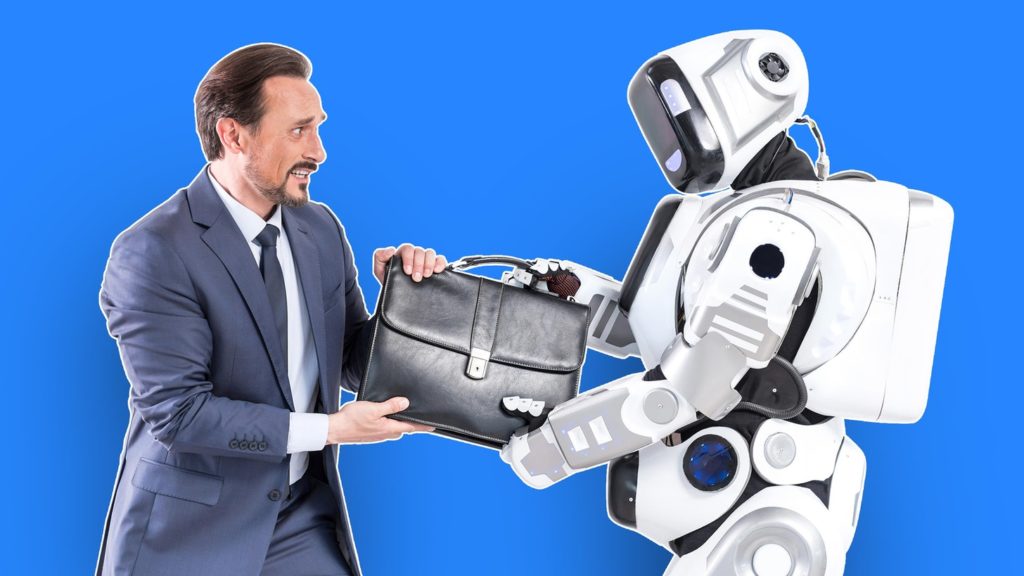
How it works: Pactum's AI is capable of reading contracts, integrating the priorities and instructions of both parties, negotiating on behalf of clients — and learning from the process.
Cold water: Pactum isn't a person, so it's likely there will be cases in which its natural language processing doesn't understand a term, or the more human aspects of conversation like tone and subtext.
There is also the risk that vendors will feel devalued or dehumanized in the negotiation process. However, Rand says that vendors that have used the system so far report feeling more heard in negotiations because the chatbot interface was more than they were offered by these companies previously.
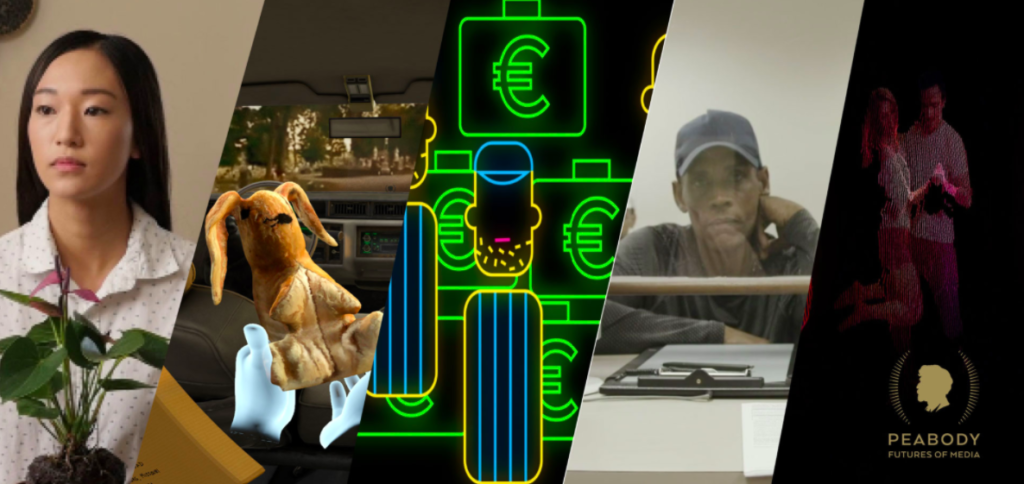
Peabody Awards Adds Immersive Media Category For VR & AR
Established roughly 80 years ago by the National Association of Broadcasters, the Peabody Awards was originally created in order to celebrate the very best in radio broadcasting. Since then, the program has expanded to include additional categories such as news, entertainment, documentaries, children’s programming, education, and public service.
This week the prestigious organization expanded its awards categories even further to honor achievements in digital and interactive storytelling. Composed of ten newly appointed jurors—industry experts from across interactive, immersive, and new media—the Peabody Interactive Board will honor a wide range of digital formats. This includes AR, Gaming, Interactive Documentary, Interactive Journalism, Social Video, Transmedia Storytelling, and VR.
See the full story here: https://www.virtualrealitypulse.com/edition/daily-apple-google-2021-06-30?open-article-id=16440179&article-title=peabody-awards-adds-immersive-media-category-for-vr---ar&blog-domain=vrscout.com&blog-title=vrscout