Using AI in fundraising – where it helps, where it doesn’t, & key challenges
AI in fundraising – how it’s helping
In practical terms for fundraisers, this means the likes of:
- Enabling donations via conversational interfaces like Alexa and Siri, such as the NSPCC’s Alexa skill.
- Robotic Process Automation (RPA): low-cost AI tools that can automate basic tasks (or parts of them) like diary management and data entry, giving fundraisers more time for their main jobs.
- Generating content. There are AI tools that can automate tasks such as producing written content for marketing, and creating natural sounding language.
- Analysis. AI and Natural Language Processing are also being used in social listening tools and to analyse the performance of campaign and marketing collateral to help spot patterns, and make predictions.
- Recommendation algorithms. These use data to generate tailored recommendations to an individual – something we’re all used to in the consumer world, and are starting to be used by charities, for example on websites and with chatbots to promote the content most relevant for that person.
- Predictive analytics. Machine learning can be applied to donor or prospect lists to spot patterns and make predictions to improve prospect research, or gain a better understanding of existing supporter preferences and behaviour.
“As charities start racing more and more towards using machine learning applications, they’re going to start realising the importance of having integrated data around an individual, and being able to make sure it’s good, appropriate, relevant data and it’s permission based. And that’s going to be an interesting challenge for a lot of organisations, because many don’t necessarily have their data organised in a useful way.”
And, clever though AI and its subsets are, in many ways they still can’t replace human intelligence and all activity needs to be overseen, so it’s also important to keep people involved in the process.
See the full story here: https://fundraising.co.uk/2021/06/16/using-ai-in-fundraising-where-it-helps-where-it-doesnt-key-challenges/

Asad J. Malik, the Hologram-Loving Virtual-Reality Entrepreneur — Future 25
Malik’s latest venture is an interactive hologram app called Jadu, a marriage of music and technology that allows fans to interact with their favorite artists to make clips that can be shared on short-form video apps like TikTok. Malik’s company has made dancing holograms for Pussy Riot, Vic Mensa, and TikToker Josh Richards; most notably, he recently created a nonchalantly speaking, bright red, satanic-themed Lil Nas X in a viral teaser for the rapper’s hit “Montero (Call Me By Your Name)” and its much-discussed music video.
See the full story here: https://www.rollingstone.com/pro/features/vr-asad-malik-future-25-1179555/

Welcome to China’s new neighbourhood stores
[PhilNote: Retail in a post-Starbucks, post-Amazon world. Personalized localized neighborhood store experiences for major brands sounds a bit attractive, and a bit of a good application for AI and surveillance capitalism.]
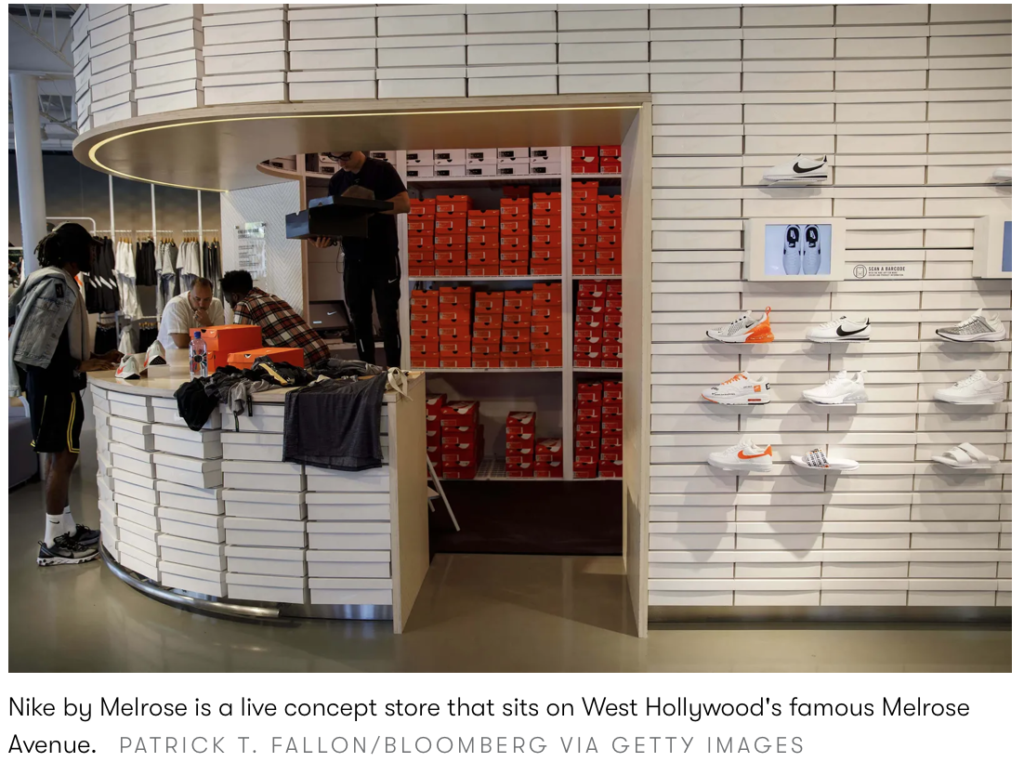
The template first appeared outside China. In 2018, Nike launched Nike by Melrose, the first Nike Live experience store, on Melrose Avenue in Los Angeles. Created as a hub for members of the brand’s NikePlus running community, it has the energy of a pop-up and an experimental edge (including automatic vending machines). The store arranges goods according to the shopping preferences of local consumers, adjusting them regularly to respond to purchase data.
In 2020, Nike opened similar neighbourhood experience stores in Taikoo Hui in Shanghai and Sanlitun in Beijing. Both stores are warm and bright with product displays that are responsive to consumer purchase data, fitting rooms with natural light, a yoga room and a gym. Consumers can immerse themselves in the intimate, relaxing, friendly vibe. The stores also have a neighbourhood community sharing area, a member-exclusive Unlock Box and other in-store special services and products.
Shanghai’s new neighbourhood stores
Now, this trend is turning local. Chinese online women’s fashion retailer Short Sentence opened its first boutique on Shanghai’s Anfu Road in January, seeking to create a similar atmosphere. In April, the store held a first Next-Door-Neighbour gathering, hosted by representatives from the shop’s retail design team AIM, urban culture platform SandwiChina and guests from the community who shared stories about the store space, life and history in the Anfu Road neighbourhood.
...
Retail freehold owners and developers can play an important role in encouraging neighbourhood shops in commercial districts. Several stores on Anfu Road are owned by the Shanghai Dramatic Arts Center, while Nio House and the Nike experience store in Shanghai’s HKRI Taikoo Hui are owned by Swire Properties. Similarly, enlightened retail developers around the world are recognising the value of small retail units with a more neighbourly feel. Watch them flourish.
See the full story here: https://www.voguebusiness.com/consumers/welcome-to-chinas-new-neighbourhood-stores
Space Force Launches Augmented Reality Enabled NFTs
[PhilNote: Travis Cloyd ,WorldwideXR CEO and NFT Executive Producer, owns the rights to many dead celebrities including James Dean.]
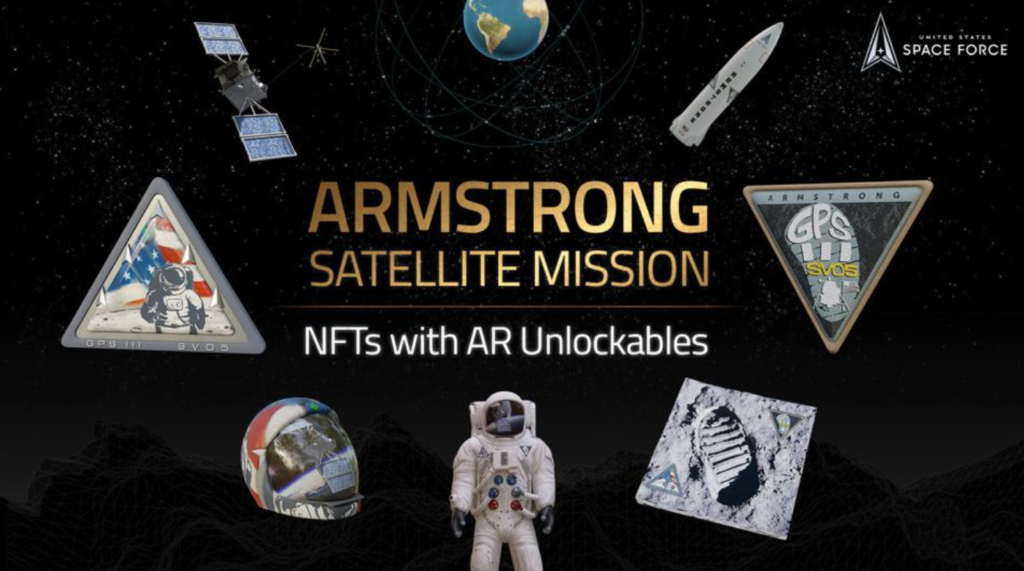
For this ground-breaking initiative, Space Force partnered with digital artist companies WorldwideXR and VueXR, to release their own NFTs with augmented reality.
The NFT collection, called “Armstrong Satellite NFT Launch with Space Force,” is the first USSF Non-Fungible Token (NFT) collection. It included a limited edition digital twin NFT of the GPS III SV05 “ARMSTRONG” satellite and GPS III SV05 “ARMSTRONG” Coin and Patch NFTs modeled after the commemorative coins and patches typically reserved for USSF mission team members. The NFTs are created to scale and accessible to its owner via the VueXR app available on iOS and Android.
NFTs And Crypto As A Way To Support Veterans
In order to get an “ARMSTRONG” NFT you have to have a wallet on the blockchain and cryptocurrency to fill that wallet. In March, 2021 the Biden Administration took on the challenges of cryptocurrency and filing to the IRS in The American Families Plan. The plan admits that cryptocurrency constitutes “a relatively small portion of business income today, cryptocurrency transactions are likely to rise in importance in the next decade…” Government agencies signal a future of blockchain related activities as they develop guidance and reporting procedures around crypto. The “ARMSTRONG” NFT collection supports the U.S. Military and its veterans but it is not officially connected to or endorsed by the U.S. Department of Defense or any of its branches.
See the full story here: https://www.forbes.com/sites/cathyhackl/2021/06/14/space-force-launches-augmented-reality-enabled-nfts/?sh=1b30b93d7645