Immersive VR Needs Your Mirror Neurons
Along those lines, the science of mirror neurons is of particular interest to Dolby. Mirror neurons are described as specialized brain circuits or systems that connect different sensory portions of the brain to the “premotor cortex” which helps control the body.
“Mirror neurons are what allow us to step into the shoes of somebody else,” Daly states. “That is a true aspect of immersion. In immersive media, having that experience would allow you to be literally ‘immersed’ in what is happening to another person.”
Qualcomm, Apple, Facebook, Microsoft and others are iterating new versions of VR/AR wearables to not only feel more comfortable on the head — but more compatible with how we actually experience the world.
“VR content creators are essentially conducting informal psychological experiments over time with their audiences as subjects, and they get feedback from the success or failure of those attempts, and try again,” says Daly. “All of those questions with VR are yet to be determined.”
See the full story here: https://amplify.nabshow.com/articles/science-class-immersive-vr-needs-your-mirror-neurons/?mkt_tok=OTI3LUFSTy05ODAAAAF9TK1N2r13xkU7WWbT2fMKpZoZeYcGKehBKuY9HCrAUQ96r30caUafwTDG-ukEuZTb2WKUz1V3dBFvftR1KchdpoUerukdX3xcju6XCw

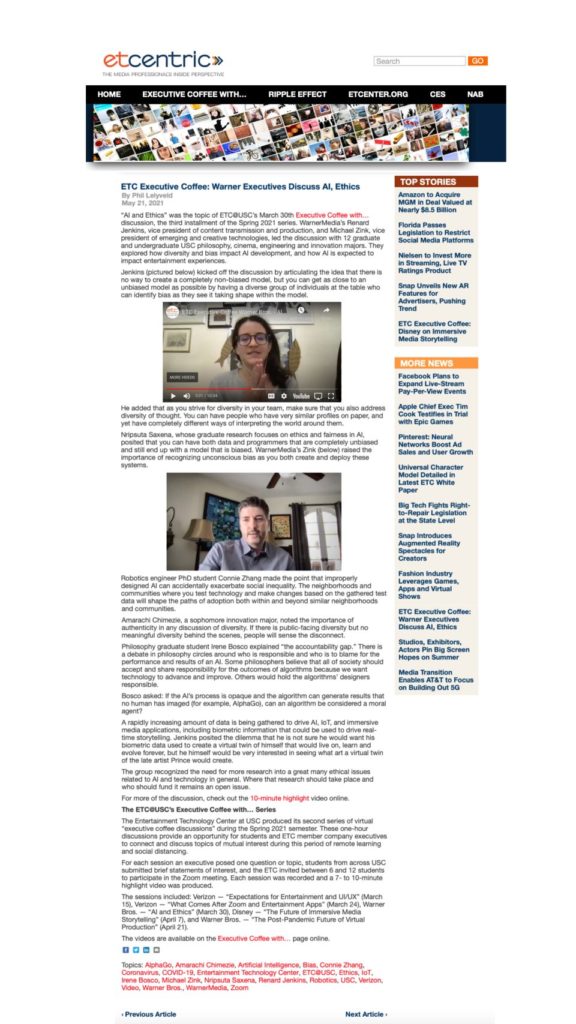
Virtuix Raises $19MM for ‘Omni One’ Virtual Reality Treadmill
Virtuix has shipped nearly 4,000 Omni Pro systems to more than 500 commercial entertainment venues around the world. Omniverse, Virtuix's proprietary content platform offering 24 VR games and built-in esports competitions, has hosted over two million plays to date. Virtuix, a private company, has raised more than $35 million from individual and institutional investors. Virtuix is launching Omni One, a consumer version of the Omni for the home market, in late 2021.
See the full story here: https://www.inforney.com/texas/virtuix-raises-19mm-for-omni-one-virtual-reality-treadmill/article_92b24823-6d94-53c1-9d5b-b8655031e036.html
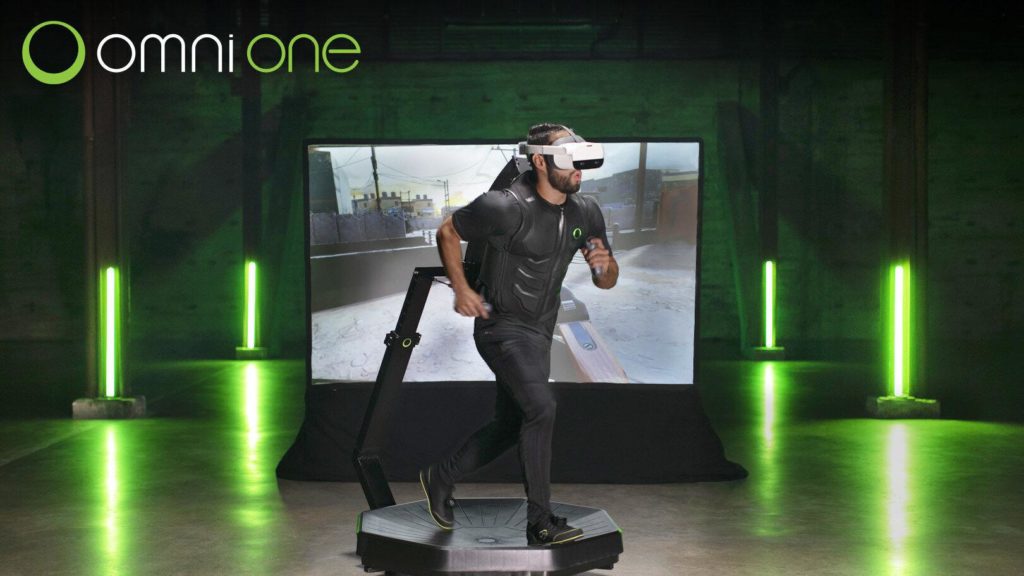
Apple won 57 Patents today covering Face ID, Augmented Reality, Apple Watch and more
The U.S. Patent and Trademark Office officially published a series of 57 newly granted patents for Apple Inc. today. In this particular report we briefly cover the vision system assembly that allows Face ID to remain perfectly aligned so that the biometric feature provides an accurate image of the user's face each time.
Apple was also granted a major AR related patent for displaying objects in 3D context...
See the full story here: https://www.patentlyapple.com/patently-apple/2021/05/apple-won-57-patents-today-covering-face-id-augmented-reality-apple-watch-and-more.html
Law firm Reed Smith publishes its guide to the metaverse
“There can be no doubt that from a business perspective, the metaverse is now a critically important consideration and influence. People exist there and there is money to be had,” is how law firm Reed Smith introduces its latest report. It’s exploring the burgeoning games, virtual and augmented reality industries, and the legal issues that they raise.
Music gets its own section. “Mostly, the traditional legal and licensing rules applicable to online exploitation apply equally in the metaverse,” writes Reed Smith’s Gregor Pryor. “However, the proliferation of music, performance, and exploitation within new, closed, or even open online environments adds yet another potential layer of complexity to an already complex chain of rights in the music licensing process.” He goes on to outline why there are plenty of opportunities in this, rather than just legal headaches. You can download the report for free here.
Download the pdf and see the full story here: https://musically.com/2021/05/20/law-firm-reed-smith-publishes-its-guide-to-the-metaverse/
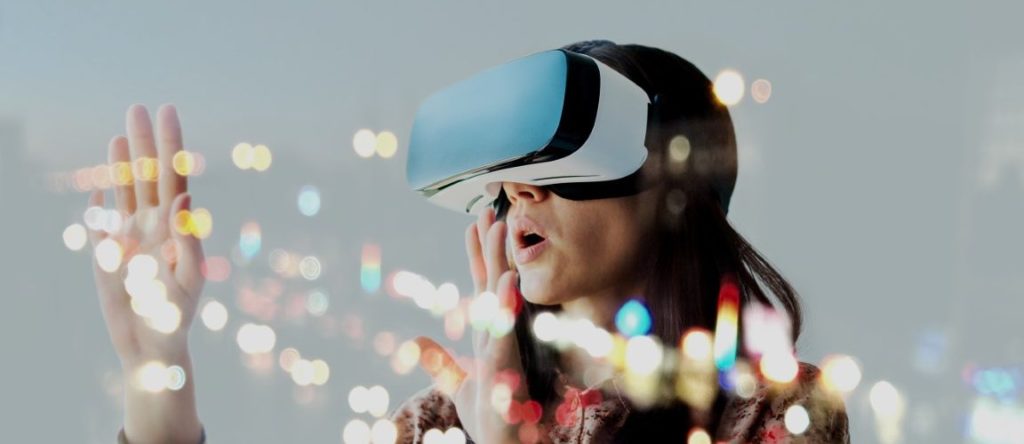
Virtual reality study sheds light on what happens when your brain can’t tell which way is up or down
Visual reorientation illusion (VRI) is a phenomenon in which one’s perception of body positioning (e.g. standing vs. lying down) or motion (e.g., moving vs. static) disagrees with reality. It can be induced by tricking the brain with false sensory data: rotating a room 360º about a horizontal axis, for example, or tilting a room 90º with familiar objects (e.g. a lamp) whose orientation disagrees with gravity.
Beyond the purely scientific interest in understanding how differing and contrary signals are interpreted by the brain, being able to reliably produce (or combat) sensory illusions has practical applications in transportation and the future of immersive gaming and virtual experiences. In the present study, published in PLoS ONE, scientists from York University in Canada took a closer look at how the brain weighs contradictory sensory signals.
The series of three studies, involving a total of 72 participants, used supine (lying on one’s back) and supine-like (head tilted back), prone (lying face-down) and prone-like (head tilted forward), and standing positions to manipulate sensations of gravity, while a VR helmet provided corollary or contradictory visual stimuli, in the form of either a hallway (strong up-down signals) or starfield (ambiguous up-down signals).
See the full story here: https://www.psypost.org/2021/05/virtual-reality-study-sheds-light-on-what-happens-when-your-brain-cant-tell-which-way-is-up-or-down-60874
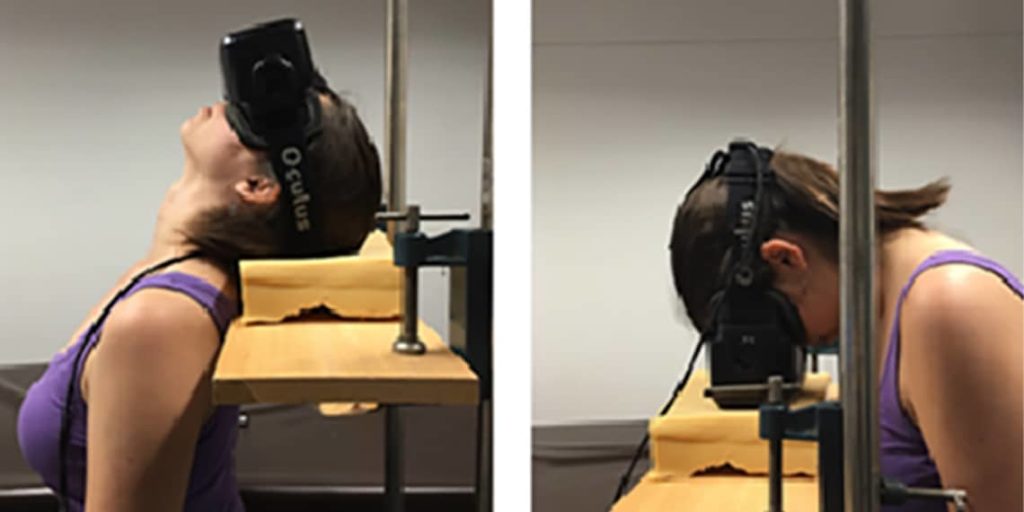
Your Disney World selfies just got so much cooler
Disney Parks and Snap (the parent company of Snapchat) announced a new partnership that will allow people to take selfies with virtual Disney characters and decorations.
- The new partnership allows guests to use the My Disney Experience app to take photos that include augmented reality technology.
- Disney Parks said in a blog post: “Mickey and Minnie will be right beside you in Snapchat with their playful expressions and gestures. They can even give you a hug!”
See the full story here: https://www.deseret.com/entertainment/2021/5/24/22447323/disney-world-selfies-snap
/cdn.vox-cdn.com/uploads/chorus_image/image/69333091/AP20332570049737.0.jpg)