Meow Wolf Denver will open fall 2021 with 450-capacity music venue, locally sourced cafe
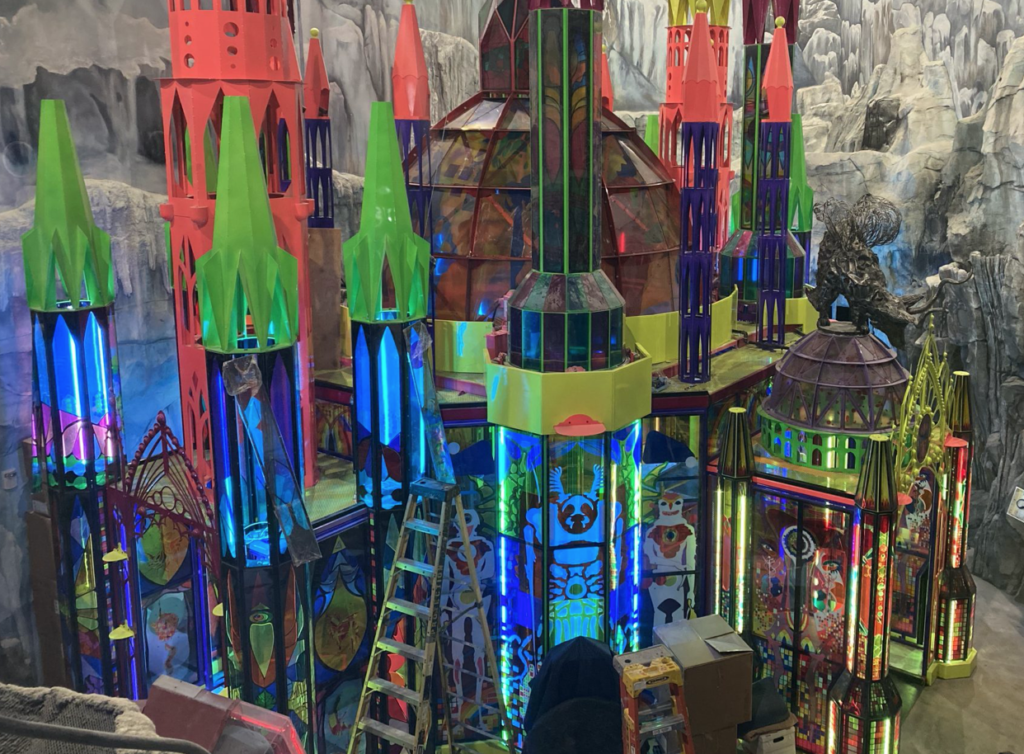
The immersive, selfie-friendly entertainment venue, which leads visitors through surreal environments of physical and digital art, will feature the work of 110 Colorado-based artists in its “multiple large anchor space showcasing 79 projects,” organizers said in a Wednesday press statement, “which depict dozens of converged worlds including portals and wormholes between them.”
During the daytime in the venue space, attendees will be able to interact with the imagery, the company said, and watch projections change in real-time based on their movements.
See the full story here: https://theknow.denverpost.com/2021/04/28/meow-wolf-denver-open-date-cafe-music-venue/257721/?fbclid=IwAR2iA1azyLXlk6AY2cuIn5RW132VJbTRnqJHBgsZEtD25YbSjU_InXtnCY4
Verizon and Snap Inc. launch 5G Landmarker Lens in L.A.
What you need to know:
- Verizon and Snap Inc. are launching the second 5G AR Landmarker experience from their 5G innovation partnership.
- Augmented reality transforms a mural on Abbot Kinney Boulevard in Venice Beach into an immersive experience sharing the story behind the National Wildlife Federation’s #SaveLACougars campaign.
LOS ANGELES - A 5G-enabled augmented reality Landmarker Lens marks the second AR Landmarker experience from Verizon and Snap Inc.’s 5G innovation partnership. The increased capacity of Verizon’s 5G Ultra Wideband along with Snapchat’s industry-leading augmented reality technology creates a Lens that transforms a mural of a cougar on Abbot Kinney Boulevard in Venice Beach, California into an immersive experience that amplifies the story behind the National Wildlife Federation’s #SaveLACougars campaign.
See the full story here: https://www.verizon.com/about/news/verizon-and-snap-inc-launch-5g-landmarker-lens-la

NASA Interns Design Interactive Virtual Reality Prototype
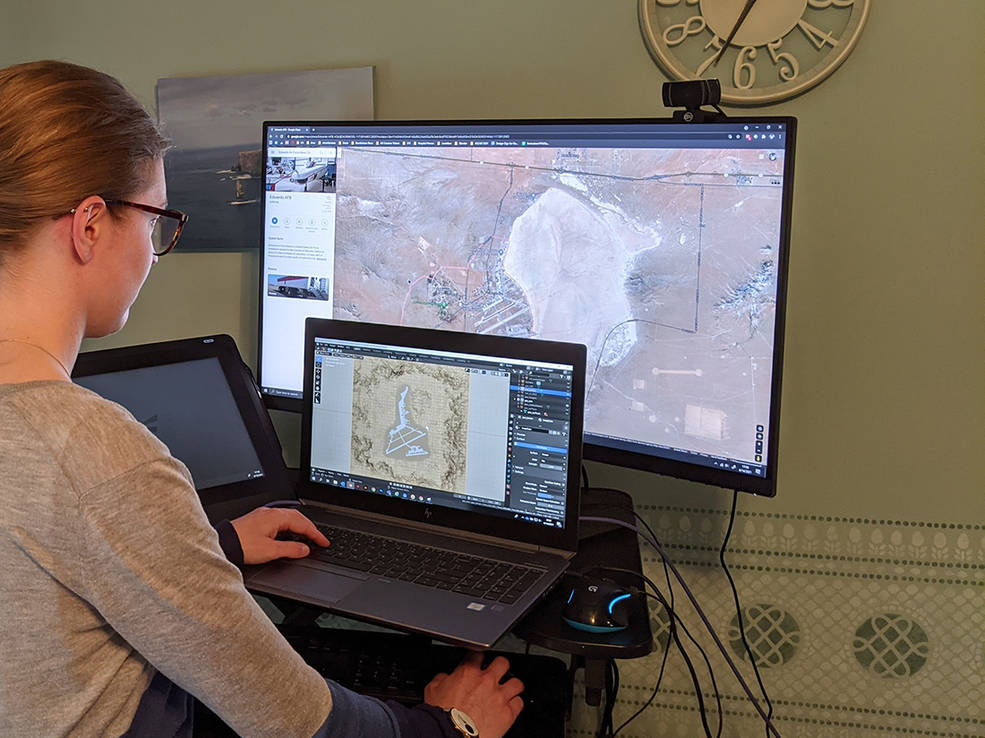
The team is designing an interactive virtual reality experience that will look and feel like the hypersonic X-15 rocket plane. The project, called Greater Heights, is a part of NASA Armstrong’s 75th Anniversary. It is an intern-led narrative virtual reality flight simulation experience that is anticipated for release this fall.
Sara Caudill, a NASA Armstrong intern, is the lead designer of Greater Heights. Caudill, who is in her third year of study for a master’s degree in design at The Ohio State University, is specializing in digital animation and interactive media studies.
She began designing the project blueprint and crafting a storyline about NASA’s X-15 aircraft and began the production of Greater Heights during her first internship in the summer of 2020.
The first play mode of the virtual reality experience is Story Mode, which details former astronaut Neil Armstrong’s experiences testing the X-15 aircraft in 1962. Users will have the opportunity to experience flying the X-15 model using the virtual reality experience. The second play mode is called Free Flight and it is designed to have users fly different types of aircraft such as the X-59 and the X-57.
See the full story here: https://www.nasa.gov/centers/armstrong/features/interns-design-interactive-virtual-reality-prototype.html
Respawn’s virtual-reality Medal of Honor short “Colette” just made Oscars history
Nobody ever thought a video-game studio would be involved in The Academy Awards, let alone be nominated for and win a prestigious Oscar.
But Respawn Entertainment took home the prize for Best Documentary (Short Subject) at the 93rd Academy Awards for their virtual-reality documentary, Colette.
The documentary follows Colette Marin-Catherine, a former French Resistance member, as she travels to Germany for the first time in 74 years after her brother tragically perished in the Mittelbau-Dora concentration camp.
Respawn Entertainment teamed up with Oculus to make the ambitious project happen, and they’re thrilled and perhaps a little surprised to win the award.
See the full story here: https://www.dexerto.com/gaming/respawn-vr-doco-colette-oscars-history-1560877/

Artificial intelligence unlocks a mystery behind a 2,000-year-old Dead Sea Scroll
In a new study, researchers at the University of Gronigen’s Qumran Institute have put together a robust investigation into the palaeography – the study of old handwriting – of one of the scrolls.
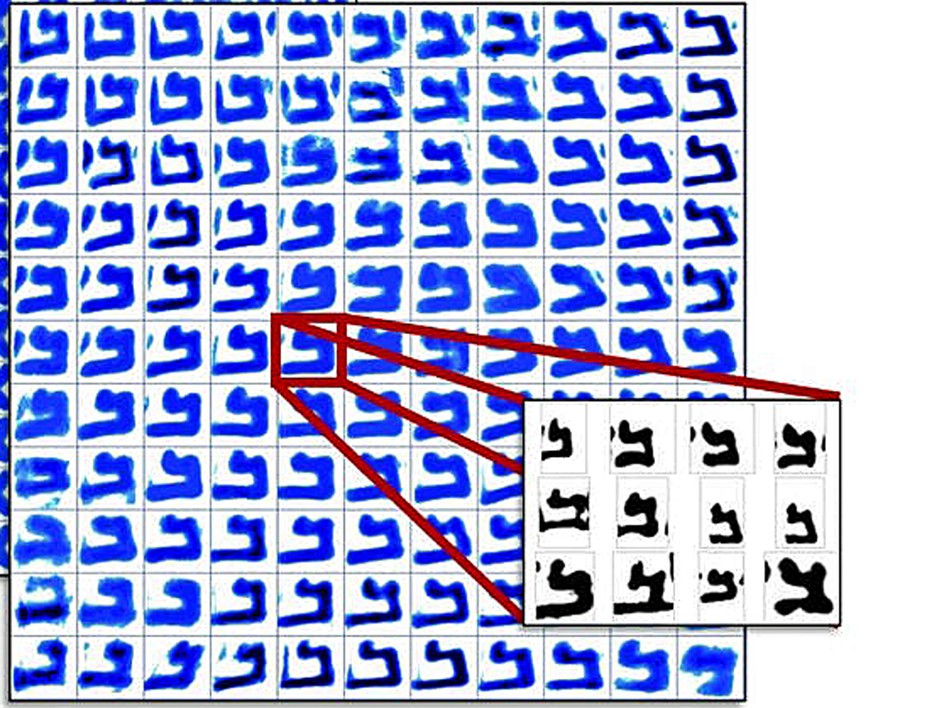
The authors trained an algorithm to separate the ink from its background, the leather or the papyrus of the scroll. Then, the algorithm studied every character, looking for small changes that might signal a different writer. This kind of algorithmic technology, shown in the image below, has started to be used in biblical studies, and the wider digital humanities, in just the last few years.
...suggesting there were perhaps teams of scribes who worked together on the Dead Sea Scrolls, with some working as apprentices to the more senior members.
A different scribe is not the only possible explanation, however. The authors note that a change of pen, the sharpening of a nib, a change in writing conditions or in the health of the scribe could contribute to the difference they found. Still, the difference seems pretty clear, and a change of scribe is the most likely conclusion.
See the full story here: https://nationalpost.com/news/world/artificial-intelligence-unlocks-a-mystery-behind-a-2000-year-old-dead-sea-scroll
Artificial Intelligence, Virtual Reality and the Future of Storytelling
The great poet, Maya Angelou once famously said, “I’ve learned that people will forget what you said, people will forget what you did, but people will never forget how you made them feel.”
Even without AI, we are seeing deep emotional connections to Virtual Beings. The iconic Japanese superstar character, ‘HatsuneMiku’ is a singing hologram that has sold-out concerts around the world and millions of followers. In 2018, a Japanese fan spent US$18,000 to wed Miku’ saying,“I never cheated on her; I’ve always been in love with Miku-san…For mother, it wasn’t something to celebrate.” He’s not alone, Gatebox, an artificial intelligence company, has issued over 3,700 marriage certificates for “cross-dimensional” marriages.
Other AI startups like Eternime, use AI to learn from you while alive, so that when you die, it can replicate a virtual being chatbot of you to engage in simulated stories with your friends and family. They aim to “give life to the dead.”Yet, what are the unintended consequences of people isolating themselves with a chatbot character of a dead loved one?
See the full story here: https://www.cxotoday.com/hardware-software-development/artificial-intelligence-virtual-reality-and-the-future-of-storytelling/

Researchers Could Achieve Artificial General Intelligence by Combining Light, Superconductors
The new approach was detailed in Applied Physics Letters by AIP Publishing.
Jeffrey Shainline is author of the research.
“We argue that by operating at low temperature and using superconducting electronic circuits, single-photon detectors, and silicon light sources, we will open a path toward rich computational functionality and scalable fabrication,” Shainline said.
Scalable and Functional Artificial Cognitive Systems
According to the researchers and their new approach, the pairing of light for communication with complex electronic circuits for computation could lead to artificial cognitive systems that are far more scalable and functional than traditional approaches that rely on light or electronics alone.
“What surprised me most was that optoelectronic integration may be much easier when working at low temperatures and using superconductors than when working at room temperatures and using semiconductors,” Shainline continued.
See the full story here: https://www.unite.ai/researchers-could-achieve-artificial-general-intelligence-by-combining-light-superconductors/