Makers of ‘kid’s first virtual world’ Animal Jam targets Gen Z teens with Fer.al debut
Before kids graduate to the expansive virtual worlds in games like Roblox, Minecraft and Fortnite, they often get their start in online social gaming with a game like Animal Jam. Here, kids learn to personalize their avatar, explore a world, chat with other players and trade items in a safe environment with parental controls. Today, the company behind this popular title, WildWorks, is launching a new game, Fer.al, which builds on Animal Jam’s legacy while catering to a slightly older crowd of Gen Z teens.
See the full story here: https://techcrunch.com/2021/03/08/makers-of-kids-first-virtual-world-animal-jam-targets-gen-z-teens-with-fer-al-debut/

Deloitte launches AI institute in Canada
Deloitte on Wednesday launched an artificial intelligence (AI)-focused initiative to help foster research and AI adoption across industries, according to a report from BetaKit.
Dubbed the Deloitte AI Institute, the initiative first launched in the US in summer 2020. Since then, the initiative has expanded to China, Germany, the UK, and now Canada.
The Canadian program will host virtual events to educate organizations on AI, and connect them with an ecosystem of partners that can help them adopt and scale AI applications. The virtual institute will include AI partners such as academics, research institutions, and AI firms.
See the full story here: https://www.consulting.ca/news/2159/deloitte-launches-ai-institute-in-canada

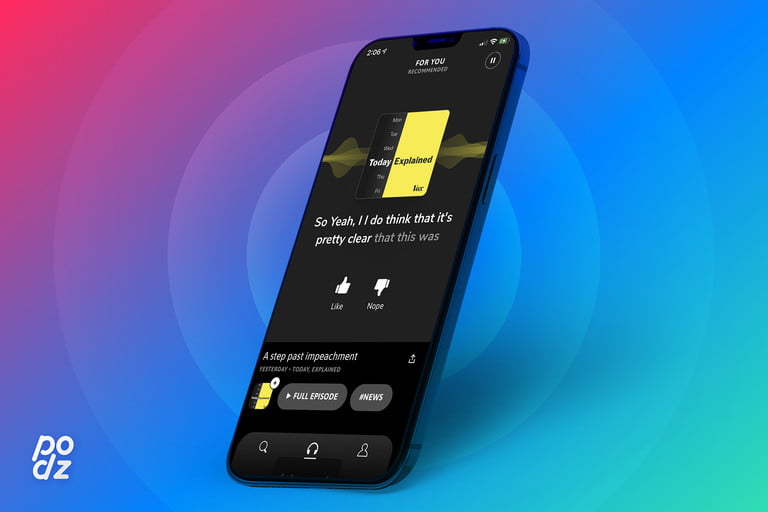
The web is full of information trapped in unsearchable audio. Podz has a fix
Right now, the world is drowning in podcasts. In February 2018, there were an estimated 500,000 active podcasts in existence. Today, that number is in excess of 1.7 million, with a total of more than 43 million episodes. And yet, for all that, podcast discoverability is, to put it nicely, horrendous.
This is where a new startup enters the picture. Podz, co-founded by a team who first met while working at Yahoo, seeks to find a way to solve the findability conundrum that besets today’s podcasts. More than that, though, it’s got far grander, far more significant designs: To do for the world’s audio archives what Google has done for search. Namely, to organize it and make it universally accessible and useful.
In an attempt to “fix” podcast discoverability, Podz has created an A.I. trained on 100,000 hours of audio, which scours through the most popular 5,000 podcasts (that’s the overwhelming majority of podcasts most people listen to) and creates the most engaging 60-second sample snippets to populate an audio news feed.
What Podz really wants to do — and, if it can pull it off, this is a multibillion dollar idea — is to make the audio space as searchable as the text space.
Right now, this is “fly before you walk” stuff for a startup — albeit a well-funded one, with investors including Katie Couric and Paris Hilton.
See the full story here: https://www.digitaltrends.com/features/audio-internet-podcasts-search-podz/
Napa Valley College students take up a challenge from NASA
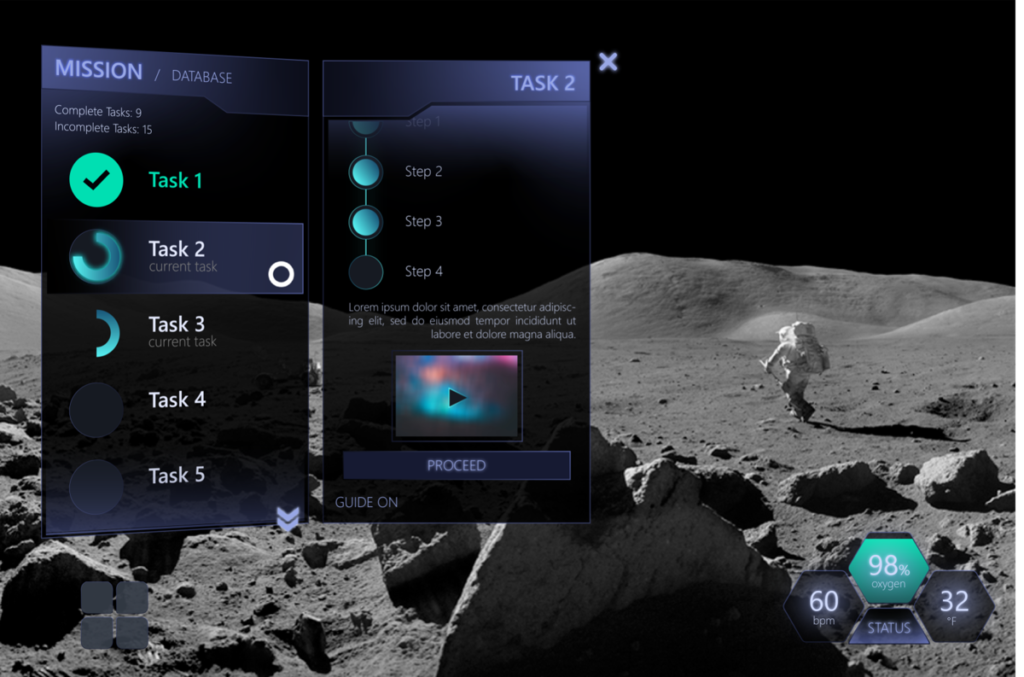
A team of ambitious student software designers at Napa Valley College has entered NASA’s Spacesuit User Interface Technologies for Students (SUITS) challenge where they will design an augmented reality user interface for the spacesuits used in the next mission to the moon.
NVC is one of 19 colleges around the country that have been accepted by NASA to participate. NVC is one of only two community colleges participating; all the other schools are four-year universities, including Columbia University in New York and Johns Hopkins in Baltimore.
The project gives the students access to a HololenLens 2, a $3,500 augmented reality headset developed and sold by Microsoft Because of its cost, the Hololens is often only used in business applications, but the SUITS program made it available to the students for this program.
See the full story here: https://napavalleyregister.com/napa-valley-college-students-take-up-a-challenge-from-nasa/article_a18fcab8-20f7-5c94-938d-167f95785a17.html
Oakland University establishes Augmented Reality Center to educate students on the applications of AR in manufacturing
Oakland University (Michigan) has recently announced that it has joined forces with the College for Creative Studies and a coalition of regional industry partners to establish an augmented reality center (ARC) at Oakland University’s School of Engineering and Computer Science.
The ARC will introduce students to cutting-edge augmented reality (AR) technology and provide unique opportunities for these students to work alongside expert faculty and industry partners in applying the technology to various aspects of manufacturing.
Oakland University noted that AR technology will play a key role in the future of manufacturing thanks to its ability to merge the physical world with digital data, enabling new and better ways to interact with machines and creating more cost effective and efficient solutions for companies. By training students to use the technology, the University hopes that it will help to prepare them for successful careers in the rapidly growing field following graduation.
Founding industry partners include ABB Inc., AM General, Continental, General Motors, Hirotec America, KUKA Robotics, Magna International, MAHLE Industries, Rave Computer, Siemens, and US Military Ground Vehicle Systems.
Epic Games is also providing support through its Epic MegaGrants Program, a USD $100 million initiative designed to service and assist game developers, enterprise professionals, media and entertainment creators, students, educators, and tool developers doing outstanding work with Unreal Engine or enhancing open-source capabilities for the 3D graphics community. The University did not disclose a dollar amount for the support that Epic will be providing however.
See the full story here: https://www.auganix.org/oakland-university-establishes-augmented-reality-center-to-educate-students-on-the-applications-of-ar-in-manufacturing/

Director Shalini Kantayya exposes dangers of artificial intelligence in ‘Coded Bias’
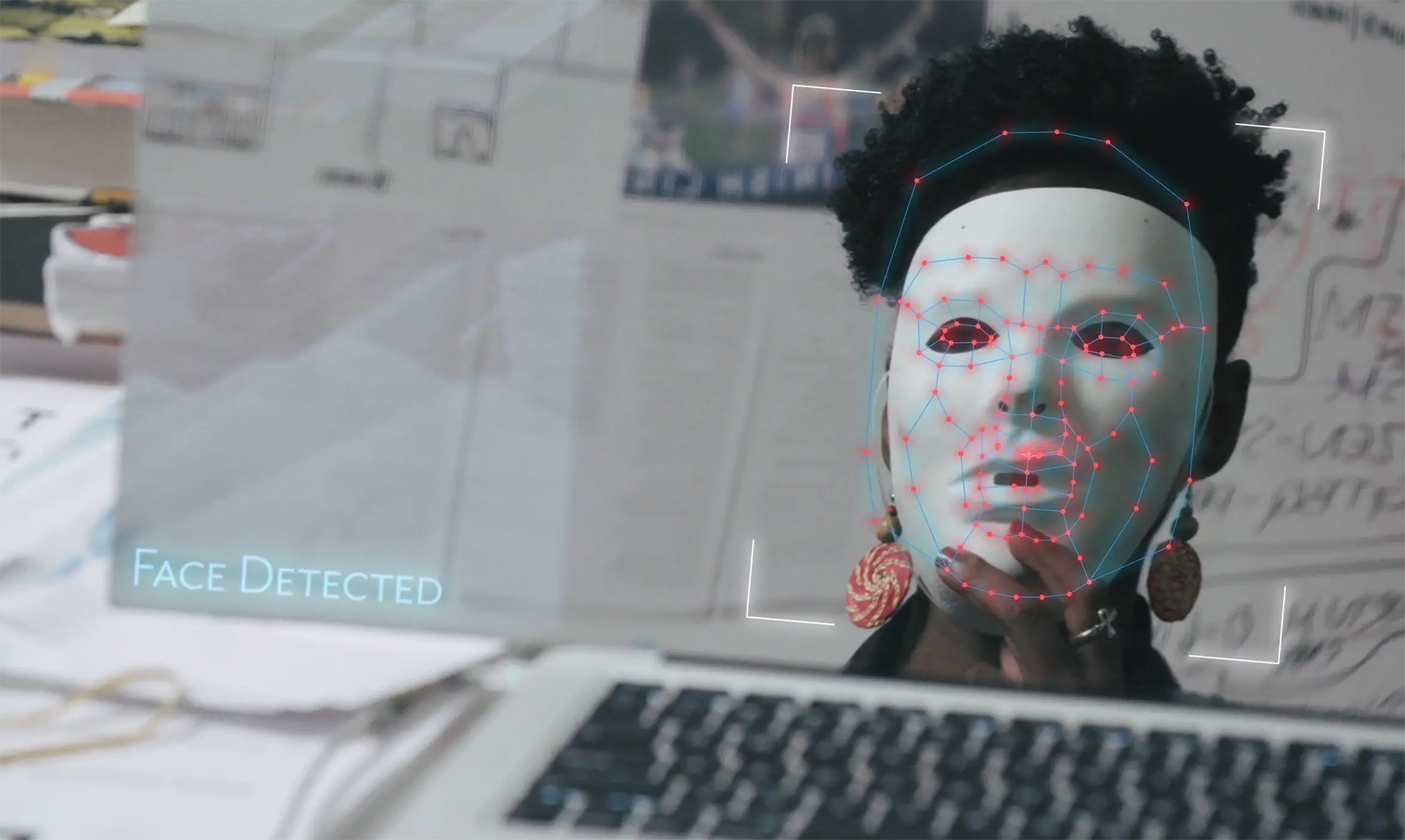
“Coded Bias” closely follows Silkie Carlo, a senior advocacy officer at Liberty and co-author of “Information Security for Journalists,” who says that these technologies are more likely to misidentify an innocent citizen than to correctly identify the criminal. In fact, Carlo says “98 percent of those matches are in fact incorrectly matching an innocent person as a wanted person.”
“Coded Bias” captured such an event in the United Kingdom, displaying members of an out-of-uniform police force halting, searching, and fingerprinting a Black 14-year-old boy for possessing a “facial match” with a criminal. His friends from school stood by watching, helpless against the police and their inaccurate facial recognition technology.
For this reason, Carlo became the director of Big Brother Watch, a British nonprofit organization dedicated to protecting citizen privacy against state surveillance. The viewer observes Carlo campaigning for Big Brother Watch by approaching members of the U.K. Parliament on a London street corner, eager to explain how facial recognition poses an infringement upon one’s privacy.
Buolamwini scrolled through the data set of the facial recognition software, noting that since each face was white, “systems weren’t familiar with faces like mine.” Buolamwini herself described this, presenting a slide to the MIT Media Lab reading “data is destiny” and highlighting how skewed data leads to skewed artificial intelligence systems.
See the full story here: https://www.columbiaspectator.com/arts-and-entertainment/2021/03/06/director-shalini-kantayya-exposes-dangers-of-artificial-intelligence-in-coded-bias/
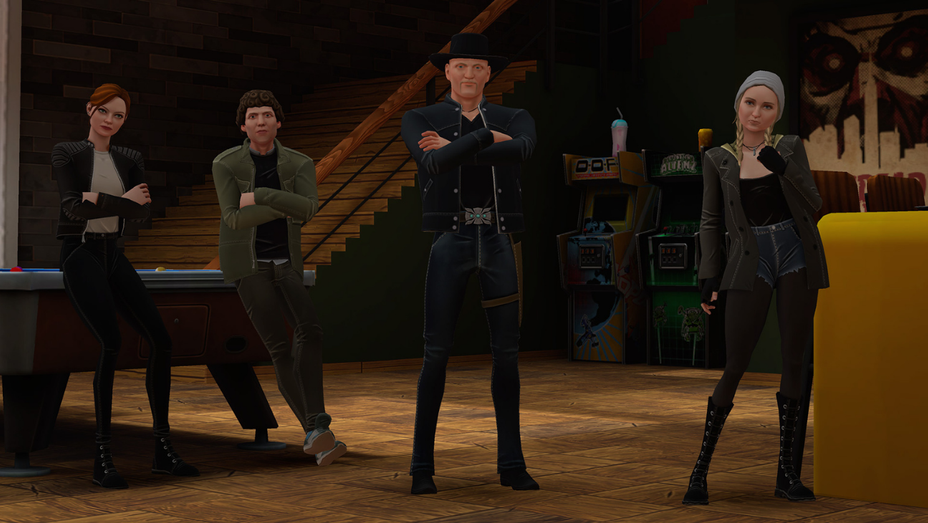
Sony Pictures Unveils Virtual Reality Game Set in ‘Zombieland’ Universe
Sony Pictures Virtual Reality and British development studio XR Games unveiled on Thursday a VR shooter game set in the Zombieland universe.
Zombieland: Headshot Fever tasks players with joining Columbus, played by Jesse Eisenberg in Ruben Fleischer's 2009 film; Tallahassee, Wichita and Little Rock as they take on the undead amid a zombie-killing racecourse. The game is inspired by 1990s' arcade-style light-gun shooting and modern racing titles, and will, as the companies describe, retain the humor and action of Zombieland and its sequel, Double Tap.
See the full story here: https://www.hollywoodreporter.com/heat-vision/sony-pictures-unveils-virtual-reality-game-set-in-zombieland-universe