AI helps this Koda social robot dog sense human emotions
Unlike other robot dogs on the market, the Koda artificial intelligence dog is meant to interact socially with its human owners. The robot's AI helps it sense when its owner is sad, happy or excited so it can, over time, respond in an appropriate manner to human emotions.
This robot dog can be a companion, seeing-eye dog or guard dog, accomplishing tasks thanks to Koda's "blockchain-enabled decentralized AI infrastructure" that enables it to process complex problems and even learn new skills, according to an official promo video.
Decentralized artificial intelligence, also often called distributed artificial intelligence, is a subfield of artificial intelligence research that focuses on the development of distributed solutions for problems.
... "Those who take this opportunity to be an original owner of a Koda will be able to watch its decentralized AI in action as it evolves from a puppy-like state to a robotic dog with the intelligence of a supercomputer."
$45,000-$55,000
See the full story here; https://www.cnet.com/news/ai-helps-this-koda-social-robot-dog-sense-human-emotions/

US leads race in artificial intelligence with China closing in
The study by the Information Technology and Innovation Foundation assessed AI using 30 separate metrics including human talent, research activity, commercial development and investment in hardware and software.
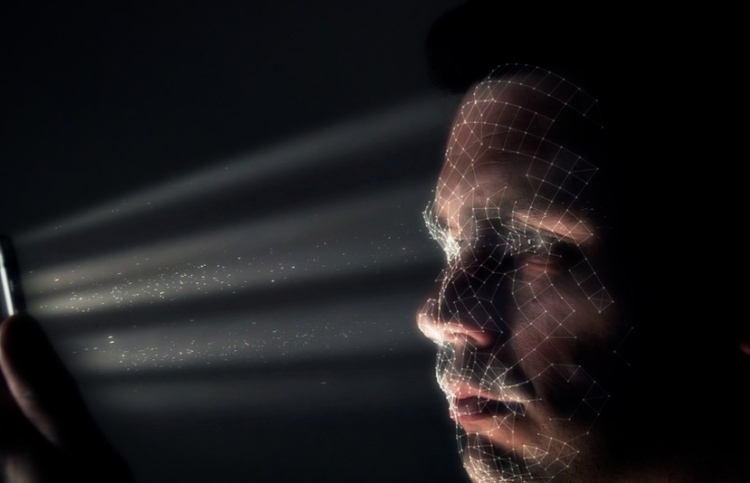
To remain competitive, the report said, Europe needs to boost research tax incentives, and expand public research institutes working on AI.
For the United States to maintain its lead, it must boost support for AI research and deployment, and step up efforts to develop AI talent domestically while attracting top talent from around the world.
See the full story here: https://edition.mv/entertainment/21720
What Apple’s Latest Move Tells us About the Future of Reality

But while this announcement might not rank high among the list of Apple’s other recent announcements, there’s a bigger picture it points to that is very notable: the integration of media technologies into our daily routines, a sort of precursor to what Kevin Kelly calls the “Mirrorworld.”
In this case, Apple gets something that so many virtual, mixed, and augmented reality companies/studios/et al. don’t—that tech can only change as fast as culture.
The upshot of this 1-2 punch? That Apple is emphasizing high-quality, lifelike audio in its present and future efforts.
With this framework in mind, it’s easy to imagine how, whenever mainstream, consumer smartglasses are capable of full augmented reality, Dolly Parton’s walks are accompanied by a visual representation of Dolly right on that walk with you. As context awareness improves in the back end (both environmental and in user preferences), we might imagine how an interactive, virtual Dolly might prompt conversations “with” us.
Makers of Sophia the robot plan mass rollout amid pandemic
(PhilNote: she starts looking really creepy toward the end of the video.)
See video here: https://vm.reuters.tv/3d112/h05tpnoq155-1404k.mp4
Hanson Robotics, based in Hong Kong, said four models, including Sophia, would start rolling out of factories in the first half of 2021, just as researchers predict the pandemic will open new opportunities for the robotics industry.
Hanson Robotics is launching a robot this year called Grace, developed for the healthcare sector.
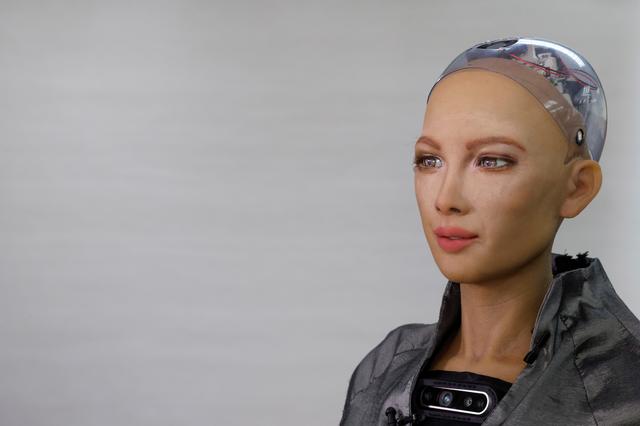
See the full story here: https://mobile.reuters.com/article/amp/idUSKBN29U03X?fbclid=IwAR3-g-7zqF9-RBClmz8Ho9q21aaCFDmvSf0Anmy3qi1P2zPQO5cJ6Chsk3E
Virtual reality has real problems. Here’s how game developers seek to delete them.
Throwing out the orthodoxies of traditional game development and starting from scratch, all while making a piece of software that should be comfortable and familiar to the millions who already enjoy games, is an appealing challenge.
But even as creativity leads developers to different solutions, they all trend in the same direction: growing the suite of tools that will help players slip comfortably into the world of VR.

“The standardization of those settings has been a big help for the whole industry in general, because the player can get used to them from game to game and get their ‘sea legs,'” said Daly.
See the full story here: https://www.seattletimes.com/business/technology/virtual-reality-has-real-problems-heres-how-game-developers-seek-to-delete-them/
Artificial divide: How Europe and America could clash over AI
SUMMARY
- Artificial intelligence is a rapidly advancing field that policymakers everywhere are struggling to keep up with.
- Calls for international, and particularly transatlantic, cooperation are growing.
- In Europe, interest in strengthening “ethical” AI policy is particularly strong – including as a way of making Europe more attractive than other jurisdictions around the world.
- Close cooperation between Europe and the US is not a given: Europe sees the US as its main competitor in AI; the US wants to join forces against China on AI, but European interest in such a front is weak.
- The non-combat military realm may be a good area for transatlantic AI cooperation.
See the full story here; https://ecfr.eu/publication/artificial-divide-how-europe-and-america-could-clash-over-ai/

Facebook’s AR/VR Head Calls for “Big Shift” in How It Deals with User Privacy
Facebook Reality Labs head Andrew Bosworth released an internal memo, entitled “The Big Shift,” which underlines why the company needs to start building products now that better balance user privacy and user experience.

Virtual and augmented reality opens new, more intimate windows into user behavior though, with biometrical data obtained from VR/AR devices offering important vectors for understanding what makes each individual tick. It’s a treasure trove of user data which has largely gone untapped (and unleaked, as far as we know), but it won’t always be that way.
Now, Andrew Bosworth, the head of Facebook’s AR/VR Reality Labs team, is calling on his colleagues to put user privacy at the core of its products.
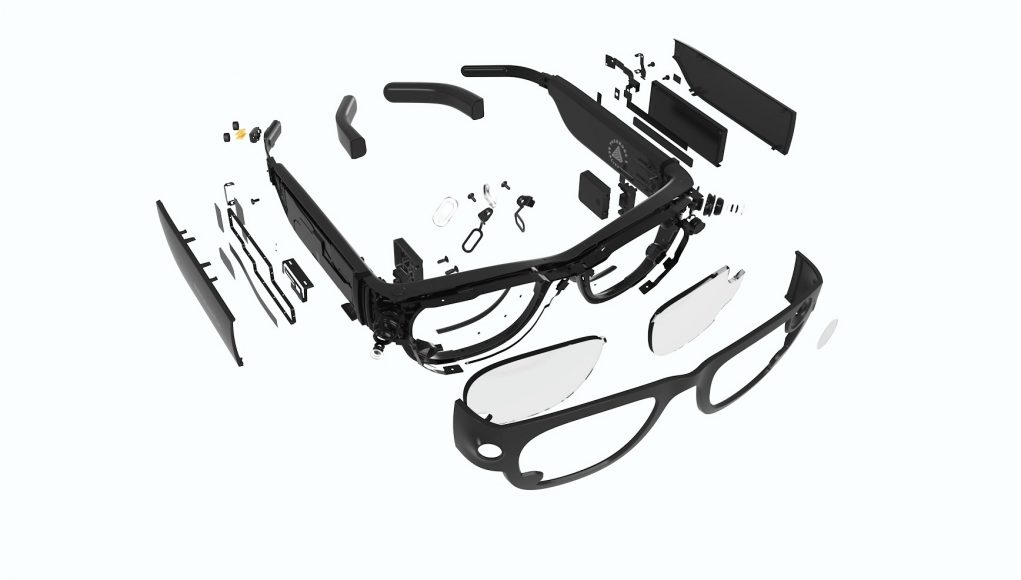
“Starting in January we are changing the way we approach product development in FRL. Instead of imagining a product and trimming it down to fit modern standards of data privacy and security we are going to invert our process. We will start with the assumption that we can’t collect, use, or store any data. The burden is on us to demonstrate why certain data is truly required for the product to work. Even then I want us to scope it as aggressively as we can, holding a higher bar for sending data to the server than we do for processing it locally. I have no problem with us giving users options to share more if they choose (opt-in) but by default we shouldn’t expect it.”
See the full story here: https://www.roadtovr.com/facebook-reality-labs-bosworth-big-shift-user-privacy/?fbclid=IwAR0tg9a8HnI7Af2pq8CCA9VZvam1hBrl4R109w6nRg9EP5C_LtUSgmen2Ug