Porsche Promote All-Electric Taycan Using Web-based Augmented Reality Print Advertising With Blue Logic and Aircards
The Porsche Taycan experience was developed on the 8th Wall WebAR framework. Aircards are an 8th Wall Premier Partner and are the agency behind experiences such as the Verizon Santa’s Grotto experience, and the Michelob ULTRA Pure Gold Yosemite portal.

See the full story here: https://www.prweb.com/releases/2021/1/prweb17658837.htm
Tom’s Guide CES 2021 Awards: Rollable phones, microLED TV and a robot that pours you wine
PhilNote: much overlap with other lists but a few new ones.
Vuzix took the covers off a new pair of AR smart glasses at CES 2021 that make use of a microLED projector to create smart spectacles we’d actually wear. Combining a design that wouldn’t look out of place at a hipster opticians, the glasses — simply called Vuzix Next Gen Smart Glasses — can display color or monochrome content to both lenses. And features like integrated touch controls and noise-cancelling microphones mean the glasses don’t just look neat but promise to be practical. These particular Vuzix specs might not become a final product, but they look more like a real device than some crazy concept, and hint at how AR smart glasses could finally become mainstream.

See the full story here: https://www.tomsguide.com/news/ces-2021-awards
SenseGlove Nova VR Haptic Gloves Are Straight Out Of ‘Ready Player One’
See the full story here: https://vrscout.com/news/senseglove-nova-vr-haptic-gloves-ces-2021/?utm_source=VRScout+Scouting+Report&utm_campaign=6d484003d7-VRScoutReport_012121&utm_medium=email&utm_term=0_f3642cd298-6d484003d7-162003161#
Presenting the Best of CES 2021 winners!
The cream of the crop in 14 categories, plus Best of the Best and the winner of our People's Choice reader poll.
See the full story here: https://www.engadget.com/best-of-ces-2021-winners-215307033.html

Augmented Realty Art Fest From the Comfort of Your Living Room
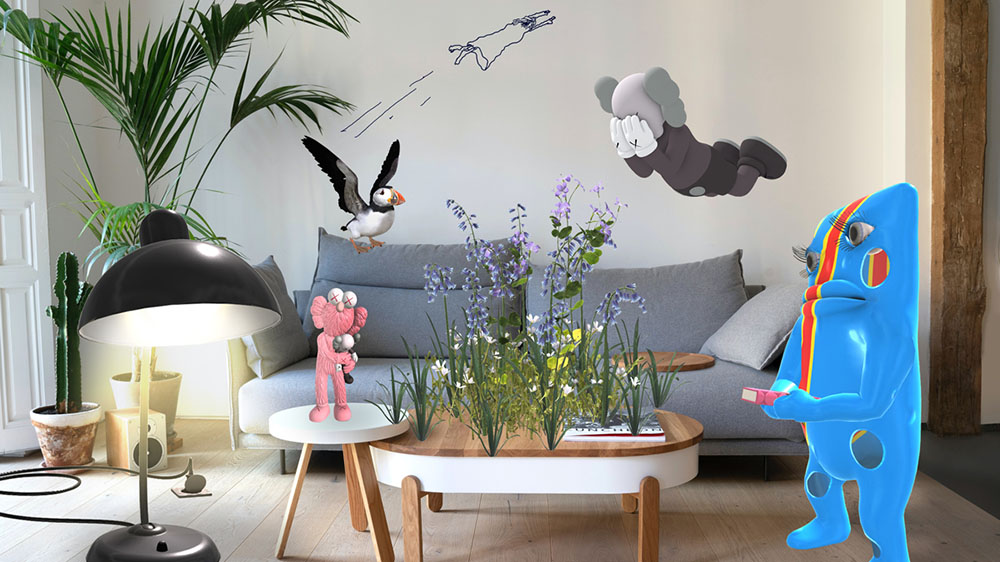
On Tuesday, Acute Art and Dazed Media announced that the UK capital’s popular Unreal City exhibition will be viewable from home via your smartphone for the next month. Originally scheduled to run from December 8 to January 5, the high-tech show, which is accessible via the free Acute Art app, will now run through February 9.
Unreal City consists of 36 AR works from artists from all over the globe, including never before seen pieces from KAWS, Bjarne Melgaard and Tomás Saraceno. While the virtual sculptures were all site-specific before—they were positioned in 24 locations between the Waterloo and Millennium Bridges along London’s south bank—you can now view them anywhere, even in your own home or condo. And even though the exhibition was originally organized for UK residents, it’s now been opened to the entire world.
See the full story here: https://robbreport.com/shelter/art-collectibles/unreal-city-ar-festival-extended-1234591090/
Roam the Galleries of the Metropolitan Museum via Augmented Reality
The museum collaborated with Verizon to launch the Met Unframed, which allows you to navigate through a dozen digitally rendered galleries and view nearly 50 works from the Met’s collection.
All you have to do is visit the Met Unframed website and scan a barcode with your phone to enter an immersive, hyperrealistic version of the iconic museum. Online visitors can navigate through a dozen digitally rendered galleries and view nearly 50 works from the Met’s collection. Those who have access to Verizon’s 5G Ultra Wideband network will be able to unlock a feature that makes some of the artworks interactive.

The AR website was designed in partnership with the production studio Unit9, drawing from the Met’s existing digital resources. For example, the studio’s 3D artists based their convincing renderings of the galleries and artworks on the Met’s vast collection of images, many of which are available for free use.
The featured games include trivia questions and riddles that encourage close observation of the artworks and labels. A game called “Analysis” uses the Met’s infrared and X-ray conservation scans of paintings to reveal underdrawings and other hidden details of well-known paintings.
See the full story here: https://hyperallergic.com/614503/roam-the-galleries-of-the-metropolitan-museum-via-augmented-reality/
At CES 2021, These Haptic Gloves Could Change Virtual Reality Training Forever
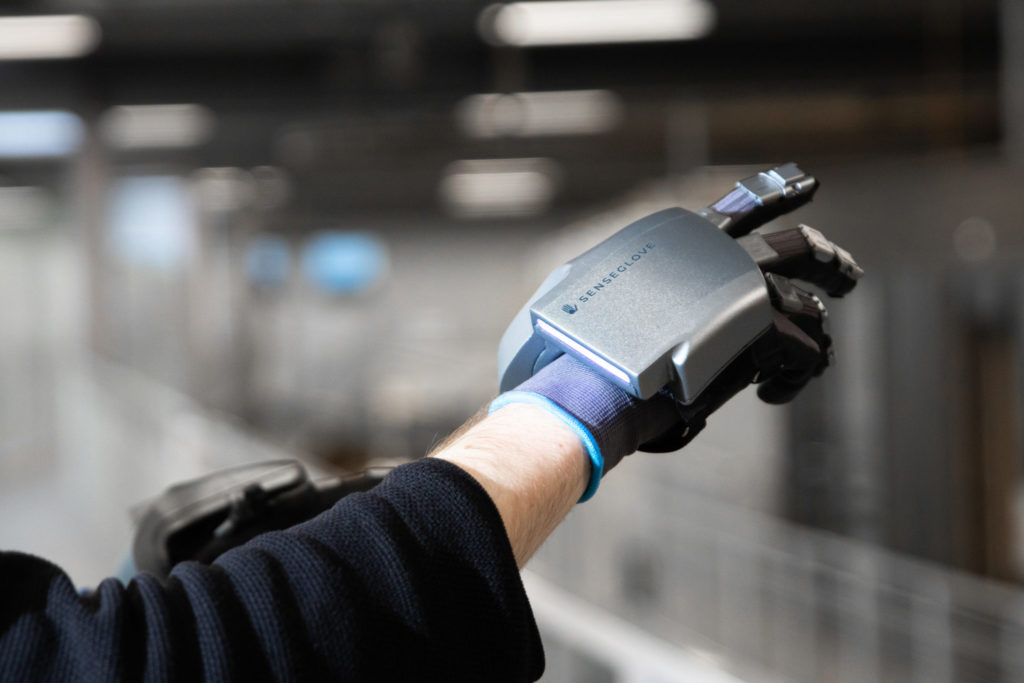
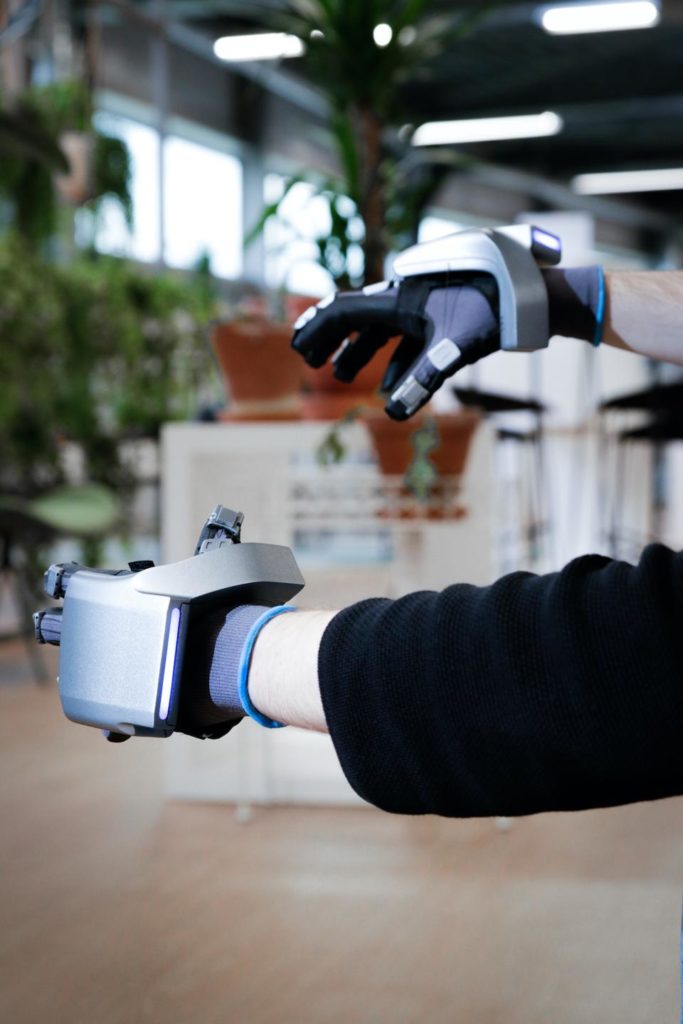
A Dutch start-up, SenseGlove debuted its new haptic feedback gloves at the opening of the all-digital Consumer Electronics Show (CES) today, January 11, 2021.
The new gloves, SenseGlove Nova, were designed explicitly for professional virtual reality (VR) training purposes. The haptic gloves use a stretchable, easy-to-put-on material that enables smooth hand tracking that allows users to more easily feel shapes, textures, stiffness, impact and resistance in VR.
The glove has four “brakes” for four fingers from the thumb to the ring finger, with each ‘brake’ delivering up to 20 Newton of force. This force is equivalent to the weight of a 4.4 pound (two kilograms) of brick on each finger. According to SenseGlove, this makes for unparalleled force feedback.
Citing Ford Motor Company’s decision to begin using VR to connect designers to inspect vehicles from home as part of remote collaboration under the stay at homework orders, den Butter says that haptic gloves like SenseGlove Nova improve immersion in these simulations.
See the full story here: https://www.forbes.com/sites/jenniferhicks/2021/01/11/at-ces-2021-these-haptic-gloves-could-change-virtual-reality-training-forever/?sh=214fdffc7d4c
Get ready for really low-power AI: Synaptics and Eta Compute envision neural nets that observe every sound, motion
In a bid to make inroads into the industrial IoT, Synaptics is this month going into production with the first silicon in a planned family of ultra-low-power chips, called Katana, a name for a type of samurai sword. The big problem that Synaptics and Eta are trying to solve is making really, really low-power chips that can support applications written in machine learning frameworks such as Google's TensorFlow.
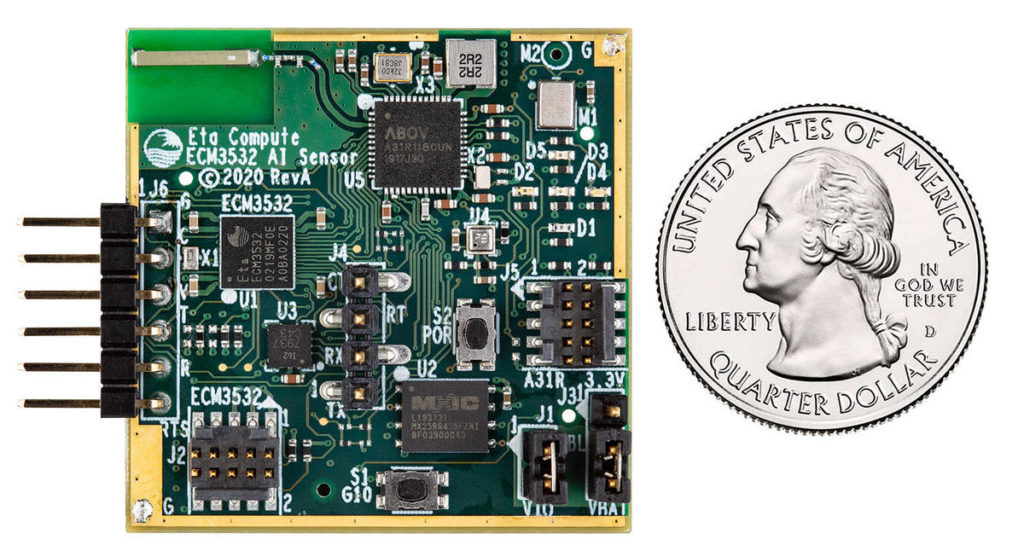
"Areas where we are differentiating is in low-power for voice and audio neural network operation, and this hybrid platform that will do both audio and image processing at micro-watts of power." Competitors' parts, contended Ganju, tend to handle only image or audio processing, not both.
Synaptics and Eta are helping to fulfill a broad mandate for low-power devices that Google and others have been describing in recent years as a stretch goal for the entire chip field. Of course, Synaptics is not the only company that is developing ultra-low-power parts. Startups are focusing on highly efficient parts for the edge, such as Ambient Scientific of San Jose, California, which claims to be able to re-train neural nets continuously even in low-power mode.See the full story here: https://www.zdnet.com/article/get-ready-for-really-low-power-ai-synaptics-and-eta-compute-envision-neural-nets-that-will-observe-every-sound-every-motion/
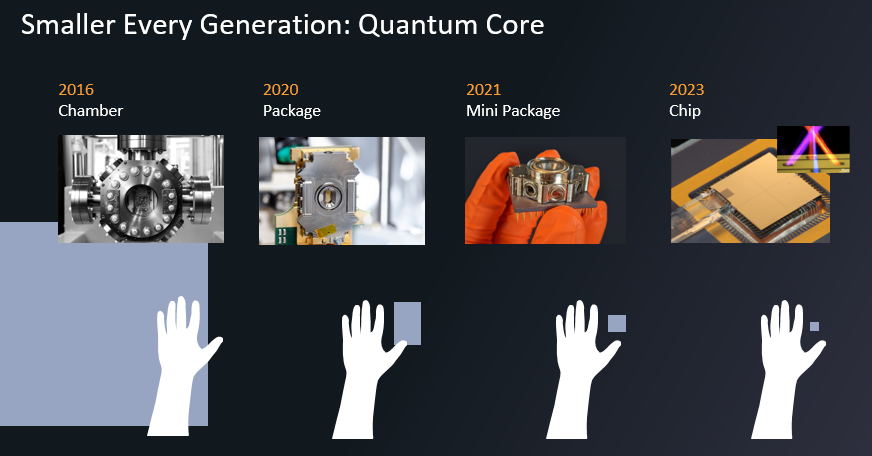
IonQ CEO Peter Chapman on quantum computing adoption, innovation and what’s next
IonQ has a plan to commercialize quantum computing and Peter Chapman is CEO expected to make it happen.
Chapman, son of a NASA astronaut, started working in the MIT AI Lab when he was 16, invented the first sound card for the IBM PC, wrote software for the FAA and led a Ray Kurzweil company to build tools for the blind.
IonQ recently made news for its roadmap and proposing a new performance metric called Algorithmic Qubit.
Simply put, Chapman has been ahead of the technology curve. Chapman joined IonQ in the summer of 2018 because he is betting that quantum computing can achieve Artificial General Intelligence (AGI).
Here are a few highlights from my conversation with Chapman on the future of quantum computing.
See the full story here: https://www.zdnet.com/article/ionq-ceo-peter-chapman-on-quantum-computing-adoption-innovation-and-whats-next/