Heidelberg-based Aleph Alpha raises €5.3 million to lead “Made in Europe” AI development
Today AI startup Aleph Alpha announces having raised a €5.3 million seed funding round to research, develop and operationalize European Artificial General Intelligence (AGI).
Headquartered in Germany, Aleph Alpha aims to revolutionize the accessibility and usability of Artificial General Intelligence (AGI) in Europe. Founded in 2019, by experts at the forefront of international AI research, Aleph Alpha develops strong AI technology for partners in academia, government and industry.
The fresh funding enables Aleph Alpha to attract more European AI scientists and engineers from around the world for top AI development “Made in Europe”.
See the full story here: https://www.eu-startups.com/2021/01/heidelberg-based-aleph-alpha-raises-e5-3-million-to-lead-made-in-europe-ai-development/

WE by West adds Qloo “cultural AI” to in-flight content recommendation engine
What does it take to better predict passenger demand for in-flight content? West Entertainment and AI powerhouse Qloo teamed up to enhance the WE by West platform crunching more than 750 billion cultural correlations to help the system deliver recommendations. Ultimately the companies expect to better tune the selections available on board and improve passenger satisfaction and, ideally, revenue for the airlines as well.
Qloo’s AI system examined a catalog of more than 150 million cultural entities and over 4 billion individual opinions to generate the broad range of correlations. With that data set the company aims for its Jetset AI solution to predict consumer tastes across over a dozen major categories, including music, film, television, podcasts, dining, nightlife, fashion, consumer products, books and travel.
See the full story here: https://paxex.aero/west-entertainment-qloo-artificial-intelligence/

Netflix CEO gifts $3 million to RMU to fund 20 full scholarships
The 20 scholarships will be open to qualified applicants pursuing degrees in computer and information systems; cybersecurity; data analytics; actuarial science; mathematics; statistics and predictive analysis; computer science; and user experience user interface design (UX-UI).
See the full story here: https://www.timesonline.com/story/news/2021/01/26/netflix-ceo-reed-hastings-funds-20-full-scholarships-robert-morris-university/4264950001/

Magic Leap founder Rony Abovitz creates startup Sun and Thunder to build synthetic beings
Abovitz said the whole project involves both left brain and right brain people. The inspiration came from early animation studios, mythopoeia concepts pioneered by the Inklings, and the freewheeling and creative spirit of music labels such as Island Records. And part of the job is creating “synthetic beings.”
Our Pinocchio right now has strings. But over time, we keep cutting those strings over 10 to 15 years. Our Pinocchio will be in a movie in the world and will also work with us to create things as well. We are making our co-creators.”

The first AI character is Jako Vega (also known as Yellow Dove). Abovitz said he is like Woody Guthrie, a vagabond singer who moves across space and time. The first film is in production.
Right now, Abovitz said he is funding the venture himself but is in discussions with possible investors. As for Magic Leap itself, Abovitz said he was pleased that Peggy Johnson is now leading the company, like a relief pitcher, after he led the company for the first nine years. He acknowledged that a lot of people thought Magic Leap was overhyped and was disappointing. But he has confidence in Johnson, and he is proud to have been a leader in spatial computing work that all of the tech giants are now pursuing.
See the full story here: https://venturebeat.com/2021/01/27/magic-leap-founder-rony-abovitz-creates-startup-sun-and-thunder/?fbclid=IwAR0ST4E79gBHb70-GqvCV-hcwbyugUCEABlWke4I9ei_J_tlbvlUUTnfiQE
‘Grow trees with your brain’: New augmented reality project combines meditation with technology
Alex Castillo@castillo__ioMy first

Brain + AR project. The deeper she meditates, the farther the trees grow. Built with the Neurosity SDK + @the8thwall.
AI helps this Koda social robot dog sense human emotions
Unlike other robot dogs on the market, the Koda artificial intelligence dog is meant to interact socially with its human owners. The robot's AI helps it sense when its owner is sad, happy or excited so it can, over time, respond in an appropriate manner to human emotions.
This robot dog can be a companion, seeing-eye dog or guard dog, accomplishing tasks thanks to Koda's "blockchain-enabled decentralized AI infrastructure" that enables it to process complex problems and even learn new skills, according to an official promo video.
Decentralized artificial intelligence, also often called distributed artificial intelligence, is a subfield of artificial intelligence research that focuses on the development of distributed solutions for problems.
... "Those who take this opportunity to be an original owner of a Koda will be able to watch its decentralized AI in action as it evolves from a puppy-like state to a robotic dog with the intelligence of a supercomputer."
$45,000-$55,000
See the full story here; https://www.cnet.com/news/ai-helps-this-koda-social-robot-dog-sense-human-emotions/

US leads race in artificial intelligence with China closing in
The study by the Information Technology and Innovation Foundation assessed AI using 30 separate metrics including human talent, research activity, commercial development and investment in hardware and software.
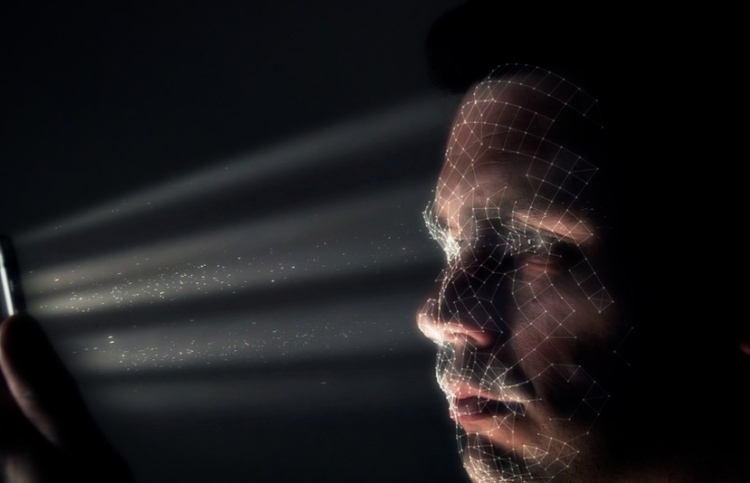
To remain competitive, the report said, Europe needs to boost research tax incentives, and expand public research institutes working on AI.
For the United States to maintain its lead, it must boost support for AI research and deployment, and step up efforts to develop AI talent domestically while attracting top talent from around the world.
See the full story here: https://edition.mv/entertainment/21720
What Apple’s Latest Move Tells us About the Future of Reality

But while this announcement might not rank high among the list of Apple’s other recent announcements, there’s a bigger picture it points to that is very notable: the integration of media technologies into our daily routines, a sort of precursor to what Kevin Kelly calls the “Mirrorworld.”
In this case, Apple gets something that so many virtual, mixed, and augmented reality companies/studios/et al. don’t—that tech can only change as fast as culture.
The upshot of this 1-2 punch? That Apple is emphasizing high-quality, lifelike audio in its present and future efforts.
With this framework in mind, it’s easy to imagine how, whenever mainstream, consumer smartglasses are capable of full augmented reality, Dolly Parton’s walks are accompanied by a visual representation of Dolly right on that walk with you. As context awareness improves in the back end (both environmental and in user preferences), we might imagine how an interactive, virtual Dolly might prompt conversations “with” us.
Makers of Sophia the robot plan mass rollout amid pandemic
(PhilNote: she starts looking really creepy toward the end of the video.)
See video here: https://vm.reuters.tv/3d112/h05tpnoq155-1404k.mp4
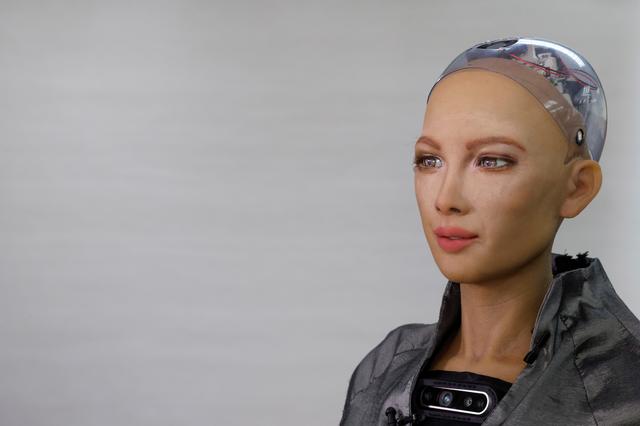
Hanson Robotics, based in Hong Kong, said four models, including Sophia, would start rolling out of factories in the first half of 2021, just as researchers predict the pandemic will open new opportunities for the robotics industry.
Hanson Robotics is launching a robot this year called Grace, developed for the healthcare sector.
See the full story here: https://mobile.reuters.com/article/amp/idUSKBN29U03X?fbclid=IwAR3-g-7zqF9-RBClmz8Ho9q21aaCFDmvSf0Anmy3qi1P2zPQO5cJ6Chsk3E