The data that apps use to track you, according to Apple
Details: Apple identified a set of data types including purchases, financial information, location, contact information, diagnostics, search history, health & fitness, browsing history, and more. An app may collect each of these types of data in three ways:
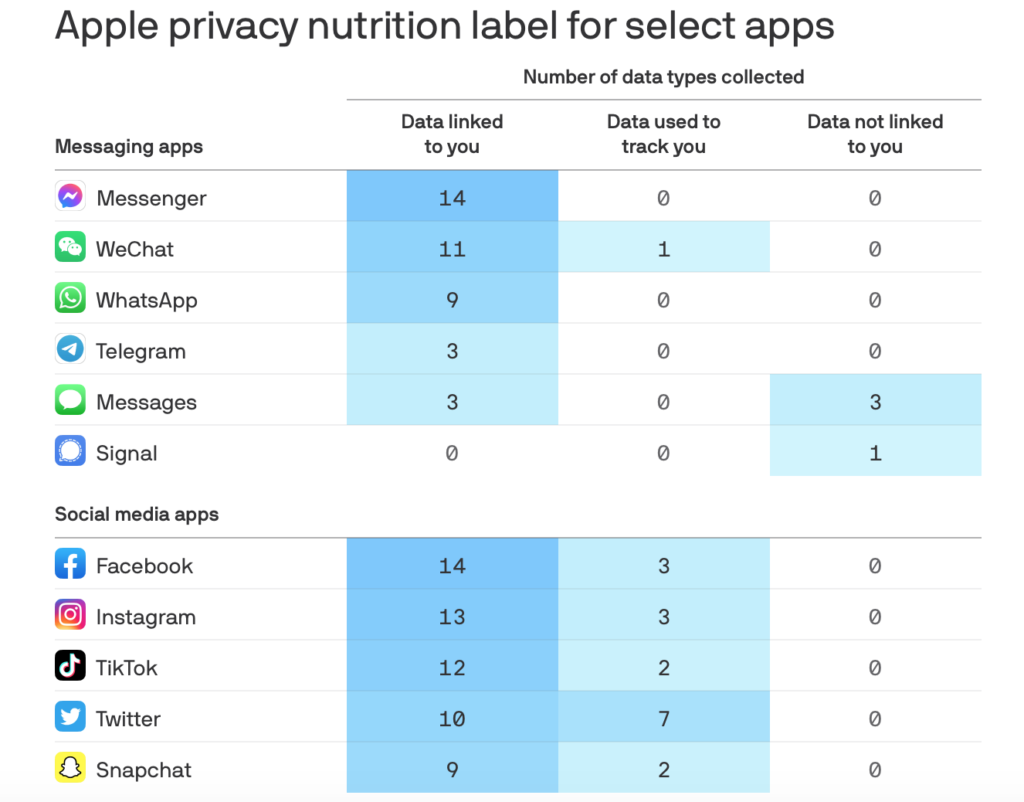
- "Data linked to you" is data that is tied to a users' identity via information from their device, account on an app, and other sources.
- "Data used to track you" is data that links user or device data collected from an app with user or device data collected from other companies’ apps or websites for the purpose of targeted advertising or ad measurement. It could also refer to sharing user or device data with data brokers.
- "Data not linked to you" is data that cannot be linked to the user in any identifying way.
Between the lines: It's helpful to know the number of data types an app collects from you, but that doesn't give you any insight into the actual volume of data the app may be collecting.
Deloitte: Augmented and virtual reality set to grow in 2021
Growth factors
Though virtual and augmented reality’s future is uncertain, the report highlights some findings that point toward greater adoption in the future:
- Cheaper high-quality VR headsets are expected to be released that cost under $1,000, which the report calls the magic point.
- Hard numbers on some enterprise programs are showing an average 32 percent improvement in productivity.
- Academic research suggests that employees prefer AR to video in work settings. Their problem-solving improves, they make fewer errors, and they perceive it as more efficient than a regular video call.
- AR training yields a 75 percent retention rate, higher than almost any other form of training. Lectures and readings have only a five to ten percent rate for example.
- VR is safer and less risky for training in dangerous environments, such as firefighters.
The Delloitte report is here: https://www2.deloitte.com/content/dam/insights/articles/US93838_TMT_Predictions_2021/DI_2021-TMT-predictions.pdf
See the full story here: https://www.hypergridbusiness.com/2020/12/deloitte-augmented-and-virtual-reality-set-to-grow-in-2021/
Fable Studio unveils two AI-based virtual beings who can talk to you
Fable Studio has announced two new conversational AI virtual beings, or artificial people. Their names are Charlie and Beck, and they will be able to hold conversations as if they were real people.
The new characters are a blend of storytelling and artificial intelligence, a marriage that Fable is pioneering in the belief that virtual beings will become a huge market as people seek companionship and entertainment during the tough climate of the pandemic.

...virtual beings companies — from Genies to AI Foundation — have raised more than $320 million.
And now Lucy is being joined by Charlie and Beck. You can sign up to make friends with them at fable-studio.com. The characters are powered by the Fable Wizard, an AI tool to bring characters to life through visuals, dialogue, voice, and animation.
Saatchi said that in the six weeks since launching Lucy’s alpha, the company has received interest from seven billion-dollar intellectual property companies to use the Wizard to create virtual beings from their characters. And it has a deal in the works to co-create a virtual being with a well-known influencer.
Beck is a world-class athlete who is scheduled to go to the Tokyo Olympics 2021 to represent Canada on the rowing team.
Charlie is more of an introvert. She is a French musician and poet living in Paris and finding her voice. She studied art history.
“We haven’t had anything negative,” Saatchi said. “If you’re doing anything inappropriate, Lucy won’t respond or she might disconnect. But this is such kind of powerful technology, and has such powerful psychological implications for people that we need to build up trust.”
See the full story here: https://venturebeat.com/2020/12/18/fable-studio-unveils-two-ai-based-virtual-beings-who-can-talk-to-you/
Cai Guo-Qiang’s VR fireworks bring together advanced technology and traditional craft
And what makes Sleepwalking in the Forbidden City truly unique is the way it was created. We might mistakenly assume that Cai relied on 3D animation software, which these days can create images that are virtually indistinguishable from reality. In fact he wanted to avoid the kind of computer-generated effects associated with Hollywood movies, believing that they lacked in ‘warmth’ and ‘animalistic energy’. So he commissioned the artwork’s components in real life and went about filming them, bringing an analogue dimension to what is often a purely digital medium.

Craftsmen from his hometown of Quanzhou, where Cai had launched his career-defining Sky Ladder five years ago, spent five months painstakingly creating a model of the Forbidden City in alabaster. What we see through our VR headsets is in fact an intricate 3D scan of the model, with its handcrafted textures, rather than a mere rendering. (The model has been included in the Palace Museum exhibition to clue viewers into the physicality of the production process). ‘I believe that for certain works, I shouldn’t use the cleverest way [of making],’ explains Cai.
See the full story https://www.wallpaper.com/art/cai-guo-qiang-virtual-reality-fireworks-forbidden-city
Verizon Bets on Virtual Reality With Entain Gambling Partnership
Verizon Media has formed a global tech partnership with Entain, the gambling operator formerly known as GVC Holdings, to innovate the next generation of sport betting products, including a combination of gambling and virtual reality.
The two companies say they’ll work together to build a VR platform that integrates live sports with layers of data and gambling. The goal is to create an immersive experience where sports fans can view games, check stats, place wagers and socialize, all within the same platform.
The gambling will take place through Entain’s brands, which include bwin, Ladbrokes, Coral, PartyPoker and BetMGM, a joint venture with MGM Resorts. Terms of the partnership were not disclosed.

See the full story here: https://sports.yahoo.com/verizon-bets-virtual-reality-entain-115500913.htmlhttps://sports.yahoo.com/verizon-bets-virtual-reality-entain-115500913.html
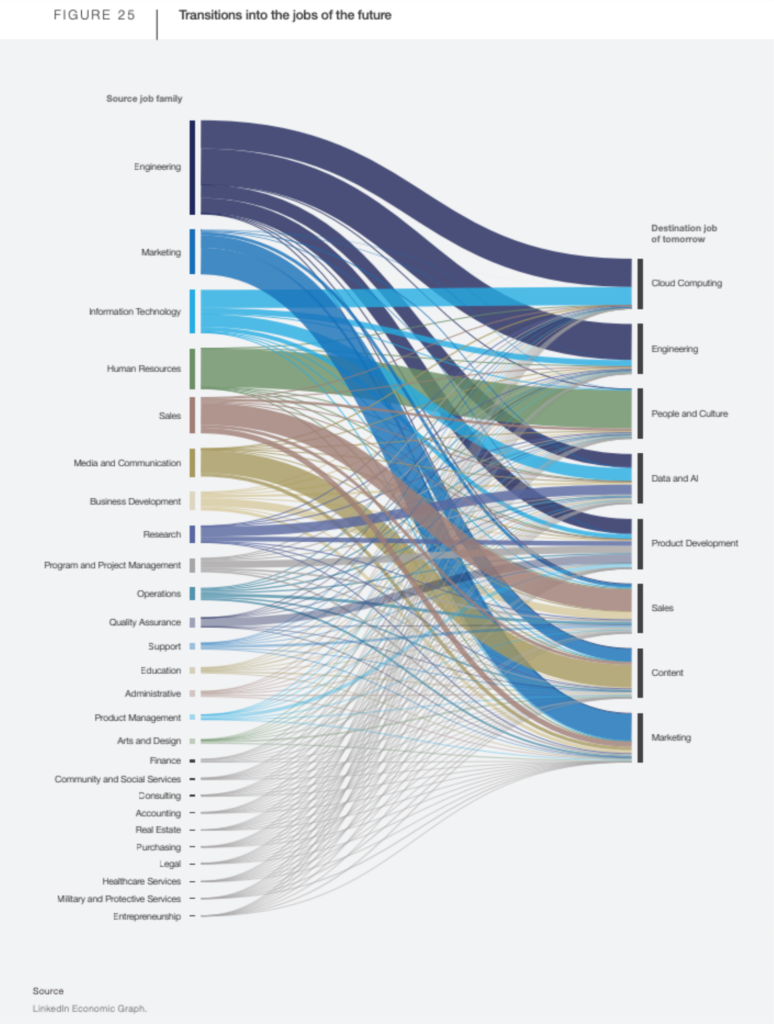
A Data-Driven Guide to Whether a Machine Will Be Doing Your Job By 2025
Humans and machines will clock the same work hours by 2025 (and other startling findings from the World Economic Forum’s ‘Future of Jobs 2020’ report).
See the full story here: https://www.vice.com/en/article/88a575/a-data-driven-guide-to-whether-a-machine-will-be-doing-your-job-by-2025?utm_source=reddit.com&fbclid=IwAR1Ddfcrt0ayDjpvGtq3jez1iO9M9kTILxp4NyeEIi1OfPEmCXIoKpsQBts