Chinese military using virtual reality to boost their combat readiness
- Training forms part of PLA’s plans to switch from a Russian model to American-style methods
- New recruits using VR for parachuting training because youngsters are more receptive to the technology
See the full story here: https://www.scmp.com/news/china/military/article/3113922/chinese-military-using-virtual-reality-boost-their-combat

Australia’s first ‘live’ 3D virtual reality streaming platform brings the opera to residents
They will experience a 60-minute live VR opera recital, staring Melba Opera Trust alumni Stacey Alleaume, Nathan Lay, Michael Petruccelli, internationally-renowned pianist Amir Farid, and hosted by the host of the ABC’s The Opera Show Mairi Nicolson.

See the full story here: https://insideageing.com.au/australias-first-live-3d-virtual-reality-streaming-platform-brings-the-opera-to-residents/
‘Namoo’: Baobab Studios Reveals New Virtual Reality Film From ‘Heart’ Director Erick Oh

Baobab Studios has announced a new virtual reality experience film directed and written by Heart and How to Eat Your Apple director Erick Oh. Namoo, which means “tree” in Korean, is a virtual reality narrative that features hand-painted props, characters and environments and will come to Oculus platforms in 2021.
Created in Facebook’s VR animation tool, Quill, Namoo is a narrative poem brought to life via VR film that celebrates a grandfather’s passing and follows the journey of a budding artist – and his tree of life– from start to end.
Tech Giants Face New Rules in Europe, Backed by Huge Fines
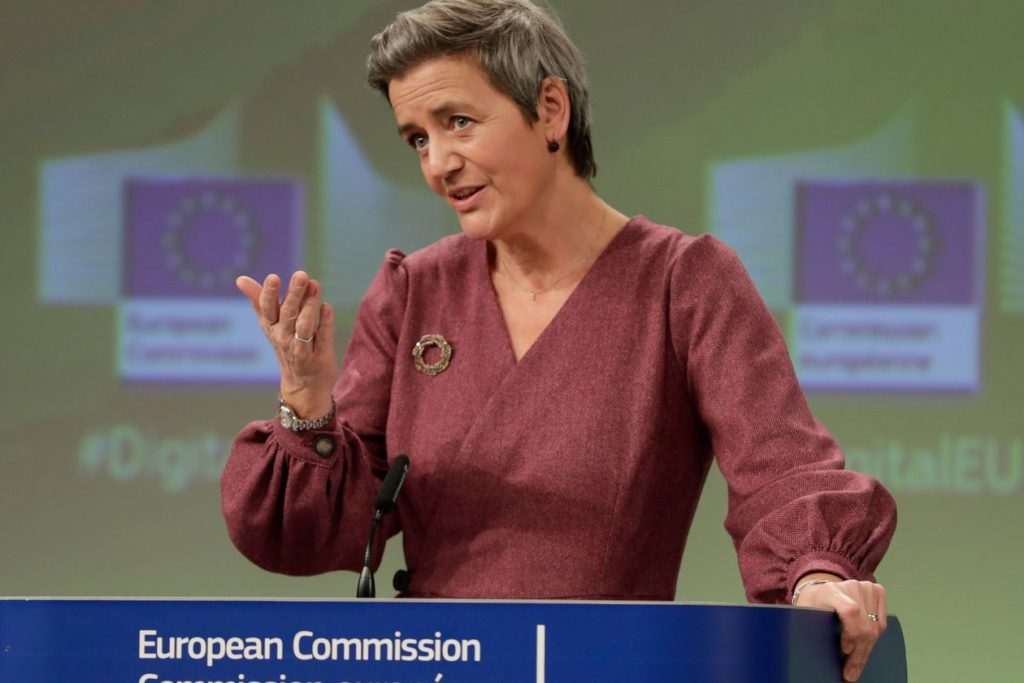
European officials want new powers to oversee internal workings at large technology companies such as Facebook Inc., FB -0.25% backed by threats of multibillion-dollar fines, as they seek to expand their role as global tech enforcers.
The European Union’s executive arm proposed two bills Tuesday—one focused on illegal content, the other on anticompetitive behavior—that would empower regulators in some cases to levy fines of up to 6% or 10% of annual world-wide revenue, or break up big tech companies to stop certain competitive abuses.
The bills don’t mention any specific company but, as drafted, one or both would likely apply to several large U.S. tech companies includingAlphabet Inc.’s GOOG +0.29% Google, Amazon.com Inc. AMZN +0.13%Apple Inc. and Facebook.
The EU’s pair of proposals will now begin months or years of haggling over their scope and details, similar to the four years of debate before the EU passed its privacy law, the General Data Protection Regulation, in 2016. Each bill must be approved by both the European Council, representing the bloc’s 27 national governments, and the directly elected European Parliament to become law.
“We hope the future negotiations will seek to make the EU a leader in digital innovation, not just in digital regulation,” said Christian Borggreen, vice president and head of the Brussels office at the Computer & Communications Industry Association, which represents companies including Amazon, Facebook and Google.
“We will never say that we believe that this company or that company is too big,” said Thierry Breton, the European commissioner for the internal market said Tuesday. “But we will say that the bigger they are, the more obligations they have to fulfill.”
See the full story here: https://www.wsj.com/articles/tech-giants-face-new-rules-in-europe-backed-by-huge-fines-11608046500
Netflix explains how it uses AI to sell you on a show
The method relies on transfer learning, where the the parameters learned from a “source task” improve the performance of a “target task.” In this case, the source tasks are simple: what titles are comparable to a Netflix original, and what kind of viewership can the service expect?

For thematic comparisons, Netflix creates a “similarity map” where AI uses a show’s metadata, tags and summaries (“embeddings” in Netflix’s world) help determine links to other titles. Marketers would know which shows and movies to help describe a coming-of-age comedy, for example.
With audience sizes, the service has an AI model that compares the audience sizes of similar work in a given country. If a drama is likely to fare well in Spain, Netflix might not only ramp up marketing in the region but prepare dubs and subtitles earlier.
See the full story here: https://www.engadget.com/netflix-explains-ai-for-show-marketing-201524601.html
Australian Teen Taking Over Virtual Model Space With Tech Business Klubb Visuals

Lucas Klubb is a sixteen-year-old creative from Melbourne, revolutionising the technology industry through ethical and sustainable 3D virtual models. Lucas founded Klubb Visuals in 2019, a virtual model agency with a focus on diversity and sustainability for marketing and tech-based use. Such avatars are created in a 3D workspace and are completely virtual. The avatars are incredibly realistic, using various tools and techniques to create a life-like effect.
Two of Klubb's six avatars, Candice and Bambi, have already made strides in the fashion industry, cat-walking for Mercedes-Benz Fashion Week Russia in June 2020. Candice and Bambi later featured in Vogue Italia, Harper’s Bazaar Vietnam, Elle China and Elle Portugal.
"I want to create a positive change for sustainability in tech and utilise virtual beings to create an ideal and healthy work environment. There has been a need for virtual models now more than ever due to the global virus, business has significantly increased and I'm glad that I can provide a safe alternative." Founder of Klubb Visuals states. The brand has an emphasis on breaking the cycle of exploitation for conventional models. This includes low wages, extended and unpaid hours, unrealistic expectations and a culture of body shaming. By using virtual models many of these problems are resolved.
See the full story here: https://prwire.com.au/print/australian-teen-taking-over-virtual-model-space-with-tech-business-klubb-visuals