NexTech AR Solutions, a provider of augmented reality (AR) for eCommerce, AR learning applications, AR-enhanced video conferencing and virtual events, has announced that Ryerson University, a public research university based in Toronto, Canada with over 46,000 students, has chosen NexTech AR to transform its 2020 Graduation taking place; November 17, 2020, into a completely virtual experience using augmented reality.
Ryerson University has previously partnered with NexTech to launch RALE – the ‘Ryerson Augmented Learning Experience’ platform – based on NexTech’s InfernoAR platform. According to NexTech, due to a very positive reaction of students and faculty to the AR labs, the contract has been expanded by 50% from 20 AR experiences to 30.
Massachusetts voters approved a measure requiring car manufacturers to let people access vehicle data for repairs. Question 1 amends a landmark 2012 “right to repair” law in the state. After it’s adopted, manufacturers will have until car model year 2022 to install a standard open data platform. The platform will let vehicle owners and independent mechanics access telematics, wirelessly transmitted data that is typically sent directly to a remote server.
Right to repair advocates hailed the measure — which passed with 75 percent approval — as a victory.
Google announced it has developed URL2Video, an AI-enabled system that automatically converts webpages into short videos by extracting text and images. The system also harvests design styles such as colors, fonts, graphics and layouts from HTML sources and organizes all the elements into a sequence of shots that looks and feels similar to the original webpage. Google is targeting businesses with websites for their products and services, enabling them to easily create marketing videos out of existing resources.
To keep the video concise, the system “presents only dominant elements from a page, such as a headline and a few multimedia assets, and constrains the duration of elements.” URL2Video “transfers the layout of elements into the video’s aspect ratio and applies the style choices including fonts and colors, adjusting the presentation timing of assets and rendering the content into an MPEG-4 video.”
Most of these systems look at data from social media and then use sentiment analysis—which categorizes the emotions expressed in a text—to figure out whether a particular post is in favor or against a certain candidate. The systems then try to find a correlation between the quantity and quality of these expressions and voting patterns.
Studies have shown that A.I. systems designed in this way can predict election outcomes, sometimes more accurately than polls. In 2016, several A.I. systems based on social media analysis accurately forecast Donald Trump’s victory over Hillary Clinton, even though most poll-based forecasts put Clinton in the White House.
But such systems aren’t infallible. The same A.I. software that worked well for India and Pakistan, for instance, failed to accurately forecast an election in Malaysia.
So what are such systems saying about today’s vote? A system designed by a company called KCore Analytics forecasts that Biden will win the popular vote handily, but that his Electoral College margin will be razor-thin.
Similarly, the Italian-based A.I. company Expert.AI saw Biden in the lead, but only by a few percentage points—a much smaller margin than the seven-point lead Biden has in an average of national polls.
But Polly Pollster, an A.I. system created by Advanced Symbolics that correctly forecast both the 2016 U.S. presidential election and the 2019 Canadian elections, predicts that Biden will win easily, with Trump having only about an 8% chance of pulling off an upset. This forecast is similar to the non-A.I. one based on combining various state-level polls that is put together by FiveThirtyEight. It predicts that Biden has a 90% chance of winning.
These systems work in different ways. One system used deep learning to successfully predict the Indian election results, categorizing sentiment and then feeding those results into another neural network that correlates that sentiment with an election result.
Nathan Benaich, founder and general partner of boutique VC firm Air Street Capital, has raised $17 million from investors including Twitter and Google’s head of AI.
The money will be used to back around 25 start-ups in Europe and the U.S. that have AI at their core.
Benaich has straddled the worlds of venture capital and artificial intelligence for almost a decade. Unlike many VCs, he is known for having a firm grasp on the latest developments in AI.
The move, unveiled Tuesday by Canadian officials, would also order streaming services such as Netflix Inc., Amazon.com Inc.’s Prime Video, Walt Disney Co. ’s Disney+, and Spotify Technology SA to meet certain Canadian-content requirements, such as more programming to serve the country’s francophone and indigenous populations.
Officials said the changes are meant to address a regulatory imbalance, as streaming services from abroad are making inroads in the Canadian economy at the expense of the domestic cultural industry. Under the proposed revamp, online-streaming services would be defined as broadcasters under Canadian law, and thereby subject to the same rules as legacy domestic broadcasters.
Under Canada’s regulatory framework, the broadcasting industry must contribute a chunk of its revenue to fund the Canadian production of TV shows, movies and music. In 2018, or the most recent annual figures available, Canada’s broadcasters contributed roughly 20% of revenue to finance Canadian programming. Based on their projections of revenue from streaming services, officials expect Netflix and the others to contribute at least C$1 billion toward financing Canadian programming, starting in 2023.
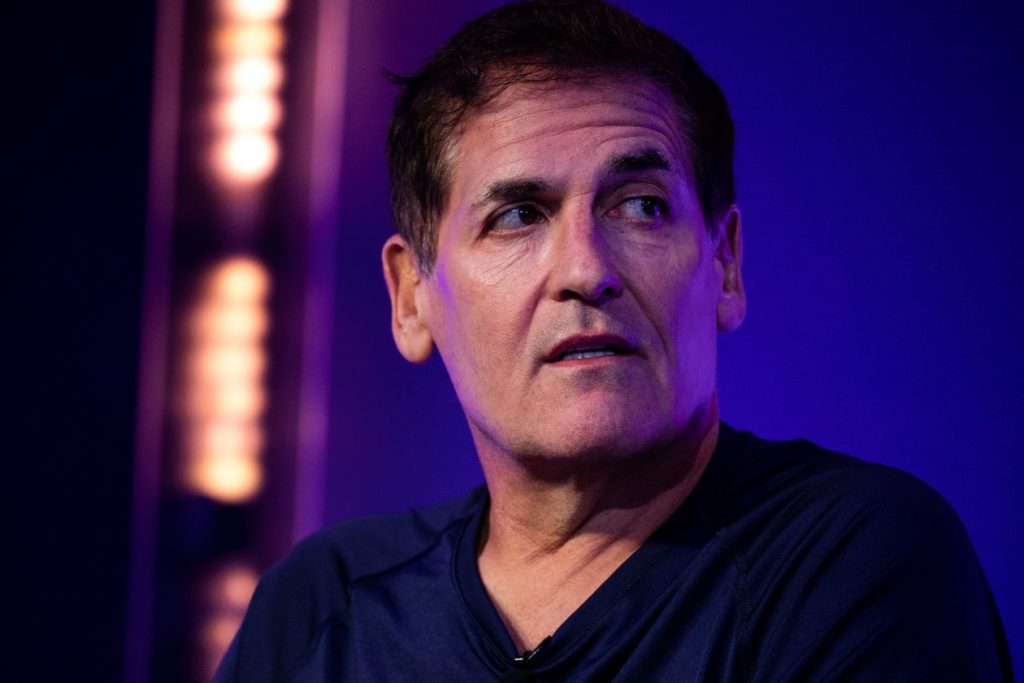
Mark Cuban has committed $2 million to expand a program he founded that aims to teach artificial-intelligence skills at no cost to high school students in low-income communities across the country.
“We don’t recognize how much talent is there,” said Mr. Cuban, who lives in Dallas. “One of my goals is to really go out and find the superstars. There are so many there that are under-appreciated and don’t have access to resources.”
Mr. Cuban’s funding will be spent on resources to educate hundreds of students in AI over the next few years, with the goal of teaching 1,000 students a year from 2023. “We’ll test it, build a curriculum, evolve it and iterate it as many times as we have to. This is important, and I’ll keep funding it,” Mr. Cuban said.
He told students he’s learned more about AI through tutorials from Coursera, an organization that offers online computer science classes, and Amazon.com Inc.’s cloud computing division, Amazon Web Services. Branches of AI he has studied include reinforcement learning, generative adversarial networks and machine learning.
“The job of the future may well be [that of] a philosopher who understands technology, what it means to our human identity, and what it means for the kind of society we would like to see,” he noted.
As we are becoming more aware, we are moving into a society where people are being told by algorithms what their taste is, and, without questioning it too much, most people comply easily. Given these circumstances, it does not seem to be a wild fantasy anymore that AI may be able to take a leadership position, which is why I wanted to write the book.
The book is not only about whether AI will replace leaders; I also point out that humans have certain unique qualities that technology will never have. It is difficult to put a soul into a machine.
We are not paying enough attention to training our leaders – our business leaders, our political leaders, and our societal leaders. We need good leadership education. Training starts with our children. [It is about] how we train them to appreciate creativity, the ability to work together with others, take perspectives from each other, and learn a certain kind of responsibility that makes our society.
AIB: How can we move towards a future where algorithms may not lead but still be at the service of humanity?
De Cremer: First, all managers and leaders will have to understand what AI is. They must understand AI’s potential and its limits — where humans must jump in and take responsibility. Humanity is important. One of the concerns we have today is that machines are not reducing inequality but enhancing it. For example, we all know that AI, in order to learn, needs data. But is data widely available to everyone or only a select few? Well, if we look at the usual suspects — Amazon, Facebook, Apple and so forth — we see that they own most of the data. They applied a business model where the customer became the product itself. Our data are valuable to them. As a result, these companies can run more sophisticated experiments, which are needed to improve our AI – which means that technology is also in the hands of a few. Democracy of data does not exist today. Given the fact that one important future direction in AI research is to make AI more powerful in terms of processing and predicting, obviously a certain fear exists that if we do not manage AI well, and we don’t think about it in terms of [whether] it is good for society as a whole, we may run into risks. Our future must be one where everyone can be tech-savvy but not one that eliminates our concerns and reflections on human identity. That is the kind of education I would like to see.