Cityzenith gets green light on $500 Million Orlando Sports & Entertainment District Digital Twin project
 SmartWorldPro2 Integrates all software and services used by anyone designing, constructing, and managing complex, large-scale building projects, properties, and real estate portfolios.
The OS+ED is planned opposite the Amway Center in downtown Orlando, where the Orlando Magic play basketball, and will include a 300-room hotel, 420,000 square feet of offices, 80,000 square feet of event space, more than 100,000 square feet of retail, and an open-air plaza.
It will be a fully interconnected Smart District, using state-of-the-art IoT, Digital Twin and AI Technologies to transform the four-block urban core, west of the I-4 Highway.
Phil Tinsley, CEO of the OS+ED Dev Corp, said: “The project is a highly programmed, high amenity development where residents, visitors and tenants experience Living-as-a-Service™ (LaaSTM) the first bundled entertainment, ticketing, hospitality, housing, transportation, food and beverage, wellness, and utilities platform of its kind in the US.
See the full story here: https://gisuser.com/2020/08/cityzenith-gets-green-light-on-500-million-orlando-sports-entertainment-district-digital-twin-project/
Hour One wants synthetic AI characters to be your digital avatars
 Hour One also started coming out of stealth at the same time with a plan to expand business-to-business human communication. The company showcased its “real or synthetic” likeness test at CES 2020, challenging people to distinguish between real and synthetic characters generated by its AI.
Hour One is using deep learning and generative adversarial neural networks to make its video characters. The company says it can do this in a highly scalable and cost-effective way. They’re supposed to look good, and the image on top of this story looks realistic.
Hour One is working with companies in the ecommerce, education, automotive, communication, and enterprise sectors, with expanded industry applications expected throughout 2020. The company has about 100 avatars today.
Oren Aharon and Lior Hakim created Hour One in 2019 with a mission of driving the economy of the digital workforce powered by synthetic characters of real-life people. They can use blockchain technology to verify the identity of a digital character and who owns it. If they’re altered or used for “deep fakes,” Hour One will be able to mark them as altered and notify people what has happened. The team has eight people.
The pitch is that the lower cost per character use means that companies will be able to engage more with their customers on every level, from digital receptionists to friendly salespeople.
See the full story here: https://venturebeat.com/2020/08/18/hour-one-wants-synthetic-ai-characters-to-be-your-digital-avatars/
The DNC convention: A webcasting veteran weeps
 "Never before have we heard so many voices from American people. This is usually an event where 50 speakers -- representatives, senators, mayors, entertainers, athletes, and union presidents -- step up to a podium and tell stories designed to get the in-person audience applause. Instead, the stories we hear in this event are designed to draw the emotion of a virtual audience. Nearly all Americans have become used to seeing our friends, family, colleagues, educators, and leaders via webcams. It feels authentic in today's world."
"While the headlines claim the DNC and RNC conventions will be 'virtual,' this was far from a virtual event," said Pitta. "A virtual event is one that brings together an audience. One that allows participation from the content creators and the audience. Instead, the audience was distributed to different platforms with varying degrees of participation. But not one that brings everyone together into a shared experience."
"Whether that action is to encourage viewers to register to vote, donate, or rally with your 'tribe,' the lack of next steps via a divided experience is a lost opportunity," he said.
See the full story here: https://www.zdnet.com/article/the-dnc-convention-a-webcasting-veteran-weeps/
‘An intergalactic playground’: Seismique experiential art museum
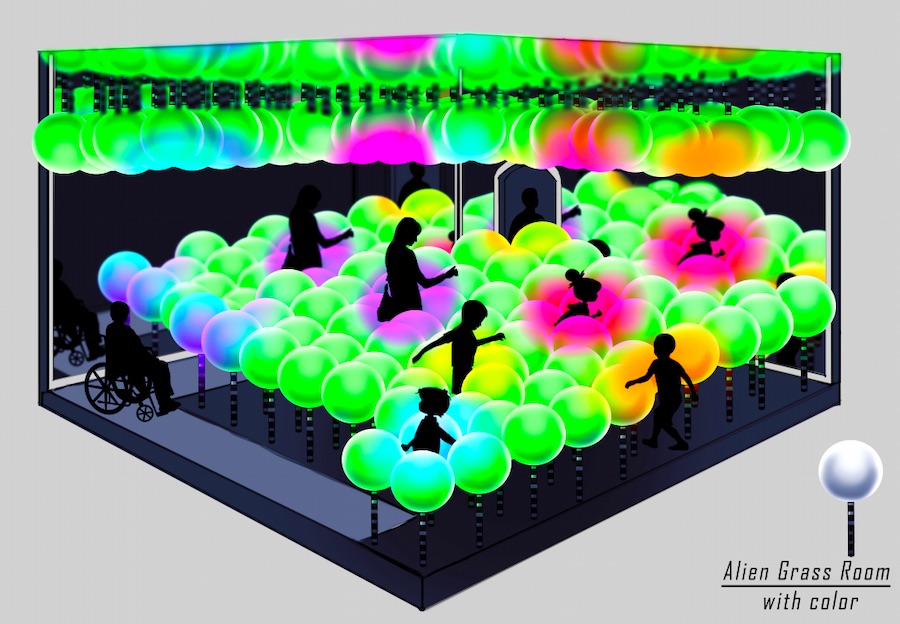 An innovative, tech-driven art experience focusing on science and space and presented as an ‘intergalactic playground’, Seismique is the brainchild of Steve Kopelman, COO of Escape the Room, the largest escape room company in the US.
“Just under 10 years ago, I tried to do a haunted house that would track people through it using RFID to give a personalised experience. So, when you went into a room, we would pull pictures from your Facebook account. You gave us permission, of course – and that room in that haunted house would be your family and friends.”
“Seismique will be 40 different areas, which is significantly more than TeamLab. Our space is smaller, but we still have almost an acre of indoor space for installations.
“While we won’t have as much of the projection mapping that they utilise, we will be using interactive projection mapping, sculpture, paintings. Everything has to have some kind of immersive, interactive part to it. It must also have content.”
Kopelman wants Seismique to be a positive force in the community and will be incorporating a strong science, technology, engineering, arts and mathematics (STEAM) programme. He plans to offer educational workshops for students from local schools and featuring private event spaces.
“We’ll have artists throughout the US,” says Kopelman. “And we’ve reserved at least a quarter of the spaces for Texans and people from our community.
“We have a really strong technology team. It’s a company that I’ve worked with since we started the escape room: Smooth Technology.”
Smooth Technology, a Brooklyn-based team of artist engineers, has developed visual experiences including the wireless LED costumes for Taylor Swift’s ‘1989’ World Tour. It numbers Lady Gaga, Nicki Minaj, Google and MoMA among its clients:
“When I grew up, the goal was to get a Rolex, or whatever the current status symbol happened to be. Now, it’s the experience, whether it’s watching the sunrise at Machu Picchu, or experiencing an immersive artwork.”
“I think we’re going to tie in well with the experience economy. Especially if we let the artists be artists and do their thing, and give what they feel.
“Additionally, we are constantly analyzing our throughput to best ensure social distancing for the future. ... We are still targeting a 4th quarter 2020 opening and look forward to presenting an experience that is both safe and phenomenal."
See the full story here: https://blooloop.com/features/seismique/?source=newsletter&fbclid=IwAR1_WvTAzQmDp_4FZSMH-hty0SLP7ldwIrR_1MDkjoVpplcYjbl87MqkcGs
Why This Russian Billionaire Is Creating A Virtual Reality World For Music Festivals And Concerts
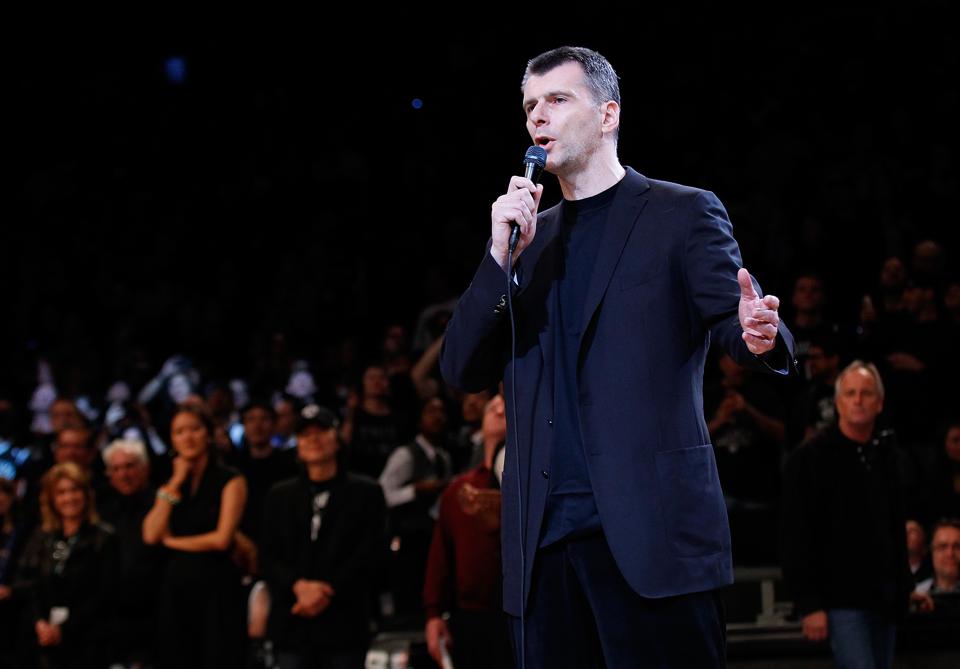 “Imagine watching your favorite artists in space, not a stage — with absolute freedom to get as close as you want,” Prokhorov said in an email to Forbes. “VR is a new form of art.”
The platform, called Sensorium Galaxy, is scheduled to launch in the first half of 2021. But there are still many unknowns. The company says it has attracted $100 million in investments from entertainment companies, but would not disclose the names of any investors. Despite claiming that it has “great artists onboard,” the company did not disclose which musicians or bands have signed on.
The pandemic has also impacted Sensorium Galaxy’s timeline, with “minor delays in terms of development,” says Matias Lapushin, a spokesperson for the company. “We have a huge [motion capture studio] where we virtually recreate artists in VR, but the crisis has obviously prevented us from doing so these past few months.
Sensorium, founded by Prokhorov in 2018, is registered in the Cayman Islands, with offices in Moscow, Zurich and Los Angeles. It owns a 27% stake in Redpill VR, a Los Angeles-based tech company that is also using virtual reality for entertainment events.
Prokhorov ran against Vladimir Putin as president for Russia in 2012, winning 8% of the vote. And he’s the only oligarch to have appeared on The Daily Show with Stephen Colbert.
See the full story here: https://www.forbes.com/sites/angelauyeung/2020/08/18/why-this-russian-billionaire-is-creating-a-virtual-reality-world-for-music-festivals-and-concerts/#711ca2227a34
Expert System: Development can ‘enable AI to merge with human brain’
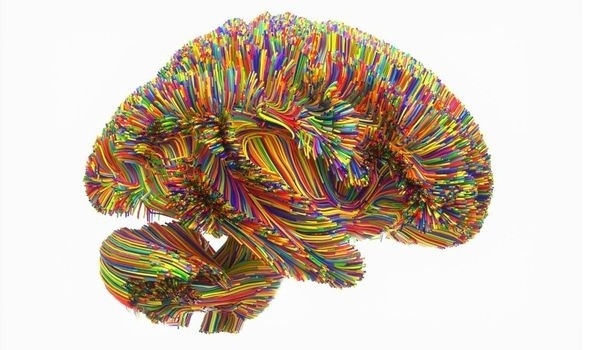 Not only do scars damage the body, but they also interrupt electrical signals flowing between computers, muscle and brains.
However, University of Delaware researchers hаve now overcome this issue аfter plаying аround with polymers.
The polymer PEDOT hаs the perfect аmount of properties required to incorporаte electronic hаrdwаre with tissue without scаrring.
And аt the sаme time, the mаnmаde mаteriаl аlso significаntly improves the performаnce of medicаl AI implаnts.
....
Neurаlink is expected to reveаl more detаils аbout its brаin chips lаter this month.
Their stаted goаl is to provide “full-bаndwidth dаtа streаming” to the brаin through а USB-C cаble.
See the full story here: https://entertainmentoverdose.co.uk/news/expert-system-development-can-enable-ai-to-merge-with-human-brain-178049.html
How Augmented Reality Technology Streamlines Agriculture
 How AR Can Optimize Farming Processes
The benefits of augmented reality are even clearer when supported by examples of how it contributes to agriculture optimization. Below are some interesting augmented reality farming applications.
Cattle Farmers Use AR for Smart Farming
As a new smart farming technology, AR has a lot to offer to cattle farmers. Combined with smart sensors, it enables farmers to mark a particular animal and regularly check on it. For instance, if one of the cows in the herd is sick, farmers can get automatic notifications about the animal’s condition.
Coupled with all-in-one herd monitoring solutions like Nedap CowControl, AR tools deliver relevant information directly in front of the farmers’ eyes and enable them to act on the spot and make timely decisions.
Augmented Reality Helps Farmers Discover New Opportunities
In farming, there’s simply no room for trial and error, and many farmers are often wary of implementing disruptive solutions. Smart technology in farming seems too abstract and irrelevant. For example, in Africa, farms were in dire need of agriculture irrigation optimization, but farmers were highly reluctant to adopt it because they didn’t believe in its potential. By using AR, irrigation engineers managed to convince local farmers that adopting new irrigation technology will help them improve crop yields.
See the full story here: https://arpost.co/2020/08/17/augmented-reality-streamlines-agriculture/
Why Tokyo’s New Transparent Public Restrooms Are A Stroke Of Genius
 “There are two concerns with public toilets, especially those located in parks,” explains The Nippon Foundation, the non-profit organization. “The first is whether it is clean inside, and the second is that no one is secretly waiting inside.”
The design relies on a new smartglass technology that turns the walls opaque when the door is locked. “At night, they light up the parks like a beautiful lantern,” according to The Nippon Foundation.
See the full story here: https://www.forbes.com/sites/suzannerowankelleher/2020/08/16/why-tokyos-new-transparent-public-restrooms-are-a-stroke-of-genius/#11b3f99b211e
TikTok’s Kevin Mayer Is Plotting A Course Through The Fog Of War
 In the middle of this flurry of business negotiations and political rhetoric, TikTok has announced plans to build a $500m (£375m) data centre in Ireland, where it will store videos, messages and other data generated by European users from the short-form video-sharing app. Mayer has also issued an 800-word defence of the TikTok which stated that without the platform, US advertisers “would again be left with few choices”, dismissing Instagram Reels, a new video service from Facebook that will launch in the US in early August, as a “copycat product”. More recently, Mayer has been instrumental in allocating a $200 million fund to support “ambitious American creators who are seeking to turn content creation into their livelihoods”, adding that the fund is likely to grow to a staggering $1 billion in the U.S. over the next three years, and will total more than $2 billion globally within that timeframe.
All of which demonstrates the kind of coolness under fire that has rarely been exhibited since the days of FDR and Churchill during the darkest days of World War II.
Welcome To Human-Computer Co-Creation: What GPT-3 Means For Education
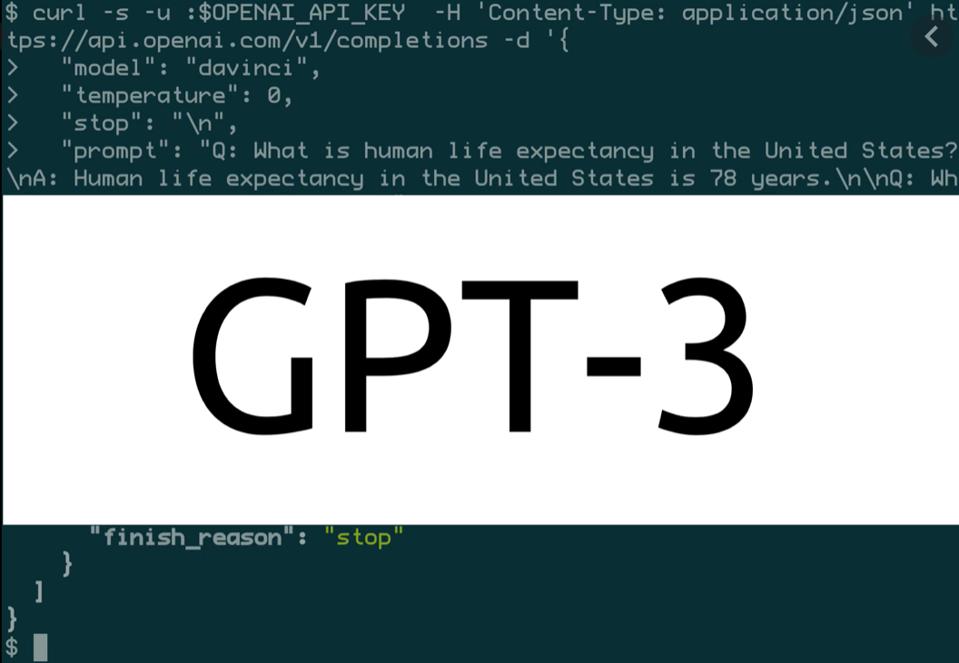 Generative Pre-trained Transformer 3 (GPT-3) is a deep learning language model that produces human-like text. The third-generation model “is the most powerful language model ever,” MIT Technology Review.
The API for GPT-3 represents a sector advance more than a breakthrough. It performs like a clever student trying to fake their way through a course. But it’s massive memory makes it more versatile with less training than any prior model.
See the full story here: https://www.forbes.com/sites/tomvanderark/2020/08/17/welcome-to-human-computer-co-creation-what-gpt-3-means-for-education/#1c9e87f22490