The Future of Entertainment: How Technological Advances in Entertainment Will Change Everything
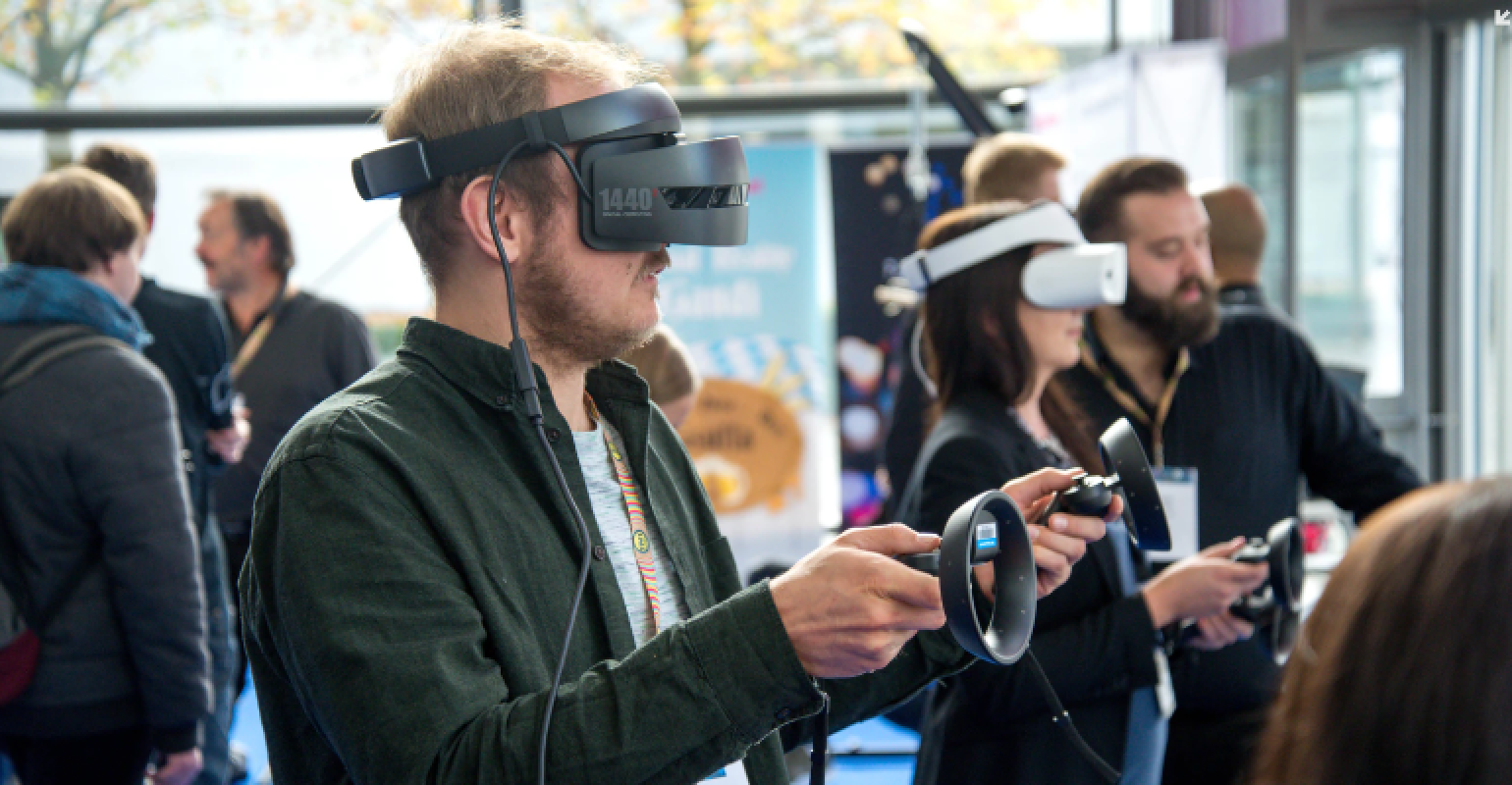 Leslie Shannon, ecosystem and trend scouting head, Nokia, discussed a recent experience in Wellington, New Zealand, where she saw the city council begin to use a digital twin to render 3D model of the city they built ten years ago to mark what was going on within the city.
“I think we’ll really start seeing a union of the real and the virtual. [Wellington] started using that as the central point where all the different departments of the city council put their information into the digital twin,” reports Shannon. “Wellington is a city that is prone to earthquakes and flooding, so they were able to see ‘okay, if the water rises due to global warming, what parts of the city will be hit first?
“When we’re thinking tech, we don’t only [think about] technology,” adds Hackl. “We’re think also about the behavioral, the economic and the societal impacts that this technology is going to have.”
See the full story here: https://www.licenseglobal.com/analysis/future-entertainment-how-technological-advances-entertainment-will-change-everything
EON Reality unveils addition of Virtual Reality World Heritage Sites to its AR and VR library
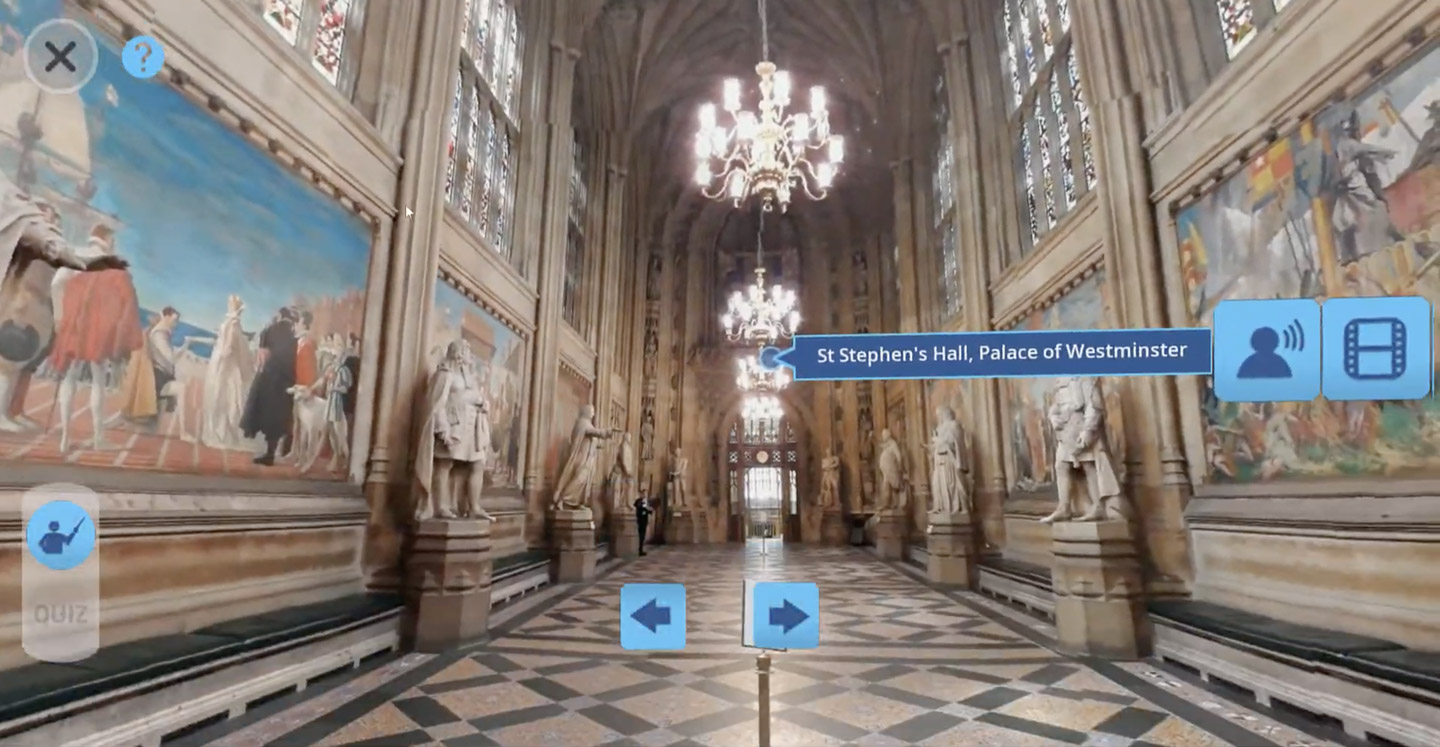 ...a brand new update containing over 1,000 “world heritage sites” using immersive and interactive 360° images and 3D models.
The sites include famous locales past and present, including natural marvels like America’s National Parks and the Swiss Alps, man-made wonders such as the Golden Gate Bridge and the Great Wall of China, and historic locations such as Ancient Babylonia and the Great Pyramid of Giza.
Designed to provide educators and travelers with the ability to virtually visit and experience new places within the AR and VR library from the safety of their own homes, EON Reality states that each of the locations can have information added to them — granting organizations the ability to build pre-made lessons, as well as a blank canvas to create a learning session about a specific topic. The company added that, particularly in a time when international travel is heavily prohibited for much of the world, giving users the opportunity to take field trips and vacations to a new environment in a matter of minutes can offer a valuable experience.
See the full story here: https://www.auganix.org/eon-reality-unveils-addition-of-virtual-reality-world-heritage-sites-to-its-ar-and-vr-library/
Augmented reality startup Mira announces $10M more in funding from Sequoia and others
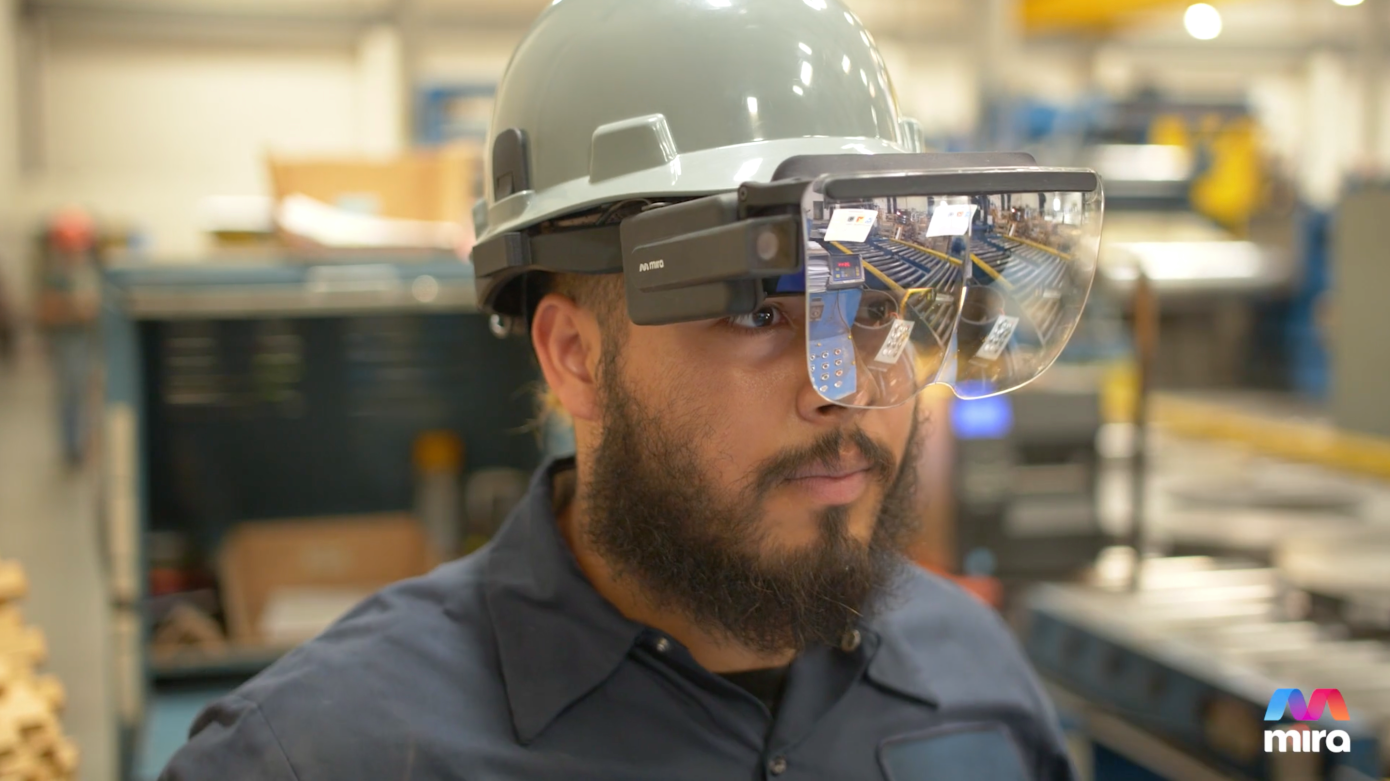 By late-2018, the founders had decided to move their focus solely toward industrial rollouts of their headset.
“As we looked across the consumer landscape, as we looked across the industrial landscape, as we looked across government, it became very clear that where that value-driven use case is ripe today is much more in the industrial landscape,” Mira co-founder and COO Matt Stern told TechCrunch in an interview.
Mira’s device is about as simple as the task requires, integrating a slot-in design for users to pop in an older-generation iPhone and physically connect it to a head-mounted camera that allows workers to scan items and markers. There are a number of advantages to this type of device. It’s cheaper, it’s simpler to operate and it’s easier to integrate into a company’s enterprise device management structure.
See the full story here: https://techcrunch.com/2020/07/23/augmented-reality-startup-mira-announces-10m-more-in-funding-from-sequoia-and-others/
People are using artificial intelligence to help sort out their divorce. Would you?
 An online app called Amica is now using artificial intelligence to help separating couples make parenting arrangements and divide their assets.
A May survey conducted by Relationships Australia found 42 per cent of 739 respondents experienced a negative change in their relationship with their partner under lockdown restrictions.
According to Amica’s website, it “considers legal principles and applies them to your circumstances”.
In other words, the software draws on mass data (collected and embedded by its designers) from similar past cases to make suggestions to users.
Interestingly, it’s not the only tool of this kind in the legal field. There are a range of AI-powered family legal services used in Australia, including Penda and Adieu.
Australia’s family law system is overburdened, resulting in long delays for families in the court system.
Court proceedings are also expensive, and complex family law cases can cost each party more than $200,000.
AI tools such as Amica and Adieu enable couples to resolve problems themselves and avoid the slow and expensive court process.
There are legitimate concerns that parenting and financial suggestions from AI-powered tools may ignore the needs of children, and only reflect the interests of parents.
See the full story here: https://thenewdaily.com.au/entertainment/2020/07/22/artificial-intelligence-divorce/
AES to Hold Conference on Audio for Virtual, Augmented Reality
 The Audio Engineering Society has released preliminary details on the upcoming International Conference on Audio for Virtual and Augmented Reality (AVAR), set to take place in its own online virtual venue, August 17–19. The event will serve as a hub of innovation for the latest research in the fields of spatial audio and technology for virtual, augmented, and mixed reality, with a focus on technical solutions and recommended practices in the field.
Registration for this event, sponsored by Facebook Reality Labs and Valve, and hosted by DigiPen Institute of Technology, starts at just $25 for AES members ($150 for non-members) and will be using AltSpaceVR as the platform to share keynotes, panel discussions, workshops, and more. The use of AltSpaceVR offers the option of attending in standard 2D mode or as an immersive experience, utilizing AR/VR devices such as the HTC Vive, Oculus Quest, Oculus Go, Oculus Rift, Samsung GearVR, or Windows Mixed Reality.
The 2020 AES Conference on Audio for Virtual and Augmented Reality builds upon the AES’s two previous AVAR conferences and will offer a fresh look at audio production for these rapidly growing market segments. This year’s topics will include spatial audio capture, rendering, synthesis over headphones and loudspeakers, binaural applications, Ambisonics, 3D audio mixing and content production, sound design for VR/AR, and more, plus a featured panel discussion with Emily Ridgway of the Valve audio team on August 18 titled “When Worlds Collide: Audio Development of the Valve Index and Half:Life Alyx.” Additionally, two keynote addresses will take place during the conference: “New Audio Realities at Scale” with Varun Nair of Facebook on August 17 and “Empathetic Technology and Embodied User Experience” with Poppy Crum of Dolby on August 19.
See the full story here: https://www.avnetwork.com/news/aes-to-hold-conference-on-audio-for-virtual-augmented-reality
New Augmented Reality Game Lets Players Buy and Sell Real World Properties
PhilNote: this is real-world Monopoly property buying and trading.

Real World properties viewed in AR mode via camera feed.
Walking down the street you notice something has changed. You take out your phone hastily, to check the available properties around you. Yes! There they are! New shares and you're the first one to get them. You don't think twice, cause you know you must have them! It's not the first time when on your way to work you come across such valuable finds. We're all part of this virtual map. With more than 3 billion mobile devices on the planet today, trillions of data trails are left behind unused. Now you can enjoy this mixture of digital and real world in the Landlord GO game.
Landlord Go is a brand new game by Reality - that leverages these digital "footprints" in a fun and exciting way, allowing players to buy, sell, and collect rent on some of the world's most famous buildings and landmarks. With over 1 million players worldwide, it's the first real-world augmented reality game that uses real buildings, real people, and real prices to turn your city into an action-packed strategy game. With more than 92340 players already making deals for virtual ownership of the more than 467 559 in London already, there's no shortage of fierce competition ready for action.
Landlord Go is incredibly accurate, reflecting real-world values of properties using details like distance from the city center and building amenities. By using our own data set combined with NASA satellite scans showing nighttime light emissions, we've created one of the most realistic and data-driven property dealing games ever conceived.
See the full story here: https://www.prnewswire.com/news-releases/new-augmented-reality-game-lets-players-buy-and-sell-real-world-properties-301097529.html
Shiny objects foil robots, but RGB-D holds the key
 Who doesn't love shiny things? Well... robots for one. The same goes for transparent objects.
Rather than relying on expensive new sensor technology or intensive modeling and training via AI, the system instead goes back to basics, relying on a simple color camera.
The CMU researchers built on this observation and developed a color camera system capable of recognizing shapes using color and, crucially, sensing transparent or reflective surfaces.
In the end, it's the end, it's not new sensors, but new strategies to use them that may give robots the powers they need to function in everyday life.
See the full story here: https://www.zdnet.com/article/shiny-objects-foil-robots-but-rgbd-holds-key/
Apple’s Exploring Sci-Fi-Inspired Virtual Touchscreens for AR Glasses
In one solution, Apple would require the user to wear a touch-sensitive device on their fingers. In another solution, the glasses would use a camera to track a person’s fingers as they move. To determine whether a virtual button has been pressed, the technology could use heat to monitor temperature changes in the object that is being pushed. The longer a press, the warmer the object will become.
See the full story here: https://www.idropnews.com/news/apples-exploring-sci-fi-inspired-virtual-touchscreens-for-ar-glasses/139816/