(China) Industrial hubs of the past are becoming technology hubs of the future
[PhilNote: this is state-sponsored marketing, but still interesting.]
The riverside region reflects the city’s early industrial heritage, once encompassing a coal wharf, a cement factory, several giant fuel tanks and an aircraft hangar. Today, it has ambitions to become the “Artificial Intelligence Valley” of Shanghai.
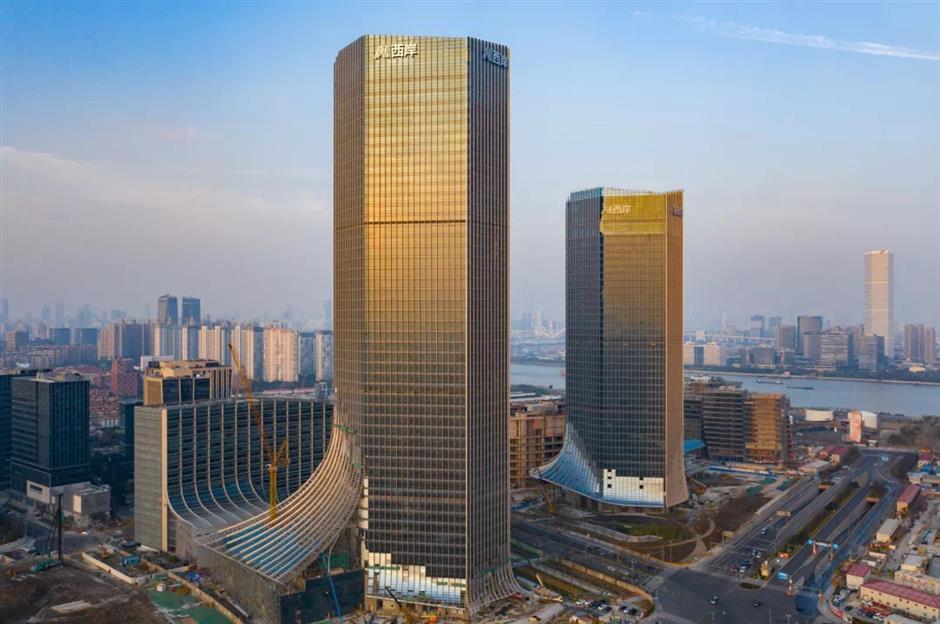 The Shanghai AI Tower, comprising two newly built landmark buildings on the waterfront, has launched its global promotion campaign.
Twenty leading companies in the sector from home and abroad — including Microsoft Research Asia, Huawei and Alibaba, and startups like United Imaging and Yitu — have offices in one of the buildings. The idea is to create a “vertical AI industrial chain” of production, study, research and application.
...
In Putuo District, near the riverside of the Suzhou Creek, the China-Israel Innovation Hub aims to become a testing site for a smarter urban-management system empowered by artificial intelligence.
The innovation park was renovated from Shanghai’s Hero pen factory, a company established in 1931. Such industrial heritage is being incorporated into an AI park jointly operated by the Putuo District government and the Lingang Group.
During the renovation, Internet of Things technology has linked up the park’s lighting, energy, elevator controls and environmental monitoring.
Based on core Welink technology from Tencent, a smart building network platform featuring AI and cloud computing operates and manages the office buildings automatically.
Physicists Must Engage with AI Ethics, Now
 These harmful impacts of AI have occurred, in part, because the rate of innovation has far outpaced the development of legislative oversight and because technology companies have been reluctant to (or have refused to) self-regulate. However, change may be coming. Activists and researchers are increasingly calling for governments to limit or outright ban certain technologies, many countries are developing standards for AI deployment, and technology companies large and small are creating or growing their ethics and fairness teams. Since I started attending AI conferences in 2016, I’ve seen the number of workshops, papers, and conversations around ethics in current AI grow. This year, the Neural Information Processing Systems meeting (NeurIPS)—one of the world’s largest AI research conferences—will require all submissions to include an impact statement discussing “ethical aspects and future societal consequences” and acknowledging potential conflicts of interest.
About half of the pre-conference courses and tutorials planned for this year’s March Meeting of the American Physical Society were focused on AI.
If you’re grappling with AI ethics for the first time (or even if you’ve thought about these issues many times before), I encourage you to start with readings from prominent scholars in the field. Stanford’s Institute for Human-Centered Artificial Intelligence, the AI Now Institute at NYU, Harvard’s Berkman Klein Center, Oxford’s Future of Humanity Institute, and the Alan Turing Institute publish excellent research and host accessible, interdisciplinary conversations and events. If you can attend AI conferences like NeurIPS or the International Conference on Learning Representations (ICLR), participate in sessions on AI ethics, data rights, and interpretability. Learn about ways AI is used in your local community and about the effects it’s having on those around you, particularly on vulnerable populations.
See the full story here: https://physics.aps.org/articles/v13/107
COVID-19 meets Election 2020: the perfect storm for misinformation
 Automated bots, programmed to churn out tweets and retweets, almost certainly are playing a role in spreading coronavirus disinformation, but how much is still not known, West said. Researchers at Carnegie-Mellon University recently estimated that nearly half of Twitter accounts posting about coronavirus may not be actual people. But the group’s research hasn’t been published yet and is being questioned by other experts.
“It’s really hard to determine whether something’s a bot or not,” West said.
Perhaps the most corrosive effect of pervasive misinformation and disinformation is the way it undermines confidence in the very institutions we all rely on, especially during crises, he added. “The thing that scares me the most is that we’re getting to the point where some people don’t trust anything.”
As the election approaches, the pandemic and its human and economic impacts are certain to become even more entwined with politics and other disinformation efforts, Caulfield said. “I think what we’re looking at now makes what we were facing in 2016 look almost quaint,” he said, referring to organized networks intent on creating confusion and swaying the outcome.
With in-person campaigning on hold, political groups are increasingly creating internet sites that often mimic legitimate news sites and conceal their partisan roots, according to NewsGuard, a startup that tracks internet misinformation and identifies the top purveyors.
See the full story here: https://www.seattletimes.com/seattle-news/health/covid-19-meets-election-2020-the-perfect-storm-for-misinformation
Where Do AR and Art Converge?
 John O’Keefe won the Nobel Prize in 2014 in medicine for establishing that the hippocampus in the brain is the situs of BOTH (a) our understanding of space — of place — AND (b) memories. Our relation to our space helps us form memories. When you combine place with genius art — with discovery, surprise, delight — that experience creates the best kind of memories.
...in an upcoming launch with JW Marriott in Anaheim California, we have built 3 steel sculptures and installed them on the West Garden Deck of the hotel. The 3 sculptures represent the 3 stages of the life of a plant — seed, sapling, tree.
Using the dedicated Shimé mobile app on your iPhone, if you point your camera at the sculptures, previously static and rigid steel becomes fluid moving flora.
Chris Nunes is the head of studio at HEAVY.
christo’s floating ‘london mastaba’ sculpture to be recreated in augmented reality
 from today (july 8 2020) visitors to london’s hyde park will be able to experience christo and jeanne-claude‘s final large-scale public artwork in augmented reality. thanks to serpentine galleries and acute art, the late artists’ huge ‘london mastaba‘ sculpture is being made freely available to view this summer via the acute art app. first unveiled in 2018, the ambitious temporary sculpture composed of over 7000 colored barrels marked the artists’ first major public work in the UK.
See the full story here: https://www.designboom.com/art/christo-london-mastaba-sculpture-recreated-in-augmented-reality-07-08-2020/
NuEyes, ThirdEye launch augmented reality glasses
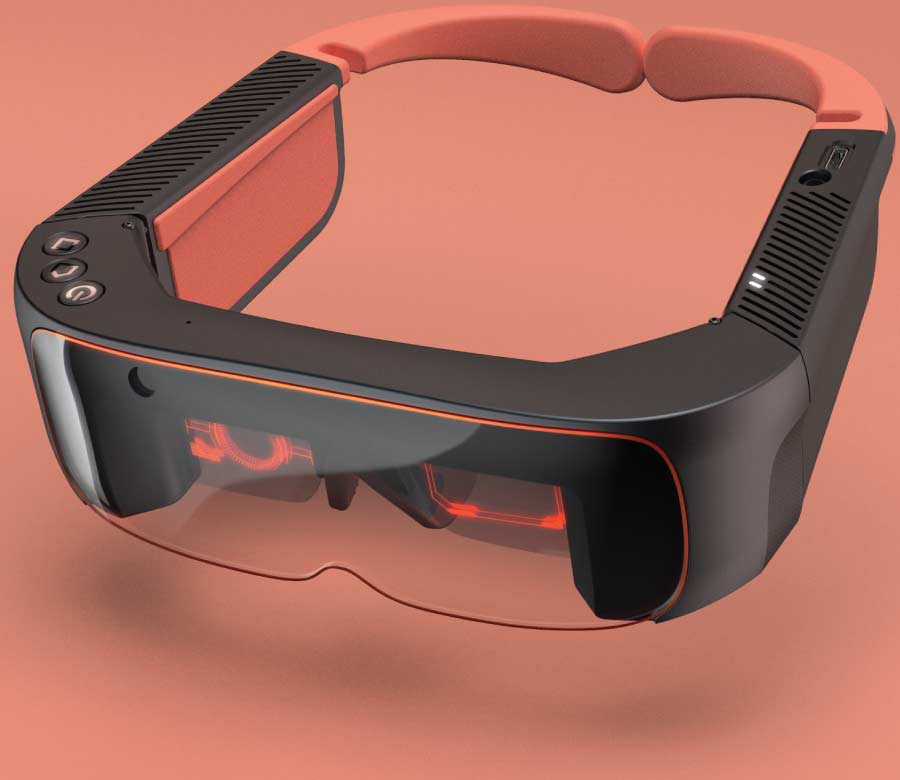 NuEyes has partnered with ThirdEye to introduce the Pro 2 lightweight X2 MR Glasses for patients who have experienced visual impairment uncorrectable by traditional methods.
The product uses augmented reality to help patients’ whose vision cannot be corrected with conventional glasses or surgery due to conditions such as age-related macular degeneration, glaucoma and retinitis pigmentosa. The wearer can control magnification, contrast and optical character recognition, with a touch of a button or through voice command.
See the full story here: https://www.healio.com/news/optometry/20200708/nueyes-thirdeye-launch-ar-glasses
A state-of-the-art, self-supervised framework for video understanding
As an important milestone in our work toward emulating this ability in AI systems, we are sharing a new framework called Generalized Data Transformations. It achieves unprecedented performance in understanding the content of videos — without using labeled training data.
Rather than using a single modality, we learn from the relationships between the sound and images in a video.
Why it matters
To build truly intelligent machines, we must enable them to learn directly from the world without needing explicit guidance every step of the way. Being able to learn from the sights and sounds in the world as they occur, without explicit supervision, is the hallmark of this kind of learning.
Read the full paper:
https://arxiv.org/pdf/2003.04298.pdf
See this full story here: https://ai.facebook.com/blog/a-state-of-the-art-self-supervised-framework-for-video-understanding/