The digital-only event will be held on Zoom from 10:30 a.m. Pacific to 3:30 p.m. on Wednesday. It’s the forum for talks on how to create virtual beings and what they’ll be useful for. The speakers will appear only as virtual beings in the conference, specifically as avatars from Fortnite or Animal Crossing: New Horizons.
Saatchi said that one of the things that will be described at the event is the Virtual Beings Venture Capital Alliance, which brings together investors who are enthusiastic about the space. Saatchi believes that virtual beings will be at the heart of the next great computing operating system. There are virtual companions, like the character in the movie Her, and companies that will try to bring back dead people as virtual beings, such as bringing back movie star James Dean as a virtual actor. The summit will probably be full of people who are welcoming this future of virtual beings, rather than fearing it.
Speakers include AI Foundation CEO Lars Buttler; Google Doodles creator Ryan Germick; Shudu creator Cameron-James Wilson, CEO of The Digitals; investor Cyan Banister; virtual reality book author Charlie Fink; Kite & Lightning technical director Ikrima Elhassan; Pietro Gagliano, founder of Transitional Forms; and more.
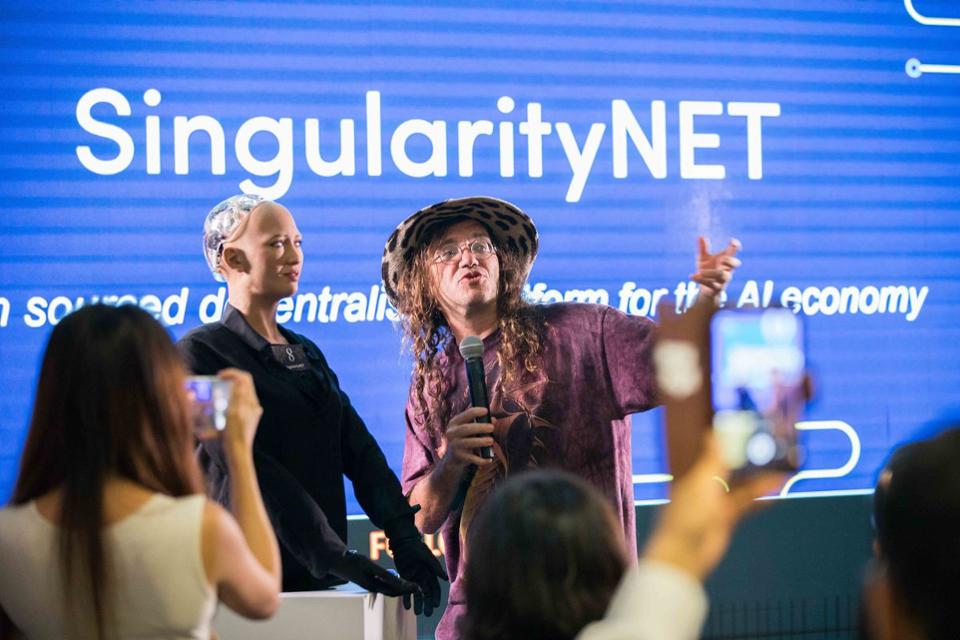
Dr. Ben Goertzel CEO & Founder of the SingularityNET Foundation is particularly visible and vocal on his thoughts on Artificial Intelligence, AGI, and where research and industry are in regards to AGI. Speaking at the (Virtual) OpenCogCon event this week,...
Dr. Goertzel is founder of SingularityNET, a decentralized AI platform which lets multiple AI agents cooperate to solve problems in a participatory way without any central controller. “It’s an infrastructure for what AI pioneer Marvin Minsky called the ‘Society of Minds’ — an approach to AGI in which the general intelligence emerges from the interactions of multiple relatively simple AI agents,” says Dr. Goertzel.
In addition to AGI, Dr. Goertzel is looking forward to the emergence of graph-processing and ideally hypergraph-processing chips. He thinks that putting graph transformations on the chip will do for both AGI and functional programming the same thing that GPUs did for deep neural nets. It has the potential to make complex scalable work far less costly and more tractable.
Online Art Gallery Sees Increase in Mobile Customers; Expands Features for Mobile Web Users
SANTA MONICA, Calif., July 15, 2020 (GLOBE NEWSWIRE) -- A leading online art gallery, Saatchi Art today announced the launch of augmented reality (AR) “view in a room” for customers on mobile web. This new feature is Saatchi Art’s latest investment in mobile, as the online art platform has seen record numbers of customers from mobile web over the past year.
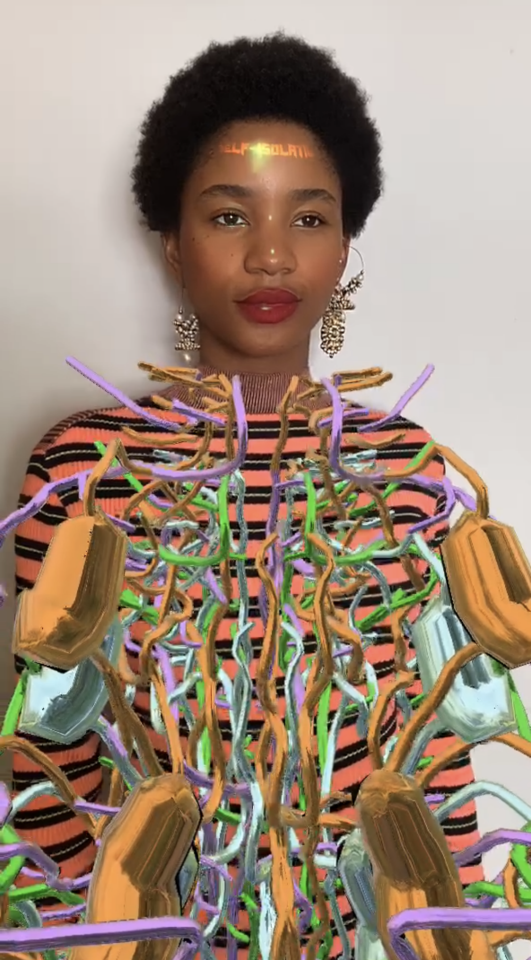
Saatchi Art’s new mobile augmented reality “View in a Room” feature, previously only available to app users, allows art buyers to select artworks and instantly view them on their own walls at home through their phone or tablet.
“We know from customer surveys that over 70% of art buyers are hesitant to purchase because they can’t see the artwork in advance."
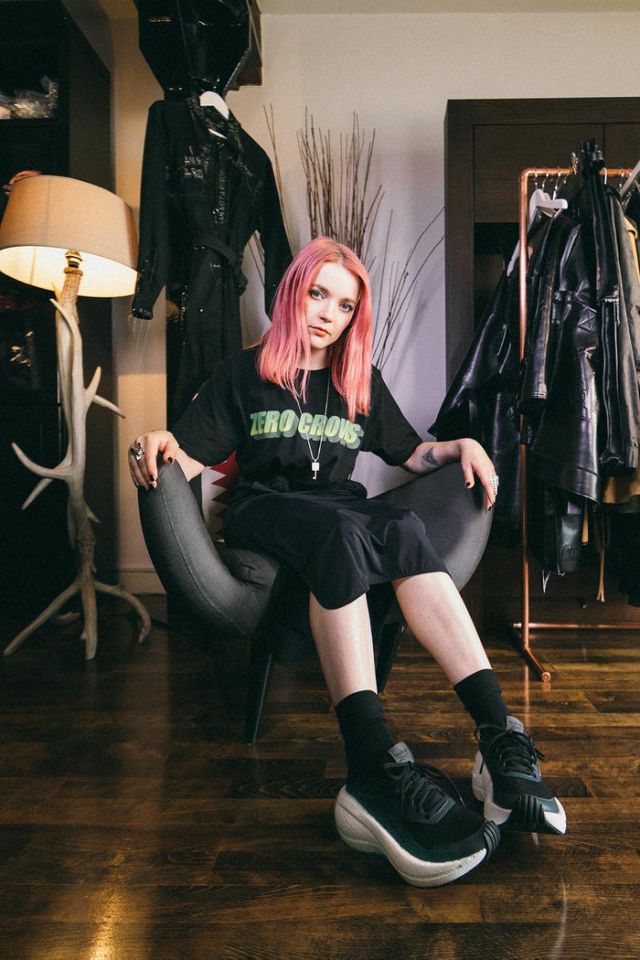
London Fashion Week saw its first digital showcase in June, quickly followed by Couture Fashion Week in July. The latter saw many high-end labels, including Chanel, Valentino, Dolce & Gabbana and Dior, introduce a new era of virtual fashion shows and short films.
Verizon Media’s The Fabric of Reality
To help reinvent fashion shows for the future, RYOT, Verizon Media’s in-house creative studio has created The Fabric Of Reality, an immersive fashion experience that pairs three up-and-coming designers with virtual reality artists to create a unique collaboration.
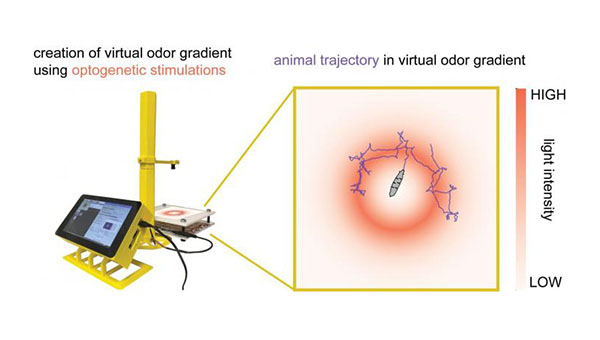
The Raspberry Pi Virtual Reality system (PiVR) is a versatile tool for presenting virtual reality environments to small, freely moving animals (such as flies and fish larvae), according to a study published in the open-access journal PLOS Biology by David Tadres and Matthieu Louis of the University of California, Santa Barbara. The use of PiVR, together with techniques like optogenetics, will facilitate the mapping and characterization of neural circuits involved in behaviour.
In the new study, Tadres and Louis used their PiVR system to present virtual realities to small, freely moving animals during optogenetic experiments. Optogenetics is a technique that enables researchers to use light to control the activity of neurons in living animals, allowing them to examine causal relationships between the activity of genetically-labelled neurons and specific behaviours.
As a proof-of-concept, Tadres and Louis used PiVR to study sensory navigation in response to gradients of chemicals and light in a range of animals. They showed how fruit fly larvae change their movements in response to real and virtual odour gradients. They then demonstrated how adult flies adapt their speed of movement to avoid locations associated with bitter tastes evoked by optogenetic activation of their bitter-sensing neurons. In addition, they showed that zebrafish larvae modify their turning manoeuvres in response to changes in the intensity of light mimicking spatial gradients. According to the authors, PiVR represents a low-barrier technology that should empower many labs to characterize animal behaviour and study the functions of neural circuits.
Accidents, including deadly ones, caused by software or industrial robots, can be traced to the early days of such technology but they are not a direct consequence of the particulars of the intelligence available in such systems. AI failures, on the other hand, are directly related to the mistakes produced by the intelligence that such systems are designed to exhibit.
We can broadly classify such failures into mistakes during the learning phase and mistakes during performance phase. The system can fail to learn what its human designers want it to learn and instead learn a different, but correlated function. A frequently cited example is a computer vision system which was supposed to classify pictures of tanks but instead learned to distinguish backgrounds of such images [3].
-Vuzix waveguides with holographic optics, laser and micro LED display integration cornerstone to producing fashion forward wearable computer smart glasses
-Company's patent portfolio has grown from 90 patents and patents pending to 166 over the last 36 months
There are very few public art galleries more unique than that of The Neon Museum in Las Vegas, Nevada. Established in 1996, the non-profit organizations primary goals involve the collection and preservation of classic Las Vegas signage for exhibition and cultural enrichment.
In 2019, museum curators handed over control of the campus to celebrated filmmaker, artist, and animator Tim Burton (The Nightmare Before Christmas, Edward Scissorhands, Sleepy Hollow), marking the first time a single artist had been given full reign of the space.
To create his portal in time, Rizzotto wore Snap Spectacles—Snapchat glasses that record high-resolution stereoscopic 3D video—for a full year, while traveling the globe. Along with recording a year’s worth of video, a task that required a small mountain of hard drives, Rizzotto also developed the software that would allow him to navigate it. Which, for about three months, seemed like it was going to be an impossible task thanks to an apparent loss of metadata.
“It’s really hard to describe the feeling you get, reliving your own past,” Rizzotto says in the video as he navigates his memories. He adds that “You don’t just see the memory portal, you see everything around it, like the rush of memories you get when you smell food you used to eat as a child.”
“Our limited conception of what understanding actually involves makes it hard to answer basic questions: How do we know if a system is ‘actually understanding’? What metrics can we use? Could machines be said to ‘understand’ differently from humans?” Mitchell writes in her paper.
What made this specific study interesting was the broad range of perspectives brought together to tackle this complicated topic. Participants in the workshop came from various disciplines, including AI, robotics, cognitive and developmental psychology, animal behavior, information theory, and philosophy, among others.
“When I first got into AI, there was a real interdisciplinary feel to it. AI people attended cognitive science conferences, and vice versa. Then statistics took over AI, and the field got less diverse,” Mitchell said. “But I see a trend now in the field returning to its interdisciplinary roots, which I think is a very positive development.”
The paper includes many examples from studies in fields other than computer science and robotics, which help appreciate the depth of meaning in living beings.
 In addition to AGI, Dr. Goertzel is looking forward to the emergence of graph-processing and ideally hypergraph-processing chips. He thinks that putting graph transformations on the chip will do for both AGI and functional programming the same thing that GPUs did for deep neural nets. It has the potential to make complex scalable work far less costly and more tractable.
 The Raspberry Pi Virtual Reality system (PiVR) is a versatile tool for presenting virtual reality environments to small, freely moving animals (such as flies and fish larvae), according to a study published in the open-access journal PLOS Biology by David Tadres and Matthieu Louis of the University of California, Santa Barbara. The use of PiVR, together with techniques like optogenetics, will facilitate the mapping and characterization of neural circuits involved in behaviour.
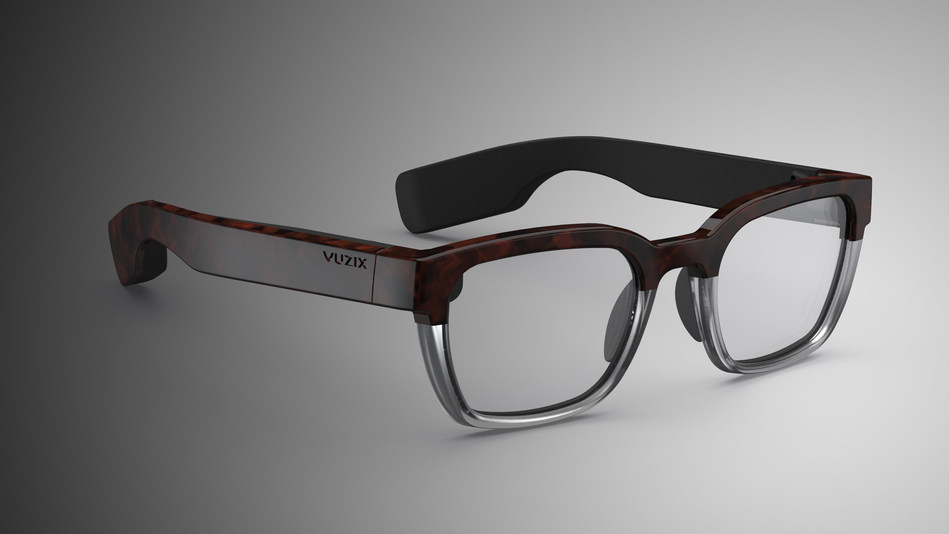 -Vuzix waveguides with holographic optics, laser and micro LED display integration cornerstone to producing fashion forward wearable computer smart glasses
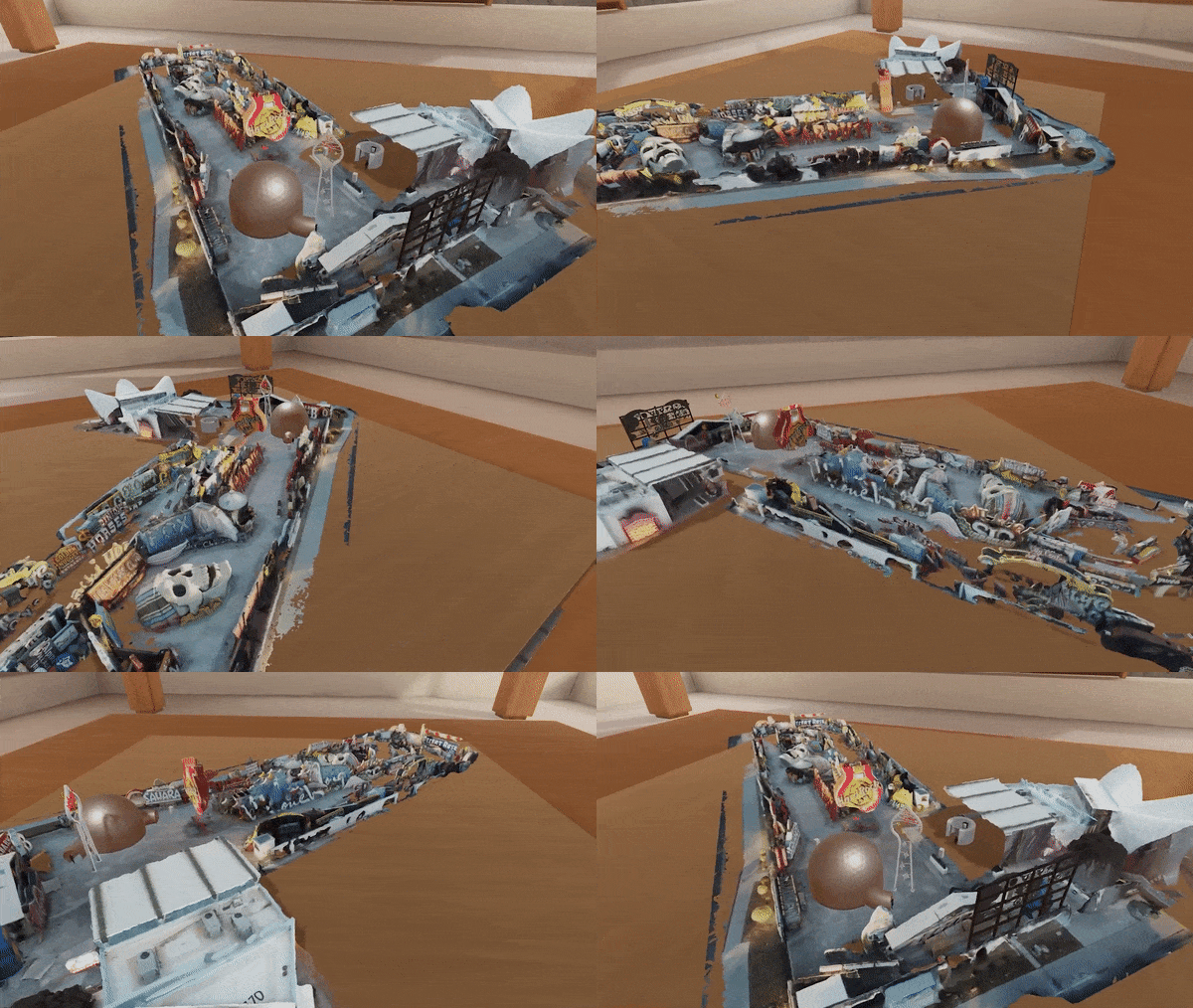 There are very few public art galleries more unique than that of The Neon Museum in Las Vegas, Nevada. Established in 1996, the non-profit organizations primary goals involve the collection and preservation of classic Las Vegas signage for exhibition and cultural enrichment.