The Risks of Autonomous Weapons Systems for Crisis Stability and Conflict Escalation in Future US-Russia Confrontations
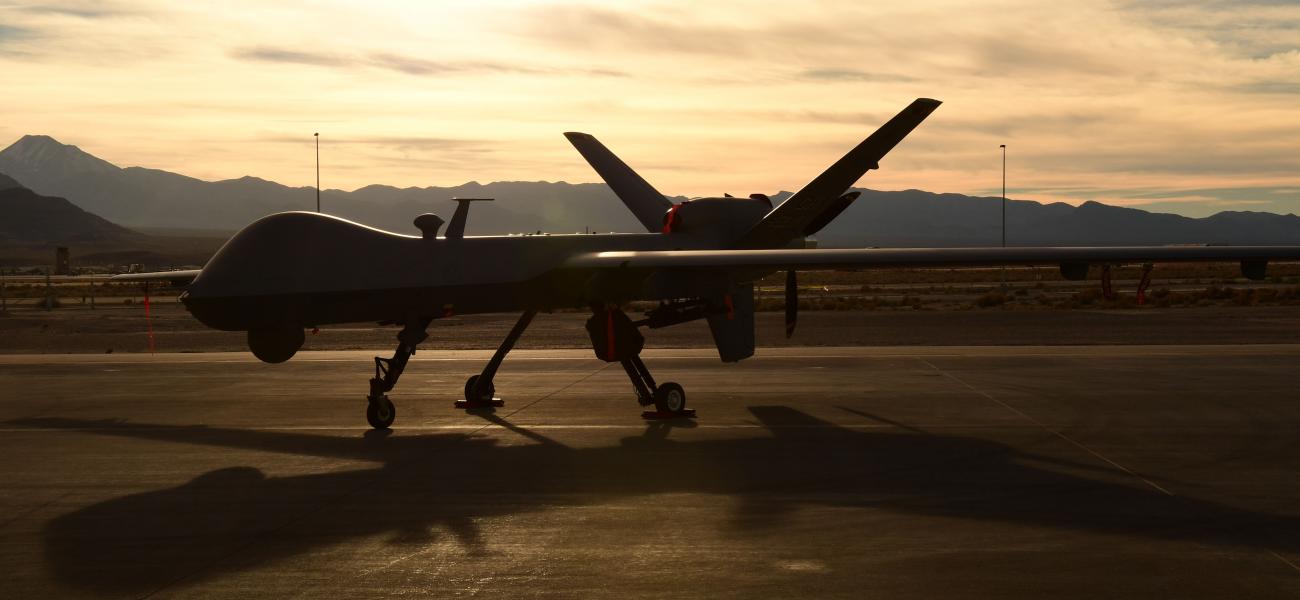
Motivations and General Aims Driving AWS Development Efforts
The Pentagon views AI and robotics, along with several other emerging technologies including hypersonics and directed-energy, as key to offsetting the anti-access and area-denial capabilities and concepts developed by China and Russia over the past two decades, thereby regaining and sustaining U.S. conventional deterrence overmatch. Meanwhile, China’s People’s Liberation Army anticipates that AI could fundamentally change the character of warfare even as it fears the emergence of a generational gap between its capabilities and that of the U.S. military. It thus seeks to develop AI and other “strategic front-line” technologies in future military competition with the United States.
Concluding Thoughts
Much attention has been paid to the operational advantages to be gained from the development of AWS. By contrast, much less attention has been paid to the risks AWS potentially raise. There are times in which the fundamental tensions between the search for military effectiveness and the requirements of ensuring that crises between major nuclear weapons states remain stable and escalation does not ensue are pronounced and too consequential to ignore. The development of AWS may well be increasing the likelihood that one day the United States and Russia could find themselves in just such a time. Now, while AWS are still in their early development stages, it is worth the time of policymakers to carefully consider whether the putative operational advantages from AWS are worth the potential risks of instability and escalation they may raise.
See the full story here: https://www.russiamatters.org/analysis/risks-autonomous-weapons-systems-crisis-stability-and-conflict-escalation-future-us-russia
TikTok has its Arab Spring moment as teen activism overtakes dance moves
Cassidy, who has amassed 1.6 million followers on TikTok since joining last November, is among the millions of users who are helping to turn the go-to destination for short-form viral music videos and pranks into a first stop for youth activism as protests against police brutality spread across America.
“The movement will be shaped to not only spread awareness about the injustice in society, but it will go further, teaching about the importance of voice and calls to action to stop the brutality,” Cassidy said.
The hashtag #blacklivesmatter has shot up TikTok’s trending list with 3 billion views as of Tuesday morning. TikTok superstars like Charli D’Amelio, whose 60 million followers is nearly twice the number of HBO’s U.S. subscribers, hit pause on showing off dance moves to discuss George Floyd, a black man in Minnesota whose death as a white police officer knelt on his neck has sparked a national debate on race and power.
TikTok’s emergence as a platform for political discourse for teens follow a tradition of media platforms evolving beyond their founders’ initial designs such as Twitter’s role in the Arab Spring protests in 2011 and the MTV cable TV network’s role galvanizing young voters in the early 1990s.
...
TikTok’s big moment also comes as its high-profile new hire, Walt Disney Co’s Kevin Mayer took over as CEO of the Chinese-owned company on Monday.
The new leadership comes at tensions flare between the United States and China over trade, technology and the COVID-19 pandemic. Because TikTok is owned by China-based ByteDance Technology Co and widely popular among American teens, U.S. regulators have questioned the safety of the personal data it handles and if its Chinese ownership poses a national security risk.
...
“The younger crowd does not want to be on Facebook and they are not on Facebook. They are on SnapChat and TikTok,” Scott said.
See the full story here: https://www.reuters.com/article/us-minneapolis-police-tiktok/tiktok-has-its-arab-spring-moment-as-teen-activism-overtakes-dance-moves-idUSKBN2392WX
Facebook to verify the identities of some user profiles behind viral posts
 Lost in the news of the George Floyd protests against police brutality and racism in the U.S., Facebook last week quietly noted it will now require Facebook profile pages with large followings in the U.S. to verify their identity. The company said that profiles with sizable audiences that also have a pattern of inauthentic behavior and whose posts rapidly go viral will be asked to verify their identity or the distribution of their posts will be impacted.
If the profile’s owner chooses not to verify their identity or the ID provided does not match the linked Facebook account, the distribution of the profile’s viral post will continue to be reduced so fewer people will see it, the company explains.
In addition, if the profile that’s posting is also a Facebook Page admin, they’ll need to complete the Page Publishing Authorization and won’t be able to post from their Page until the account is verified through Facebook’s systems.
See the full story here: https://techcrunch.com/2020/06/01/facebook-to-verify-the-identities-of-some-user-profiles-behind-viral-posts/
Artificial intelligence: The dark matter of computer vision
 There is a range of efforts aimed at solving the shallowness and brittleness of deep learning, the main AI algorithm used in computer vision today. But sometimes, finding the right solution is predicated on asking the right questions and formulating the problem in the right way. And at present, there’s a lot of confusion surrounding what really needs to be done to fix computer vision algorithms.
In a paper published last month, scientists at Massachusetts Institute of Technology and University of California, Los Angeles, argue that the key to making AI systems that can reason about visual data like humans is to address the “dark matter” of computer vision, the things that are not visible in pixels.
Titled, “Dark, Beyond Deep: A Paradigm Shift to Cognitive AI with Humanlike Common Sense,” the paper delves into five key elements that are missing from current approaches to computer vision. Adding these five components will enable us to move from “big data for small tasks” AI to “small data for big tasks,” the authors argue.
These dark components are functionality, intuitive physics, intent, causality, and utility (FPICU).
See the full story here: https://bdtechtalks.com/2020/06/01/artificial-intelligence-computer-vision-fpicu/
TOP 10 REINFORCEMENT LEARNING PAPERS FROM ICLR 2020
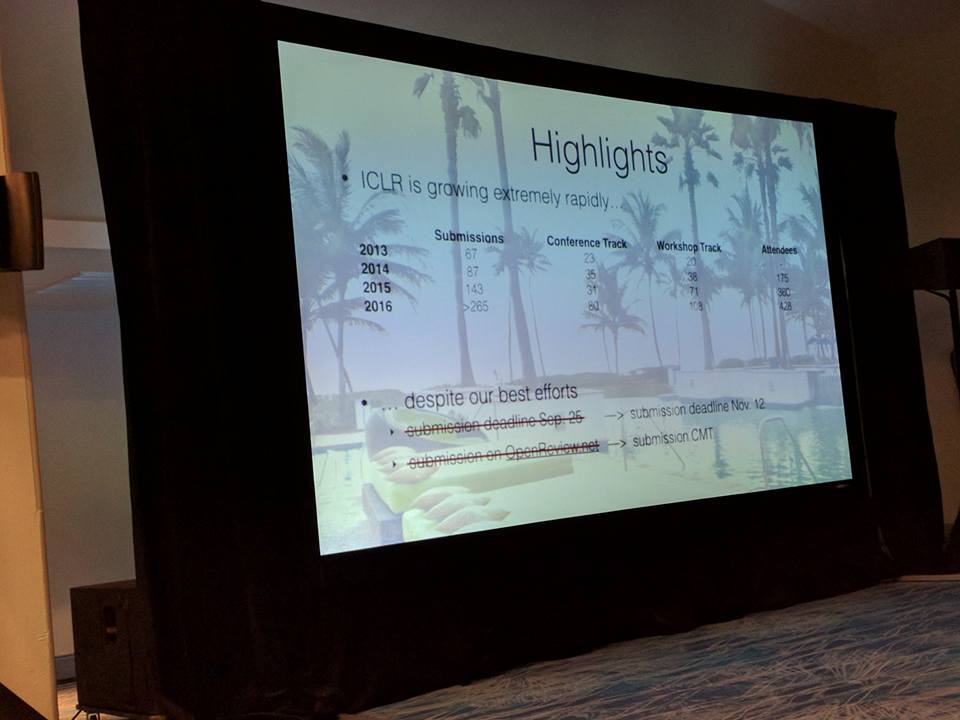 Reinforcement Learning has become the base approach in order to attain artificial general intelligence. The ICLR (International Conference on Learning Representations) is one of the major AI conferences that take place every year. With more than 600 interesting research papers, there are around 44 research papers in reinforcement learning that have been accepted in this year’s conference.
This article lists down the top 10 papers on reinforcement learning one must read from ICLR 2020.
See the full story with links to the full papers here: https://analyticsindiamag.com/top-10-reinforcement-learning-papers-from-iclr-2020/
Armed with disinfectant, South Korean robot tackle coronavirus spread
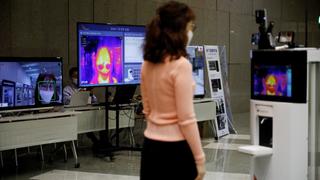 Seoul - A self-driving robot equipped with cameras and an LED screen greets visitors at the lobby in the headquarters of South Korea's largest mobile operator, checking their temperature, dispensing hand sanitiser and disinfecting the floor.
"Please take part in social distancing," the white robot firmly but politely reminds three SK Telecom employees who stand chatting nearby.
Having largely managed to contain an epidemic that infected more than 11,000 and killed 269, South Korea is transitioning from intensive social distancing towards what the government calls "distancing in daily life".
The robot, developed jointly by SK Telecom and Omron Electronics Korea, an industrial automation solution provider, transmits data to its server in real time, powered by the telecom company's fifth-generation (5G) technology.
It sets off an alarm if anyone's temperature is over 37.5 Celsius (99.5 Fahrenheit), while using artificial intelligence (AI) to detect gatherings and advise people to disperse. Those not wearing a mask will be reminded to put one on.
"The robot helps minimise people-to-people contact and reduce time that's taken for temperature checks at the entrance, and the AI technology raises accuracy," said Ra Kyhong-hwan, head of data business cooperation at SK Telecom and one of the developers.
Armed with ultraviolet lamps and two disinfectant sprayers, the robot can disinfect 99% of 33 square metres (355 square feet) of surface area in 10 minutes, the company said.
The developers added a function to hide faces mirrored in the screen to protect people's privacy, Ra said.
...
A customer can place an order through a QR code, and the robot, called Delitower, would pick up food from the restaurant or a delivery rider and bring it straight to the customer's location.
"We've been testing delivery robots since last year and are seeking to adopt them at the offices, hotels and residential complexes as more people find robots to be useful amid the coronavirus outbreak and social distancing," an official at Woowa Brothers told Reuters.
See the full story here: https://www.iol.co.za/technology/gadgets/armed-with-disinfectant-south-korean-robot-tackle-coronavirus-spread-48791375
This is online learning’s moment. For universities, it’s a total mess
 From Blackboard to Panopto to Minerva, most universities already had hosting platforms in place where course materials could be uploaded; but for academics and students with little or no experience of pre-recorded or live-streamed lectures, the quick transition to online learning was painful.
A survey found that one in five people were willing to delay their undergraduate degrees if universities were not operating as normal due to the coronavirus pandemic. With 120,000 fewer students starting in September, UK universities could face a £760 million loss of income in tuition fees.
Online lectures generally go wrong when academics decide to record lessons using the same slides they had previously prepared for face-to-face teaching, says Kyungmee Lee, a lecturer in technology enhanced learning at Lancaster University. ...“Of course, it doesn't really work.”
The University of Cambridge’s decision to stay online could set a precedent for the shift from traditional lecture-based teaching to student-centred online learning, says Lee. “It's a totally different discussion now that we have to think about the entire year of teaching practice. We can just do so many different things.” Drawing from what has worked and what hasn’t during lockdown, lecturers and teachers will have more time on their hands to restructure their courses with the necessary support of instructional designers, programmers and illustrators.
On May 19, the University of Bolton offered a glimpse into the future of campus life: airport-style temperature scanners at entrances, bikes for loan, tables with plastic dividing screens, and compulsory face masks are some of the new measures that would make its campus “Covid secure”.
See the full story here: https://www.wired.co.uk/article/university-online-coronavirus
UCU calls for government support as poll shows students may defer study and consider changing university
20 May 2020
Government must underwrite loss of income to safeguard the higher education sector and stop competition between universities for students
Universities face an uncertain future as over a fifth of prospective students (22%) could defer going to university, according to a new survey released today (Wednesday). Prospective students also said there was a 25% chance they would consider switching their university, which could lead to a summer of chaos as institutions compete to secure students.
With touches of technical wizardry, MIT holds its first online Commencement
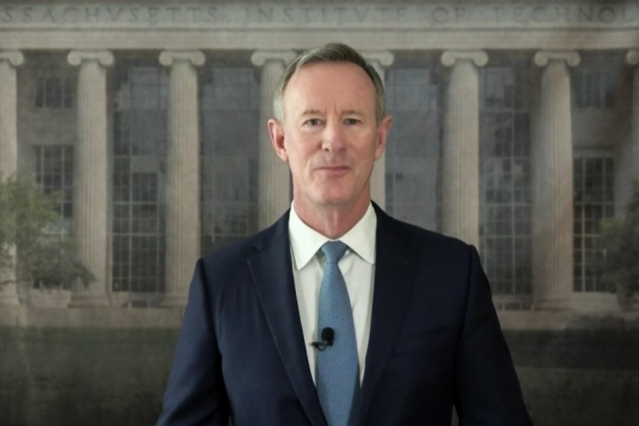 In an unprecedented online version of MIT’s annual Commencement exercises, necessitated by the departure of most people from the campus because of the Covid-19 pandemic, the Institute added some innovative touches — including a surprise appearance from the International Space Station — to the unusual but festive occasion.
...
Another musical performance, featuring the voices of over 800 members of the MIT community, followed McRaven’s remarks. Called “Comusica” and conceived by professor of the practice Eran Egozy along with Professor Evan Ziporyn, who wrote the music, and Professor Isaac Chuang, who built the infrastructure and image-processing algorithms, the project involved recording each participant singing a single note. These were arranged into a mosaic to create a unique song and video “portrait” of the Class of 2020.
...
Nwanacho Nwana, president of the Class of 2020, spoke of regrets about the things he and his classmates missed experiencing during their last weeks of MIT. But, he added, “Even if we had those last few months together, we would all likely still leave MIT with numerous regrets of what could have been and what we could have done. This period has been a harsh reminder that time is not only limited, but the limits on that time are uncertain and we never really know when our time will be up.”
...
Following the online graduation ceremony, the names of all 3,512 degree recipients were scrolled online. Then, in a typically MIT show of technical prowess, a specially designed app was made available to all the graduates. This allowed each graduate to individually simulate through virtual reality the experience of walking across the Commencement stage, shaking hands with President Reif, and receiving their degree.
See the full story here: http://news.mit.edu/2020/online-commencement-0529