This Tokyo Hospital is Livestreaming Surgeries in Virtual Reality
 “Especially in the current situation, we believe that VR live streaming is very useful because you can share an immersive experience while avoiding human contact,” Naotaka Fujii, CEO of the VR company Hacosco that set up the system, wrote in a blog by the virtual reality camera manufacturer Insta360.
One drawback of the use of VR camera during surgeries is that students won’t get a hands-on perspective as they would if they were in the same surgical theatre with the rest of the surgeons. Another is that surgeons would also need to switch between various reference points for the visuals to be clear enough.
This doesn’t mean the virtual reality camera doesn’t provide a better view while livestreaming surgeries. It looks as if students were peering over the shoulders of a surgeon or watching from the glass window outside the surgical theatre.
See the full story here: https://www.technowize.com/this-tokyo-hospital-is-livestreaming-surgeries-in-virtual-reality/
Real Vs Virtual: Is COVID-19 Changing The Idea Of Who We Are?
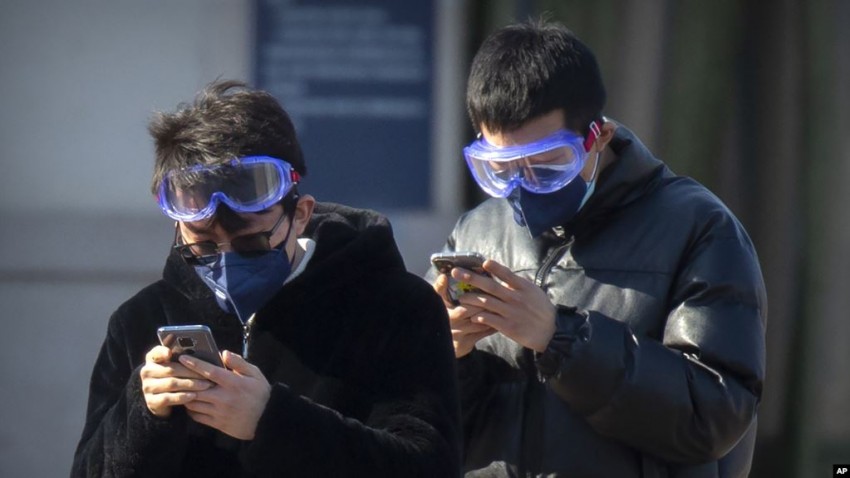 Years ago, as bag-packers, my friend and I used to look at Japanese groups who would come out of their tourist buses, look in the direction of the guides’ stick and click pictures. They made no efforts to explore or walk around. Whether in the colosseum in Rome or in Auschwitz, it was the same. Within one week, they would cover the entire European civilization from the renaissance to the world war. The tourists had been everywhere but also perhaps nowhere. Today, we may be becoming like those tourists who experienced little, processed even lesser and believed they had seen all.
These students didn’t get my point that the virtual world is not anything close to real. It is the unprogrammed in the program that builds understanding of reality by engagement with other people; me telling the students that the surprises and the changes make an experience real, didn’t cut any ice.
This is also a predicament for many psychologists. I have seen Sunit (name changed) get over a bad marriage, a divorce and he is now fighting a painful custody case. The last few sessions he had were online. When I asked him if he felt any difference, after a moment’s silence he said, “I feel safer and anonymous while talking online. My communication, my business is so much online now that it seems more real now. It has become a way of life and I want to continue.” I nodded my head wondering how the new reality would challenge the principles of human behaviour I had learnt long ago at graduate school.
Soon psychologists may have more clients who prefer online to offline.
In the virtual world, we rarely look inward. Interactions with others are more performances and less based on exchanges that the human civilisation is based upon. It is the unpredictable whose presence makes me look inwards and ask certain questions that one can’t do in the virtual world. Knowing, sensing, intuiting has taken a backseat and the tactile, the visual no longer hold.
The physical world we leave behind did create meaning in our lives. It gave us poets, writers, scientists who drew their imagination and inspiration from the sensory world. It is something that the virtual world post-COVID-19 won’t be able to do. It will not create the meaning that Viktor Frankel said makes us truly human and gave us hope. I hope we discover an answer to that sooner than later.
(The author is a professor of Psychology at Amity University. Views expressed are personal.)
See the full story here: https://www.outlookindia.com/website/story/opinion-real-vs-virtual-is-covid-19-changing-the-idea-of-who-we-are/353916
How AI, virtual reality and augmented reality will improve social services: the future of health care in the 5G era
 [PhilNote: this story could have been PR from any global telco, but because it is about Hong Kong it has a political undercurrent.]
“Physical boundaries will no longer be a concern. In the future, medical assessments of a Hong Kong client could be done by an expert in the US quite easily and quickly, and services could be easily delivered across borders,” Wong says.
He adds: “Medical professionals could conduct virtual home visits to examine the living conditions of the vulnerable and make assessments more comprehensively and with precision.”
Ultimately, Wong says, medical and social services will become more affordable and accessible, and will be delivered more quickly and from anywhere in the world.
See the full story here: https://www.scmp.com/lifestyle/health-wellness/article/3086976/how-ai-virtual-reality-and-augmented-reality-will-improve
Royal Mint launches first-ever augmented reality dinosaur coins
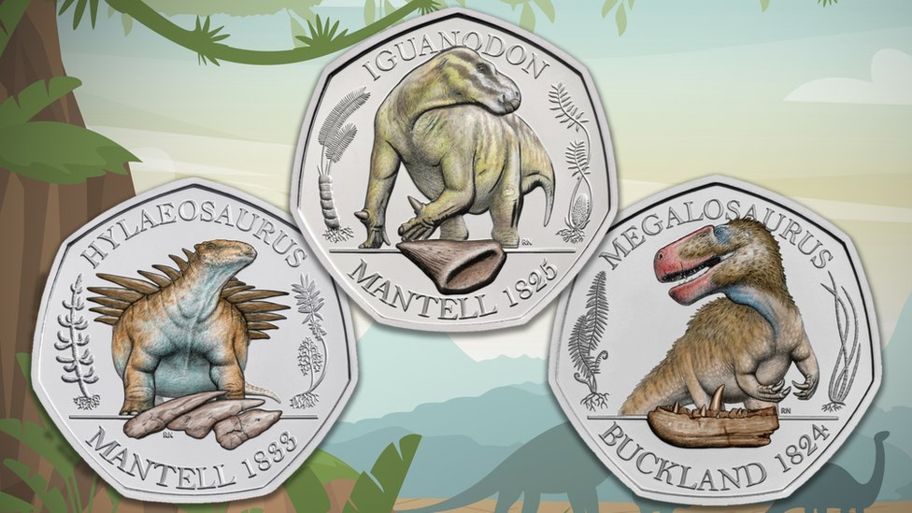
[PhilNote: 50pence coins, although it isn't clear that banks will accept them. The Royal Mint is The Fed plus Franklin Mint.]
Not only do they have amazing pictures of dinosaurs on them but they also are the first-ever to use augmented reality (AR).
Royal Mint, which makes most of the the UK's coins, used the latest colour printing techniques to vividly show the megalosaurus, iguanodon and hylaeosaurus on the coins.
After receiving the coin, collectors can use AR to scan the packaging to unearth facts, clips and images about the prehistoric beasts.
Fossils from the megalosaurus, iguanodon and hylaeosaurus led British anatomist Sir Richard Owen, the founder of the Natural History Museum, to first use the term 'dinosauria' in 1842.
See the full story here: https://www.bbc.co.uk/newsround/52874357
john craig freeman invites us to virtually visit the wet market of wuhan in augmented reality


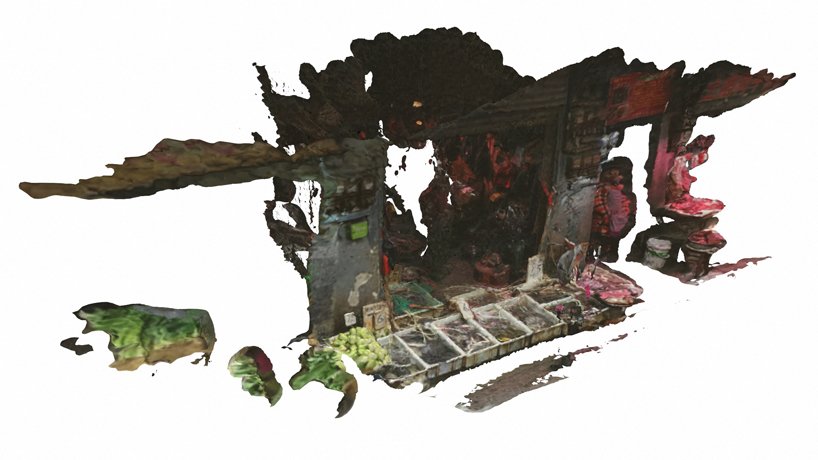 through the emergent technology of augmented reality, artist john craig freeman invites viewers worldwide to virtually visit the wet markets of wuhan — the place where COVID-19 is believed to have originated.
during the development of the augmented reality project ‘wet market, wuhan,’ artist john craig freeman traveled to the city of wuhan in 2016. the trip was part of the U.S. state department’s cultural diplomacy program, ‘zero1 american arts incubator.’ the project serves as a part of an extensive body of work which documents the rapidly changing city and sheds light on the complex and nuanced historical culture it holds.
photogrammetry. with this strategy, the artist stitches together thousands of individual images into one single three dimensional file.
See the full story here: https://www.designboom.com/design/wuhan-wet-market-augmented-reality-john-craig-freeman-05-29-2020/
INDE announces touchless version of its Augmented Reality ‘HeroMirror’
INDE has today announced the introduction of ‘HeroMirror Touchless’, a technology that enables users to navigate the company’s kiosk-sized augmented reality experience without having to touch the device itself.
With the outbreak of COVID-19 though, health concerns regarding public touchscreens have likely prompted many companies to look at alternative activation solutions.
To activate the feature, users have to scan a QR code on the mirror with a smartphone, which leads them to a website. Once enabled, users are able to use their own smartphone as a remote control, allowing them to select all options on the AR mirror without having to touch it. As with every other HeroMirror installation, users can also choose their favourite snapshot and share it online right away from the website.
See the full story here: https://www.auganix.org/inde-announces-touchless-version-of-its-augmented-reality-heromirror/
‘Why I recreated my local pub in virtual reality’
Tristan Cross taught himself how to make the 3D models from scratch by watching YouTube videos.
See the video here: https://www.bbc.com/news/av/technology-52833546/why-i-recreated-my-local-pub-in-virtual-reality
U.S. Joins Global Partnership on AI to Check China’s Power
 The United States became the last of the Group of Seven countries to sign on to the G7 AI Pact, an initiative focused on responsible development of artificial intelligence. The Global Partnership on AI will, after study, create recommendations on AI technologies that “respect privacy and civil liberties.” At a G7 meeting of science and technology ministers, U.S. chief technology officer Michael Kratsios and President Trump’s science adviser Kelvin Droegemeier will describe the U.S.’s involvement in the program.
Bloomberg reports that the Global Partnership on AI “will ask member states to follow principles drafted by the Organization for Economic Cooperation and Development, which recommends developing AI technologies that respect human rights and are transparent to anyone affected by them.”
...
Kratsios noted that, “the idea of both the 5G and AI initiatives is to set limits on Chinese companies seeking to expand abroad.” Referring to China joining the World Trade Organization in 2001, he also warned that adopting Chinese 5G and AI standards would “run the risk of repeating the same mistakes our nations made nearly 20 years ago.”
See the full story here: https://www.etcentric.org/u-s-joins-global-partnership-on-ai-to-check-chinas-power/#more-150778