FAROE ISLAND REMOTE TOURISM: ABOUT THE PROJECT
See the full story here: https://www.visitfaroeislands.com/remote-tourism/about-the-project/
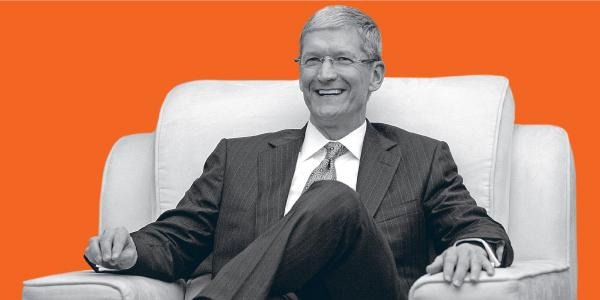
How Tim Cook’s Augmented Reality vision paid off for Apple
 The unexpected, 5 year failure of smartphone VR
The unanticipated success of smartphone AR
Cook's unpopular take on AR
Apple sneaks out AR to the masses
The alternative reality of the tech media
AR Software Sells Systems
See the full story here: https://appleinsider.com/articles/20/05/23/how-tim-cooks-augmented-reality-vision-paid-off-for-apple
How Britain’s oldest universities are trying to protect humanity from risky A.I.
- The University of Oxford’s Future of Humanity Institute is led by Professor Nick Bostrom, who is the author of “Superintelligence.”
- Over at the University of Cambridge, just 66 miles away, there is the Center for the Study of Existential Risk and the Leverhulme Center for the Future of Intelligence.
- Researchers at both universities are carefully studying how to ensure artificial intelligence is developed safely.

In the main foyer of the institute, complex equations beyond most people’s comprehension are scribbled on whiteboards next to words like “AI safety” and “AI governance.” Pensive students from other departments pop in and out as they go about daily routines.
It’s rare to get an interview with Bostrom, a transhumanist who believes that we can and should augment our bodies with technology to help eliminate ageing as a cause of death.
“I’m quite protective about research and thinking time so I’m kind of semi-allergic to scheduling too many meetings,” he says.
...
Bostrom’s institute has been backed with roughly $20 million since its inception. Around $14 million of that coming from the Open Philanthropy Project, a San Francisco-headquartered research and grant-making foundation. The rest of the money has come from the likes of Musk and the European Research Council.
...
The idea for CSER was conceived in the summer of 2011 during a conversation in the back of a Copenhagen cab between Cambridge academic Huw Price and Skype co-founder Jaan Tallinn, whose donations account for 7-8% of the center’s overall funding and equate to hundreds of thousands of pounds.
“I shared a taxi with a man who thought his chance of dying in an artificial intelligence-related accident was as high as that of heart disease or cancer,” Price wrote of his taxi ride with Tallinn. “I’d never met anyone who regarded it as such a pressing cause for concern — let alone anyone with their feet so firmly on the ground in the software business.”
...
The Leverhulme Center for the Future of Intelligence (CFI) was opened at Cambridge in 2016 and today it sits in the same building as CSER, a stone’s throw from the punting boats on the River Cam. The building isn’t the only thing the centers share — staff overlap too and there’s a lot of research that spans both departments.
Backed with over £10 million from the grant-making Leverhulme Foundation, the center is designed to support “innovative blue skies thinking,” according to ÓhÉigeartaigh, its co-developer.
...
See the full story here: https://www.cnbc.com/2020/05/25/oxford-cambridge-ai.html
TikTok’s Augmented Reality Ad Format Could Disrupt Several Industries At Once
 A somewhat under-the-radar post in Digiday outlined a new augmented reality format planned by the streaming network that will be tentatively called the "AR Brand Effect" ad. This will will allow TikTok users to add interactive visuals supplied by advertisers to their videos.
Most users become creators trying to either create or recreate memes they see on the platform. Give them the ability to implant AR effects, even if they come from an advertiser, and it takes things up several notches. Imagine the viral possibilities.
From an advertiser's perspective AR is a dream come true.
Then there are the reports that TikTok is also rolling out a new ad format to prominent influencers that lets creators attach a call-to-action button to their videos. The significance here is that it will then link directly to the advertiser's or an ecommerce site. A combination of this and AR ads might be just the thing to excite influencers who have complained about limited revenue opportunities on the platform.
My money is on TikTok to show the way in AR advertising not only for the music industry, but advertising as well.
See the full story here: https://www.forbes.com/sites/bobbyowsinski/2020/05/24/tiktoks-augmented-reality-ad-format-could-disrupt-several-industries-at-once/#634ef3511ddb
Remote Collaboration And Virtual Conferences, The Future Of Work
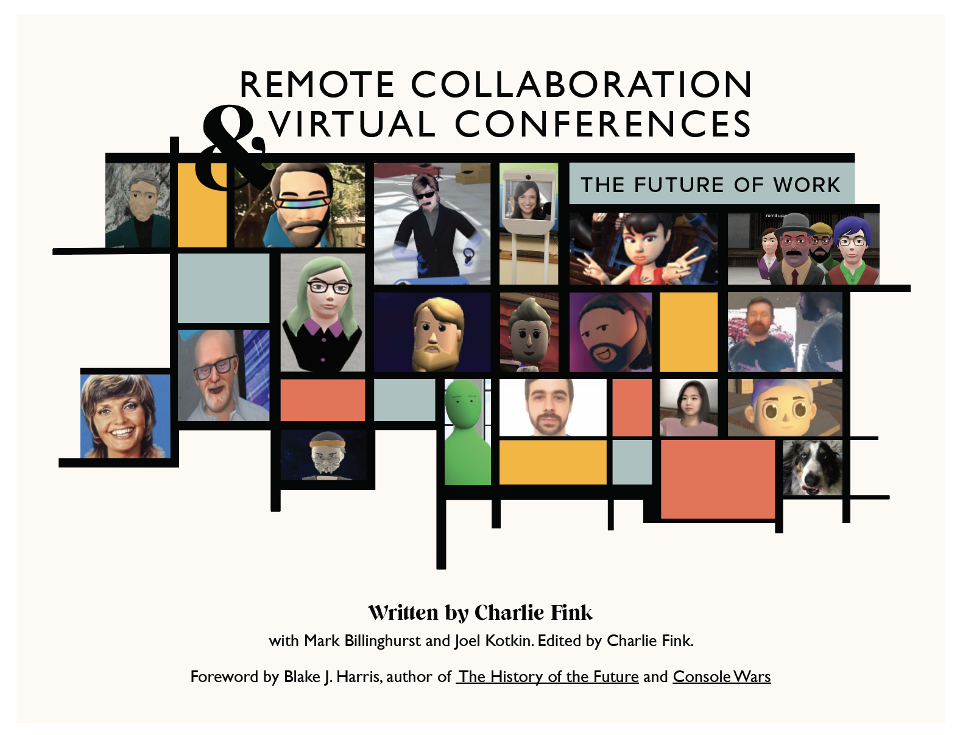 “This semester, Chapman University offered an experimental class called “Landscape of Emerging Media” through Dodge College, Chapman’s school for film and media studies. Taught by Charlie Fink, it was intended to introduce students to the XR industry, including conversations with entrepreneurs, pioneers, and artists. (Disclosure: Fink is also a Forbes Contributor).
Then, the Coronavirus pandemic struck,...
He and his students reimagined the course as an eight-week research sprint exploring how XR tools will contribute to the future of remote work—and the final product will be a book, tentatively titled, Remote Collaboration & Virtual Conferences: The End of Distance and the Future of Work.”
This is a chapter of that book. It will be available on June 15. ...
See the full story here: https://www.forbes.com/sites/charliefink/2020/05/27/remote-collaboration-and-virtual-conferences-the-future-of-work/#75c3fe906b9c
Slack CEO: How We’ll Use AI to Reduce Information Overload
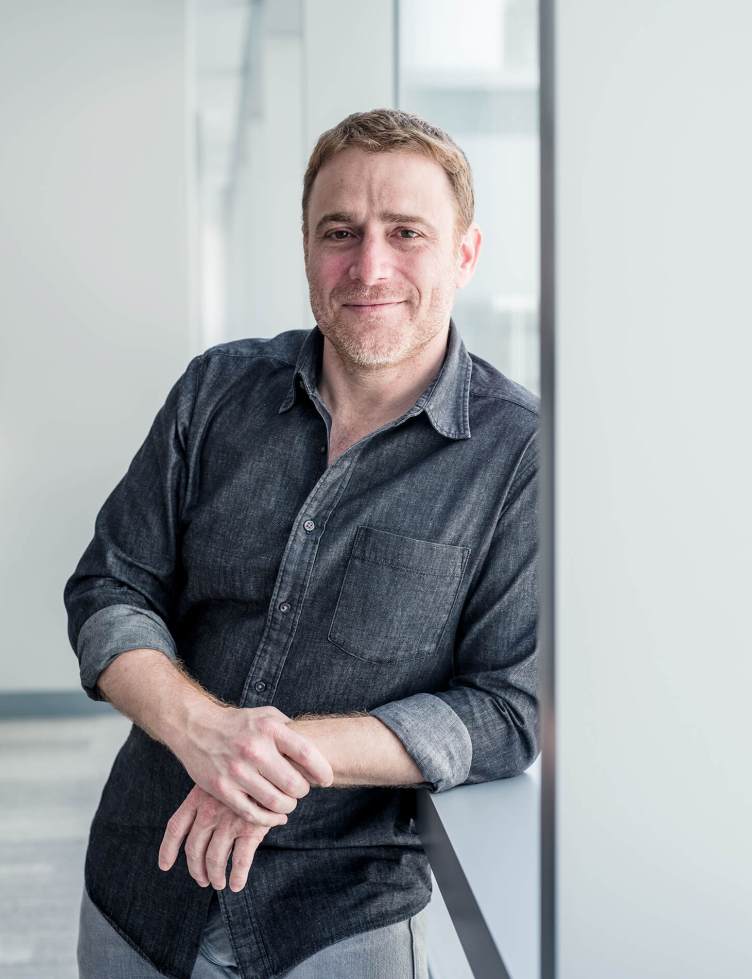 Slack established an AI and machine-learning division called Search, Learning & Intelligence early last year to reduce that “information avalanche.” Slack has already incorporated a few featuresthat SLI developed. What are your specific goals for that group?
The third is trying to make sense of the whole corpus [of information in Slack] and have that improve over time, ideally in a way that doesn’t require any manual input [from users]. The computers will do it all; people can just communicate the way they would normally communicate. You could imagine an always-on virtual chief of staff who reads every single message in Slack and then synthesizes all that information based on your preferences, which it has learned about over time. And with implicit and explicit feedback from you, it would recommend a small number of things that seem most important at the time. So whether you’re waking up in the morning or getting out of a meeting or getting off an airplane, when you check Slack, there could be this virtual chief of staff waiting for you, ideally with a near-perfect list of those things that are important to you.
That’s an intriguing idea. What else is SLI researching?
Organizational insights. We had this really fascinating internal project that looked at the strength of connections [within Slack] between the different departments in our company and the ratio of public to private messages along those axes. So if you look at Slack from the perspective of our facilities team, [it turns out] they talk to finance, HR, and security but almost never talk to engineering. If you look at Slack from the perspective of our marketing team, they talk to sales, product, and finance.
I would—and I think everyone would—like to have a private version of a report that looks at things like: Do you talk to men differently than you talk to women?
Niantic to begin collecting 3D visual data from pokemon go players

Niantic founder and CEO, and creator of Pokemon Go, John Hanke, speaks during a keynote speech on the second day of the Mobile World Congress in Barcelonaon on February 28, 2017.
Phone makers will seek to seduce new buyers with artificial intelligence functions and other innovations at the world's biggest mobile fair starting today in Spain.
/ AFP / LLUIS GENE (Photo credit should read LLUIS GENE/AFP/Getty Images)
The move is likely to be the subject of privacy concerns as Niantic collects and sophisticatedly interprets rich user data. Confining the data collection to locations specifically designated as a PokéStop and Gym will allow Niantic to minimize the chances they are collecting visual data from private locations, like inside someone’s home. The feature will be opt-in for players, at least initially. Data uploaded to Niantic’s servers will also be anonymized and visual data, including faces and license plates, will be blurred automatically, the company says.
This announcement comes just two months after Niantic’s acquisition of AR startup 6D.ai, which had professed to be building out a crowdsourced 3D map of the world.
See the full story here: https://techcrunch.com/2020/05/26/niantic-to-begin-collecting-3d-visual-data-from-pokemon-go-players/
Ultimate guide to artificial intelligence in the enterprise
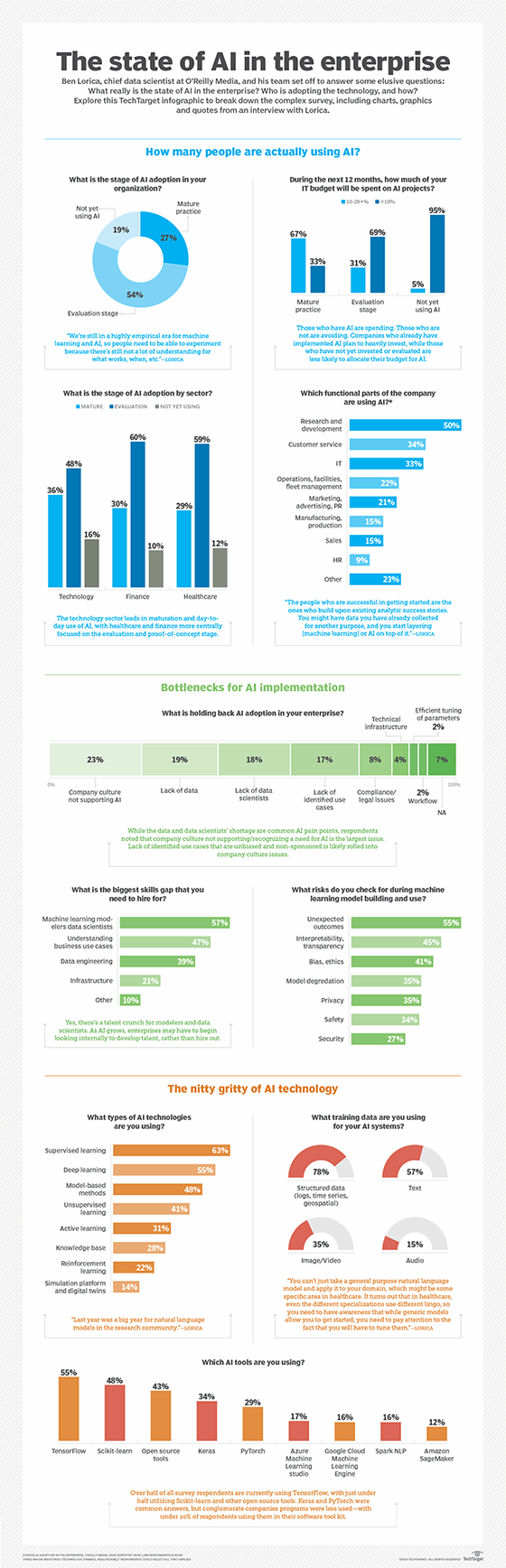
This wide-ranging guide to enterprise AI provides the building blocks for becoming an intelligent business consumer of artificial intelligence. It begins with a brief explanation of how AI works and the main types of AI. You will learn about the importance of AI to companies, including a discussion of AI's principal benefits and the technical and ethical risks it poses; current and potential AI use cases; the challenges of integrating AI applications into existing business processes; and some of the technological breakthroughs driving the field forward. Throughout the guide, we include hyperlinks to TechTarget articles that provide more detail and insights on the topics discussed.
See the full story here: https://searchenterpriseai.techtarget.com/Ultimate-guide-to-artificial-intelligence-in-the-enterprise
Florida Will Soon Be Home To The World’s Largest Drive-In Movie Theater
[PhilNote: Drive-Ins could spark business renaissance in Ex-urbian and urban edges where there are large open spaces left. PhilNote2: anyone who lived thru the birth of the multiplex has heard that new/throwback/festival screen pitch before. It lasts about as long as it times to clear the building permits.]
 On their Facebook page, they explain that two to three screens would be dedicated to new Hollywood releases, one to two screens for old throwbacks, and one screen for film fests, indies, and rentals.
The idea comes from Eustis native Spencer Folmar, who just purchased 71.4 acres of property for $460,000 in early March.
This Lickable Screen Can Recreate Almost Any Taste or Flavor Without Eating Food
 [PhilNote: I could definitely see this being sold like printer ink cartridges in a few years.]
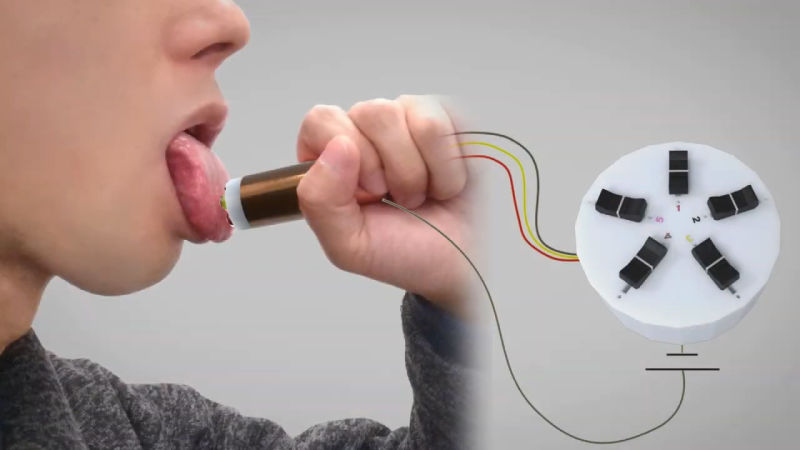
The Norimaki Synthesizer takes a more aggressive approach through the use of five gels that trigger the five different tastes when they make contact with the human tongue.
The color-coded gels, made from agar formed in the shape of long tubes, use glycine to create the taste of sweet, citric acid for acidic, sodium chloride for salty, magnesium chloride for bitter, and glutamic sodium for savory umami. When the device is pressed against the tongue, the user experiences all five tastes at the same time, but specific flavors are created by mixing those tastes in specific amounts and intensities, like the RGB pixels on a screen. To accomplish this, the prototype is wrapped in copper foil so that when it’s held in hand and touched to the surface of the tongue, it forms an electrical circuit through the human body, facilitating a technique known as electrophoresis.
In testing, the Norimaki Synthesizer has allowed users to experience the flavor of everything from gummy candy to sushi without having to place a single item of food in their mouths.
In its current form the prototype is a bit bulky, but it could be easily miniaturized to a device as compact as the vapes everyone is already carrying around and regularly using.
See the full story here: https://gizmodo.com/this-lickable-screen-can-recreate-almost-any-taste-or-f-1843609903?fbclid=IwAR2N4V8Ho7J3dvK2kOr8TZJOVAg4zvaZA4fe5zdRTl2QUX_YkcCtjt9OHqs