Diagne says it takes about 2.5 seconds to copy an object and four seconds to paste it, but that could be easily sped up. In fact, he’s even put his code up on GitHub for anyone who feels like they want to improve it themselves.
5May/20Off
Copy and paste the real world with your phone using augmented reality
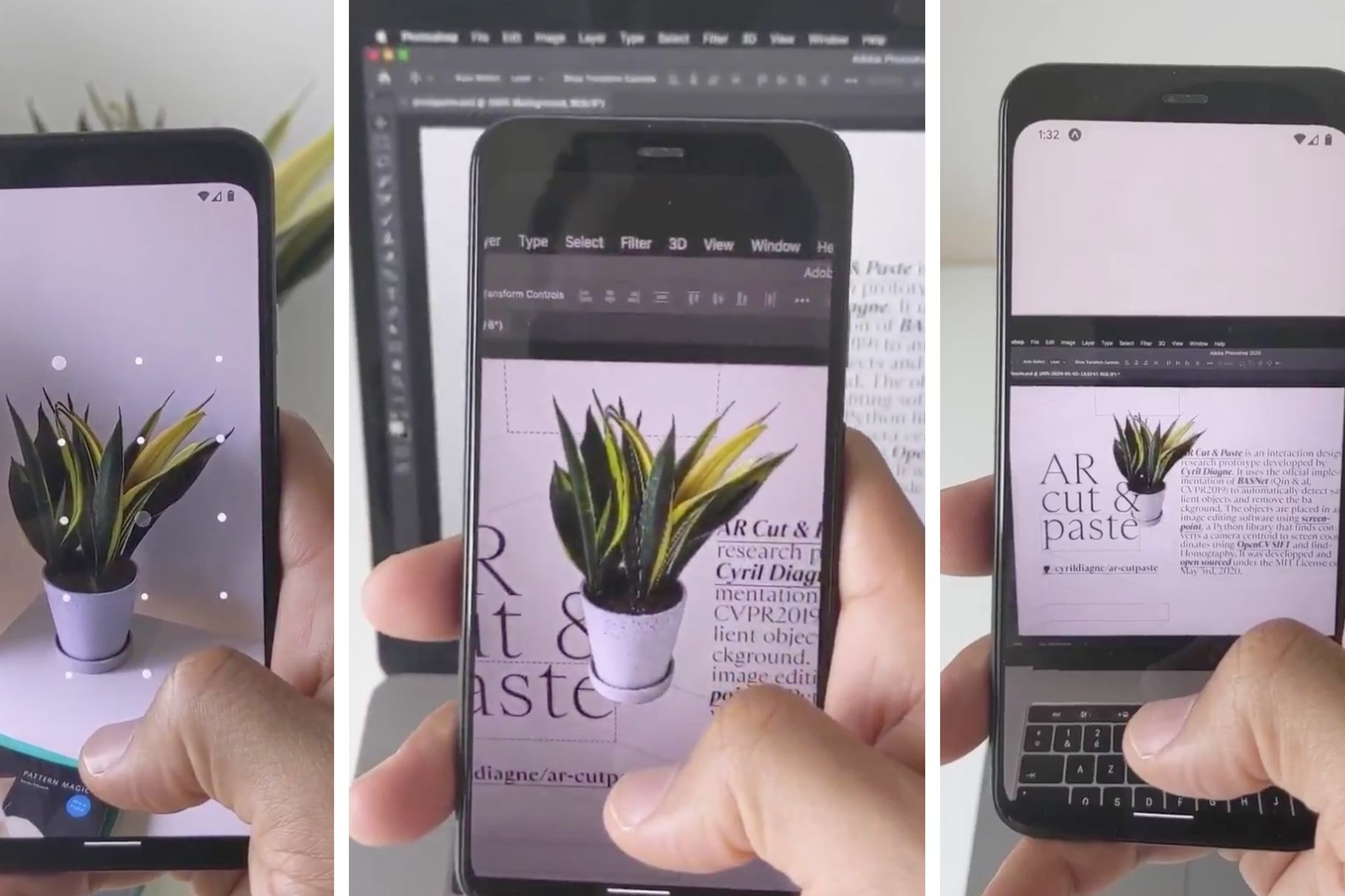 As this awesome demo from developer Cyril Diagne demonstrates, AR can be the perfect tool to quickly grab visuals from the real world and paste them into digital documents. Just point your phone at what you want to copy, and drag it over to your desktop. No fiddling around emailing images to yourself or cutting out objects in Photoshop. Forget it: your homework / mood board / dumb meme involving your pet’s stupid face is already done.
This is only a research prototype right now, but judging by replies to Diagne’s video, it looks like a few companies are already working on similar software.
5May/20Off
Elon Musk talks Tesla cars playing augmented reality games while driving
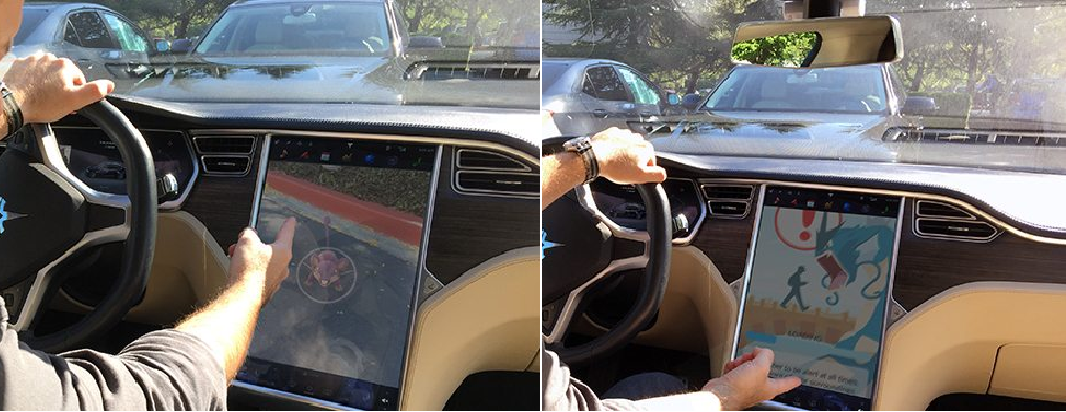 But what many people found even more interesting is his suggestion that Tesla vehicles could run some kind of game that interacts with reality, like Pokémon Go, a popular mobile augmented-reality game, but while the vehicle is being driven “safely.”
Electrek’s Take
I’d like Elon to elaborate a little on the “while driving safely” part, because I’m not exactly sure what it entails. It sounds like driving would be part of the game.
If it’s anything like Pokémon Go, that sounds crazy dangerous.
Maybe he’s talking about self-driving, but it sounds like driving is part of the game play.
See the full story here: https://electrek.co/2020/05/04/elon-musk-tesla-minecraft-augmented-reality-video-games/
5May/20Off
How to Hold a Virtual Gala — Video Production Gurus Reveal the Tricks of the Trade
 PC: What are your pointers to note when going virtual?
TS: One criticism of virtual events is that they can be less personal than live events. That does not have to be the case and often occurs more when a virtual event is an afterthought or done as an alternative method rather than an intentional one. It is okay for virtual experiences to be authentic and organic; they just need to be well-produced with quality content to be effective.
There are three things that have the most impact on streamed or digital engagement: (1) quality content, (2) production value, and (3) authentic human connection. The goal is to produce an online event your audience will actually watch and stay engaged. So, consider a prerecorded production.
...
Consider alternative sponsorship opportunities. Virtual events open up a lot of additional revenue streams and sponsorship opportunities that can give even greater exposure and impact to larger audiences than a live attended event. There are virtual waiting rooms and landing pages that can be used for sponsor recognition, as well as closing credits. There are also a lot of great fundraising tools out there that can be integrated into virtual experiences such as Better Unite, One Cause, and Text 2 Give.
...
See the full story here; https://www.papercitymag.com/society/virtual-gala-best-practices-holding-party-online/?fbclid=IwAR2jlNW_BVosP395rgF170oXqoLek6khsd5biP7L6lRCD3szcv4EnytB9QQ
1May/20Off
All the things COVID-19 will change forever, according to 30 top experts
Tech exec, VCs, and analysts—from WhatsApp’s Will Cathcart to AOL cofounder Steve Case—on the pandemic’s lasting impact on how we live, work, and think.
 See the full story here: https://www.fastcompany.com/90486053/all-the-things-covid-19-will-change-forever-according-to-30-top-experts
1May/20Off
Emerging consumer trends and their future in a post-pandemic world
 Shopstreaming
VR Economy
Virtual Companions
Ambient Wellness and Cleanliness
Stella McCartney opened a flagship store in London that features an in-house air filtration system. The fashion designer's store at Bond Street has a sustainable air solution that removes 95% of airborne pollutants. Coming out of the pandemic, people will be more concerned about the air they breathe, the things they touch and the water they drink. Hence, providers will need to think and invest accordingly in initiatives like Stella's in order to make sure that the stores are clean and the surrounding physical components of these have a positive impact on consumers' physical and mental well-being.
A-commerce
Open-source Solutions
Coordinated Development
Virtual Status
See the full story here: https://www.thedailystar.net/toggle/news/emerging-consumer-trends-and-their-future-post-pandemic-world-1898383
1May/20Off
These pop songs were written by OpenAI’s deep-learning algorithm

BRIGHT, AUSTRALIA - MARCH 11: Katy Perry performs on March 11, 2020 in Bright, Australia. The free Fight On concert was held for for firefighters and communities recently affected by the devastating bushfires in Victoria. (Photo by Daniel Pockett/Getty Images)
The news: In a fresh spin on manufactured pop, OpenAI has released a neural network called Jukebox that can generate catchy songs in a variety of different styles, from teenybop and country to hip-hop and heavy metal. It even sings—sort of.
How it works: Give it a genre, an artist, and lyrics, and Jukebox will produce a passable pastiche in the style of well-known performers, such as Katy Perry, Elvis Presley or Nas. You can also give it the first few seconds of a song and it will autocomplete the rest.
Chatbot sing-alongs: To be honest, it’s not quite there yet. You will notice that the results, while technically impressive, are pretty deep in the uncanny valley. But while we are still a long way from artificial general intelligence (OpenAI’s stated goal), Jukebox shows once again just how good neural networks are getting at imitating humans, blurring the line between what’s real and what’s not.
See the full story here: https://www.technologyreview.com/2020/05/01/1000942/pop-songs-katy-perry-elvis-openai-neural-network-deep-learning-algorithm/