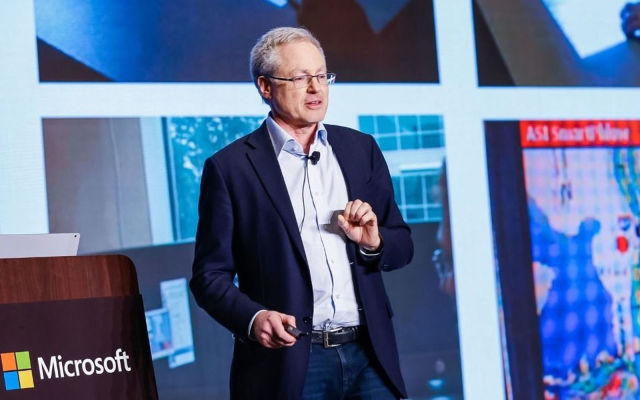
 For the first in its history, there's a chief scientific officer at Microsoft. This week, the company appointed Eric Horvitz to the role as part of a broader reorganization following the departure of a key executive in February.
13Mar/20Off
5G confirmed safe by radiation watchdog
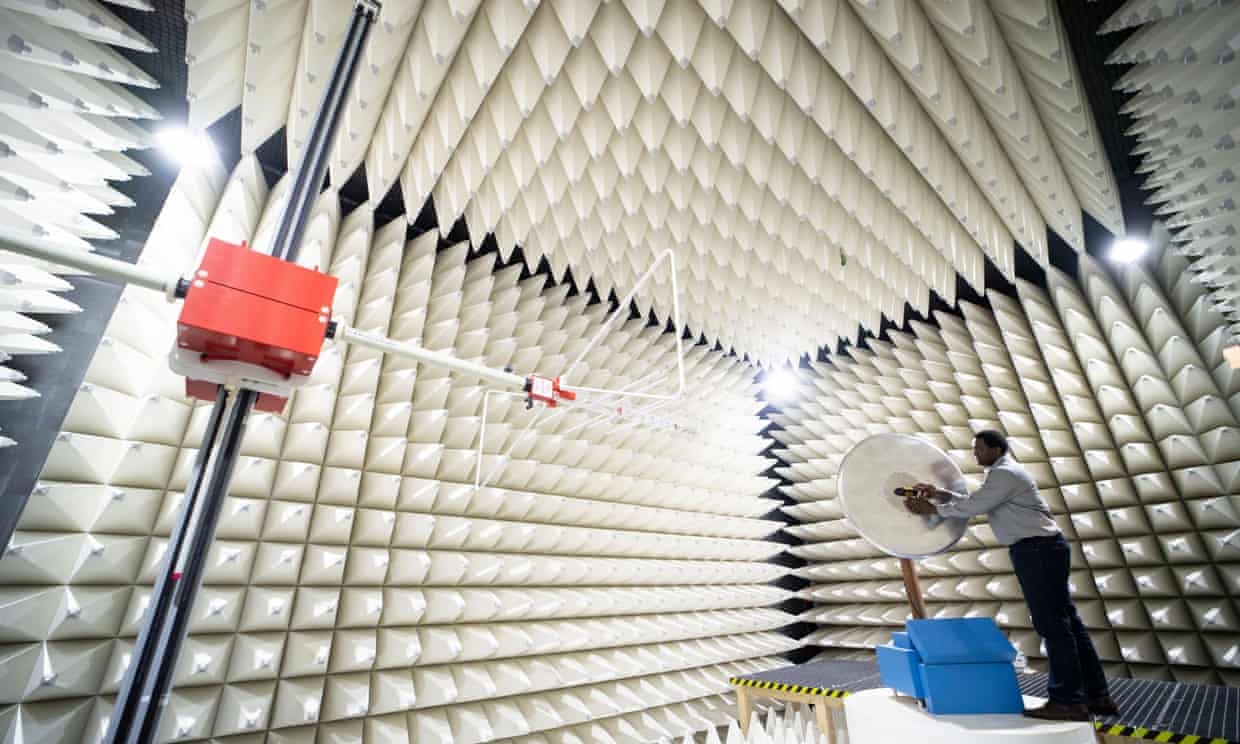 5G is safe, according to the international body in charge of setting limits on exposure to radiation, which has updated its advisory guidelines for the first time in more than 20 years.
The International Commission on Non‐Ionizing Radiation Protection (ICNIRP), the Germany-based scientific body that assesses the health risks of radio broadcasts, called for new guidelines for millimetre-wave 5G, the most high-frequency version of the telecommunications standard.
But in practice, that form of 5G, which is in use in the US and will be coming to Europe, still has output levels significantly below the new maximum.
See the full story here: https://www.theguardian.com/technology/2020/mar/12/5g-safe-radiation-watchdog-health
12Mar/20Off
TikTok to open a ‘Transparency Center’ where outside experts can examine its moderation practices

ZHEJIANG, CHINA - OCTOBER 18 2019 Two us senators have sent a letter to the us national intelligence agency saying TikTok could pose a threat to us national security and should be investigated. Visitors visit the booth of douyin(Tiktok) at the 2019 smart expo in hangzhou, east China's zhejiang province, Oct. 18, 2019.- PHOTOGRAPH BY Costfoto / Barcroft Media (Photo credit should read Costfoto / Barcroft Media via Getty Images)
TikTok, the popular social media app owned by Chinese tech company ByteDance, has been under a national security investigationby U.S. lawmakers who have raised concerns about the company’s access to U.S. user data and whether it was censoring content at the behest of the Chinese government. Today, TikTok tries to combat these concerns with the opening of a “Transparency Center” that will allow outside experts to examine and verify TikTok’s practices.
The new facility in TikTok’s LA office will allow outside experts to view how TikTok’s teams operate day-to-day, the company explains, as staff moderates content on the platform. This includes how moderators apply TikTok’s content guidelines to review the content its technology automatically flagged for review, as well as other content the technology may have missed.
In addition, the experts will be shown how users and creators are able to bring concerns to TikTok and how those concerns are handled. TikTok will also explain how the content on the platform aligns with its guidelines, the company says.
While the larger concern to U.S. lawmakers is potential for China’s influence through social media, TikTok at times makes other moderation choices that don’t appear to be in line with U.S. values. For example, singer Lizzo recently shaded TikTok for removing videos of her wearing a bathing suit, even as TikTok stars posted videos of themselves dancing in their bathing suits....And The Guardian reported on bans of pro-LGBT content. Again, TikTok said the guidelines being referenced in the article were no longer in use.
The Center will open in early May, initially with a focus on moderation. Later, TikTok says it will open up for insight into its source code and efforts around data privacy and security. The second phase will be led by TikTok’s newly appointed chief information security officer, Roland Cloutier, who starts next month.
TikTok in January announced its L.A. operations had moved to a new 120,000-square-foot office in Culver City, California. The company now has over 400 U.S. employees across L.A., New York, and Silicon Valley.
See the full story here: https://techcrunch.com/2020/03/11/tiktok-to-open-a-transparency-center-where-outside-experts-can-examine-its-moderation-practices/
11Mar/20Off
Virtual reality deployed to boost NZ’s biosecurity threat defences
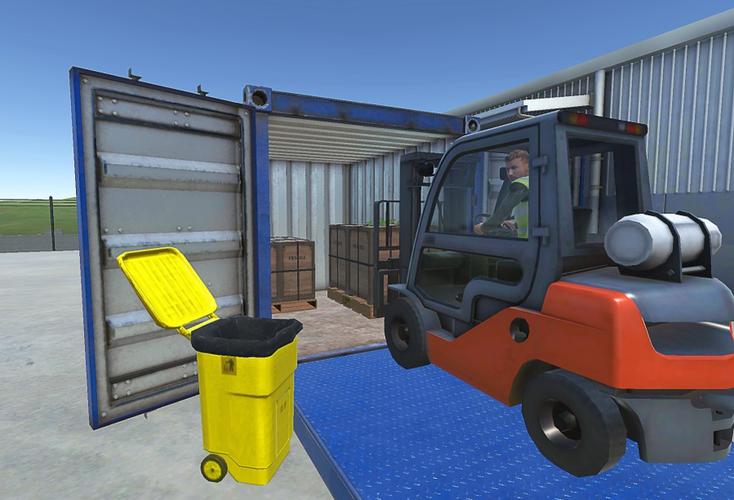 [philnote: training, not inspection]
A collaboration between two Hamilton companies is using virtual reality to improve New Zealand's biosecurity defences by boosting the quality of shipping container inspection.
Independent Verification Services (IVS) in Hamilton has launched a new virtual reality (VR) container inspection simulation which tests and trains inspectors with a series of randomised threats.
The Ministry of Primary Industries has approved the technology, built by Hamilton-based Company-X, to be used in biosecurity refresher training for "accredited persons" (APs), the people employed to carry out inspections.
See the full story here: https://www.reseller.co.nz/article/671635/virtual-reality-deployed-boost-nz-biosecurity-threat-defences/
11Mar/20Off
Does the Future have a Past? New-Old and Old-New Virtual Realities
 Facebook's purchase of Oculus-VR in 2014 is the latest in a series of events (enabled by the ménage à trois of technological innovation, entrepreneurial CEO, and hopeful consumer) that were each thought at the time to open a new era in VR, which would leave the past behind. In this seminar, Professor Peter Otto argues that the roles we have in shaping our digital futures can only be understood in relation to a cultural field that includes histories of our non-digital virtual realities.
Importantly, in the case of VR the 'new' has a very long history, which means that digital VR struggles to find its place within a world already cluttered with (arguably more sophisticated) digital and non-digital virtual realities.
In this Seminar, Professor Peter Otto will focus on three immersive/interactive environments:
- Thomas Hornor's Colosseum (1829), centred on his 'Panorama of London', which was designed to enable immersants to live, for extended periods of time, in an alternative reality
- the Hiroshima Peace Memorial Museum, designed by Kenzo Tange (opened 1955), centred on a deeply-disturbing panorama of Hiroshima in ruins
- 'Teamlab Planets', a sequence of linked, digitally-generated panoramic environments, which opened in Tokyo in 2019
See the full story here: https://arts.unimelb.edu.au/research/digital-studio/news-and-events/does-the-future-have-a-past-new-old-and-old-new-virtual-realities
11Mar/20Off
Serious Labs Unveils Universal Motion Base for Virtual Reality Heavy Equipment Simulators
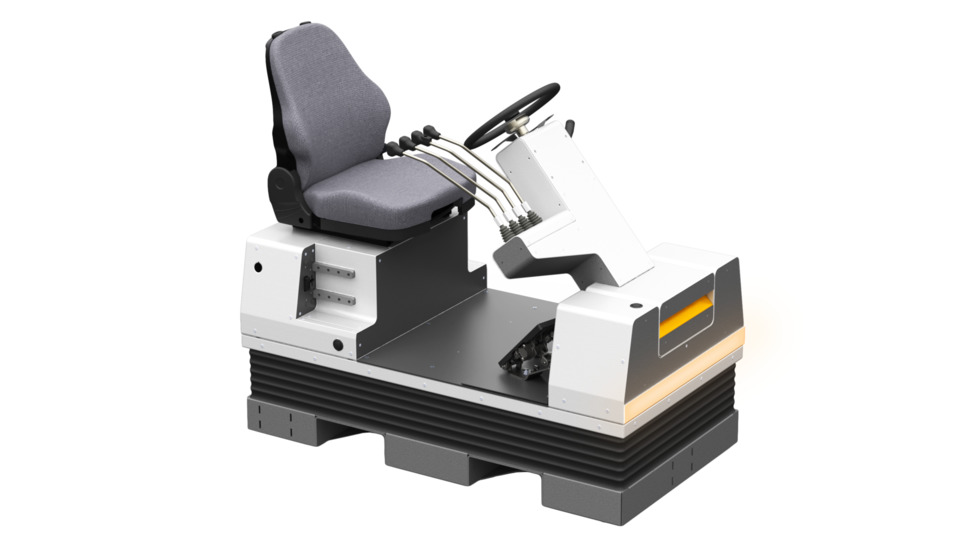 The versatile prototype can be used for safety training across seated machines and vehicles.
Serious Labs, a supplier and creator of virtual reality (VR) solutions for training and operation of heavy equipment, unveiled its Universal Motion Base (UMB) for seated VR Heavy Equipment Simulators at CONEXPO-CON/AGG 2020. The UMB has been designed as the common foundation for the development of additional VR equipment simulators such as skid steers, dozers, excavators, backhoes, as well as for vehicles such as buses and trucks.
11Mar/20Off
The world’s first augmented reality surgical operation
 “We had a real patient both under our hands and under our eyes, the entire experience was heightened. Suddenly I had instant and seamless access to a wide range of data about the patient, which proved to be a vital aid in the operation.”
The procedure itself involved the resecting and repositioning of the upper jaw bone, in order to restore the patient’s biting functionality. For an operation such as this, normally an external monitor would be used to analyse vital information about the patient’s condition.
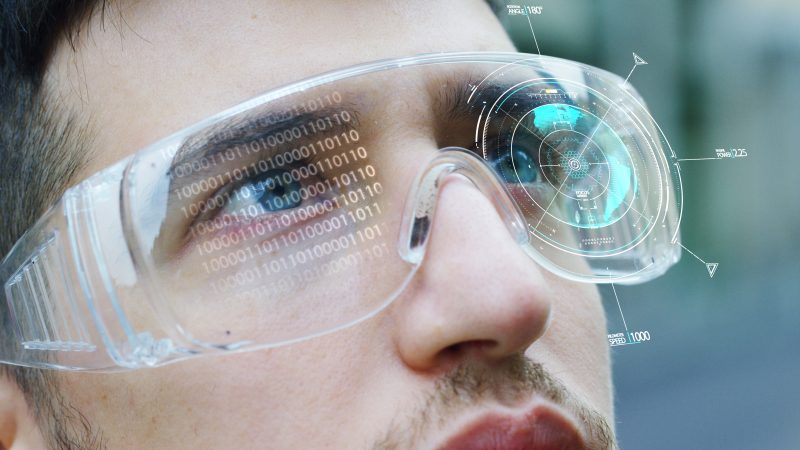
This time around, with the use of a headset developed as part of the EU-funded VOSTARS (Video-Optical See Through AR surgical System) project, that very same data appears in the lens of a visor worn by the lead surgeon.
The data visible through the visor includes the patient’s heart rate, body temperature, blood pressure, and breathing rates, alongside pre-operative information retrieved from imaging technologies used beforehand, including CT, MRI, or 3DUS scans.
The data visible through the visor includes the patient’s heart rate, body temperature, blood pressure, and breathing rates, alongside pre-operative information retrieved from imaging technologies used beforehand, including CT, MRI, or 3DUS scans.
See the full story here: https://www.euractiv.com/section/digital/news/the-worlds-first-augmented-reality-surgical-operation/