How AI is Transforming the Entertainment Industry
 The majority of cases of artificial intelligence applications in media and entertainment can be divided into four categories:
- Marketing and advertising. Artificial intelligence programming will be aimed at helping with the development of film trailers and designing advertisements.
- User experience personalization. Artificial intelligence app will be used by entertainment providers to offer personalized content based on users data obtained from their activity and website behavior.
- Search optimization. In this case, AI will be used to increase the speed and efficiency of the overall classification and search process.
- Innovative experience with broader usage of VR and AR. More active implementation of AI to enhance the virtual and augmented reality to take user experience to the next level.
See the full story here: https://readwrite.com/2020/01/10/how-ai-is-transforming-the-entertainment-industry/
Mark Cuban Talks Investing in AI and Regulating Big Tech at Variety’s CES Summit
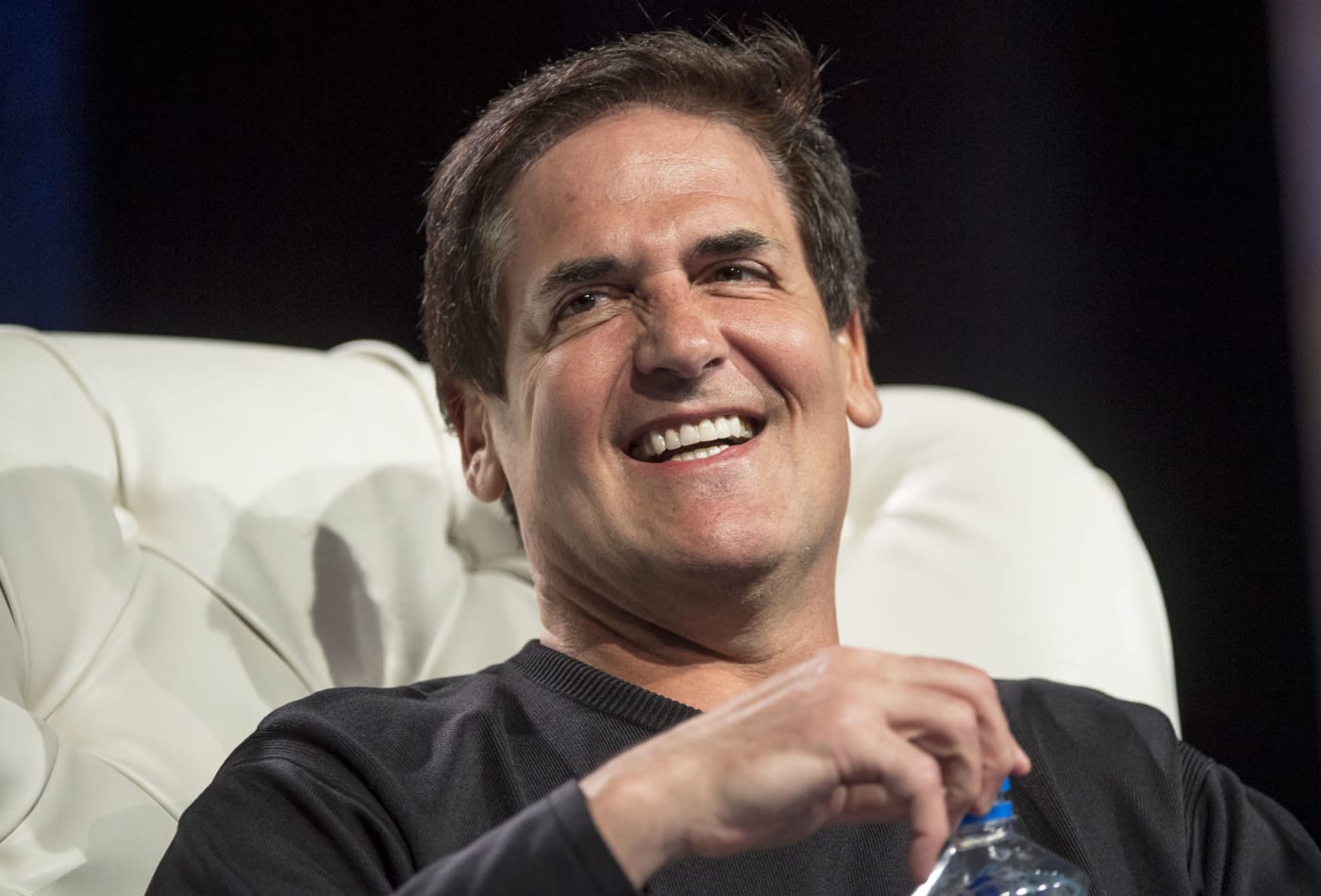 Cuban was most enthusiastic about the potential for AI to transform myriad aspects of the way people live, work and play. In the wide-ranging Q&A with Variety co-editor-in-chief Andrew Wallenstein, Cuban stated flatly that most American businesses have no choice but to integrate AI technology into their strategic plans. He said he’s been taking classes to better understand the growing world of artificial intelligence and machine learning.
“If you don’t know AI, you’re the equivalent of somebody in 1999 saying ‘I’m sure this Internet thing will be OK but I don’t give a shit,’ ” Cuban said during the session at the Aira Las Vegas Resort, held as part of the CES conference that runs through Thursday.
The TikTok platform that has come on strong in the U.S. in the last year has also been a source of family bonding for the Cubans. As a father of three, he appreciates the mostly family-friendly focus of the platform known for its 15-second videos. He was shocked to see that a video of him dancing with his children got 1.6 million views in 20 hours.
See the full story here: https://variety.com/2020/biz/news/mark-cuban-ai-tikok-variety-entertainment-summit-1203461358/
Resonai and CJ 4DPLEX join to push the envelope for augmented reality entertainment
 Using the Vera platform, a theater space or any large area can be scanned and sent to Vera’s AR cloud to create a highly accurate 3D digital twin. This virtual space then becomes available via the cloud and is connected to Vera operated apps and mobile devices.
This allows AR experiences to use highly accurate location information about the space and deploy visual and audio cues with high fidelity.
See the full story here: https://siliconangle.com/2020/01/07/resonai-cj-4dplex-push-envelope-augmented-reality-entertainment/
Edinburgh author Jane Alexander on the futuristic possibilities of virtual reality
 In her thought-provoking new novel, A User’s Guide to Make-Believe, Jane Alexander explores the life of a woman who uses virtual reality to revisit the golden days of a relationship. Interview by David Robinson
As she points out, we’re more than half-way there already, what with all the fictions we put out about ourselves on social media.
Alexander’s novel imagines something far more immersive – a technology called Make-Believe (“Whatever your fantasy, live it with Make-Believe™ – the only limit is you”) which is also unlinked to anything else. To activate your biomolecules and kickstart your fantasies, all you need is a simple – if expensive – nasal spray.
Suppose, Alexander imagines, extreme users’ virtual reality could be affected by other people’s. Suppose, in other words, that people could see straight into each other’s minds ...
See the full story here: https://www.scotsman.com/arts-and-culture/books/edinburgh-author-jane-alexander-on-the-futuristic-possibilities-of-virtual-reality-1-5072073
Nreal Light gets Nebula 3D augmented reality UI and eye tracking
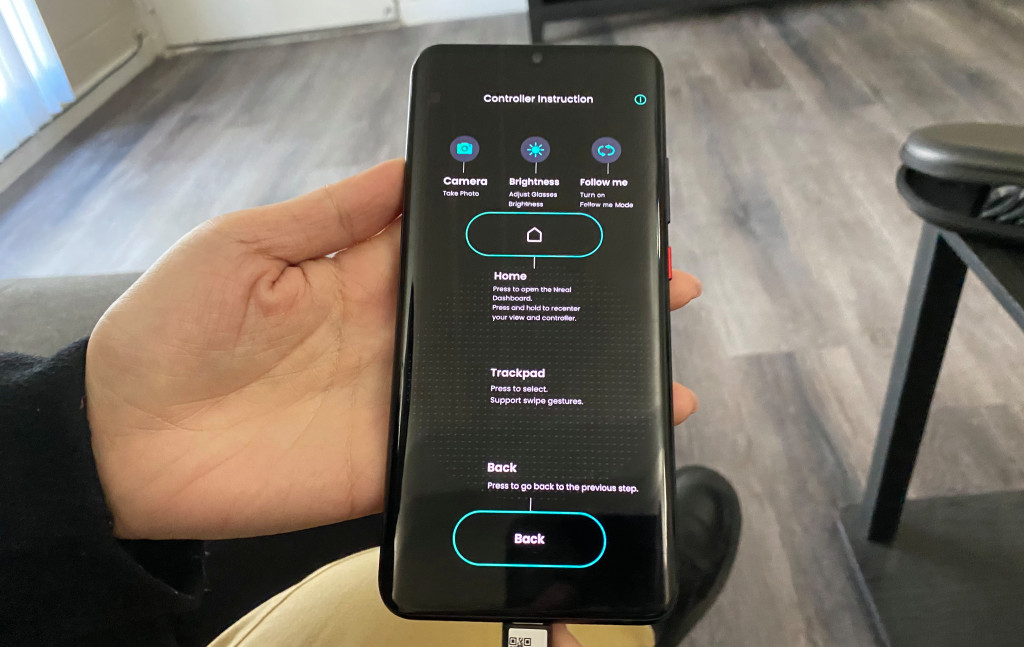
 Today, the company revealed a new 3D home screen called Nebula that will let users access Android apps and interactive 3D content, as well as eye tracking and controller support that will let you interact with mixed reality experiences.
Nebula transforms your current environment into a user interface, enabling you to place persistent app screens within a physical space and interact with them at will. During hands-on testing of the new UI, anti-aliased text and icons looked even clearer and brighter than one might have expected from Light’s dual 1080p displays; a tethered Android smartphone serves as a 3DoF controller to laser-point at icons and reposition app windows as you want them in 3D space.
Nreal claims that the UI actually creates a digital reconstruction of your real world surroundings, enabling virtual objects to be occluded within the 3D space for realistic mixed reality blending — something we didn’t see in the demo. Multiple users can share app work and play spaces for collaboration, or a single user can keep the space private.
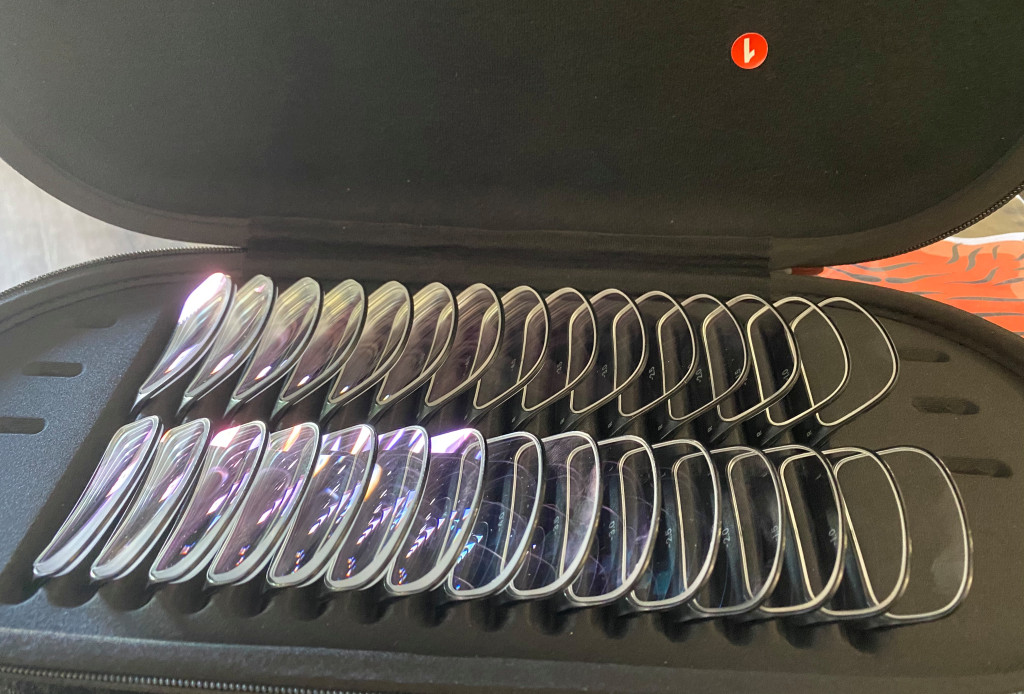
Nreal also disclosed some additional connectivity options for Light: In addition to working with Android smartphones over USB-C, the $499 consumer versionwill also work with tablets and Windows PCs. Optional magnetic corrective lenses will be offered to accommodate nearsighted users, in addition to the included magnetically attachable nose pads that will come in the box. No pricing for the lenses is yet available.
See the full story here: https://venturebeat.com/2020/01/06/nreal-light-gets-nebula-3d-augmented-reality-ui-and-eye-tracking/
‘You Can Slow Down Time in Virtual Reality’: Why This Artist Is Using VR to Recreate Lost Ecosystems in the Era of Climate Change
 The last Kaua’i ‘ō’ō bird died in 1987. After the species went extinct, a user uploaded a recording of the Hawaiian bird’s unique mating call to YouTube in 2009 and it has since been played by humans more than a half-million times since.
One of them was the Danish-born, New York-based artist Jakob Kudsk Steensen, who uses Virtual Reality as a tool to remix and create a new kind of landscape that is not bound to time or space, and that recalls the irretrievable, lost nature of history.
For his recent installation RE-ANIMATED (2018-19), which was on view in the Future Generation Art Prize’s exhibition in Venice during last year’s biennale, Steensen brings the Kaua’i ‘ō’ō bird back to life via an imagined virtual-reality world.
There’s another layer of this story, which is personal, and I don’t want to go into details, but it’s about family and losses. Even though I grew up in a digital time and am used to archiving things with social-media pictures and everything, people still die and vanish and can never come back.
What about the limits of VR as a medium?
The limits of VR as medium would be the size of the audience. I have eight headsets now, and after each exhibition they just broke down because the technology is so new. All these complications can play in when dealing with a big audience.
See the full story here: https://news.artnet.com/art-world/jakob-kudsk-steensen-vr-1748265
R2-D2 finally joins cast of Star Wars characters roaming around Disneyland’s Galaxy’s Edge
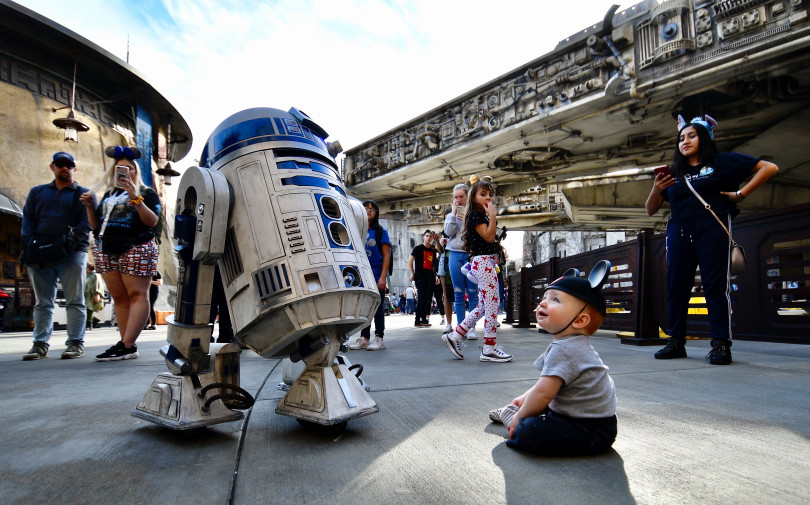
Ronan Chavez, 1, from Arizona, stares at R2D2 as the droid roams around Star Wars Galaxy’s Edge at Disneyland in Anaheim, CA, on Tuesday, Jan. 7, 2020.
(Photo by Jeff Gritchen, Orange County Register/SCNG)
It’s taken seven months for Artoo to begin making the rounds through Black Spire Outpost on the Star Wars planet of Batuu, the setting for the new Galaxy’s Edgethemed land that debuted in May at Disneyland.
Previously, R2-D2 had been confined to the droid-building workshop where well-heeled visitors could purchase the remote-controlled astromech unit for a whopping $25,000.
Artoo doesn’t have a set appearance schedule or an official meet-and-greet location in Galaxy’s Edge. You’ll have to just stumble upon the R2-unit much like the seemingly serendipitous encounters with Kylo Ren, Rey, Chewbacca, Vi Moradi and the stormtroopers that populate the land. Disneyland cast members walk alongside Artoo as the droid makes his way around Galaxy’s Edge.
R2-D2 isn’t the first droid to roll around the Anaheim theme park. An orange and white maintenance droid named Jake wowed Disneyland visitors in 2017 as he roamed freely around Tomorrowland posing for photos with curious onlookers and pausing for hugs from adoring kids.
The J4-K3 Tomorrowland play test at Disneyland was independent of any work being done on Galaxy’s Edge, according to Walt Disney Imagineering officials. Imagineering has no current plans to use the J4-K3 autonomous character technology in Star Wars: Galaxy’s Edge or with any particular character or type of character.
See the full story here: https://www.ocregister.com/2020/01/08/r2-d2-finally-joins-cast-of-star-wars-characters-roaming-around-disneylands-galaxys-edge/
BMW Augmented Reality Windshield Concept Adds Gaze Detection for Natural Interaction
 During the climax of its presentation at this week's CES 2020 in Las Vegas, the automaker unveiled its BMW i Interaction Ease, a concept cabin for autonomous vehicles that combines an AR windshield, a contextual user interface, intelligent lighting, and a luxurious, adaptable interior that looks more like a hotel suite than a passenger vehicle.
The BMW Natural Interaction system uses not only voice and gesture control, but also gaze detection to interact with navigation and infotainment features on the Panorama Head-Up Display, which adds a digital layer to the entire expanse of the real-world view. Meanwhile, intelligent materials turn dashboards and seats into interactive surfaces for additional interaction.
According to Fröhlich, the first BMW Natural Interaction features will arrive in the BMW iNext in 2021.
materials turn seats into interactive surfaces, so, with a touch, seats recline into a position that emulates the feeling of weightlessness. The display and lighting also adjust, while soothing sounds from Academy Award-winning composer Hans Zimmer and BMW sound designer Renzo Vitale fill the cabin.
See the full story here: https://next.reality.news/news/bmw-augmented-reality-windshield-concept-adds-gaze-detection-for-natural-interaction-0228950/