USC student looks to virtual reality to alleviate young patients’ fears of MRI scans
/arc-anglerfish-arc2-prod-uscannenberg.s3.amazonaws.com/public/7GHJVFPWMZCOFKZDSTAY2UURTY.png) According to Orozco, the prototype creates a child-friendly experience for kids to learn what an MRI is and how it functions. He described that users would see a teddy bear welcoming them and walking them through the MRI scan procedures and overall experience.
According to Orozco, the prototype creates a child-friendly experience for kids to learn what an MRI is and how it functions. He described that users would see a teddy bear welcoming them and walking them through the MRI scan procedures and overall experience.
“VR experience emerges you in that space, so you can see the scanner, you can see what the room would look like, you can [hear] the sounds,” Orzco said. “By stimulating the environment and the procedure itself, it's much more than just a learning experience. You're getting first-hand experience of [MRI].”
He also explained that VR MRI is different from other mock MRI tools on the market due to its portability, since most competitors have products that are too large for hospitals, and immersive reality.
He attributed factors that increased anxiety among children to the MRI’s loud sounds, huge volume and closed environment. The National Center for Biotechnology Informationreported that MRI scans are more likely to cause anxiety among children, since it makes sounds of up to 120 decibels. This amount is equivalent to the loudness of an ambulance siren or thunderclap, according to the Hearing Health Foundation.
He also added that since many children move around during scans due to anxiety, which makes the images hard to read, relieving the stress that young patients fear can help generate more usable data for experts in the medical field.
“I found that a lot of the data that we collected was just unusable, [which is] a waste of money and a waste of time,” Orozco said.
Lumeum will launch the pilot program in the beginning of 2020 to have children perform MRIs with VR MRI in collaboration with Children’s Hospital Los Angeles, according to Dr. Jeffrey Gold, who founded the hospital's pediatric pain management clinic.
See the full story here: http://www.uscannenbergmedia.com/2019/12/04/usc-student-looks-to-virtual-reality-to-alleviate-young-patients-fears-of-mri-scans/
MIT creates an AI that understands the laws of physics intuitively
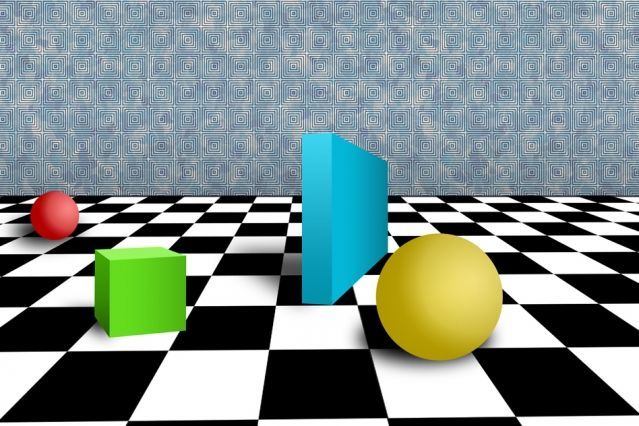 Dubbed ADEPT, the system is able to, like a human being, understand some laws of physics intuitively. It can look at an object in a video, predict how it should act based on what it knows of the laws of physics and then register surprise if what it was looking at subsequently vanishes or teleports. The team behind ADEPT say their model will allow other researchers to create smarter AIs in the future, as well give us a better understanding of how infants understand the world around them.
ADEPT depends on two modules to do what it does. The first examines an object, determining its shape, pose and velocity. What's interesting about this module is that it doesn't get caught up in details. It only looks at the approximate geometry of something, rather than analyzing every facet of it, before it moves onto the next step.
The second module is a physics system. It shares similarities with the software video game developers employ to replicate real-world physics in their games. It takes the data captured by the graphics module and simulates how an object should act based on the laws of physics. Once it has a couple of predicted outcomes, it will compare those against the next frames of a video. If it notices a discrepancy in what it thought would happen with what actually occurred, it will send out a signal. The stronger the signal, the more surprised it was by what just happened. What's interesting about ADEPT is that its level of surprise matched those of humans who were shown the same set of videos.
See the full story here: https://www.yahoo.com/entertainment/2019-12-04-mit-adept-ai-understands-physics-intuitively.html
New ways to syndicate your augmented reality and 3D assets
 Conclusion

Thanks to a growing number of syndication opportunities across the Web, immersive content is poised to become mission-critical content for online retail. Merchants who invest in portable, web-based 3D and AR have a solid foundation for innovative experiences now and in the future.
Vertebrae Inc. provides technology that manages the process of 3D and augmented reality (AR) asset creation, management, deployment and reporting.
See the full story here: https://www.digitalcommerce360.com/2019/12/04/new-ways-to-syndicate-your-augmented-reality-and-3d-assets/
Virtual Reality Is Great, But Only If It Works for Troops in Zombieland
Today’s military service members often are referred to as “integrated weapons platforms” and “systems.” In squads, they are “integrated combat platforms.” Army infantry members are being “modernized” by a cross-functional team dedicated to improving their “lethality.”
 There’s one possible bug in the ointment: Our warfighters are humans. Reducing them to platforms and weapons systems does them and the nation a disservice. They are highly skilled experts at multitasking in extreme conditions with muscle memory and split-decision-making honed through hard-earned experience. Their lessons learned are in the form of casualties, not numbers of defects or cycle times. Especially as we arm them with smarter technology and artificial intelligence, we cannot overlook their human insights, their ethical perspective, and their expertise.
But our sons and daughters in uniform, especially those who are deployed, don’t necessarily need their equipment to be the latest and most advanced. They need devices that deliver information and decision support they can easily and effectively use in the high-stress, high-stakes missions we send them on. Out in Zombieland, sleek and immersive pale in comparison to simple and effective.
See the full story here: https://www.govexec.com/defense/2019/12/virtual-reality-great-only-if-it-works-troops-zombieland/161620/
Virtual Reality Patents: Creating a World of Innovation and Imagination
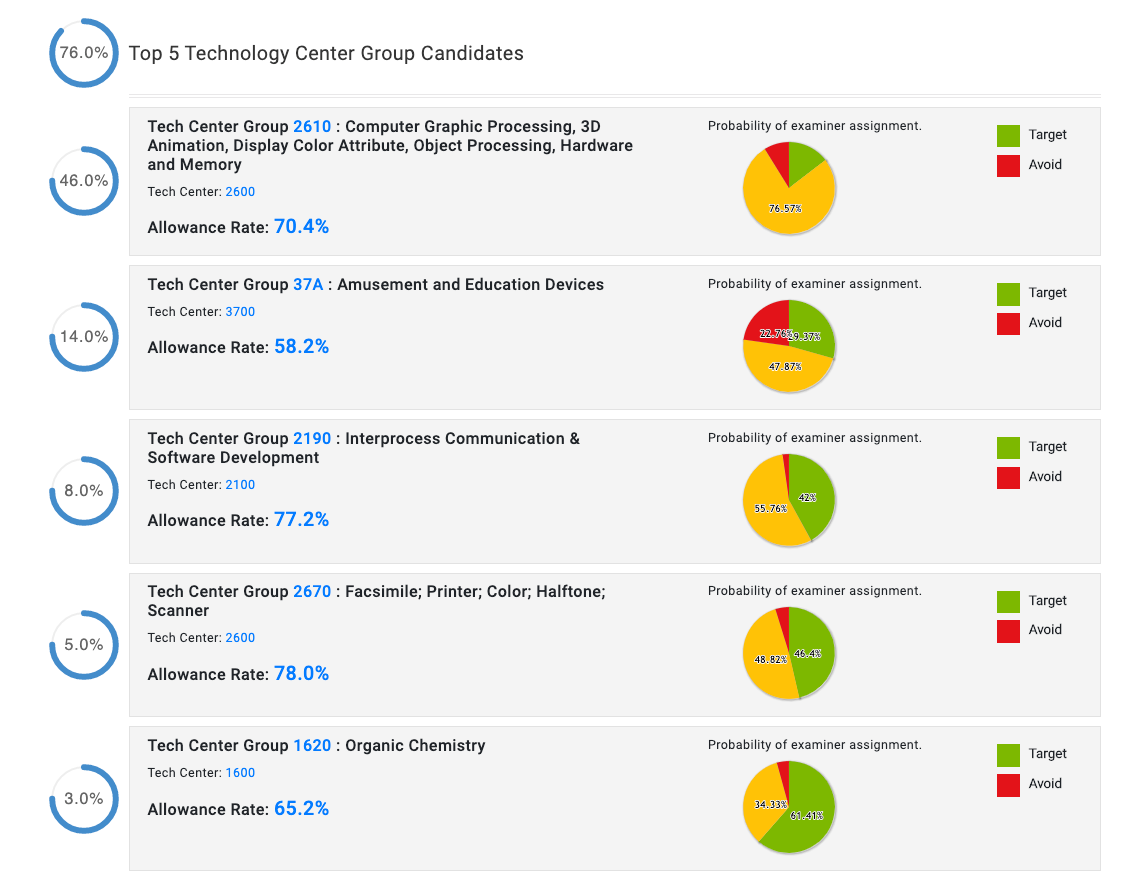
Often, when a new technology leads to an abundance of patent filings, patent prosecution grows in difficulty as the “novelty” and “non-obviousness” requirements become tougher to meet. The LexisNexis PathWays™ tool, available on the LexisNexis PatentAdvisor® patent prosecution platform, is able to use patent language keywords to provide both the likelihood of being assigned to a specific USPTO art unit, as well as key patent statistics that help make predictions about patent prosecution difficulty. Currently, a “virtual reality” PathWays™ search shows that USPTO allowance rates are still generally favorable for patent applications. However, patent statistics vary greatly across the technology center groups that are most likely to evaluate a VR patent (shown below).
See the full story here: https://www.lexisnexisip.com/knowledge-center/virtual-reality-patents-creating-a-world-of-innovation-and-imagination/
Top Minds in Big Data, Artificial Intelligence Fields Converge in Pasadena This Week
 A schedule on the event website shows panels throughout the two-day IM DATA Global Annual Conference, on Friday and Saturday, December 6 and 7, will include practitioners and professors who will discuss topics such as the innovative discovery in recent AI and Big Data research, raising capital for data start-ups, and applications in media and entertainment.
The event is organized by the RDMS in Pasadena, which stands for Research Methods and Data Science.
Keynote speakers are experts from prestigious universities like Caltech, USC, UCLA and big companies like Google, Disney, and ObEN who will talk about their recent research, and how their projects directly benefit the community. Moreover, there are numerous forums scheduled for practitioners and professors to discuss the most interesting topics in AI, like the ethical use of AI and how AI will impact healthcare and education. The career paths to work in data science will also be included in the panel.
See the full story here: http://www.pasadenanow.com/main/top-minds-in-big-data-artificial-intelligence-fields-converge-in-pasadena-this-week/#.XeiUUy2ZPow
and the conf info here: https://www.grmds.org