The Extensive Practices Of Augmented Reality Today
 Yale University is also one of twenty universities which are participating in the HP/Educause Campus of the Future project investigating the use of AR and VR technology in higher education. Yale’s Blended Reality team has endeavored to “capture” digitally the Peabody museum dioramas which will essentially become digital replicas of plastic arts. Yale’s projects also include the use of motion capture and AR to generate dance choreography in addition to the replication of visual artworks.
Additionally, the University Libraries at the University has recently hosted a VR|AR Meet-Up featuring the Reno Street Art Project and Walking With Reality, two projects that have fully taken on the challenge to merge the arts an new technology. And Street Art Museum Amsterdam (SAMA) is also using VR to preserve street art collections which will be destroyed by the year’s end. It is clear that VR, AR and XR are promising new arenas in the art world and their inclusion in the cultural landscape of art is hardly experimental today.
See the full story here: https://www.forbes.com/sites/julianvigo/2019/11/15/the-extensive-practices-of-augmented-reality-today/#6db51aae4eac
Prosthetic reality: living art. How augmented reality is breaking down the walls between viewer and art.
 At the Ayzenberg sp[a]ce gallery in Pasadena, the art on the walls are coming to life. A still illustration of a rural house is suddenly engulfed in a dust storm, a Japanese village is destroyed by a wave and a fish swims off of its dinner plate. Each artwork in the Prosthetic Reality exhibit is animated through augmented reality (or AR) technology and sound elements, which can only be experienced through your phone on an app called EyeJack.
Prosthetic Reality, curated by AR and virtual reality (VR) artist Sutu (Stuart Campbell), peeks into the emerging world of art and technology. The free exhibit, which is open until December 8, showcases work from over 40 artists and sound designers from around the globe. The sp[a]ce gallery, which identifies as a non-profit project, has featured several mixed reality (AR and VR) art exhibits in the past, making it a mainstay in the emergence of interactive museums.
...
One of the pieces on the app called “Unprotected” is Cahill’s own. Located in front of the U.S. Supreme Court, the drawing depicts an abstraction of a mangled body in the midst of struggle. The piece was enacted on the app after the Kavanaugh hearings and before the swearing-in of the new Supreme Court Justice. The name, “Unprotected,” signifies how female bodies are still not guaranteed equal protection because the Equal Rights Act was never ratified into the Constitution.
“These conversations may not always be productive, but they are conversations nonetheless,” she said.
With creations like Prosthetic Reality and 4th Wall, the possibilities of AR look promising, whether it’s making art more fun and immersive, or deepening the meaning of a piece.
See the full story here: http://www.uscannenbergmedia.com/2019/11/15/prosthetic-reality-living-art/
Cinephil Acquires AI-Themed Political Thriller Documentary ‘iHuman’ (EXCLUSIVE)
Tel Aviv-based Cinephil has acquired worldwide rights to Tonje Hessen Schei’s (“Drone”) “iHuman,” a political thriller documentary about artificial intelligence, power and social control.
“’iHuman’ presents the AI landscape through the eyes of the world’s top minds in the field, laying out how the new generation of AI technology will powerfully outpace human intelligence in our lifetime,” said Annie Roney, founder and managing director of ro*co films. Roney said the film asks whether AI “serves or undermines democratic principles.”
New federal bill would restrict police use of facial recognition
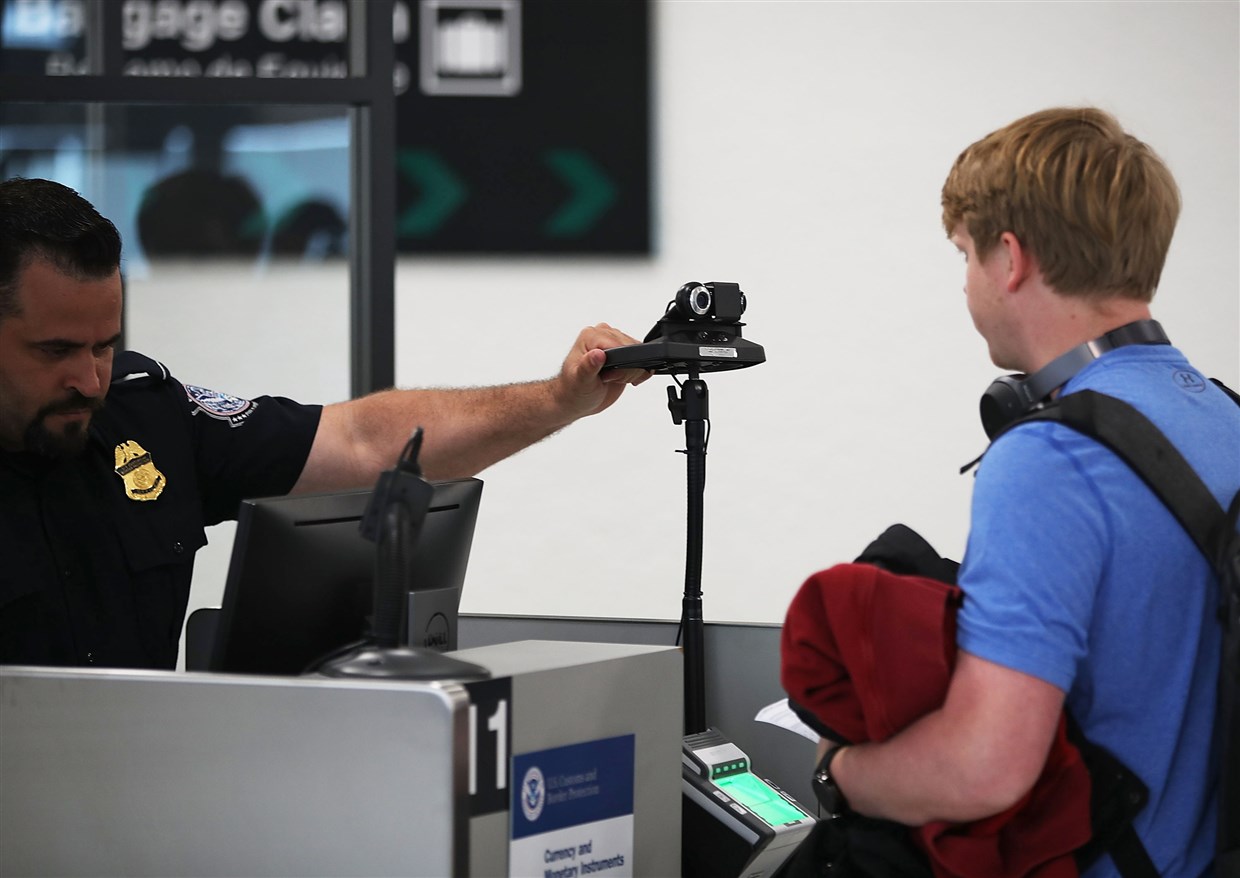 The bill, known as the Facial Recognition Technology Warrant Act, would require federal law enforcement to explain to a judge why they want to use facial recognition to track someone in real time for longer than three days, and would limit that surveillance to 30 days. It also would require the judge to report the request to U.S. court administrators for tracking. And it would require law enforcement to work with government researchers to make sure the facial recognition systems they're using are accurate.
The bill only applies to federal law enforcement, not state and local police.
"It's an OK step," said Andrew Ferguson, a law professor at the University of the District of Columbia who has pressed lawmakers to regulate police use of facial recognition. "It addresses a problem that is not a problem yet, but it omits the problem that is currently in practice right now."
See the full story here: https://www.nbcnews.com/news/us-news/new-federal-bill-would-restrict-police-use-facial-recognition-n1082406
John Carmack Stepping Down As Oculus CTO To Develop ‘Strong AI’
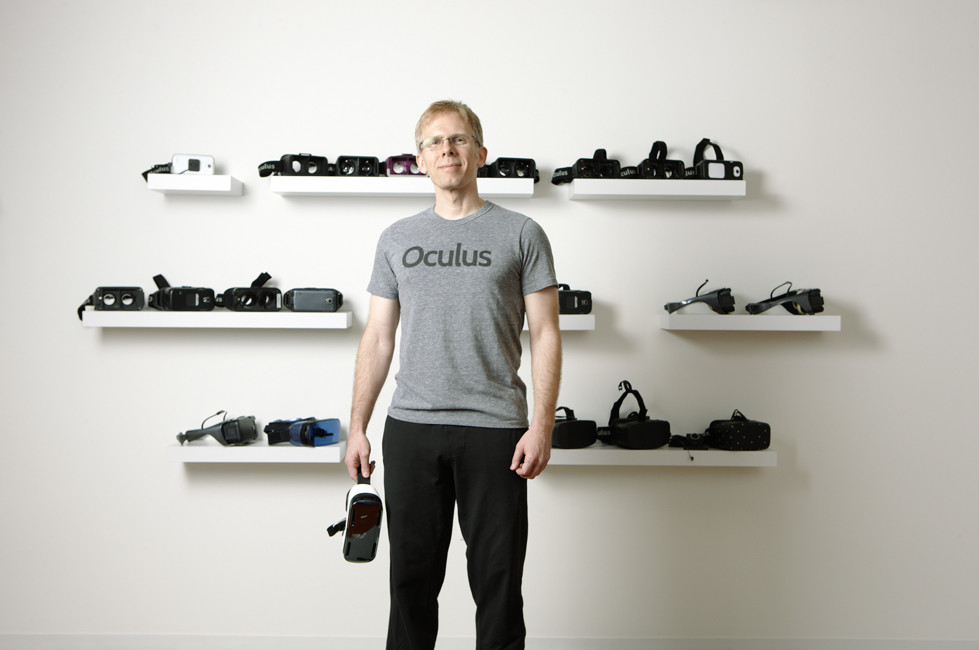 “When I think back over everything I have done across games, aerospace, and VR, I have always felt that I had at least a vague “line of sight” to the solutions, even if they were unconventional or unproven,” stated Carmack during his video acceptance speech. “I have sometimes wondered how I would fare with a problem where the solution really isn’t in sight. I decided that I should give it a try before I get too old.”
As for what’s next for the tireless programmer/developer/engineer, Carmack states he’s looking to expand his already impressive resume to include artificial general intelligence. Sometimes referred to as “Strong AI,” AGI is an advanced form of artificial intelligence capable of learning and understanding intelligent tasks at a human level. It’s the kind of technology that keeps people like Elon Musk up at night.
See the full story here: https://vrscout.com/news/john-carmack-steps-down-from-oculus/
Turn Your Home Into A Mixed Reality Record Store With Spotify On Magic Leap
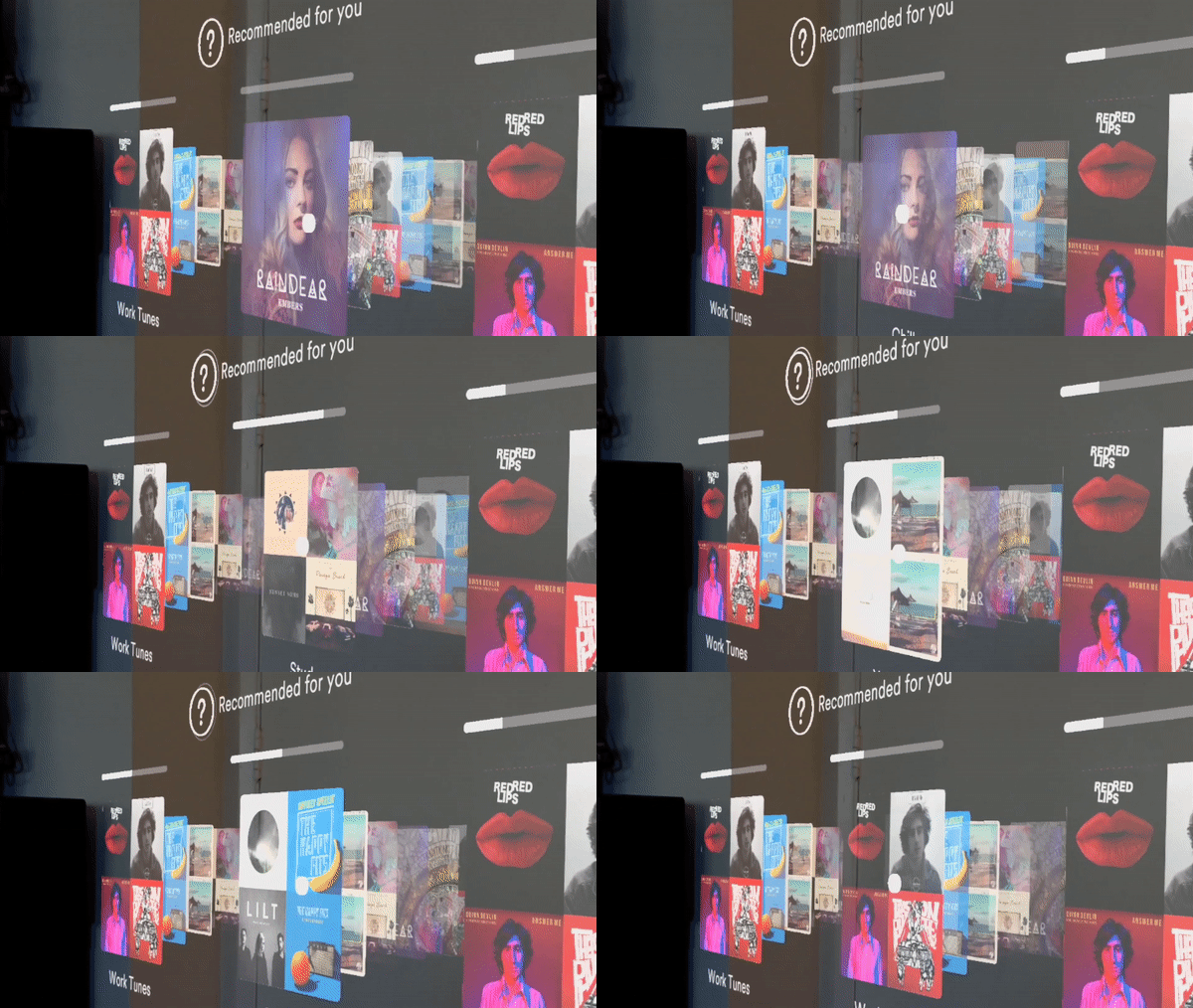 Using a spatial-aware user interface, you can actually pin artists, tracks, albums, and playlists anywhere within your physical space, turning your home into a futuristic jukebox. Not only that, but you can also create personalized soundscapes that trigger certain playlists depending on what room you’re in.
“Share your sofa with up-and-coming bands, meet your idols in your kitchen, explore new albums in your garage,” says the company in the official blog post.
See the full story here: https://vrscout.com/news/spotify-mixed-reality-on-magic-leap/
Last Labyrinth Is A Nightmare-Fueled Escape Room Tailor-Made For VR
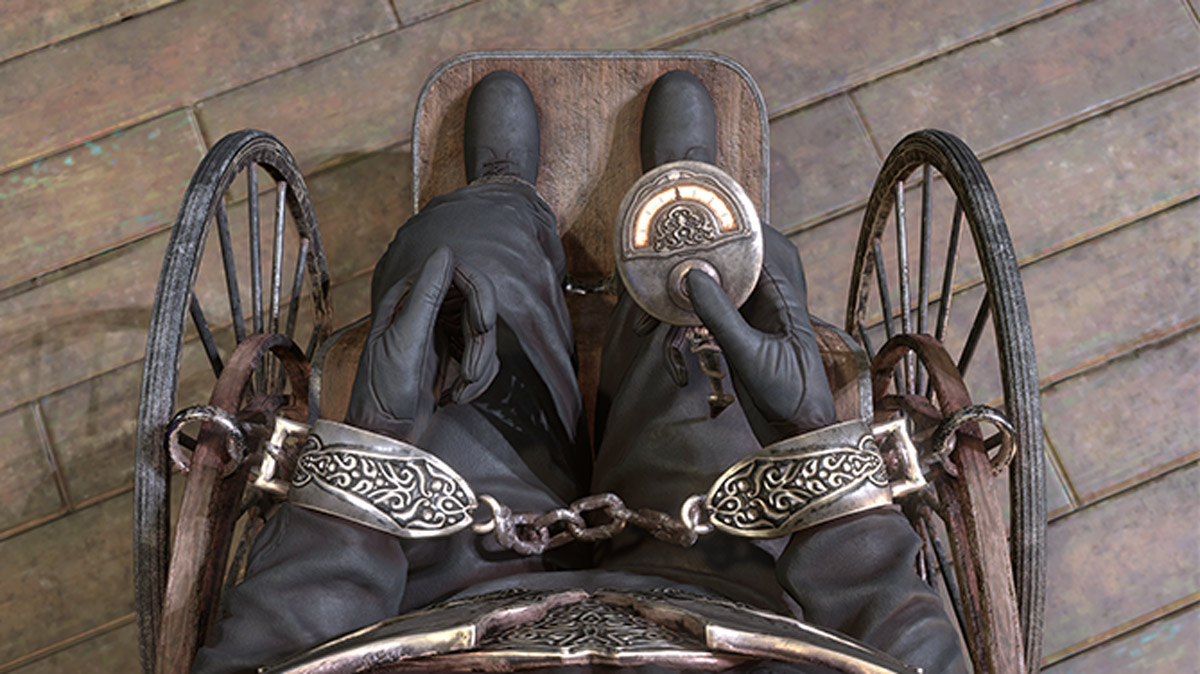 Tasked with escaping the confines of a mysterious mansion, Last Labyrinth begins with the player tied to a wheelchair — hands and legs bound together — inside a dark room; their only other company being a young girl who speaks an unrecognizable foreign language. Right off the bat, the immersive escape room experience sets itself apart from its contemporaries with its unique interaction system. Unable to physically move their legs or arms, players can trigger levers, activate switches, and interact with various other environmental elements by directing the young girl, Katia, to different positions throughout each room.
Of course, neither Katia nor the player can understand one another. As a result, players “communicate,” using a laser pointer attached to their head which allows them to guide the young companion towards specific objects. Before Katia performs each desired action, she’ll “ask” for confirmation by pointing at the object, at which point the player can either nod “yes” or “no” to complete the action.
While the experience can sometimes slow down to a crawl during a few of the lengthier challenges, the comfortable, seated experience manages to keep you constantly engaged throughout, thanks in large part to its consistently-unsettling environments.
One of Last Labyrinth’s most defining elements is the gruesome deaths you and Katia are subject to as a result of failing certain puzzles. This can include everything from decapitation and impalement, to falling or being crushed to death.
See the full story here: https://vrscout.com/news/last-labyrinth-vr-escape-room-now-available/