In this pioneering production of AR drama, Augmented Play reimagined Beckett’s ground-breaking theatrical text, Play (1963), for digital culture.
Guests activated the characters into speaking simply by looking at them. This technological artwork acknowledged the new condition of active audiences and recognised new opportunities for narrative, by affording audiences a central role in the story.
The characters – recorded using world-leading technology for volumetric video content creation, developed by V-SENSE and Volograms – were displayed using Magic Leap’s AR headset. Augmented Play affirmed the maturity of this technology as a viable option for live action, immersive storytelling in VR and AR.
Augmented Play presented a ground-breaking milestone for V-SENSE, a leading computer science research group at Trinity; Volograms, a domestic SME leading VR, AR and Mixed Reality technologies for the creative cultural industries; and the Trinity Centre for Beckett Studies based at the Trinity Long Room Hub, whose partnership was pivotal in the production, translation and dramaturgical direction of Beckett’s play.
The business proposition of AR is causing it to be adopted before the risks have been vetted or having tech developed by companies without significant IT experience, leading to technologies that are actually incompatible with existing infrastructure. I strongly recommend including IT security experts in your early AR discussions, as they can help you vet security capabilities and adopt your security best practices.
Dark Clouds
Many wearable AR companies require cloud connectivity, which exposes new threat vectors. Those vectors include:
• Data moving to and from the cloud can often be intercepted. Even TLS encryption can be breakable with common IT infrastructure stacks that do packet inspection.
• Interruptions of internet connections can disrupt production.
• Cloud servers can be breached, potentially exposing sensitive data.
...
To appreciate how quickly new realities can replace old assumptions, consider the extraordinary speed with which quantum computing capabilities — which are already starting to make standard RSA encryption look vulnerable — are increasing. We're not at the exponential rate described by Moore’s Law, which famously states that computing power roughly doubles every two years — but double theexponential rate.
At that pace, new threats can emerge and reliable security protocols become obsolete quite literally overnight. Implementing your cyber strategy is an ongoing process to keep up with the sophisticated threats of an increasingly connected — and increasingly augmented — world.
The CTO of Facebook says videos forged using AI will be used maliciously on its platforms before long, reports Will Knight.
The logic: As they become easier to produce and more convincing, Facebook fears deepfakes could be the next big source of viral misinformation. It’s directed its own team of AI researchers to produce a set of deepfake videos of actors doing and saying routine things, set to be released at the end of the year.
Why? The idea is that they will help researchers build and refine detection tools. Although such methods exist, they often involved painstaking expert analysis. Tools for catching deepfakes automatically are only just emerging.
A challenge: Facebook will spend $10 million on detection tech, launching theDeepfake Detection Challenge with Microsoft and academics from MIT, Oxford University, and other institutions.
Unintended consequences: Despite all the fears over the use of deepfakes in the political arena, the technology is more likely to become a potent tool of cyber-stalking and bullying in the short term, says Henry Ajder, an analyst at Deeptrace. Read the full story here.
Deep dive: For more on the emerging threat of deepfakes and where the technology is heading, check out our profile of Hao Li, the world’s top deepfake artist.
Axon, the largest provider of police body-worn cameras in the U.S., is bringing on an expert in virtual reality, signaling an emergent interest in the field.
Caitlin Kalinowski, head of VR hardware at Facebook's Augmented Reality/Virtual Reality division, will become the seventh independent director on Axon's board.
In addition to spearheading engineering and product design for Oculus VR devices at Facebook, Kalinowski has worked on technical teams at Apple and sits on the strategic board of Lesbians Who Tech & Allies.
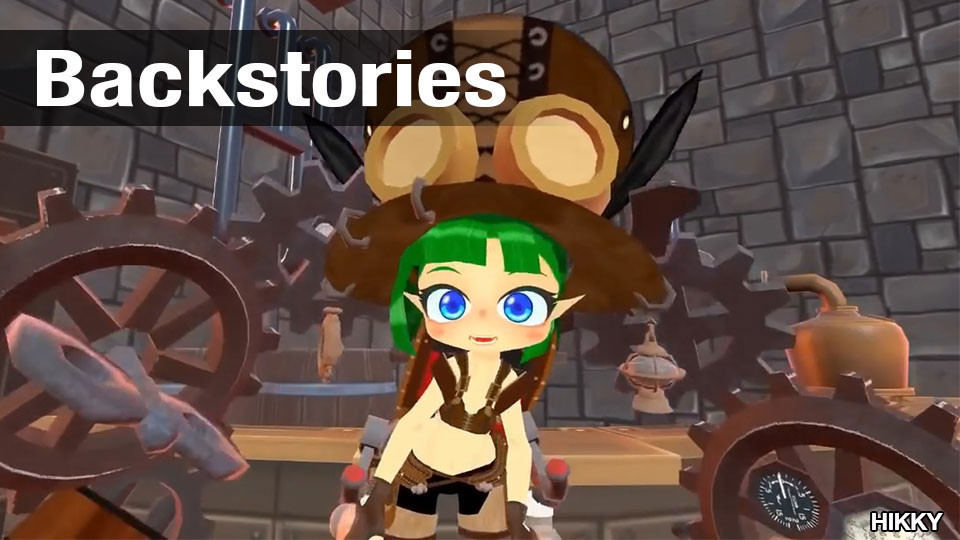
A Japanese man who has lived as a social recluse, or hikikomori, for more than two years is finding a new life in the virtual world.
"Phio" is a virtual YouTuber who posts videos using an avatar he made of a girl with green hair.
Phio says the joy he got from participating in VR platforms pushed him to re-engage with society. He talks to other virtual YouTubers about things such as online games. His channel has gradually gained popularity, recently passing 10,000 subscribers.
"Thanks to technology, we are able to live in virtual space in a similar way to how we live in the reality," Phio says. "I hope to create a virtual society in which those who think they can't recover in the real world can be reborn and start over."
Two years after addressing the impact of artificial intelligence on international arbitration in an article entitled ‘March of the Robots’, Paul Cohen and Sophie Nappert explain blockchain, augmented reality and quantum computing and predict their future impact on the arbitral process.
With this data in mind, it’s exciting to see how widely the applications of AR can vary in a business. Here are just some of the ways we’ve been seeing innovative learning professionals integrate AR into their employee offering:
Onboarding - Onboarding is critical to ensuring new employees are given the most effective introduction to their new working environment. Of course, the quality of onboarding has lasting effects on both retention and the business itself, particularly in terms of making speed to competency as efficient as possible. As such, businesses have gradually been utilizing AR to reinvigorate the often all too familiar onboarding process - turning to immersive experiences to make them more engaging and memorable. In addition to creating a strong first impression, it’s empowered teams to re-purpose their existing printed materials to minimize waste, turning physical assets into portals which new employees can access with the device most important to them - their smartphone.
Simulated Interaction - Sometimes the toughest part about a job that involves direct interaction with customers is being able to prepare confidently for difficult scenarios on the shop floor. AR empowers employees to simulate common customer interactions directly in the context of their work area using their smartphone - particularly with AR’s ability to leverage interactive alpha video content without the potentially awkward baggage of employee-to-employee roleplays. By being able to replay and repeat realistic scenarios at their own pace, it enables employees to develop their confidence for the real thing.
Supporting Specialized Positions - Factory workers and production line employees often have unique jobs that are highly specialized that require significant hands-on experience. AR is enhancing training for these roles by providing a high level of process visualization that can reduce risk and increase confidence in the employee. By adding a digital layer of guidance directly to the equipment they will be using daily, AR experiences mean employees can increase competency in context without the associated risks.
These “robot-threads” developed by MIT expand on research done on so-called “hydrogels,” which are materials made mostly of water that work well within the human body. At the thread’s core is a material called “nitinol” that can bend, and is springy, meaning it has a natural tendency to spring back to its original shape when bent.
The material is coated in an ink-like substance, which is then bonded with a hydrogel, thus regulating it in a magnetically manipulable material that can still survive within the human body. Using a large magnet, the researchers could then steer the thread through a demonstration obstacle course they built to show off how it could work in a surgical situation.
MIT’s researchers also note that you can modify the core construction of the robot threads with other materials to serve different functions, and showed this by replacing the nitinol at its center with a fiber-optic filament, which in practice could be used to transmit laser light to blast away a blockage in a brain blood vessel.
The new entertainment pop-up at Westfield San Francisco Centre puts you into the Star Wars universe, where you can smell the rocket fuel and feel the impact from enemy blasters
The San Francisco pop-up is scheduled to stay open under the dome of Westfield San Francisco Centre for two months while The VOID builds a larger, permanent home on the mall's ground floor.
 The CTO of Facebook says videos forged using AI will be used maliciously on its platforms before long,
  Caitlin Kalinowski, head of VR hardware at Facebook's Augmented Reality/Virtual Reality division, will become the seventh independent director on Axon's board.