Every Single Sex Toy in Third Aurora’s Augmented Reality Platform

Augmented Reality objects. Bondage Mask, Sex Swing, Bondage Cage, Whipping Board (PRNewsfoto/Third Aurora)
The company behind the augmented reality platform, Third Aurora, firmly believes that technology such as augmented reality will play a huge role in not only sex-toy sales, but many other industries as well. Dave Chaffey, one of the co-founders of the company, acknowledges that the platform will provide a bit of a giggle for consumers at first. "Yes, there's certainly been a lot of people giving it a go and some office banter about all the bits and pieces you can see. We're expecting that at the start. But once the initial laughter dies down, watch this become a serious channel for commerce."
"Think about it for a second," says Chaffey, "If you're a coy couple looking to purchase bondage equipment, where do you start? You can look online but photographs don't give you the true picture. You really need to view it in a three-dimensional setting you know well, to see if it's going to match the bed suite."
See the full story here: https://www.prnewswire.com/news-releases/every-single-sex-toy-in-third-auroras-augmented-reality-platform-300896996.html
Stanford University Researchers Point to Dramatic Improvements In Virtual Reality Sound
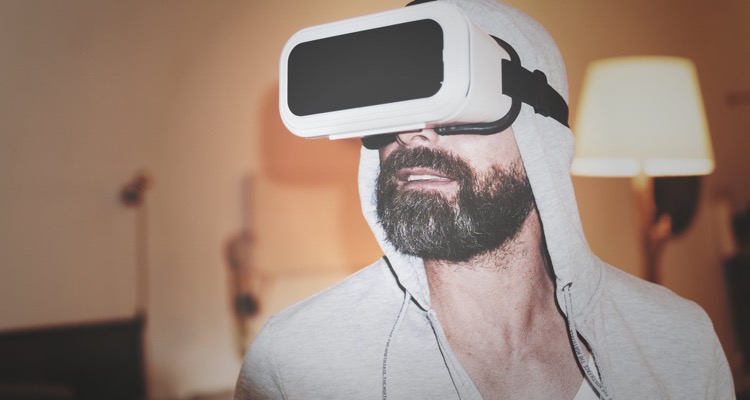 “Making it easier to create models makes it practical to build interactive environments with realistic sound effects,” remarked Doug James, a professor of computer science at Stanford who is currently focusing on this VR music challenge.
The traditional approach to modeling sounds is based on theories developed by famed scientist Hermann von Helmholtz. But the researchers have based their algorithm on how music composer Heinrich Klein was able to blend multiple musical notes into a single sound. It uses a computer’s graphic processor to split different vibration modes into chords, and then it creates a sound-wave simulation of those chords.
In practical terms, the algorithm can significantly reduce the amount of time required to model sounds. It can be many thousands of times faster than traditional modeling, which could bring an unprecedented amount of realism to VR experiences.
See the full story here: https://www.digitalmusicnews.com/2019/08/05/stanford-virtual-reality-sound/
ReelTime VR Creates First Virtual Reality Commercials that Can Be Seen On Both Traditional TV and Internet Video Platforms
 The commercials that are airing proving the capability were filmed using ReelTime VRs proprietary technologies and methodologies during the creation of ReelTime's No. 1 award winning VR travel series "In Front of View". The series seen in 49 countries starring international supermodel/actress Front Montgomery and her daughter Leonie Montgomery, now in its second season, transports the viewers so that they can travel alongside the famous mother and daughter as they explore the most beautiful and hidden places in full 360 Virtual Reality.
ReelTime VR is a pioneer in Virtual Reality technologies and has received patent-pending status from the United States Patent and Trademark Office (USPTO) for their non-provisional patent application covering apparatus and method claims for technology involving simultaneous capturing of 360 X 360 degree Spherical Panorama Images and Video.
See the full story here: https://finance.yahoo.com/news/reeltime-vr-creates-first-virtual-120000436.html
China has started a grand experiment in AI education. It could reshape how the world learns.
 Racing ahead: While experts puzzle over AI’s role in education, China hasn’t waited around. Its AI-enabled teaching and learning sector has exploded. Tens of millions of students now use some form of AI to learn—whether through extracurricular tutoring programs like Squirrel’s, digital learning platforms like 17ZuoYe, or even in their main classrooms.
Blowing up: At the moment, it looks like this could be a huge new business area. That’s got Silicon Valley interested. And the Chinese firms behind the programs are already beginning to export their models globally.
A note of caution: Experts worry about the direction this rush is taking. At best, they say, AI can help teachers foster their students’ interests and strengths. But it could also further entrench a global trend toward standardized learning and testing, leaving the next generation ill-prepared to adapt in a rapidly changing world of work.
Three things have fueled China’s AI education boom. The first is tax breaks and other incentives for AI ventures that improve anything from student learning to teacher training to school management. For VCs, this means such ventures are good bets. According to one estimate, China led the way in over $1 billion invested globally last year in AI education.
Second, academic competition in China is fierce. Ten million students a year take the college entrance exam, the gaokao. Your score determines whether and where you can study for a degree, and it’s seen as the biggest determinant of success for the rest of your life. Parents willingly pay for tutoring or anything else that helps their children get ahead.
Finally, Chinese entrepreneurs have masses of data at their disposal to train and refine their algorithms. The population is vast, people’s views on data privacy are much more lax than in the West (especially if they can get coveted benefits like academic performance in return), and parents are big believers in the potential of technology, having seen how much it has transformed the country in just a few decades.
See the full story here: https://www.technologyreview.com/s/614057/china-squirrel-has-started-a-grand-experiment-in-ai-education-it-could-reshape-how-the/?
Augmented Reality Architects wraps house with courtyards to create private home

 Augmented Reality Architects designed the house in Seoul, South Korea, so that it gives the owners an extremely high level of privacy.
"The family's request was very specific: privacy," explained the architecture studio. "The request went as far as to sacrifice basic requirements for a house, such as ventilation and ample sunlight."
See the full story here: https://www.dezeen.com/2019/08/04/augmented-reality-architects-w-house-south-korea-architecture/
Snapchat Turns Jack in the Box Augmented Reality Experience into a Build-a-Burger Contest

 The object of BurgAR is for users to build a custom burger in their own physical space. Users can choose their own combination of bread/bun, sauce, and patty, and then up to five toppings from an array of ingredients. Add a dab of special sauce to a sourdough bun? Have it your way. Beef or chicken patty? It's up to you. Throw a freakin' taco and freshly cracked egg on it? Live your best life!
With their unholy sandwich prepared, users are then asked to save a picture, return to the Lens, and click "More" (thanks to Snap's Shoppable AR e-commerce platform) to navigate to the contest website. From there, users can then submit their concoction for a chance to not only win a $250 gift card, but also have their culinary creation featured on the chain's menu.
See the full story here: https://mobile-ar.reality.news/news/snapchat-turns-jack-box-augmented-reality-experience-into-build-burger-contest-0202470/
How Rude Virtual Humans Are Helping Veterans Re-enter the Job Market
 The USC Institute for Creative Technologies developed lifelike interviewers to help prep veterans for what they might encounter in the real world
The hostile script, while written by a team at USC, isn’t unrealistic for an interviewing veteran. In fact, some of the most offensive questions—“Did you kill anybody?”—came from real stories veterans told the writers.
“There’s an under-the-radar stigma,” says Skip Rizzo, the director for medical virtual reality at ICT. “Everybody says thank you for your service and all that but when it comes to hiring it’s like, well, is he all right?”
So far, the angry interviewers have been effective. U.S. Vets, a nonprofit for at-risk veterans in Los Angeles, started using an earlier version of the technology in 2016. In early tests, they found of the 37 veterans who practiced interviewing with the virtual humans, 36 were able to find jobs.
The interviewers are programmed to do a lot of human things—walk out of the office in the middle of the interview, check their notes, even sneeze. They are not designed to convince veterans they are human, though. In fact, Rizzo says part of the reason the device works is precisely because people know they’re not real.
See the full story here: https://www.lamag.com/citythinkblog/virtual-reality-interviews-veterans/