Embodying taller avatars in VR can make us more confident in real life
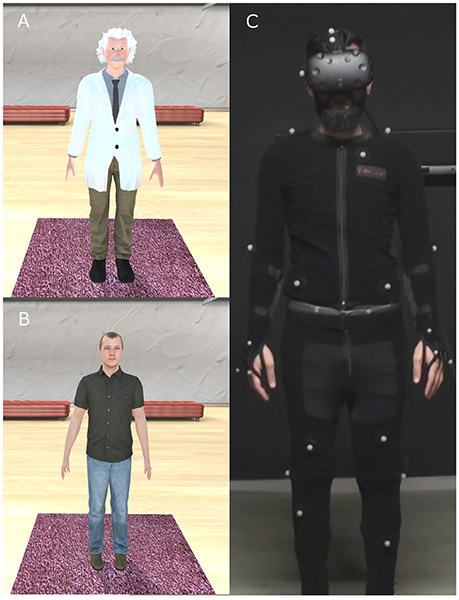 Among many other findings, we now know that avatar embodiment experiences can be used to encourage pro-environmental attitudes and prosocial behavior or to decrease social phobia. These experiences can also help reduce negative stereotyping of the elderly or forms of racial bias.
Recent studies have looked not only at behavioral and attitudinal changes but also at cognitive modifications. They got surprising findings, such as the fact that avatar embodiment can even increase cognitive performance.
Note: The reader might be wondering whether avatar embodiment experiences could likewise negatively influence our behavior or lead to harmful consequences. In a previous article, we noted the existing gap of studies that examine the potential negative outcomes of avatar embodiment experiences and pointed out some ethical, moral, and legal issues that need to be promptly addressed.
See the full story here: https://thenextweb.com/insider/2019/08/01/embodying-taller-avatars-in-vr-can-make-us-more-confident-in-real-life/
The Future of Virtual Reality in the Workplace
 See the original post here: https://www.hrtechnologist.com/articles/digital-transformation/the-future-of-virtual-reality-in-the-workplace/
Moth + Flame – Netflix – 13 Reasons Why
Using natural language processing, when you speak, the characters will answer, giving fans the experience of being able to live inside of their favorite story worlds and getting to feel what it's like when the characters care about what they have to say and think. On our journey to evolve the medium of conversational storytelling, it has been amazing to work with the Netflix team to bring this fan experience to life!
See the experience here: WhoKilledBryceWalker.com
20 COMPANIES MAKING GOOD ON THE PROMISE OF VIRTUAL REALITY
 TALESPIN
Industry: Corporate Training, Workforce Development
Location: Culver City, California
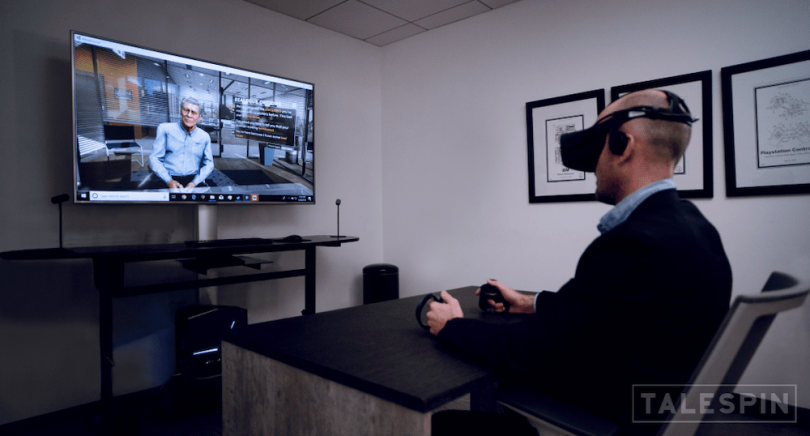
What it does: Just because a world is virtual doesn't mean it’s necessarily fantastical. Talespin's newest technology, for instance, recreates one of the most commonplace environments imaginable: the office. The software deposits employees and managers into virtual sales cold calls, performance reviews, and other stressful on-the-job situations, so that they can handle them more adroitly IRL. One simulation, in which a user is tasked with firing “Barry,” a natural language processing-powered “employee,” proved so immersive for one manager that he reportedly cried during the mock-termination.
WEVR
Industry: Media, Entertainment
Location: Venice, Calif.
What it does: When looking at VR through the lens of leisure, we tend to first think gaming. But VR-as-entertainment might just achieve mass appeal in the shape of something more akin to traditional filmic storytelling. WEVR has been driving in that lane for nearly ten years, releasing projects with everyone from Reggie Watts to Run the Jewels to Deepak Chopra. Up soon: the long-awaited virtual-reality film helmed by technophile blockbuster director Jon Favreau (the Lion King reboot). Is it all still a bit niche? Seems that way. But the broader allure is built right in.
FRAMESTORE
Industry: Media, Film
Location: London, England
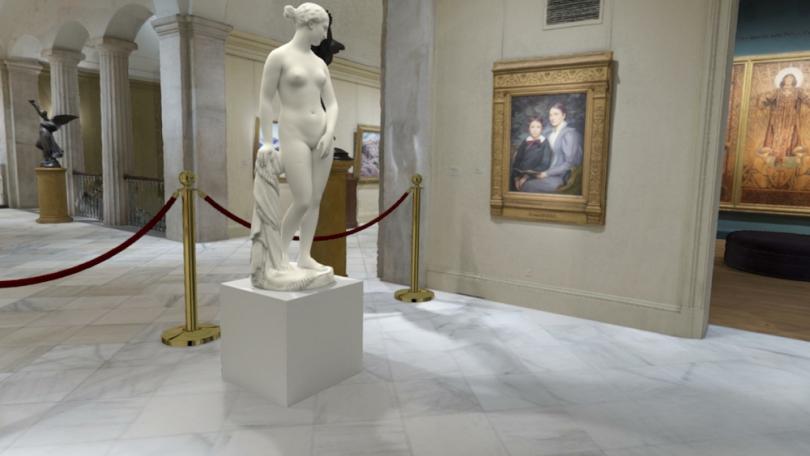
What it does: You've seen the digital handiwork of Oscar-winning visual-effects craftsmen Framestore in movies like Spider-Man: Far from Home and in TV shows like Black Mirror. The company brings that same visual pizzazz to VR, too, working on the Fantastic Beasts experience for Google's Daydream headset and building a virtual-reality tour of the Smithsonian American Art Museum.
See the full story here: https://builtin.com/media-gaming/virtual-reality-companies
Universal is building a new theme park to challenge Disney’s dominance
 “Our new park represents the single largest investment Comcast NBCUniversal has made in its theme park business and in Florida overall,” Comcast chief executive Brian Roberts said in a statement.
The addition of Epic Universe will bring Universal Orlando Resort’s total to three major theme parks and one water park. It already includes Universal Studios Florida, Islands of Adventure and Volcano Bay. The new park will be located on a larger 750-acre plot a few miles from the existing resort, according to a news release; Universal will provide transportation to link all the properties.
Details are still scarce about the latest Universal development; officials have not said when it will open, how large the park itself will be, or what types of rides and intellectual property it will feature.
See the full story here: https://www.washingtonpost.com/travel/2019/08/01/universal-is-building-new-theme-park-challenge-disneys-dominance/?utm_term=.0d66fa6a3005&wpisrc=nl_most&wpmm=1
Where Everyone’s an Influencer

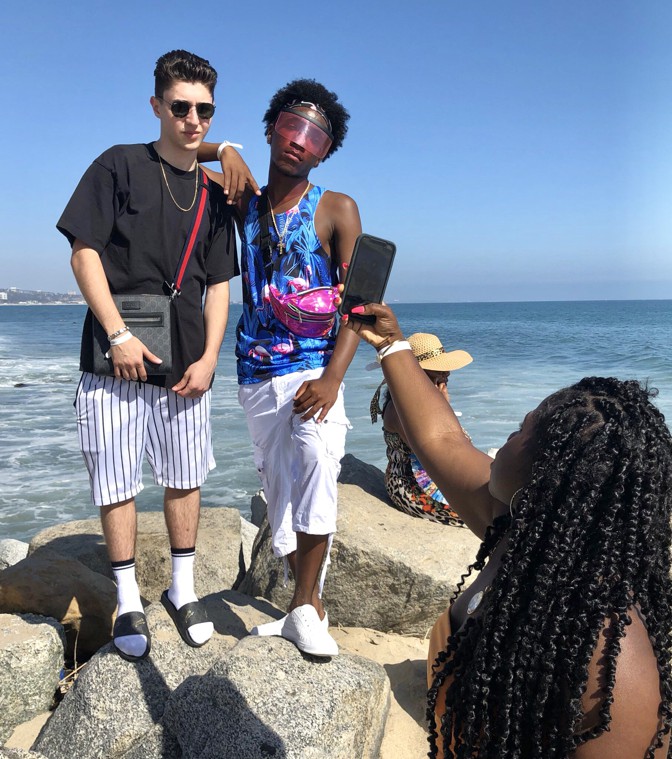 See the full story here: https://www.theatlantic.com/technology/archive/2019/07/where-everyones-an-influencer/595213/?
Another U.S. City Moves to Ban Face Recognition, Citing Threats to Free Speech and Civil Rights
 On Tuesday, the city of Cambridge, Massachusetts moved one step closer to prohibiting local government from using facial recognition. Three other cities in the country have already instituted such bans over concerns that the technology is biased and violates basic human rights.
“The use of face recognition technology can have a chilling effect on the exercise of constitutionally protected free speech, with the technology being used in China to target ethnic minorities, and in the United States, it was used by police agencies in Baltimore, Maryland, to target activists in the aftermath of Freddie Gray’s death,” the amendment states.
Cambridge would join San Francisco, Oakland, and Somerville in banning this specific type of surveillance tech.
Backlash to the spread of face surveillance is growing. But if we don’t act now, it will soon become ubiquitous, and then it could be too late.”
See the full story here: https://gizmodo.com/fourth-u-s-city-bans-facial-recognition-citing-threat-1836858623?
Meet the classified artificial brain being developed by US intelligence programs
 But Executive Order 12333 outlines principles governing intelligence agencies and doesn’t apply in the same way to the private Earth-observation companies that have proliferated in recent years, BlackSky being one of them. Corporations can point their telescopes pretty much anywhere they like. Although the government does reserve the right to exercise “shutter control,” prohibiting photography of a certain area, it has never done so (sometimes the government does buy exclusive access to an area, a practice known as “checkbook shutter control”). Limits do exist on the resolutions at which private companies can sell images to the public and to other countries.
For the most part, companies like Maxar, Planet, and BlackSky take pictures that anyone with a fat enough checkbook can purchase — including you, and including organizations like the NRO. That raises some interesting legal questions that researchers like Aftergood are still trying to figure out: if NRO was interested in surveilling the US, and can’t deliberately use its satellites to focus in on your house, could it simply buy pictures of your house from a private company instead?
The NRO did not provide a specific answer on commercial data’s role in Sentient. But limits, says Aftergood, should still exist on paid-for data. “What they do with that should in some way be mission-oriented,” says Aftergood. “They’re not supposed to be snooping for snooping’s sake.”
Costs of Teaming With Social Media Influencers on the Rise
 A report from Klear points out that nano-influencers on YouTube (with 500 to 5,000 followers) earn an average of $315 per video, and power-influencers (with 30,000 to 500,000 followers) charge an average of $782 per video.
“Brands are willing to pay a premium for video posts on Instagram, too,” reports eMarketer. “Nano-influencers make an average of $114 per video post on Instagram, compared with $100 for an image post and $43 for a story. Power users make an average of $775 for an Instagram video, $507 for an image post and $210 for a story.”
See the full story here: https://www.etcentric.org/costs-of-teaming-with-social-media-influencers-on-the-rise/