 Social virtual reality company Sansar and EDM label Monstercat have partnered to launch Monstercat: Call of the Wild, a collaboration that is expected to create VR concerts, meet-and-greets and giveaways.
3Jul/19Off
Chinese border guards are putting a surveillance app on tourists’ phones
 The spyware: Anyone crossing the land border from central Asia into Xinjiang is being asked to hand over their phones. Border guards then load an app known as Fengcai onto them. This sucks up calendar entries, text messages, phone contacts, other apps on the device, and call logs, all of which are then sent to a remote server. The phone’s content is then checked against a register of over 73,000 items, including terrorist materials, Arabic language books, recordings of the Quran, and even a song by a Japanese band called Unholy Grace.
Big Chinese Brother: This isn’t the first time that China has force-fed apps to people. But it shows the extent to which the country is willing to go to create a massive surveillance state.
3Jul/19Off
Augmented Reality Versus 3-D Printing for Radiology
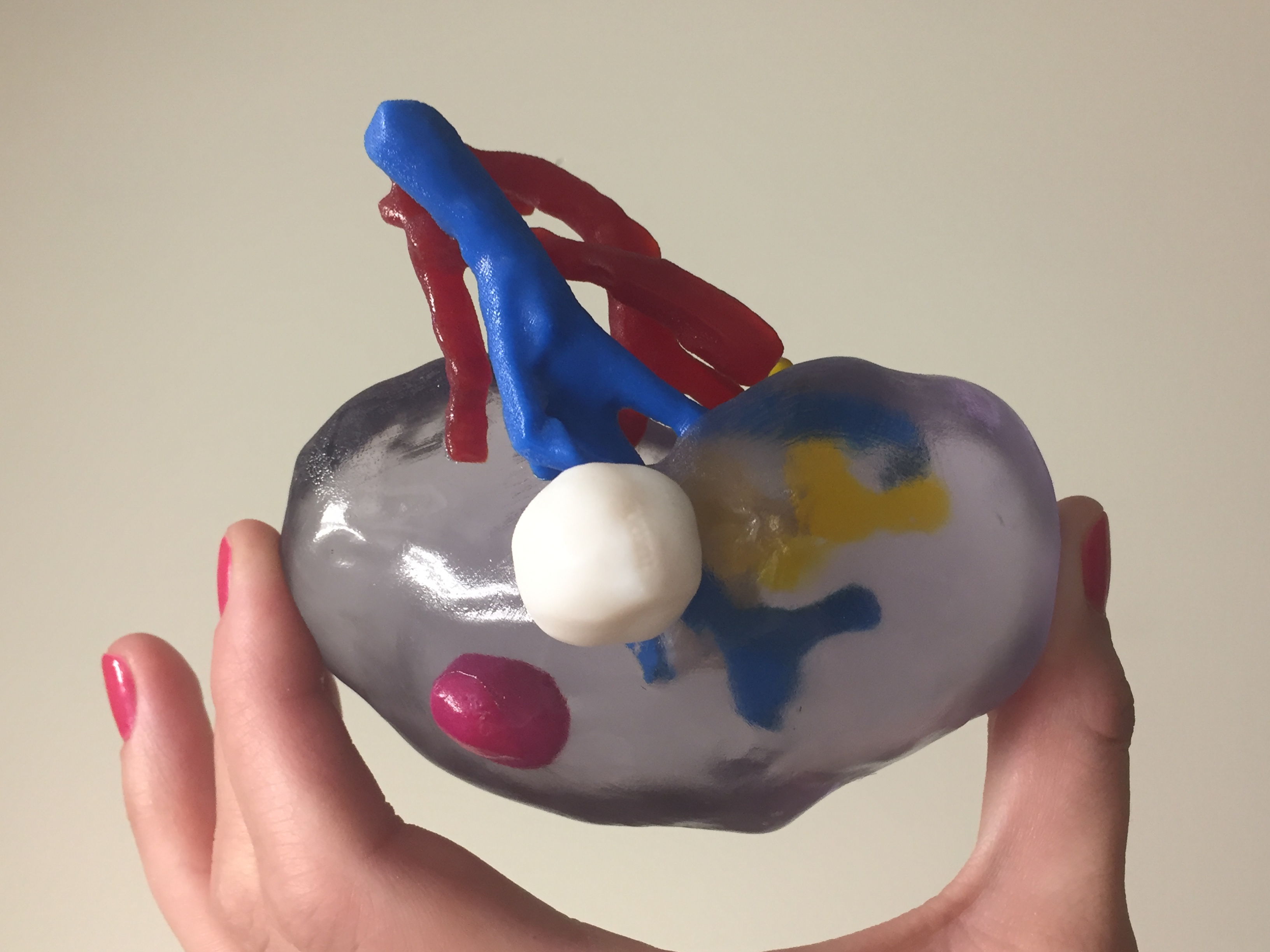 Three-dimensional (3-D) printing and augmented reality (AR) are two of the more exciting technologies being explored in radiology today. In their own way, each technology gives form and depth to medical imaging data, offering a new perspective for physicians and patients. Early explorations have promised new ways to plan surgical and interventional procedures, and new methods to help patients understand what care is being delivered and how. For now, however, both technologies are still largely viewed as novel, with at best anecdotal evidence of how they can be translated into clinical use. A pair of recent large-scale studies may offer a sense of how to collect quantitative evidence that these technologies can benefit all members of the healthcare team.
When the HoloLens was first released, Wake was already working in 3-D printing but recognized the limitations of the technology — primarily the amount of time required to create a 3-D printed model.
Data indicated that the 3-D models resulted in a change to the type of procedure planned as much as 50 percent of the time.
Models for the second group were either 3-D printed, visualized in AR, or viewed in 3-D on a 2-D monitor. To measure patient response, Wake and colleagues used a five-point Likert scale survey — on a scale of 1 to 5, patients rated their understanding of:
• Their cancer/disease itself;
• The size of the tumor/cancer;
• The location of the tumor/cancer;
• Why the surgeon chose their given treatment plan; and
• Their comfort with the surgical plan.
“Just seeing the anatomy in 3-D, whether a virtual model or a physical tactile model, is much more powerful than simply viewing grayscale medical images on a 2-D screen, especially for patients who might not have seen a medical image before so they don’t really know what they’re looking at,” Wake said.
Despite the utility of both technologies, cost remains a prohibitive factor blocking widespread adoption. Wake said a planned future prospective study will provide a deeper cost analysis in hopes of expanding the utility of 3-D printing and AR.
See the full story here: https://www.itnonline.com/article/augmented-reality-versus-3-d-printing-radiology
2Jul/19Off
How gender questioning and transgender gamers found a safe space in VR
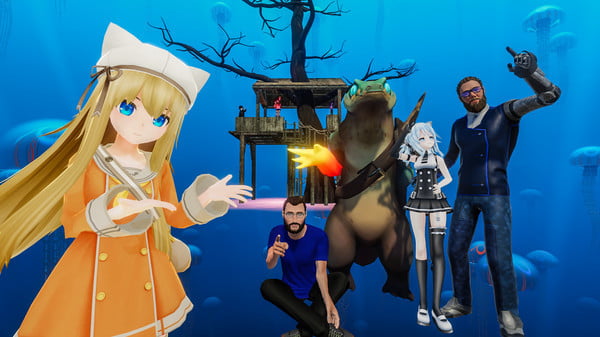 Whether you’re interacting with people online in VRChat, Star Trek: Bridge Crew, and RecRoom, or saving the region in Skyrim VR, virtual reality offers those who aren’t ready or unable to open up to their family and friends, the chance to discover and explore their feelings before making the life-changing decision of coming out for good.
See the full story here: https://www.digitaltrends.com/gaming/gender-questioning-transgender-gamers-safe-space-vr/
2Jul/19Off
Granite Geek: Augmented reality app aids sight-impaired at Manchester airport
 Stephanie Hurd, community relations coordinator for Future In Sight, a statewide nonprofit for the visually impaired. She was demonstrating a service called Aira that has just started at Manchester airport. The company has geo-tagged the airport so that anybody can turn on Aira there for free without using up data minutes.
Wearing glasses with an installed wide-angle-lens camera – think Google Glass as designed by Clark Kent – Hurd walked confidently through the ambulatory chaos of an airport lobby despite being blind and alone.
“The sign is about 20 to 30 feet in front of you,” said a voice from the smartphone connected to the glasses, directing her toward the displays of departures and arrivals. A moment later, Hurd was pointing her face in the direction she was told so the person at the other end of the connection could snap a photo of the display and tell her such vital information as which gate her flight was leaving from and whether it was on time.
“There’s a flight to Atlanta, on time,” the voice told her.
Aira is a professional version of a service that exists in free, peer-to-peer form, but which sighted people like me didn’t even know about. The idea is pretty simple: make a Skype-like connection with somebody over your smartphone so they can look through the camera and act as your eyes, telling you what they see. There are also versions using what is loosely called artificial intelligence to give advice, but people are still much better at this task.
Manchester is one of scores of airports that has turned on Aira, which costs it about $5,000 a year to cover cellphone minutes, said Director Ted Kitchens.
See the full story here: https://www.concordmonitor.com/airport-manchester-audio-aira-blind-26576052
1Jul/19Off
D-Wave launches its quantum hybrid platform
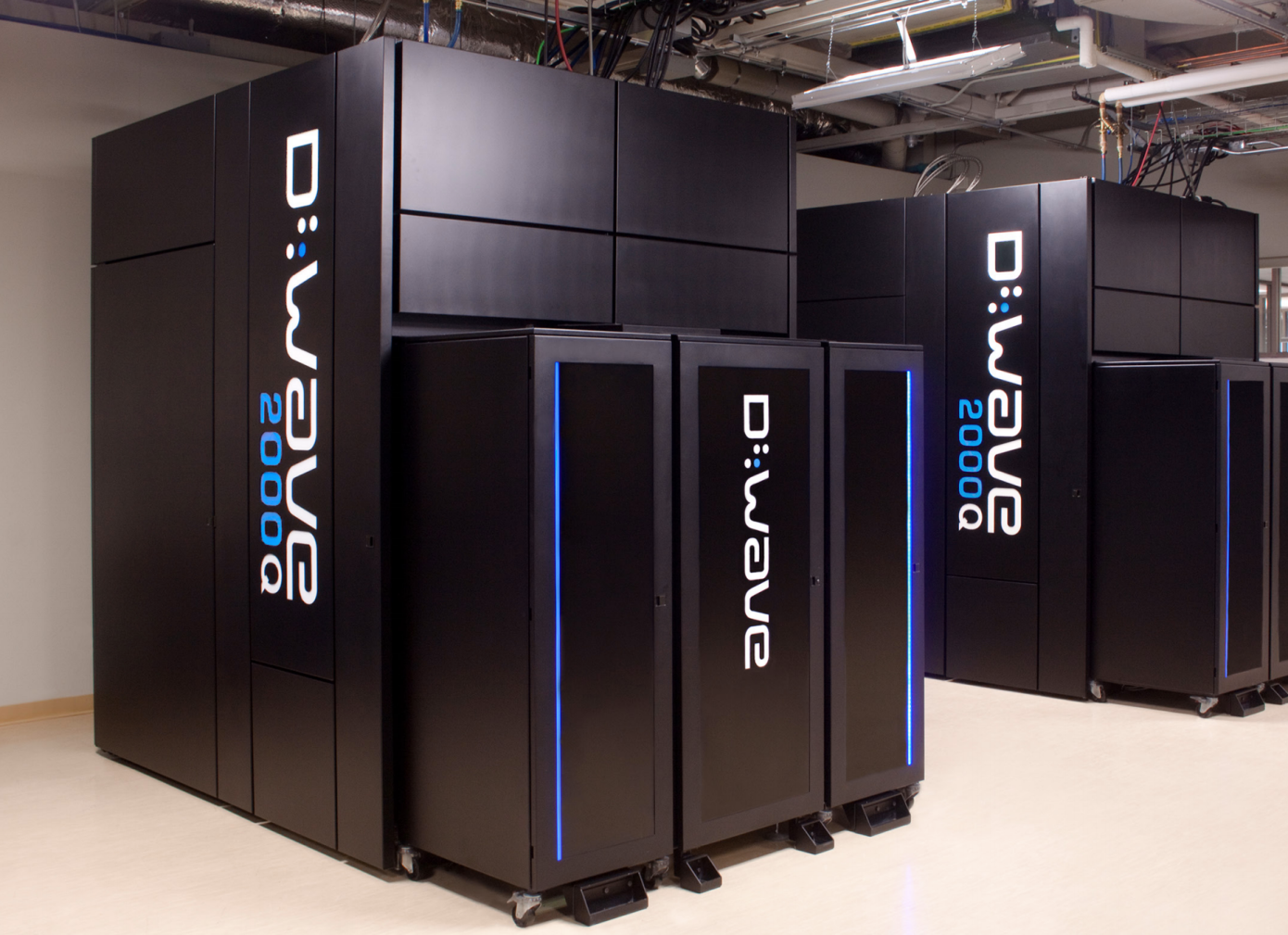 D-Wave, one of the earliest quantum computing startups, today announced the general availability of D-Wave Hybrid, it’s open-source hybrid workflow platform that makes it easier for developers to build — you guessed it — hybrid quantum applications that combine classical and quantum computing. D-Wave Hybrid is part of the company’s Ocean software development kit, which itself is part of its Leap quantum computing cloud service.
The general idea behind D-Wave Hybrid and similar tools from its competitors like Rigetti is to help developers build applications that essentially use the quantum computer as a co-processor when it’s useful. D-Wave Hybrid also helps developers to break larger problems into smaller parts in order to allow today’s generation of what are still relatively limited quantum processors to process them.
One of the earliest customers of this system is Volkswagen, which is currently using the system for a number of small proof-of-concepts around traffic flow optimization and other optimization problems.
See the full story here: https://techcrunch.com/2019/06/26/d-wave-launches-its-quantum-hybrid-platform/
1Jul/19Off
Machine learning has been used to automatically translate long-lost languages. Some languages that have never been deciphered could be the next ones to get the machine translation treatment.
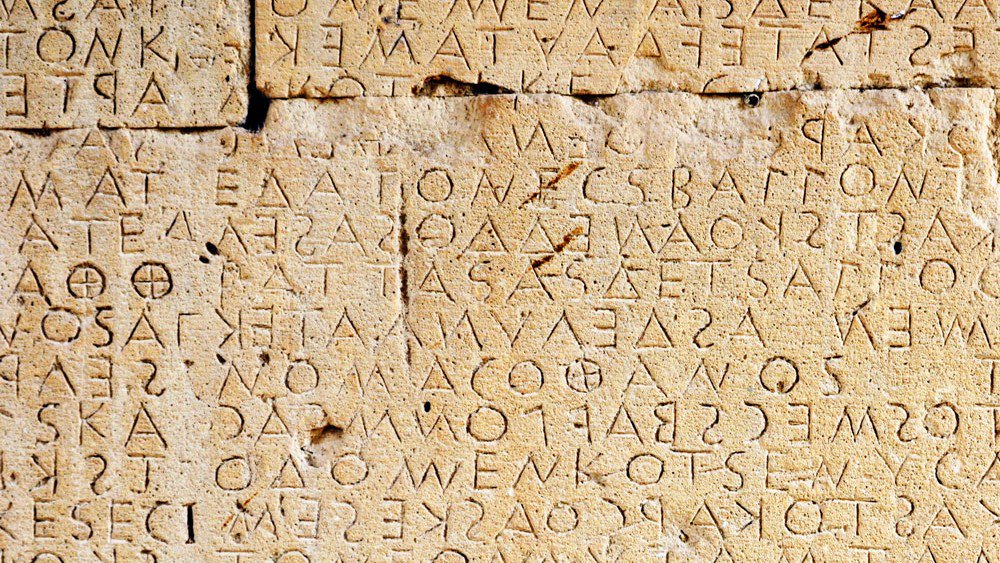 Enter Jiaming Luo and Regina Barzilay from MIT and Yuan Cao from Google’s AI lab in Mountain View, California. This team has developed a machine-learning system capable of deciphering lost languages, and they’ve demonstrated it by having it decipher Linear B—the first time this has been done automatically. The approach they used was very different from the standard machine translation techniques.
The constraint they use has to do with the way languages are known to evolve over time.
The idea is that any language can change in only certain ways—for example, the symbols in related languages appear with similar distributions, related words have the same order of characters, and so on. With these rules constraining the machine, it becomes much easier to decipher a language, provided the progenitor language is known.
But the big advantage of machine-based approaches is that they can test one language after another quickly without becoming fatigued. So it’s quite possible that Luo and co might tackle Linear A with a brute-force approach—simply attempt to decipher it into every language for which machine translation already operates.
1Jul/19Off
Walmart Turns to VR to Pick Middle Managers
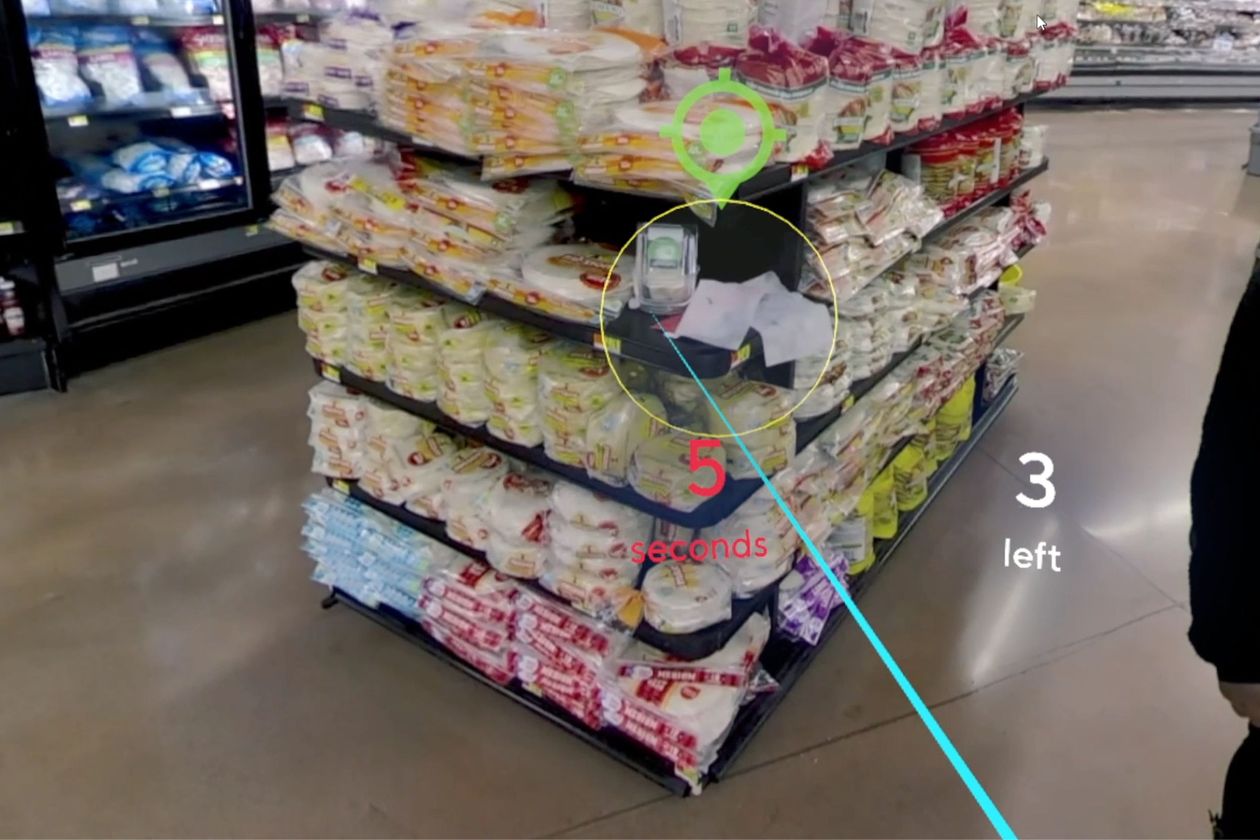 The country’s largest private employer is using a VR skills assessment as part of the selection process to find new middle managers, watching how workers respond in virtual reality to an angry shopper, a messy aisle or an underperforming worker.
The assessment yields a color-coded report for hiring managers that describes strengths and weaknesses—perhaps weak leadership skills, but strong knowledge of the fresh produce department—that can help determine promotion decisions or the need for additional training, said Mr. Holler.
Walmart started using virtual reality training broadly last year, adding headsets in the backrooms of all 4,600 U.S. stores to train over a million workers how to stock shelves or use new online pickup machines.
As Walmart begins to use VR to evaluate workers, it can use the data to identify how certain traits correlate with performance, said Jeremy Bailenson, founding director of Stanford University’s Virtual Human Interaction Lab and co-founder of Strivr, a Menlo Park, Calif.-based company that designed Walmart’s virtual reality training. “We know how high performers act and we can match with that,” he said.
But Strivr and Walmart are moving toward integrating a worker’s body movement and attention data, collected in VR, which early research shows gives a more accurate and complete picture of future performance and a candidate’s soft skills, said Mr. Casale. That data isn’t yet used in scoring, he said.
Strivr doesn’t use VR assessment in its own hiring or promotion decisions, said Mr. Casale. “I imagine it’s something we will explore in the near future on an experimental basis.”
See the full story here: https://www.wsj.com/articles/walmart-turns-to-vr-to-pick-middle-managers-11561887001