Augmented reality improves movie experience for the hearing impaired
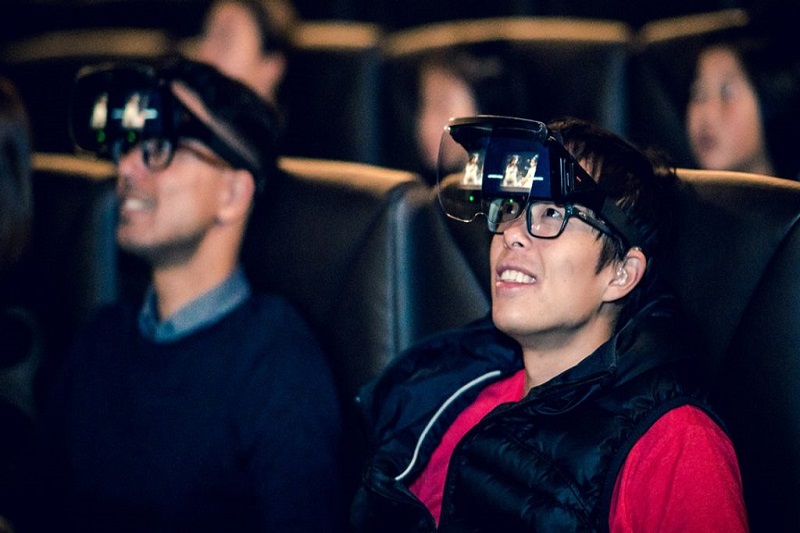 Subtitle data is included in most movies, but cinemas in New Zealand rarely use it, so cinematic options for the hearing-impaired are extremely limited.
One of the changes was finding a way to make the subtitles stay in place when people turned their heads, to talk to their neighbour, for instance.
The subtitles would follow the user, which can be annoying and distracting.
While their current prototype involved customising off-the-shelf headsets, they plan to build headsets from scratch, make them more aesthetically pleasing and lighter.
See the full story here: https://www.opengovasia.com/augmented-reality-improves-movie-experience-for-the-hearing-impaired/
Virtual Reality Takes A Leap Into Taste
 The fly hasn’t eaten for an entire day and it’s starving. Finally, it finds a pile of edible gelatinous goo. It begins eating when suddenly a green light appears, and the food, which was far from delicious a moment ago, becomes irresistibly sweet. The fly, excited by the sudden improvement, eats with increased vigor. But its enthusiasm quickly wanes when the green light disappears and the flavour of the food reverts to its original blandness.
“The fly’s experience was very real. It was a virtual taste created by directly manipulating its taste neurons”, says Carlos Ribeiro, head of the behavior and Metabolism lab at the Champalimaud Centre for the Unknown in Lisbon, Portugal. Together with his team, Ribeiro developed the optoPAD: a system that creates “virtual taste realities”, in a way that can be flexibly paired with the fly’s behavior. They describe this new technology in a scientific article published today June 21st in the journal eLife.
Creating virtual taste realities
The optoPAD combines two high-tech elements: the first is optogenetics, a powerful method that uses light to control the activity of neurons (quite literally to turn them “on” or “off”).
The second element of the optoPAD is an additional system, previously developed in the lab, called flyPAD. “The flyPAD uses touchscreen-type technology to monitor the fly’s feeding behavior. Just like your phone is able to detect the touch of your finger on the screen, flyPAD is able to detect whenever the fly touches the food”, explains José-Maria Moreira, one of the leading co-authors of study.
By combining flyPAD with optogenetics, the researchers were able to overcome one of the main challenges in the field of feeding research: precisely controlling taste sensations.
Taste and beyond
In this study, which shows that the optoPAD is able to effectively pair active feeding with optogenetic manipulations, the researchers demonstrate that these virtual tastes have a very real effect on the behavior of the flies.
The team is now gearing up to start a series of new experiments, and they are already freely sharing this exciting new technology with the scientific community by making all the blueprints and software freely available here: http://ribeirolab.
See the full story here: https://bioengineer.org/virtual-reality-takes-a-leap-into-taste/
Augmented Reality Will Be A Given For The Cars of The Future
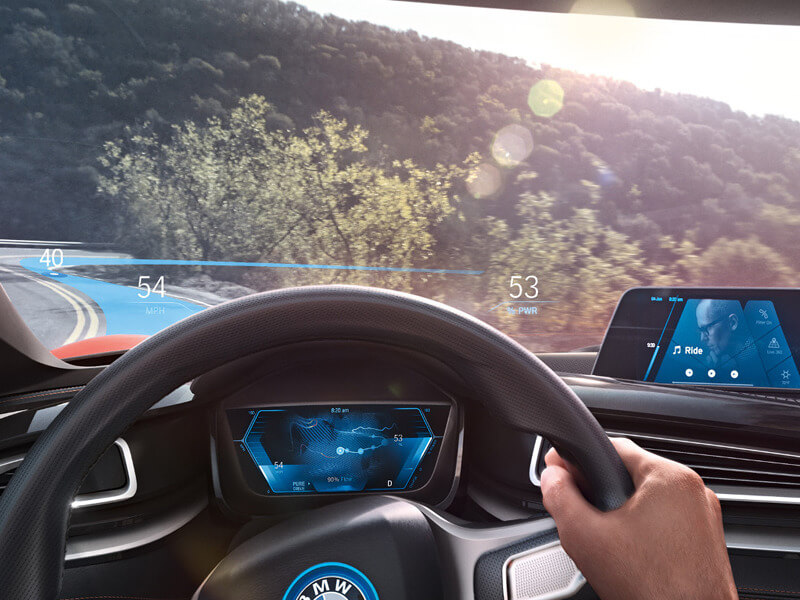 One of the most interesting examples so far has to be GMC’s 2020 pickup, which will offer a Transparent Trailer Rear Camera View option.
This option makes the trailer ‘invisible’ to the driver and instead superimposes a view from the trailer’s back camera to show them what’s happening in all the blind spots they can’t see just by using the rearview mirrors.
Aside from external cameras, we’ve seen the emergence of interactive dashboards across a number of concept cars this year.
Toyota... has developed a system that can put to use the back car windows. The passengers can interact with them in different ways like drawing or using them to find out more information about the objects far away or zoom in on the scenery.
See the full story here: https://techthelead.com/augmented-reality-will-be-a-given-for-the-cars-of-the-future/
The Fall and Rise of VR: The Struggle to Make Virtual Reality Get Real
 It is tempting to write off virtual reality as yet another overhyped fad. Yet that would ignore the technology industry’s long history of fallen pioneers paving the way for someone else’s breakthroughs. The Apple Newton and the Polaroid Polavision died, after all, so that the iPad and camcorder might live. It took a decade for smartphones to become ubiquitous. Early VR headsets themselves date back to the 1960s, while Nintendo and Sega in the 1990s forayed into the consumer market with the ill-fated Virtual Boy and Sega VR systems, respectively.
Facebook’s initial vision for VR was far grander than games. It thought cinematic virtual reality would be a breakthrough application and that Facebook itself, rather than third-party developers, would create the masterpieces. Facebook established the Oculus Story Studio in 2015 as an in-house film department dedicated to making movies for virtual reality. Yet despite winning an Emmy for its animated short “Henry,” Facebook shuttered the studio in 2017. Yelena Rachitsky, a Facebook executive producer who’d been with the defunct studio, says Facebook realized its clout was better deployed encouraging an ecosystem approach. “I think there is just a reality that a lot of the creativity doesn’t necessarily happen within a big corporation,” she explains. “It’s the creators out there who aren’t limited or confined by specific corporate structures [who] I think have the innovative and creative thoughts that are going to continue to push the boundaries in VR.”
Hollywood also figured prominently in Facebook’s VR dreams. Edward Saatchi, whose father, Maurice, cofounded the ad agency Saatchi & Saatchi, was a founding member of the Oculus Story Studio. He says the goal was to create VR content that could “inspire an industry.” Five or so years ago, Hollywood directors approached then Oculus CEO Brendan Iribe, intrigued by the technology’s prospects, says Saatchi, who now heads a “virtual beings” company called Fable.
“Our goal was to get film schools teaching VR movies, to have film festivals accepting VR movies, to have famous directors do VR movies,” Saatchi explains, noting that director Alejandro González Iñárritu, whose Birdman won an Academy Award for Best Picture in 2014, took home another Oscar for his 2017 VR short, Carne y Arena. “So, in that sense, we succeeded. Except it didn’t become a mainstream thing. There just isn’t any evidence that anyone is willing to pay for narrative VR content outside of a theme park.”
In retrospect, Mark Zuckerberg was so enamored with the theoretical potential of VR that it appears he spent billions without having thought through how to make a business of it.
Indeed, Zuckerberg and his minions have described VR as the logical next step in the social experience Facebook itself created for billions of people.
Jeremy Bailenson, a Stanford professor and founding director of the university’s Virtual Human Interaction Lab, stands beside me. He begins explaining what I have just witnessed: a VR training module for Verizon store employees to learn how to deal with armed robberies. “If you work at a Verizon store, there’s so much expensive material that’s right near the door,” he says. “They have dozens of robberies at gunpoint each year. They want to train their employees to be safe.”
Since late 2018, roughly 1,500 of these managers have undergone Strivr’s training experiences. When surveyed, 95% said they better understood the factors they would need to consider during an actual burglary attempt.
It turns out that while VR movies or virtual hangouts may not be ready for prime time, the technology is ideal for certain practical applications. VR is gaining traction in fields like surgical training, STEM education, industrial design, architecture, real estate, and more. At Facebook’s F8 developer conference in April, Oculus announced an expanded Oculus for Business program slated to begin in the fall. It includes access to enterprise-grade headsets, such as the new Oculus Quest, and “a dedicated software suite offering device setup and management tools, enterprise-grade service and support, and a new user experience customized for business use cases.” Microsoft and HTC, meanwhile, have pushed heavily into industrial enterprise with the mixed-reality HoloLens headset and the HTC Vive, respectively. “Our bigger market is on the consumer side,” says HTC’s Dan O’Brien, general manager of the Americas for the Vive product line. “But our more aggressive growth area is enterprise.”
“When a company tells us, ‘I need to know that the trainee looked at that bucket on the floor,’ we can tell you that they did not look at it,” says Strivr CEO and cofounder Derek Belch, a former graduate student of Bailenson’s. “That means they’re not going to look at it in the real world. Like, unequivocally.”
Why don’t more people use virtual reality—besides the issues of price, discomfort, and lack of good content? Because VR requires you to completely abandon reality. And, honestly, who has time for that?
“In the future, our AR glasses will merge the physical and digital worlds, blending what’s real with what’s possible, resulting in the next mainstream, must-have, wearable consumer technology,” promises a Facebook Research web page.
Dreamscape Immersive is a Los Angeles–based LBE “exhibitor” that’s raised $36 million from the likes of 21st Century Fox, Warner Bros., and AMC. It hopes to entice customers with immersive narratives, a kind of interactive moviegoing experience, says Hollywood veteran Walter Parkes, a Dreamscape cochairman. Parkes says he finds LBE more compelling than typical in-home VR—in other words, a single user wearing a headset—because users are an “actual character in a real, rendered world with other people able to be in touch with all of [their] senses.”
When I enter the Alien Zoo at Dreamscape, inside a Westfield mall in Los Angeles, I’m thinking about how people typically describe their VR experiences. They fly over the Manhattan skyline or dive into the Pacific or head for outer space. And they always use the word “I.” I, too, am now in space. But there’s a significant difference: It’s not “I”, it’s “we.”
Our Dreamscape minder instructed us to shake hands to confirm this astonishing mix of the physical and fake, and then we set off for a safari on a vibrant planet occupied by brontosaurus-giraffes and gigantic praying mantises that make Jurassic Park seem positively Neanderthal. It’s a mind-blowing experience—and absolutely worth paying for. Now all virtual reality needs to do is to persuade hundreds of millions of people to arrive at the same conclusion.
See the full story here: http://fortune.com/longform/virtual-reality-struggle-hope-vr/