Comcast Universal Sphere: What to know and how to get tix for the Spielberg VR experience
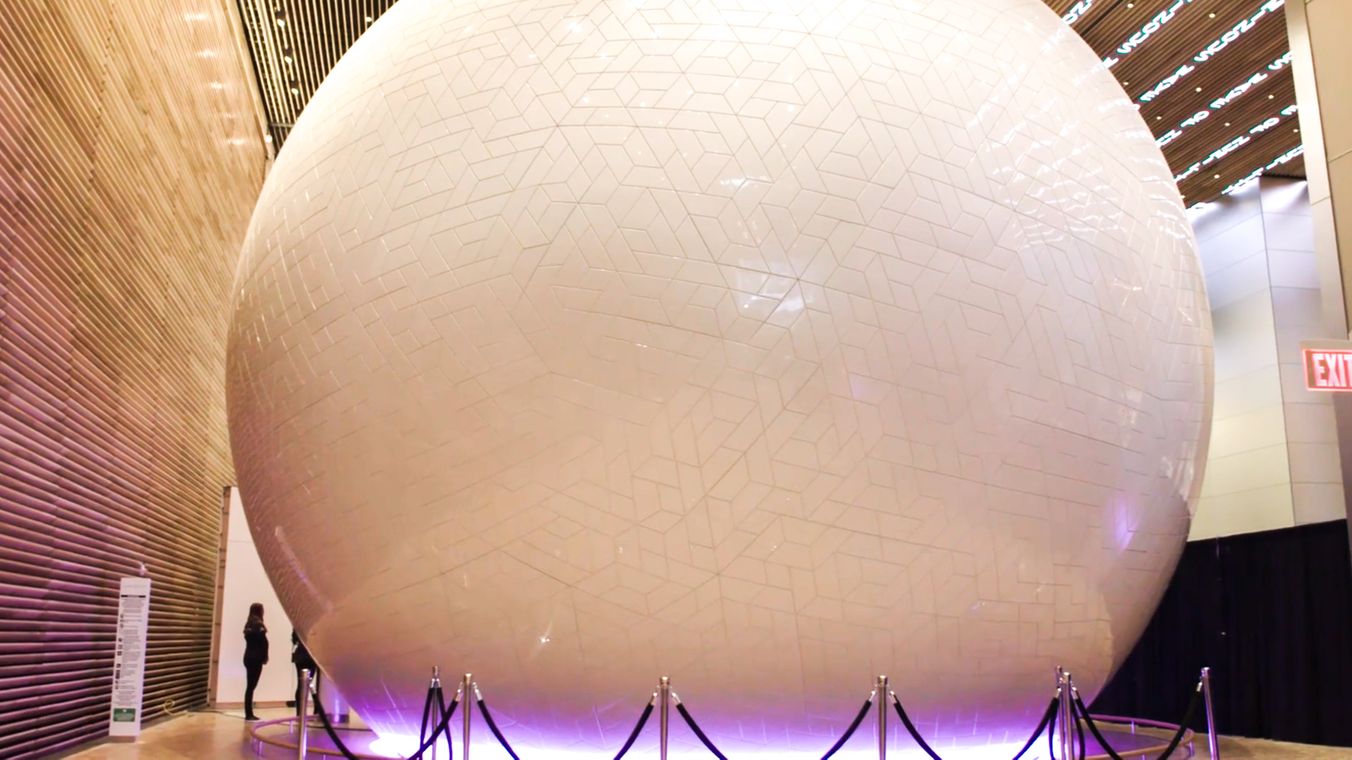 The interior of the 39-foot-diameter orb plays host to a short film called The Power of I. The gist? To “explore the power of ideas.”
Narratives follow the stories of “geniuses” throughout history — Beethoven, Confucius, Angelou, Earhart. At one point the movie zips you through a galaxy shaped like Albert Einstein’s eye, according to the Inquirer.
Another tack explores impactful documents of the United States, from the Constitution to Martin Luther King Jr.’s “I Have a Dream” speech to the Title IX legislation that outlawed gender discrimination.
Stories are told on a personal level for maximum impact, like that of Emily Whitehead, a young leukemia patient at CHOP who was saved with a breakthrough drug. “I had tears in my eyes” after watching the show, a Comcast staffer told NBC10.
See the full story here: https://billypenn.com/2019/05/20/comcast-universal-sphere-what-to-know-and-how-to-get-tix-for-the-spielberg-vr-experience/
Disney-Backed VR Company Tyffon to Open ‘Free Roam’ VR Room in LA Later This Year
 The Disney-backed virtual reality company Tyffon is set to open its first “free roam” VR venue in Los Angeles later this year after a new round of funding, the company announced Monday.
Tyffon has already developed three immersive experiences for their Tyffonium rooms, a VR arcade that combines VR technology and multi-sensory effects, including horror walk-through attraction “Corridor.” Looking forward, Tyffon plans to work closely with entertainment companies to bring branded IP into the VR world.
Tyffon has already developed three immersive experiences for their Tyffonium rooms, a VR arcade that combines VR technology and multi-sensory effects, including horror walk-through attraction “Corridor.” Looking forward, Tyffon plans to work closely with entertainment companies to bring branded IP into the VR world.
The Santa Monica-based company was born out of the Disney Accelerator program in 2014, where now-thriving tech startups like Atom Tickets and Epic Games have used Disney’s resources and relationships to build its portfolio. Tyffon began by building mobile gaming apps like ZombieBooth, which Tyffon says has reached 5o million downloads worldwide.
See the full story here: https://www.yahoo.com/entertainment/disney-backed-vr-company-tyffon-150012555.html
Hollywood’s Changing As Fast As It Ever Has — Can Industry Lifers Change Too?
 “Content and storytelling is the new universal truth to market all goods and services,” said Erwin. “Whether you’re retail, marketing, consumer, industrial, B2B, B2C, it’s all the same. All those executive roles being pushed out, there’s not going to be a place for them to go in Hollywood, but I do think there’s going to be roles for them in marketing, in brand management all over the world.”
And there are other unexpected opportunities. Consulting company RL Leaders, for instance, convenes “Deep Applied Creativity panels” that combine Hollywood directors and writers with subject-matter experts. Those panels work with government agencies and other large, often hidebound organizations to develop creative solutions to thorny issues far from traditional entertainment.
USC and other film schools continue to turn out hundreds of new filmmakers, actors, musicians, production and development talent, Squire said. Those skills are likely to remain in demand. The key, however is making sure that students continue to embrace the new platforms and the opportunities they present.
Chris Rico, who tracks the entertainment industry for the Los Angeles County Economic Development Corp, said the way that the federal government totes up entertainment jobs is “hopelessly outdated.”
“If you look at shifting demographics and what people are doing, people aren’t being classified correctly,” Rico said. “Their jobs are being classified as technology or information technology instead of (as) what’s really a media company.”
For instance, Netflix now has around 3,500 employees in Los Angeles, concentrated along Sunset Boulevard in Hollywood. Rico said that’s nearly as many as the company has in its Bay Area headquarters, and nearly equal to the number of people just laid off at Fox.
USC and other film schools continue to turn out hundreds of new filmmakers, actors, musicians, production and development talent, Squire said. Those skills are likely to remain in demand. The key, however is making sure that students continue to embrace the new platforms and the opportunities they present.
Augmented Reality Options By Second Spectrum Added To ESPN App For NBA Playoffs
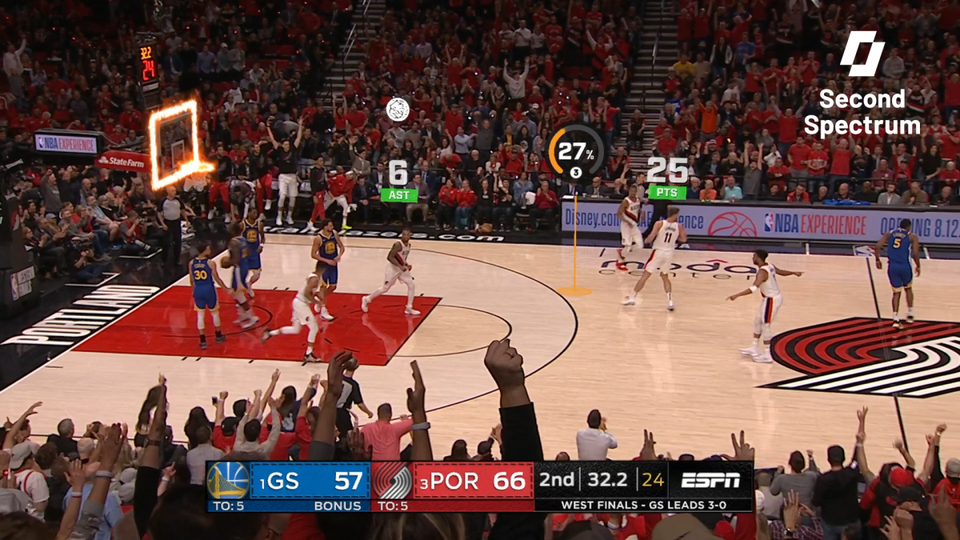 ESPN’s Branded Full Court Press, with Second Spectrum, allows viewers to watch various isolated broadcasts of the game on the ESPN app and on ESPN3. The options also include a Coach Mode, which is “a heavy X’s and O’s analytical presentation of the game, featuring on-court diagrams of the live action”.
There is also a Player Mode that offers “above-the-rim cameras and graphics displaying the scoring probability of all five offensive players on the court throughout each possession, changing in real time” and a Mascot Mode that features “a fun, entertaining presentation featuring special graphics treatments, including a fire graphic on the basket when a team goes on a scoring run, a 3D on-screen brick if a player misses badly, and more.”
See the full story here: https://www.forbes.com/sites/simonogus/2019/05/26/augmented-reality-options-by-second-spectrum-added-to-espn-app-for-nba-playoffs/#6a0c580d3db4
How War Photographer Julia Leeb Is Using Virtual Reality and Art to Let Comfortable People Experience the Terror of Conflict Zones
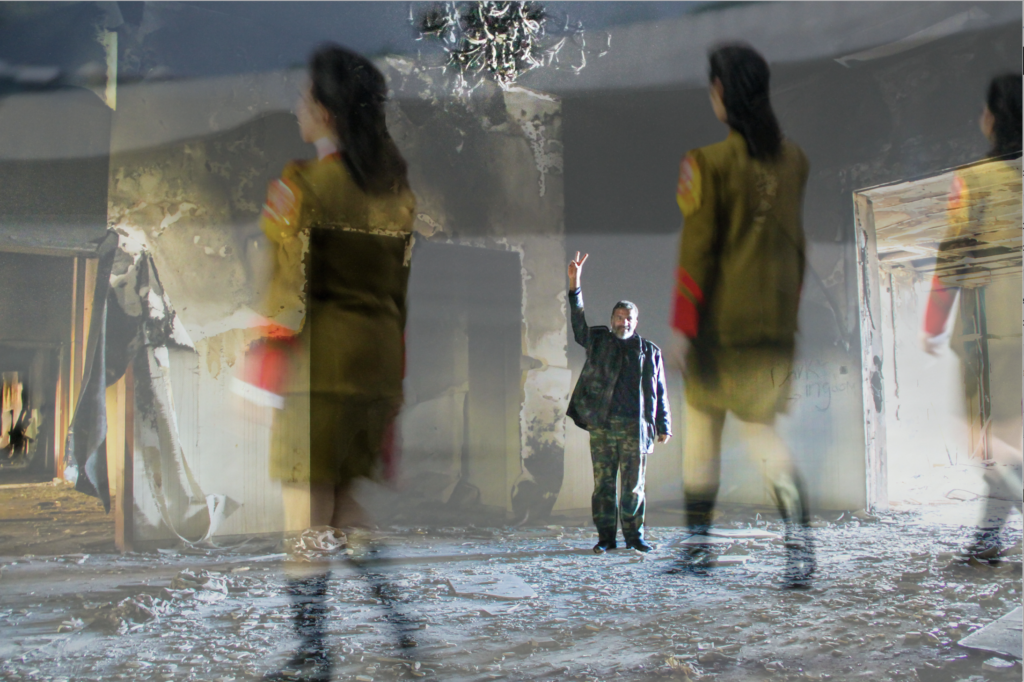 One of her most important projects was a 2017 exhibition at the Süddeutscher Verlag publishing house in her hometown of Munich, where she combined photography and VR. A groundbreaking initiative, the show enabled viewers to see a photograph and then put on a VR camera and experience what it depicts for themselves. Oftentimes, photographs from areas of conflict can seem foreign and abstract for those of us fortunate enough to be living in a secure, comfortable environment. Leeb’s exhibition brought these conflict zones, and those horribly affected by them, closer to home—and raised a new consciousness about the small world we inhabit.
Contrary to her work as a journalist, Leeb removes any context in her art that relates to the time or situation in which the photo was taken, narrowing down the focus to the most human element. She uses paint to as a base, giving images different hues to further accentuate their content. Then, she layers the photographs on top the paint. The resulting image represents a raw, unfiltered depiction of humanity. Looking at her artworks, questions of locality and time disappear as the realities of conflict and terror gain a sense of inescapable immediacy, regardless of where and when they took place.
See the full story here; https://news.artnet.com/art-world/sophie-neuendorf-on-julia-leeb-1552957
THE AUGMENTED REALITY BREADBOARD OF THE FUTURE
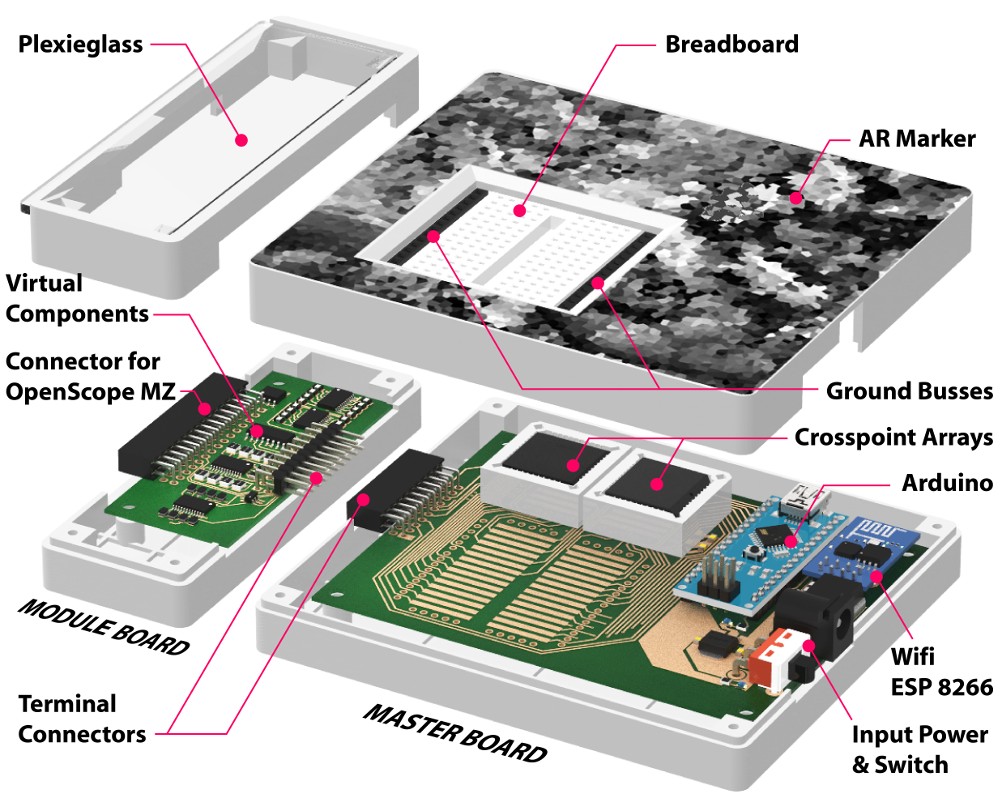
 Developed at the Korean Advanced Institute of Science and Technology, VirtualComponent uses augmented reality and some very clever electronics to transform the classic breadboard into a powerful mixed-reality tool for testing and simulating circuits. It’s not going to replace the $3 breadboard you’ve got hiding at the bottom of your tool bag, but one day it might be standard equipment in electronics classrooms.
Holes in the same row are still electrically linked like in the classic breadboard, but with two AD75019 cross-point switch arrays and an Arduino in the base, it has the ability to virtually “plug in” components at arbitrary locations as selected by the user. So rather than having to physically insert a resistor, the user can simply tell the software to connect a resistor between two selected holes and the cross-point array will do the rest.
What’s more, many of those components can be either simulated or at least augmented in software. For example, by using AD5241 digital potentiometers, VirtualComponent can adjust the value of the virtual resistor. To provide variable capacitance, a similar trick can be pulled off using an array of real capacitors and a ADG715 digital switch to connect them together; essentially automating what the classic “Decade Box” does. In the demonstration video after the break, this capability is extended all the way out to connecting a virtual function generator to the circuit.
See the full story here: https://hackaday.com/2019/05/27/the-augmented-reality-breadboard-of-the-future/
To realize its VR dreams, Facebook needs to kill what Oculus has built
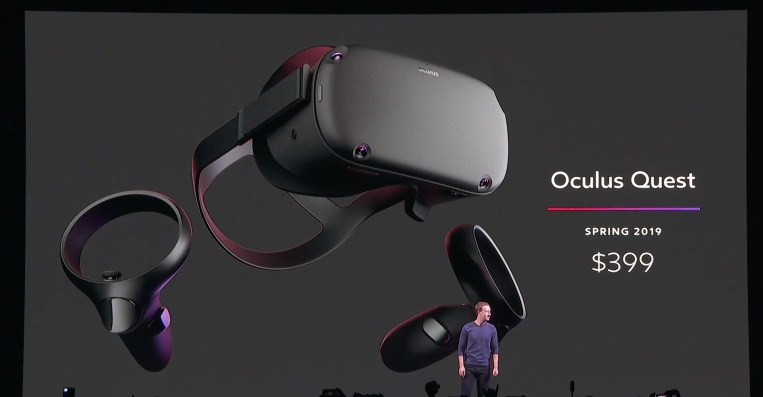 The company’s Quest product, which they released on Tuesday,offers a streamlined version of high-end virtual reality while leveraging time-honed software to make the process of getting up-and-running immeasurably easier. It’s probably the best VR product that’s been built yet, and one that has the mainstream firmly in view.
As the closing of the Oculus acquisition approaches its fifth birthday, one wonders where Facebook’s 10-year-plan for virtual reality begins to show some signs of critical success.
Whether the Quest succeeds or fails, I would not be surprised to see the company fade the high-end into its standalone line over time. The PC will always drive the most high-end experiences, but it’s no place to stake a platform that still needs to prove itself.
Facing its prolonged degradation, Nintendo reshaped its mobile and home consoles into a single product. Oculus needs to do the same, and they already have.
See the full story here: https://techcrunch.com
Amazon Will Pay You to Help Develop Its Augmented Reality System, No Skills Required
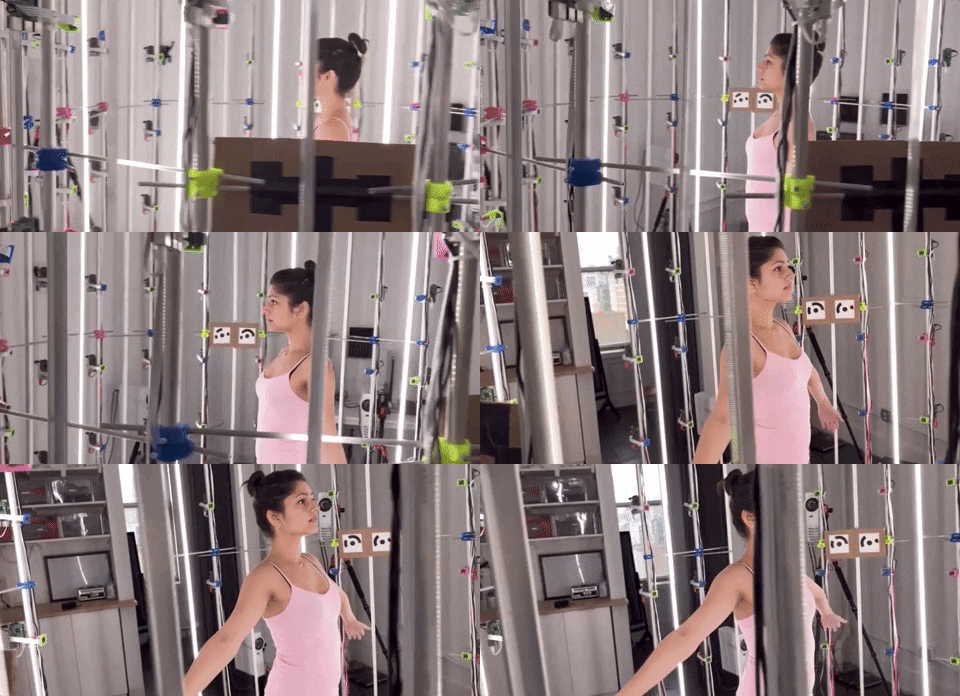 The "Amazon Real World Image Study" is a new, limited time program based in New York City that asks the public to submit themselves to full body 3D scanning for Amazon's research and get paid in the process.
The Body Labs team, a New York-based startup acquired by Amazon in 2017, is conducting the program. The company's work revolves around artificial intelligence, computer vision, and body modeling.
Back when the company was independent, it described a process of capturing a photographic image of a person and then transforming that image into a 3D model of the person. That 3D data could then, based one part of the company's vision, be used for things such as fitting clothing to a person's body shape.
That vision fits in perfectly with Amazon's goal of allowing online shoppers to more accurately purchase items that fit by using augmented reality in the same way that the company has begun using AR to allow you to place items in your home before clicking the buy button.
In return for submitting yourself to Amazon's body scan, you'll get a $25 Amazon gift card. The process takes around 30 minutes and will require those involved to change into form-fitting clothing provided by Amazon.
See the full story here; https://next.reality.news/news/amazon-will-pay-you-help-develop-its-augmented-reality-system-no-skills-required-0198051/
Facebook’s A.I. Whiz Now Faces the Task of Cleaning It Up. Sometimes That Brings Him to Tears.
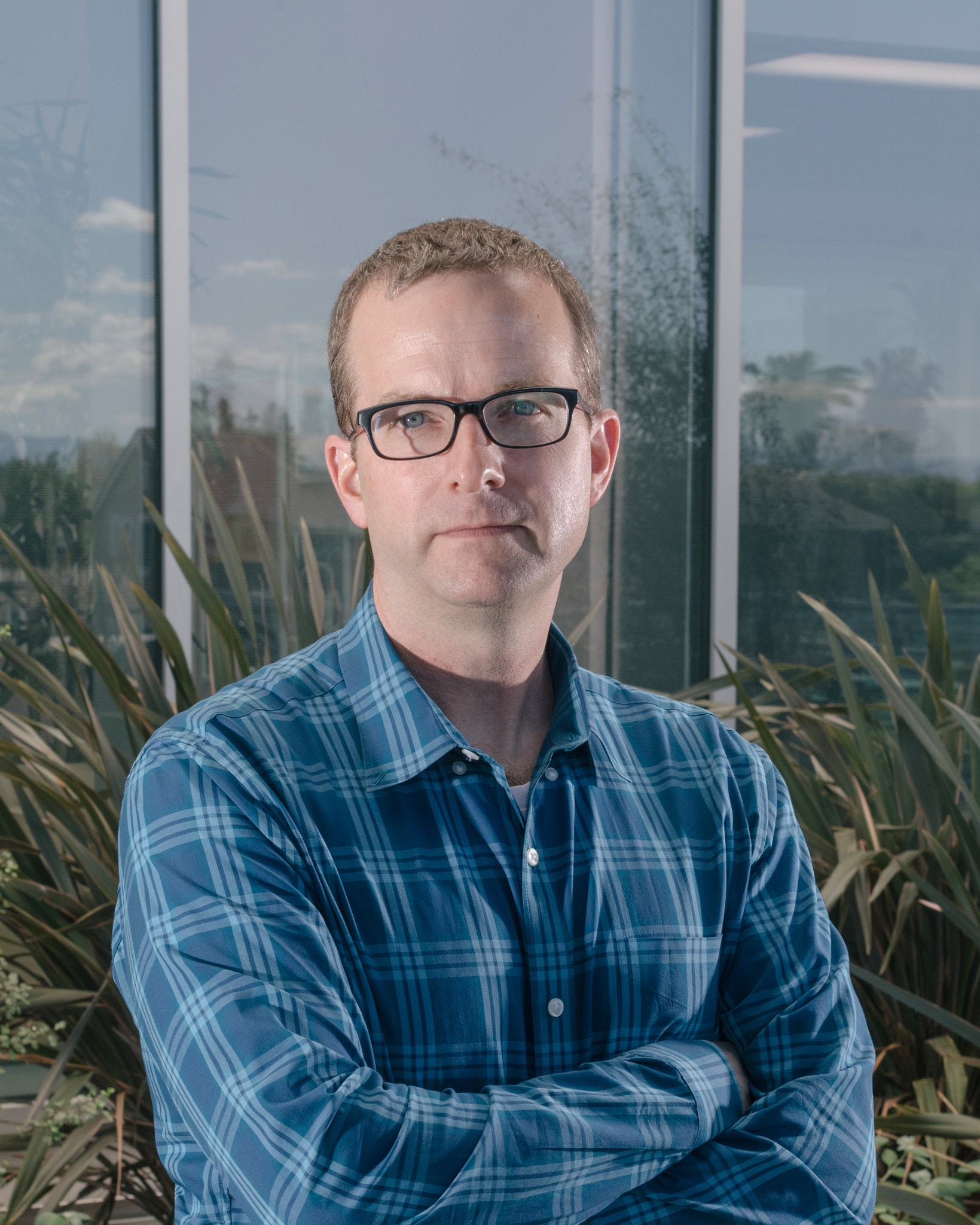 Mr. Schroepfer, 44, is in a position he never wanted to be in. For years, his job was to help the social network build a top-flight A.I. lab, where the brightest minds could tackle technological challenges like using machines to pick out people’s faces in photos. He and Mr. Zuckerberg wanted an A.I. operation to rival Google’s, which was widely seen as having the deepest stable of A.I. researchers. He recruited Ph.D.s from New York University, the University of London and the Pierre and Marie Curie University in Paris.
But along the way, his role evolved into one of threat removal and toxic content eliminator. Now he and his recruits spend much of their time applying A.I. to spotting and deleting death threats, videos of suicides, misinformation and outright lies.
“None of us have ever seen anything like this,” said John Lilly, a former chief executive of Mozilla and now a venture capitalist at Greylock Partners, who studied computer science with Mr. Schroepfer at Stanford University in the mid-1990s. “There is no one else to ask about how to solve these problems.”
...
In late 2015, some of the A.I. work started to shift. The catalyst was the Paris terrorist attack, in which Islamic militants killed 130 people and wounded nearly 500 during coordinated attacks in and around the French capital. Afterward, Mr. Zuckerberg asked the Applied Machine Learning team what it might do to combat terrorism on Facebook, according to a person with knowledge of the company who was not authorized to speak publicly.
In response, the team used technology developed inside the new Facebook A.I. lab to build a system to identify terrorist propaganda on the social network. The tool analyzed Facebook posts that mentioned the Islamic State or Al Qaeda and flagged those that most likely violated the company’s counterterrorism policies. Human curators then reviewed the posts.
It was a turning point in Facebook’s effort to use A.I. to weed through posts and eliminate the problematic ones.
...
Identifying rogue images is also one of the easier tasks for A.I. It is harder to build systems to identify false news stories or hate speech. False news stories can easily be fashioned to appear real. And hate speech is problematic because it is so difficult for machines to recognize linguistic nuances. Many nuances differ from language to language, while context around conversations rapidly evolves as they occur, making it difficult for the machines to keep up.
Delip Rao, head of research at A.I. Foundation, a nonprofit that explores how artificial intelligence can fight disinformation, described the challenge as “an arms race.” A.I. is built from what has come before. But so often, there is nothing to learn from. Behavior changes. Attackers create new techniques. By definition, it becomes a game of cat and mouse.
See the full story here: https://www.nytimes.com/2019/05/17/technology/facebook-ai-schroepfer.html