The 5 biggest announcements from UploadVR’s 2019 E3 VR showcase

PISTOL WHIP IS A RHYTHM SHOOTER THAT MAKES YOU FEEL LIKE JOHN WICK
Pistol Whip is a fast-moving action / rhythm game from Cloudhead, the studio that worked with Valve on its Portal-themed Aperture Hand Labs. It’s described as a mashup of Beat Saber, Superhot VR, and John Wick, wrapped in a stylish neon package. It’s coming out for major VR platforms later this year.
See the full story here: https://www.theverge.com/2019/6/10/18656517/e3-uploadvr-vr-biggest-announcements-after-the-fall-budget-cuts-2-2019
Business Writing Gets A Boost From Big Data
 Simply put, Harris told PYMNTS, “augmented writing is applying data to words. The difference between successful business writing and failing is the words that you use.”
In general, here is what augmented writing entails: By analyzing millions upon millions of words from actual communications – emails, cover letters, marketing copy and so on – machine learning can predict what types of words and sentences work best in a specific context. The data analysis keeps track of which messages lead to positive and desired results, Harris said. When someone is writing a message with the augmented writing technology in the background, the software helps the person select the right copy, learning from every keystroke in what Harris called a “positive learning loop.”
The idea is to bring a new level of craft and efficiency to business communications, including job postings and candidate applications. The predictive engine that powers the technology can help produce more precise copy for those tasks, which can making hiring less of a hassle, and even less expensive over time. The technology also recognizes context and makes appropriate suggestions.
“The language that works in Denver is different from the language that works in New York or London or San Francisco,” Harris said. “The way you would talk to an engineer is different than the way you would talk to a fashion designer or someone in financial services.”
See the full story here: https://www.pymnts.com/innovation/2019/business-writing-big-data-augmented-reality-textio/
Google Helps Tell the Story of Stonewall in Augmented Reality
 About four miles southwest of New York's iconic Flatiron Building, which is getting its own Pride makeover via Snapchat's Landmarker AR, Stonewall National Monument is also receiving some augmented reality treatment by way of the Stonewall Forever mobile app published by the Lesbian, Gay, Bisexual, and Transgender Community Center (better known as The Center) in partnership with Google.
See the full story here: https://mobile-ar.reality.news/news/google-helps-tell-story-stonewall-augmented-reality-0198594/
How Is Augmented Reality Being Used In Education?
 Overall AR acts as a great facilitator in active learning through doing in a way that engages students and aids teachers.
The clear watch-outs are that most teachers are stretched already so giving structured narrative driven content that can be plugged directly into their existing resources and curriculum requirements are critical.
See the full story here: https://www.forbes.com/sites/quora/2019/06/10/how-is-augmented-reality-being-used-in-education/#4df088845028
How does mobile AR work today and how will it work tomorrow
[PhilNote: this is an excellent CliffNotes-style AR technology primer.]
AR experiences can seem magical but what exactly is happening behind the curtain? To answer this, we must look at the three basic foundations of a camera-based AR system like our smartphone.
- How do computers know where it is in the world? (Localization + Mapping)
- How do computers understand what the world looks like? (Geometry)
- How do computers understand the world as we do? (Semantics)
One day, we will create a machine-readable, 1:1 scale model of the world known as “The AR Cloud”. The AR Cloud has many alternative names such as “the world’s digital twin”, “the mirror world” or “magicverse”. Personally, I’d like to think of it as a digital replica of our world that perfectly overlays on top of our real world.
See the full 5000 word essay here: https://arvrjourney.com/reality-check-the-marvel-of-computer-vision-technology-in-todays-camera-based-ar-systems-69b00947f954?sk=0070a49f213064d70f6f104f443c33ef
Jeffrey Katzenberg, Meg Whitman Offer Details on Quibi Launch, Pricing
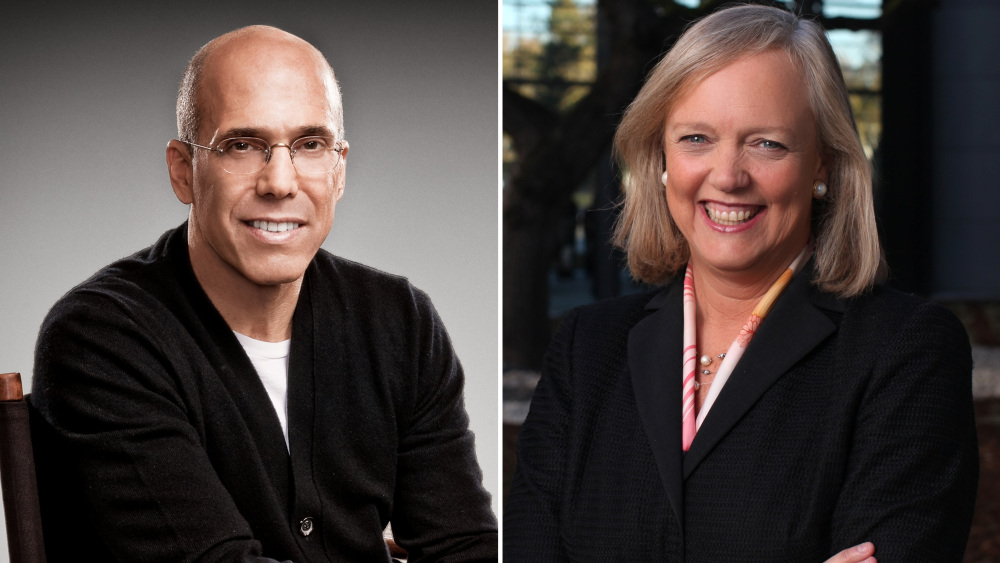 The company currently has projects in the works from A-listers like Guillermo del Toro, Antoine Fuqua, and Sam Raimi. Each series is expected to be two to four hours in length, with each one divided into segments that will be no longer than 10 minutes each.
According to Katzenberg, the service will have two pricing tiers at launch on April 6, 2020. The first will cost $4.99 with one pre-roll ad before each video segment — a 10-second ad if the video is less than 5 minutes and a 15-second ad for 5-10 minute videos. The ad-free option will cost $7.99. Whitman also said they expect to have approximately 7,000 pieces of content available within the first year.
“I said to Meg that, until day one, every decision that we make around content will be driven by instinct,” Katzenberg said. “Minutes after we launch, everything will be driven by data.”
See the full story here: https://variety.com/2019/digital/news/quibi-jeffrey-katzenberg-meg-whitman-produced-by-1203236854/
5G IS COMING, AND IT’S FORTIFIED WITH FIBER
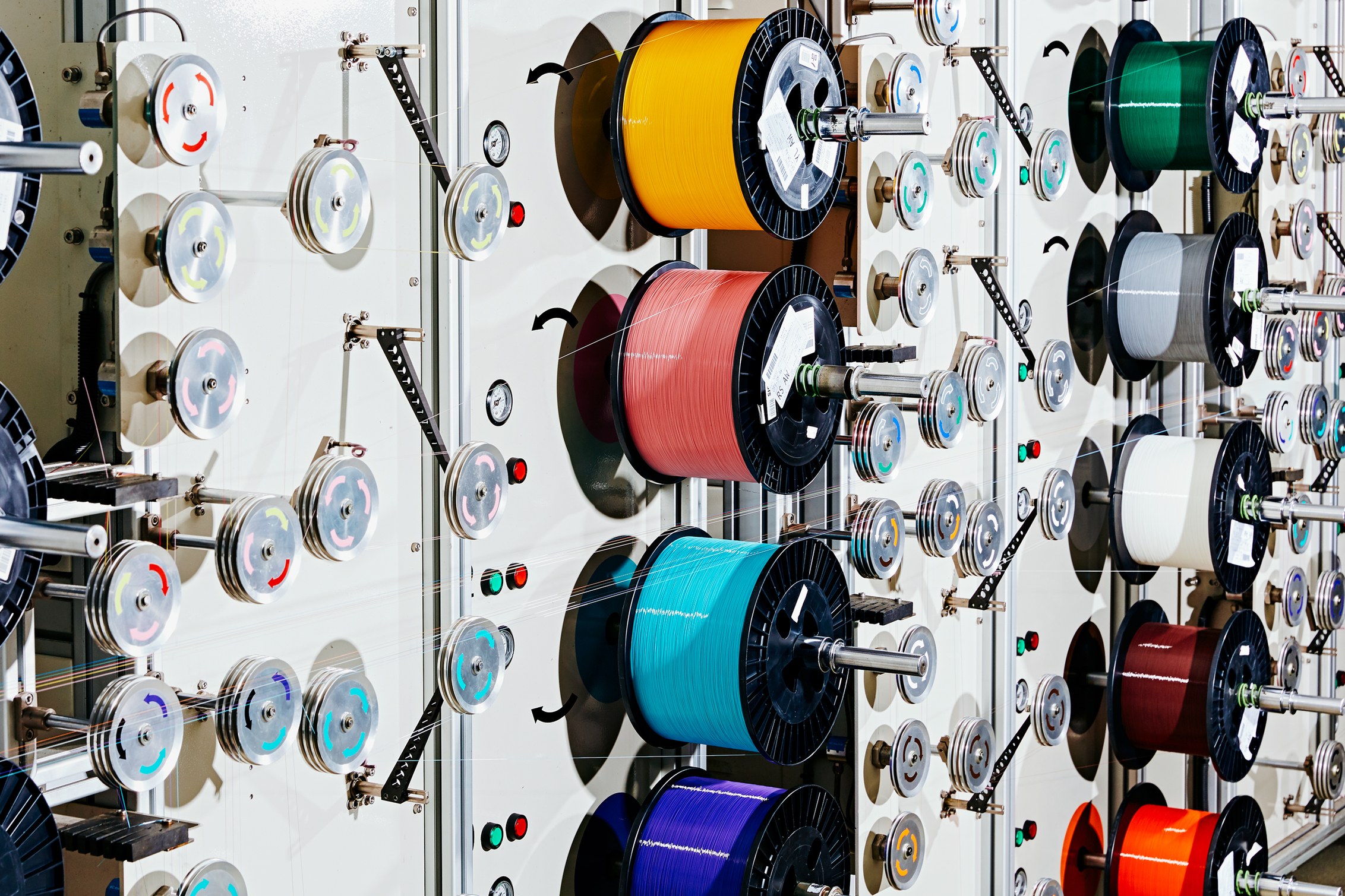 5G will happen in the airy realm of radio waves. To get there, big telecoms have to harness underused parts of the spectrum. But there's another crucial part underlying this system: lowly cable. Huge numbers of new transmitters will be needed to relay all that data to your phone, and many of those transmitters will still connect to the internet through fiber-optic cable—glass as thin as strands of hair carrying pulses of light.
To make it all work, companies, including OFS Optics, a fiber-optics and cable company, are now being commissioned to produce millions of miles of new cable holding twice as many fiber pairs—two strands, one for the uplink and one for the downlink—as the old stuff.
Out in the world, these cables may be draped along utility poles or hidden in shallow trenches under city streets. Enormous lengths of cable carry the internet under the oceans between continents. In those places, mostly unseen, they may one day connect your 5G-enabled device and beam you into the future.
See the full story here: https://www.wired.com/story/5g-is-coming-fortified-with-fiber/
How A.I. Could Be Weaponized to Spread Disinformation
 Now, researchers at the world’s top artificial intelligence labs are honing technology that can mimic how humans write, which could potentially help disinformation campaigns go undetected by generating huge amounts of subtly different messages.
In recent months, two prominent labs — OpenAI in San Francisco and the Allen Institute for Artificial Intelligence in Seattle — have built particularly powerful examples of this technology. Both have warned that it could become increasingly dangerous.
Alec Radford, a researcher at OpenAI, argued that this technology could help governments, companies and other organizations spread disinformation far more efficiently: Rather than hire human workers to write and distribute propaganda, these organizations could lean on machines to compose believable and varied content at tremendous scale.
A fake Facebook post seen by millions could, in effect, be tailored to political leanings with a simple tweak.
See the full story here: https://www.nytimes.com/interactive/2019/06/07/technology/ai-text-disinformation.html
Facebook’s machine learning system MelNet generated a series of voice clips that sound just like Microsoft founder Bill Gates.
 MelNet can also mimic Stephen Hawking, George Takei, and Jane Goodall, among others, which makes sense considering that it was trained on audiobooks as well as a 452-hour dataset of TED talks. Unlike WaveNet and other programs that are trained with audio waveforms, MelNet relies on the spectrogram, which allows it to capture more subtle consistencies known as "high-level structure" in a person's voice, which could one day result in higher-quality AI assistants.
See the full story here: https://www.theverge.com/2019/6/10/18659897/ai-voice-clone-bill-gates-facebook-melnet-speech-generation