 The study showed that this was not significant and showed a reversal in the traditional view. Students wearing virtual reality headgear that blocked their full view of their partner not wearing AR felt that they had less of a social connection with their partner.
On the other side, those who were not wearing AR gear said they did not notice a significant difference and felt socially connected to the AR user they were paired with.
This directly contrasts the common attitude of cellphone users when interacting with others. In this case, many studies have found that the cellphone user felt more socially connected with their conversation partner than the non-cellphone user.
This could suggest that with newer AR technologies, there are more ways to interact than with previous technologies.
Another factor would be that the test subjects might not have known the AR user had a limited view that prevented them from seeing what the non-AR user looked like.
See the full story here: https://byuiscroll.org/study-performed-using-stanford-students-shows-the-effects-of-virtual-reality/
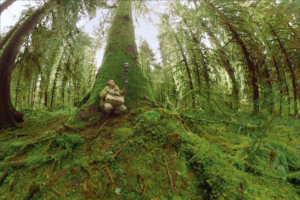 1. Stage an encounter
See also: connection, conversation
2. Be wild: Bewilderment is powerful
See also: Joy, awe
3. Move from being to doing
See also: agency, interaction, control
4. Embody the future
See also: bodies, voices
See the full story here: https://immerse.news/virtual-futures-a-manifesto-for-immersive-experiences-ffb9d3980f0f
 Microsoft co-founder Bill Gates, Uber co-founder Travis Kalanick’s 10100 fund and current Uber CEO Dara Khosrowshahi have invested in Luminous, a small start-up building an artificial intelligence chip.
The seven-person company’s goal is to build a chip that can substitute for 3,000 boards containing Google’s latest Tensor Processing Unit AI chips, or TPUs.
“We know this works because we already have working silicon,” Gomez said.
Google’s entry into the AI silicon business was itself a bold development. The company took matters into its own hands, rather than relying on the Nvidia graphics cards that have become popular among AI researchers for training AI models with vast supplies of data. Google’s public cloud now features its own TPUs; the company hasn’t started selling these chips to other companies.
See the full story here: https://www.cnbc.com/2019/06/03/bill-gates-and-travis-kalanick-invest-in-ai-chip-start-up-luminous.html?fbclid=IwAR2zBjRXjd0YHALz-SdOJWJcx8fdAwvVZZsy9hjdus-ab8cTLjHMl1KYxQk
 Google
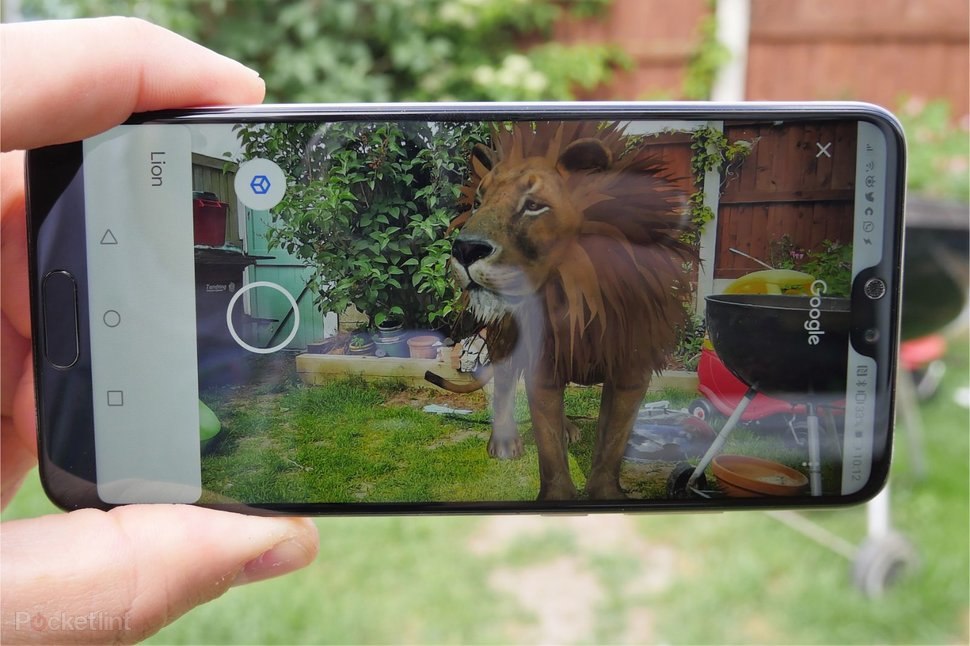
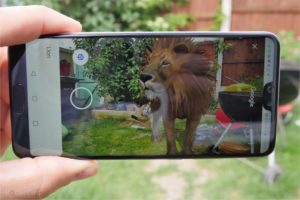
is taking steps to make search results on your phone more exciting. One of these moves includes adding AR animals to search results.
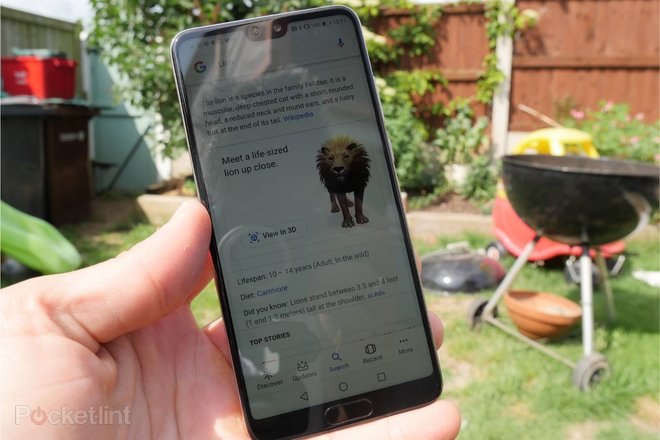
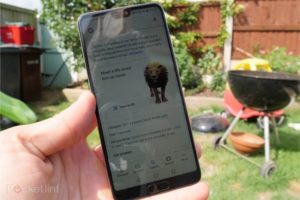
If you have an AR-enabled phone, then all you need to do is search for specific animals using Google search and you'll get an augmented reality vision of those creatures to play around with.
All you need to do is search for an animal, then you'll see a card within the results that says "Meet a life-sized [creature] up close." From there you just need to click the "view in 3D" button to launch the experience.
This new addition to search uses Google ARCore and works with any phone that supports it which includes most modern Android smartphones. We're expecting to see more of this sort of thing in future. Google has already confirmed that it's working with NASA, New Balance, Samsung, Target, Visible Body, Volvo and Wayfair to create more AR content in the near future.
See the full story here: https://www.pocket-lint.com/ar-vr/news/google/148226-google-search-results-now-include-augmented-reality-animals
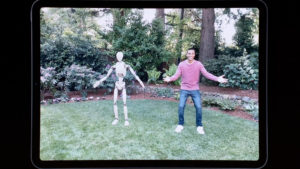
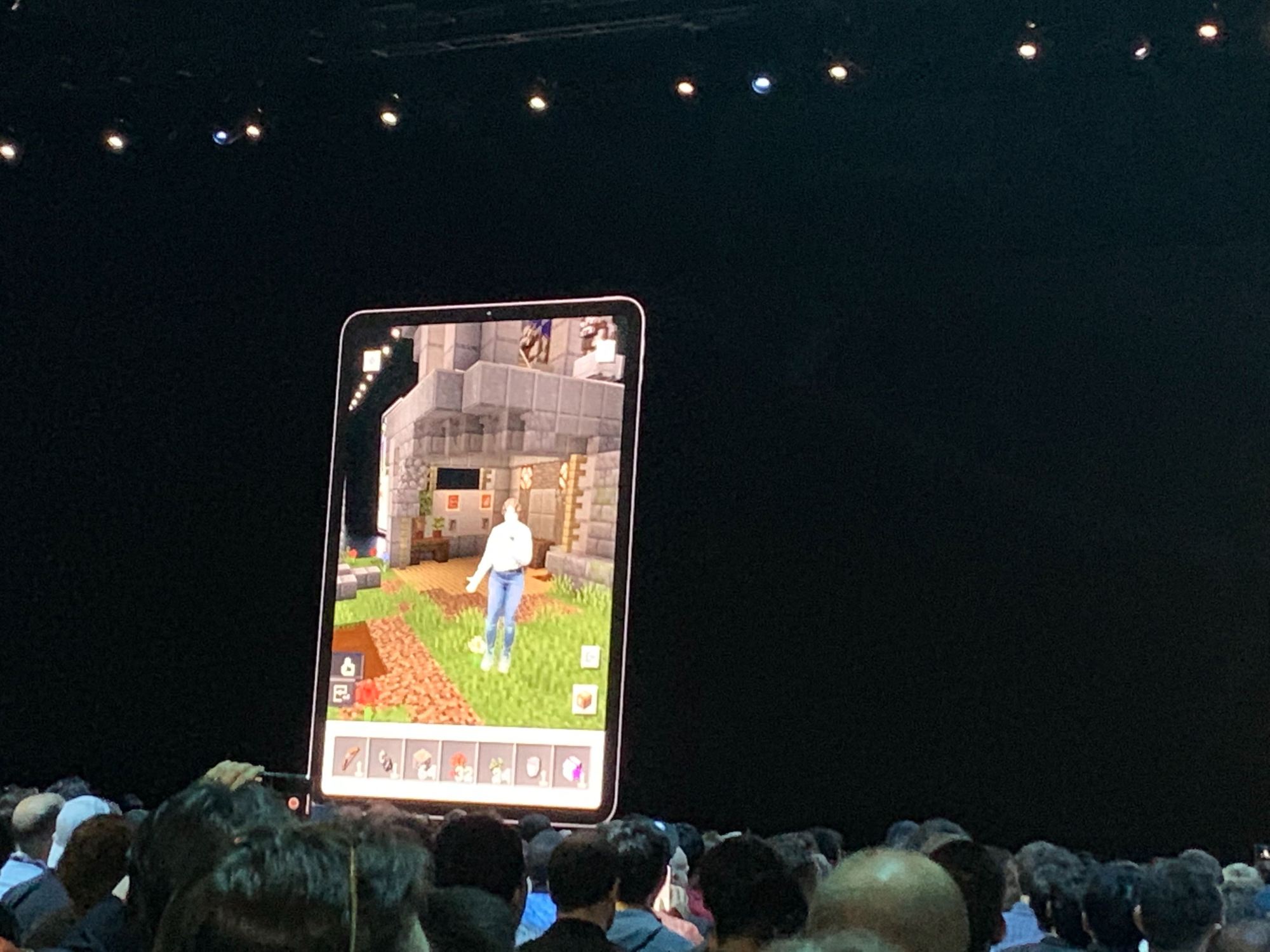
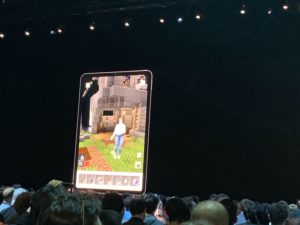 Apple showed off its updated augmented reality platform at its Worldwide Developer Conference (WWDC) keynote event today. Apple has a new version of its AR platform, dubbed ARKit 3.0, and Microsoft showed how it could bring Minecraft to life in AR using the new features.
Onstage, Microsoft showed how you can use your iPhone to add a layer of augmented reality animations on top of a scene in Minecraft Earth. You can, as you can see in the picture above, add your own body into the 3D space of a Minecraft scene.
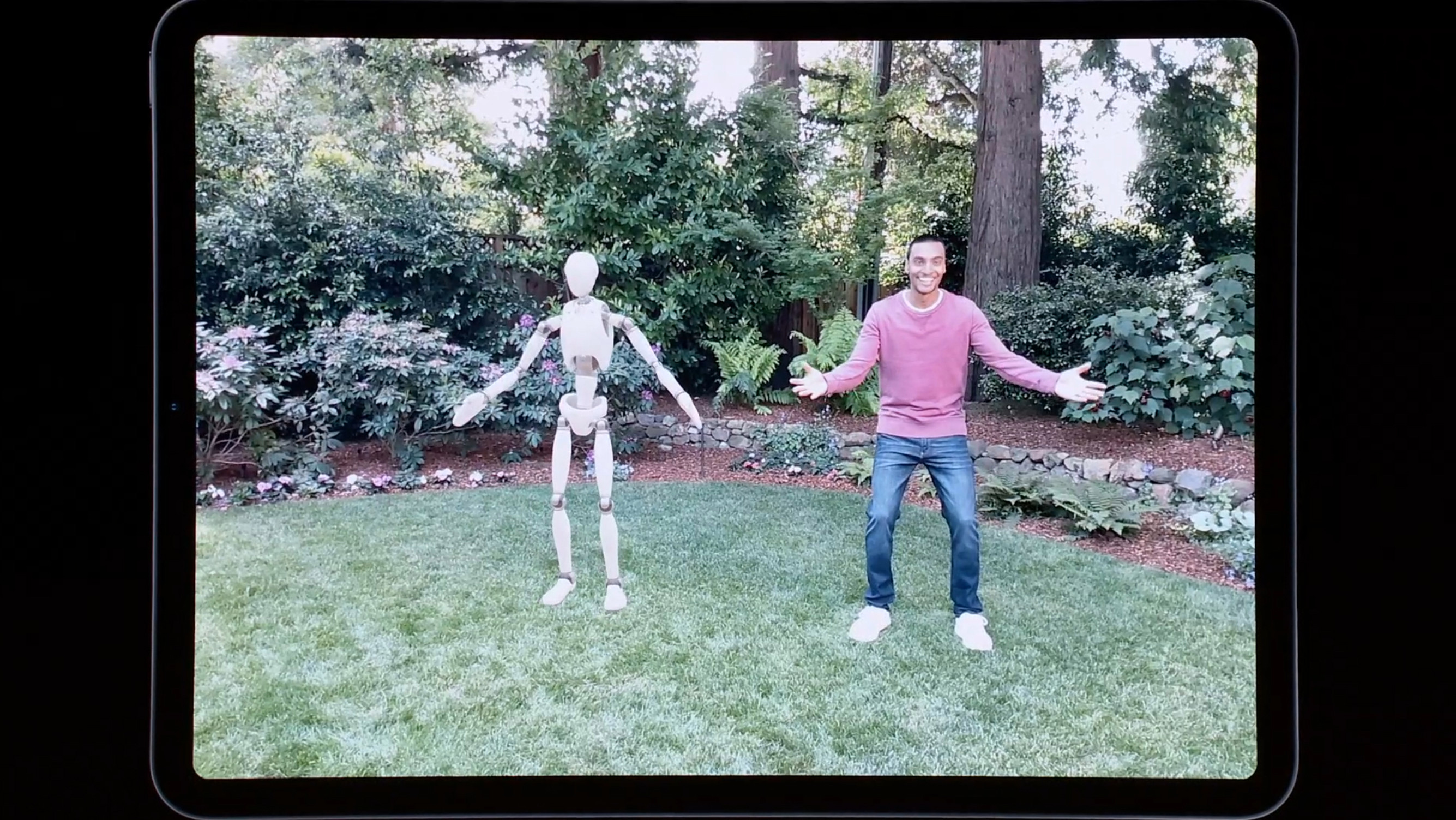
Apple has also added motion capture, which allows an iPhone to capture your body so that it can be added to an AR scene and be manipulated as a movable animated object. It’s now easier to build interactive AR experiences, and you can use an a built-in AR content library. Apple says the ARKit 3.0, RealityKit, and Reality Composer tools will make it a lot easier for developers to create compelling AR experiencers.
Safer Pain Management
Called virtual reality hypnosis distraction (VRHD), the technique could provide a valuable drug-free alternative for pain management free of the negative effects of traditional intravenous sedation.
"Given the immersive and distracting nature of the virtual reality experience, this technology has the ability to act as a preventive intervention transforming local anesthesia into a less distressing and potentially pain-free medical procedure", says Dr Dragos Chirnoaga from CUB Erasmus Hospital, Brussels, Belgium who co-led the research.
To test whether VRHD could aid during surgery the team looked at a randomized trial of 60 adults scheduled for orthopedic surgery. They put 40 of them through a VRHD therapy that consisted of wearing virtual reality goggles and headphones and watching a relaxing video.
Up to 90%
Impressively, only 25% of patients receiving VRHD during anesthesia required intravenous sedation. That percentage was even lower, only 10%, for patients given VRHD both before and during the anesthesia.
See the full story here: https://interestingengineering.com/vr-reduces-the-need-for-sedation-during-surgery-by-up-to-90-finds-research
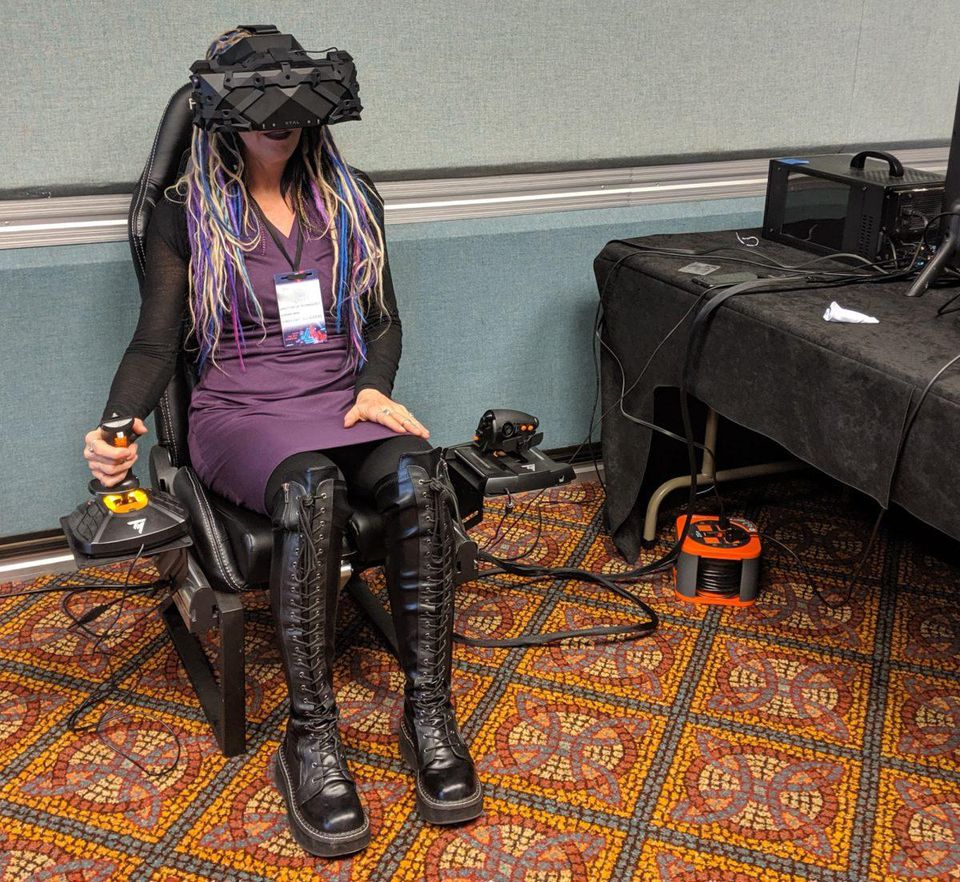
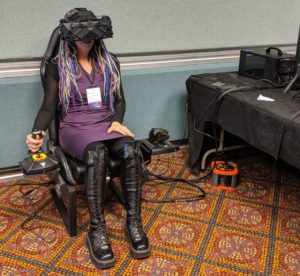 If you are hard-core, however, then a new generation of high-resolution glasses have arrived. The most impressive were those of Varjo which, at $6,000, had better be very good. Varjo places a rectangle in the center of the view which has nearly "retinal" resolution. The rest of the screen is not that shabby either. The things you focus your attention on are almost as sharp as real. You can see fine detail, read small print. The small rectangle can be noticed but it's fairly subtle. I felt much closer to being in a real place than I have felt before.
North Focals
The other exciting device as the conference was the North "Focals" glasses. These glasses are very close to being devices that could be worn all day by the average glasses wearer, going after the same goal that Google Glass had.
Unlike Glass, the North's display shows up right in the center of your field of view.
See the full story here: https://www.forbes.com/sites/bradtempleton/2019/06/03/vrar-begins-picking-up-steam-again-with-new-glasses-including-one-you-might-wear-in-public/#68845be66a17
 Critics say the government is trying to crack down on the internet by stifling dissent and increasing censorship, but authorities say they are trying to prevent terrorism and cyber attacks.
Last month, President Vladimir Putin signed into a law a "sovereign internet" bill, designed to enable Russian authorities to sever the country's internet from the rest of the world.
See the full story here: https://www.bbc.com/news/world-europe-48510026
Abstract:
In rockfall hazard management, the investigation and detection of potential rockfall source areas on rock cliffs by remote-sensing-based susceptibility analysis are of primary importance. However, when the rockfall analysis results are used as feedback to the fieldwork, the irregular slope surface morphology makes it difficult to objectively locate the risk zones of hazard maps on the real slopes, and the problem of straightforward on-site visualization of rockfall susceptibility remains a research gap. This paper presents some of the pioneering studies on the augmented reality (AR) mapping of geospatial information from cyberspace within 2D screens to the physical world for on-site visualization, which directly recognizes the rock mass and superimposes corresponding rock discontinuities and rockfall susceptibility onto the real slopes. A novel method of edge-based tracking of the rock mass target for mobile AR is proposed, where the model edges extracted from unmanned aerial vehicle (UAV) structure-from-motion (SfM) 3D reconstructions are aligned with the corresponding actual rock mass to estimate the camera pose accurately. Specifically, the visually prominent edges of dominant structural planes were first explored and discovered to be a robust visual feature of rock mass for AR tracking. The novel approaches of visual-geometric synthetic image (VGSI) and prominent structural plane (Pro-SP) were developed to extract structural planes with identified prominent edges as 3D template models which could provide a pose estimation reference. An experiment verified that the proposed Pro-SP template model could effectively improve the edge tracking performance and quality, and this approach was relatively robust to the changes of sunlight conditions. A case study was carried out on a typical roadcut cliff in the Mentougou District of Beijing, China. The results validate the scalability of the proposed mobile AR strategy, which is applicable and suitable for cliff-scale fieldwork. The results also demonstrate the feasibility, efficiency, and significance of the geoinformation AR mapping methodology for on-site zoning and locating of potential rockfalls, and providing relevant guidance for subsequent detailed site investigation.
The market of virtual technologies (Augmented, Mixed and Virtual Reality) is anticipated to grow exponentially. Technological development and high-speed 5G mobile connections will accelerate the growth within the next few years. More content and concepts need to be created and tested for these technologies. One of those concepts is City Stories, a location- based Augmented Reality experience. A pilot of it is examined in this study. It was pro-duced during spring and summer 2018 by the funding of Media Industry Research Foundation of Finland. This study is also part of the project.
In this study the early history of AR technology is summarized, the XR industry is analyzed briefly, previous research on immersion and AR design is examined. The level of immersion of the City Stories is measured with ARI (Augmented Reality Immersion) questionnaire that is designed for a location-based augmented reality setting. It is found that the level of feeling immersion was quite high according to the ARI questionnaire, and the conclusion is that City Stories and similar concepts are potentially viable concepts for further development. It is also con- cluded that the taxonomies of immersion and flow should be clarified and the instruments for measuring these should be tested more.
See the full story here: https://www.theseus.fi/handle/10024/172150