Yale: ‘Blended Reality’ brings diverse perspectives to emerging tech
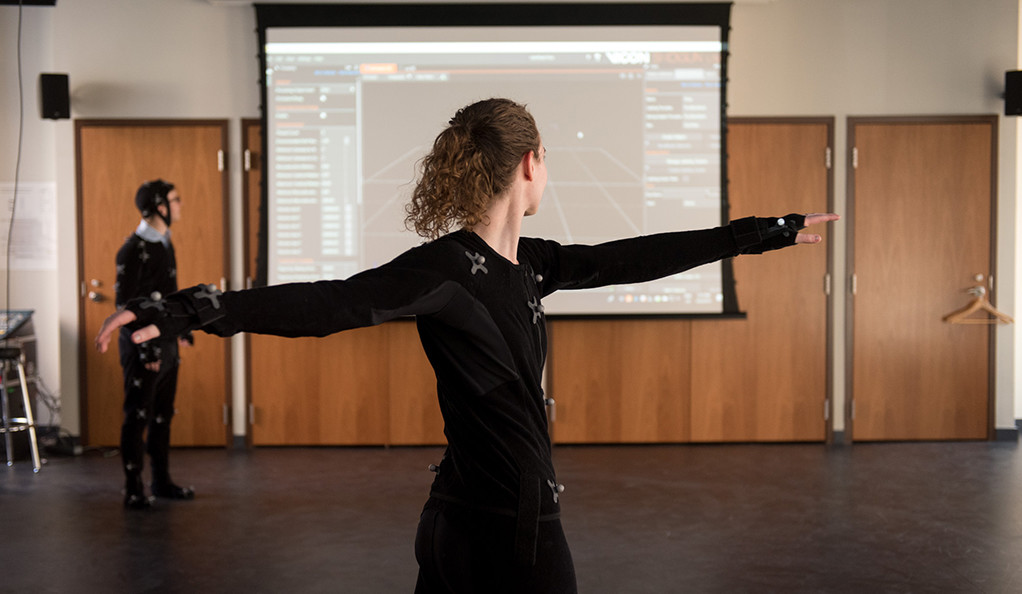 Shapiro presented his zoo experience at “Liminal Views,” an exhibition of a dozen “blended reality” projects by Yale students and faculty held on April 26 at the Center for Collaborative Arts and Media (CCAM). The work presented was part of the Blended Reality Research Program — a partnership between Yale and HP supporting innovative, cross-disciplinary projects that blur lines between the physical and digital worlds.
The program seeks to make emerging technologies, such as virtual and augmented reality, 3D fabrication, and digital imaging, accessible to a broader range of people, opening new creative avenues for artists and scholars, explained Justin Berry, the research program’s principal investigator and a critic at the Yale School of Art.
“We’re trying to introduce this technology to people who don’t have expertise with it — people who are not approaching it with preconceived ideas about what it is supposed to become,” Berry said. “In doing so, we’re bringing diverse and unique perspectives to an emerging technology. Very often it’s people who aren’t familiar with technology who have the most meaningful insights about it.”
See the full story here: https://news.yale.edu/2019/05/01/blended-reality-brings-diverse-perspectives-emerging-tech
32 countries work to harmonize 5G security plans at Prague conference
 Hosted by the Czech government, the Prague 5G Security Conference sought to establish a foundation of trust between the telecom chiefs of 32 countries, including nations from North America, Asia, and Western and Eastern Europe, as well as Australia and Israel. In recent months, the leaders and telecom ministries of individual countries have reached varied conclusions regarding Chinese networking hardware within their 5G infrastructures, so the conference aimed to share best practices on developing secure 5G networks — an issue that is expected to impact the countries’ militaries, intelligence-sharing efforts, and critical infrastructures over the next decade.
While the conference was Czech-sponsored, the U.S. reportedly sought to use it as an opportunity to pitch allies on its latest approach, which emphasizes strict network security rather than bans on specific companies. The strategy, which was embraced by several countries prior to the Prague event, recommends that governments adopt 5G network standards Huawei can’t meet, due to Chinese laws requiring its cooperation in intelligence-gathering efforts.
See the full story here: https://venturebeat.com/2019/05/03/32-countries-work-to-harmonize-5g-security-plans-at-prague-conference/
Facebook Is Developing Cryptocurrency Payments System
 At its center is a digital coin that users would be able to send to one another and use to make purchases on Facebook and on the broader Internet. This has the potential to significantly disrupt, or even up-end, “the traditional, lucrative plumbing of e-commerce and would likely be the most mainstream application yet of cryptocurrency.”
“The existing system is full of entrenched interests and technology clogs. And Facebook’s battered standing with users, investors and regulators make it a delicate time to plow into new territory,” suggests The Wall Street Journal.
What sets Facebook apart from others who may have tried and failed with cryptocurrency in the past is its sheer size. A total of one-third of all people around the world log on monthly, and many are in developing countries where social media acts is a crucial component of Internet commerce. But do people want Facebook, in particular, more deeply ingrained in their financial lives?
See the full story here: http://www.etcentric.org/facebook-is-developing-cryptocurrency-payments-system/
This is Cool: Echodyne Demonstrates Augmented Reality for Airspace Awareness
 Echodyne is an airspace security firm established in 2014, with blue chip investment from Bill Gates, among others. They use a combination of sensors, combined with a sophisticated software platform to allow stakeholders like law enforcement, federal agencies or enterprise companies to see exactly what is in their airspace, including drones. While small, lightweight radar systems are a main component of the detection system, they aren’t the only piece. “Radar is a great primary sensor,” says Leo McCloskey, Echodyne’s VP of Marketing. “But you need other sensors, like cameras, to be able to positively identify objects in the airspace.”
...
Here it is: imagine that you’ve secured an area of airspace around your drone operation. The Echodyne system has identified a drone in the airspace. Now, you need to find it in the sky – and learn all there is to know about the aircraft, identifying it as friend or foe.
With this reference architecture displayed by Echodyne, you just turn your head. Wearing the Hololens augmented reality headset, you follow the arrows in your field of vision until you find the drone in the sky – then twitch your fingers and see all of the data the system holds on that aircraft. It’s a stunning demonstration of the possiblities of data visualization.
See the full story here: https://dronelife.com/2019/05/02/echodyne-demonstrates-augmented-reality-for-airspace-awareness/
Facebook will open its data up to academics to see how it impacts elections
 More than 60 researchers from 30 institutions will get access to Facebook user data to study its impact on elections and democracy, and how it’s used by advertisers and publishers.
A vast trove: Facebook will let academics see which websites its users linked to from January 2017 to February 2019. Notably, that means they won’t be able to look at the platform’s impact on the US presidential election in 2016, or on the Brexit referendum in the UK in the same year.
Despite this slightly glaring omission, it’s still hard to wrap your head around the scale of the data that will be shared, given that Facebook is used by 1.6 billionpeople every day. That’s more people than live in all of China, the most populous country on Earth. It will be one of the largest data sets on human behavior online to ever be released.
The process: Facebook didn’t pick the researchers. They were chosen by the Social Science Research Council, a US nonprofit. Facebook has been working on this project for over a year, as it tries to balance research interests against user privacy and confidentiality.
Privacy: In a blog post, Facebook said it will use a number of statistical techniques to make sure the data set can’t be used to identify individuals. Researchers will be able to access it only via a secure portal that uses a VPN and two-factor authentication, and there will be limits on the number of queries they can each run.
The context: Facebook is keen to improve its reputation after months of scandals over data privacy, security, and its role in elections and democracy. If it opens up its data as promised, it could introduce some much-needed light into what’s often a very heated debate.
See the full story here: https://www.technologyreview.com/f/613451/facebook-will-open-its-data-up-to-academics-to-see-how-it-impacts-elections/?utm_campaign=the_download.unpaid.engagement&utm_source=hs_email&utm_medium=email&utm_content=72251193&_hsenc=p2ANqtz-8_ulPXLXdMuvg2GhkpgFJDb15NrzcylAooYpgXt4Pmpp96-MACO9Inb5wi7PCOah5o20OdbmCy9YFoHRryv0WpOD1EOA&_hsmi=72251193