AT&T’s and Magic Leap’s ‘Game of Thrones’ Experience Is a Fun Little Teaser
 Augmented reality startup Magic Leap and AT&T have been showing a “Game of Thrones” experience ahead of the premiere of the show’s final season at select AT&T stores this month. “The Dead Must Die: A Magic Leap Encounter” isn’t necessarily breaking ground in location-based entertainment, but it’s a fun little teaser for the show, and a device that most consumers haven’t had a chance to play with until now.
The experience, produced by Framestore in partnership with HBO, AT&T and Magic Leap, is currently showing in the telco’s so-called flagship stores in San Francisco, Boston and Chicago. Later this month, it is scheduled to come to select stores in Los Angeles and Dallas as well. Ultimately, there will also be a home-based version of Magic Leap owners, according to a Magic Leap spokesperson.
All of this just takes five minutes or less, depending on how well-versed participants are in slaying the undead. The experience is single-player, and while there are physical props, players don’t actually get to interact with them. For instance, you use the Magic Leap controller to pick up the AR torch, as well as any other objects, instead of handling physical representations of such objects, as one might in a more advanced location-based VR experience from a company like The Void.
See the full story here: https://variety.com/2019/digital/news/atts-and-magic-leaps-game-of-thrones-experience-is-a-fun-little-teaser-1203186144/
Facebook are ‘morally bankrupt liars’ says New Zealand’s privacy commissioner
 Zuckerberg said incidents like the live streaming of the Christchurch mosque attacks were the result of “bad actors”; not bad technology and a time delay would disrupt the enjoyment of users who broadcast events like birthday parties or group hangouts.
In a later interview with RNZ on Monday, Edwards described Zuckerberg’s comments as “disingenuous”, and said the company had refused to tell his office how many murders, suicides and sexual assaults had been broadcast using the platform.
See the full story here: https://www.theguardian.com/technology/2019/apr/08/facebook-are-morally-bankrupt-liars-says-new-zealands-privacy-commissioner
This immersive theatre project is so psychedelic it’s now become a science experiment
 “The show ended, the lights came on, and the guests are lying on their backs, holding hands, shaking, sweating – tears, snot, drool – vibrating, unable to move for about 45 minutes,” says Sean Rogg. Surprisingly, Rogg isn’t describing the scenes of an internment camp or some other unspeakable horror. He’s talking about his latest art piece, Barzakh, an immersive experience like no other.
Staged within an old factory in Welwyn Garden City, a misleadingly idyllic town north of London, entrants will be grilled through a four-hour-long trial of reverence and rebirth. Their clothes exchanged for uniforms, the willing group will be subjected to blinding light, chilling darkness, biting sound, and, ultimately, a palpable sense of a higher power. This is not a pleasant trip to the gallery.
“We use every phobia you can imagine: suffocation and isolation and degradation, just one after the other, slapping the outside world out of them; cleansing them, and then preparing them for the final moment,” says Rogg. Indeed, given its hellish toll, it’s hard to imagine why anyone would want to experience Barzakh at all. But Rogg insists that entrants experience far more than just distress; they achieve true empathy.
And this newfound fellowship wasn’t just a surprise to Rogg, but to psychologists, too. Startled by Rogg’s results, and unable to replicate them in their own regulated workplace, some scientists are now turning to the artist for answers.
What you may not understand about China’s AI scene
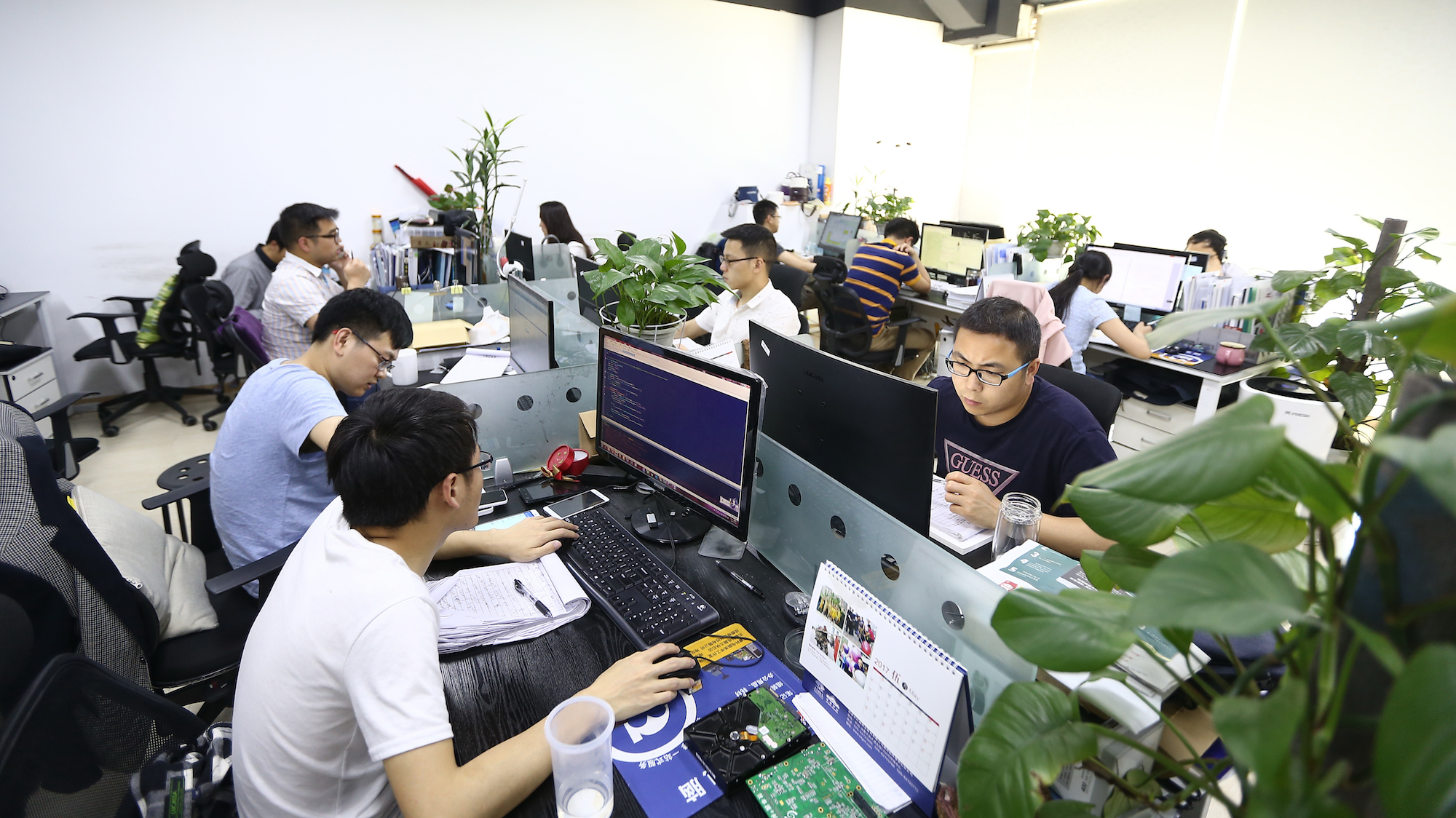 #1. The Chinese- and English-speaking AI communities have an asymmetrical understanding of each other. Most Chinese researchers can read English, and nearly all major research developments in the Western world are immediately translated into Chinese, but the reverse is not true. Therefore, the Chinese research community has a much deeper understanding than the English-speaking one of what’s happening on both sides of the aisle. As China’s AI industry continues to grow, this could prove a major disadvantage for people in the West.
#5. Chinese people care about AI ethics. While it may be true that Chinese and American citizens have differing views on privacy, it’s false to say that the former don’t care about it at all. Tech giants have been mired in privacy infringement controversies, and local governments have filed suits against companies for violating data protections. Chinese philosophers and academics have also elevated broader conversations on ethics into the national discourse.
See the full story here: https://www.technologyreview.com/the-download/613296/what-you-may-not-understand-about-chinas-ai-scene/?utm_campaign=the_download.unpaid.engagement&utm_source=hs_email&utm_medium=email&utm_content=71618860&_hsenc=p2ANqtz-8lITqd2mvdndM-ngG31-WOiP-FKINe478qfbi5FgAeoki3xiF4uZlMCBM7aqhdDlD-StKwR3XL_nHdawneuRaZeds6kA&_hsmi=71618860
How AI & Machine Learning Tools Could Benefit Filmmaking
 Before an NAB 2019 panel discussion on machine learning and artificial intelligence in filmmaking began, Corto chief executive Yves Bergquist wanted to make one thing clear. “AI and machine learning are used interchangeably,” said Bergquist, who also leads research in AI and neurosciences at USC’s Entertainment Technology Center. “But they are not. Machine learning is a property of AI. The ML app will have opinions about the data, but AI will use ML to have agency over that data and take action.” Bergquist asked the panel how filmmakers can leverage ML and AI to create optimization and efficiencies as well as better artistic content.
Cinematographer Andrew Shulkind, who is also director of imaging/immersive media strategy at M. Bonnieux Inc., noted that, “the idea of post production techniques filtering into production is what’s happening now.” “There are some experimental uses of AI, but mostly what we’re seeing is ML used for labeling and classifying — assistant editor tasks,” he said. “It’s a code processor to achieve post deadlines. On the display side, companies like Netflix are using it to personalize content. The idea is that ML offers so many efficiencies.”
Unity Technologies head of cinematics Adam Myhill created Cinemachine (later sold to Unity), which is a Technical Emmy Award-winning “unified procedural camera system for in-game cameras, cinematics and cut-scenes, film pre-visualization and virtual cinematography eSports solutions.”
“In eSports, it’s hard to know how to build a narrative when you don’t know what’s going to happen next,” explained Myhill. “The procedural camera system acts like a filmmaker, looking through the lens and moving appropriately.” Shulkind added that Cinemachine is “one of the most amazing tools out there now.”
Another new tool, CineCast, can take 5,000 or 10,000 live virtual camera streams to construct a narrative. “It’s a terrifying problem,” said Myhill. “But we’ve been chipping away at it. It understands good editing and it doesn’t do jump cuts. But it’s like a toddler that walks and falls down. We believe we’re on the edge of AI cinematography — but it won’t put any cinematographers out of work.”
Bergquist said one of the biggest challenges today is to take low-level visual data and abstract it into symbols. “Machines are very bad at that right now,” he said. Myhill agreed that his company isn’t yet doing a very good job of this. “Some of the first things we’re doing is, if you’re in a game and you orbit it around the player, what if there were a mode to do that automatically? We chose this first because it’s easier to train this than doing that for emotional intensity of a dialogue scene. It’s a matter of thin slicing.”
Bergquist asked Shulkind if, as a cinematographer, what aspect of his work he wished could be automated, and what he wished he knew at the time he was working.
“Cinematography is about the psychology of the image,” said Shulkind. “It would be great to know where there’s harmony between the images and the purpose, to create more accurate psychological models. One of the more esoteric aspects of cinematography is plotting out the moves — to be able to see what that looks like in previs would be interesting.”
“We’re selling this to experts in this industry, and we’re putting a lot of work at ETC into how to help creatives innovate better and convince studio executives and financiers to put money behind it,” Bergquist said. “The risk isn’t in innovating — the risk is not innovating.” But, he warned, “the technology won’t be ready for awhile, and [currently] the studios have zero interest in it.”
See the full story here: http://www.etcentric.org/how-ai-machine-learning-tools-could-benefit-filmmakingmachine-learning-ai-tools-for-filmmaking-now-in-the-future/
AI systems should be accountable, explainable, and unbiased, says EU
 To help with this goal, the EU convened a group of 52 experts who came up with seven requirements they think future AI systems should meet. They are as follows:
- Human agency and oversight — AI should not trample on human autonomy. People should not be manipulated or coerced by AI systems, and humans should be able to intervene or oversee every decision that the software makes.
- Technical robustness and safety — AI should be secure and accurate. It shouldn’t be easily compromised by external attacks (such as adversarial examples), and it should be reasonably reliable.
- Privacy and data governance — Personal data collected by AI systems should be secure and private. It shouldn’t be accessible to just anyone, and it shouldn’t be easily stolen.
- Transparency — Data and algorithms used to create an AI system should be accessible, and the decisions made by the software should be “understood and traced by human beings.” In other words, operators should be able to explain the decisions their AI systems make.
- Diversity, non-discrimination, and fairness — Services provided by AI should be available to all, regardless of age, gender, race, or other characteristics. Similarly, systems should not be biased along these lines.
- Environmental and societal well-being — AI systems should be sustainable (i.e., they should be ecologically responsible) and “enhance positive social change”
- Accountability — AI systems should be auditable and covered by existing protections for corporate whistleblowers. Negative impacts of systems should be acknowledged and reported in advance.
You’ll notice that some of these requirements are pretty abstract and would be hard to assess in an objective sense. (Definitions of “positive social change,” for example, vary hugely from person to person and country to country.) But others are more straightforward and could be tested via government oversight. Sharing the data used to train government AI systems, for example, could be a good way to fight against biased algorithms.
...
But this role has been partly forced on the EU by circumstance. It can’t compete with America and China — the world’s leaders in AI — when it comes to investment and cutting-edge research, so it’s chosen ethics as its best bet to shape the technology’s future.
...
Regulators in China are weighing a ban on Bitcoin mining
 The official announcement, which comes in the form of a revised list awaiting public comment, does not exert regulatory power. The agency did not put a proposed deadline for when crypto mining should be banned. While such guidelines normally hint at Beijing’s attitude towards an industrial activity, some points out that the NDRC’s guiding list, which renews every few years, has had limited impact on industries it has wanted to cut.
The ban, if carried out, would deal a massive blow to a series of Chinese companies that rode the crypto wave by providing mining and production tools to the industry. In particular, Bitmain — which recently lets its application for a proposed Hong Kong IPO lapse — would be significantly impacted by a ban. Bitmain’s mining-optimized hardware is widely acknowledged as the top provider of mining hardware, and as much as 94 percent of the company’s revenues in the first half of 2018 came from “Antminers”, its crypto mining hardware.
See the full story here: https://techcrunch.com/2019/04/09/china-considers-ban-crypto-mining/?utm_medium=TCnewsletter&tpcc=TCdailynewsletter
The Nuances of Augmented Reality
 Types of Augmented Reality
- Marker-Less AR: This of location-based or position-based augmented reality, which employs a GPS, a compass, a gyroscope, and an accelerometer to render facts based on user’s location.
- Marker-Based AR: This of image recognition kind of AR which uses a marker to calculate the position and orientation to induct digital animations.
- Projection-Based AR: It just projects synthetic light to physical surfaces and makes the facility for the user to interact.
- Superimposition-Based AR: It completely replaces the natural view with an augmented, as a whole or part. Object recognition performs a pivotal role.
See the full story here: https://thriveglobal.com/stories/the-nuances-of-augmented-reality/
THE MILITARY IS DEVELOPING AUGMENTED REALITY NIGHT VISION GOGGLES
 The U.S. military is developing night vision goggles that are loaded to the brim with augmented reality capabilities.
Some of the AR features are what one might expect from military goggles, like a built-in compass and targeting system, but Military Times tried out a prototype and reported back that the military’s AR goals are far more ambitious — signaling that the military’s ground troops could be in store for a major high-tech upgrade.
The demo was for what the Pentagon is calling the Integrated Visual Augmentation System (IVAS), which is expected to enhance a soldier’s capabilities in combat by giving them new tailor-fitted ways to communicate and coordinate with each other.
IVAS is built on a custom version of Microsoft’s HoloLens headset. The headset is the end result of a $480 million military contract that Reuters reported — and which caused internal protests within Microsoft.
See the full story here: https://futurism.com/the-byte/us-military-augmented-reality-night-vision-goggles