Sony Unveils Three Phones With CinemaWide Aspect Ratio
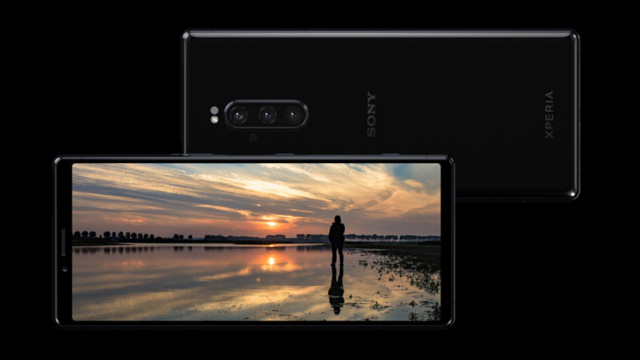 At MWC Barcelona (formerly Mobile World Congress), Sony introduced its flagship smartphone, the Xperia 1, with a notably tall display and ‘CinemaWide’ 21:9 aspect ratio, shared by the lower cost new Xperia 10 and 10 Plus. The Xperia 1 is the successor to Sony’s Xperia XZ3 released last fall. The Xperia 1’s display is a 4K HDR OLED panel measuring 6.5-inches diagonally. With a bezel on top, it is 6.57-inches tall, almost an inch taller than an iPhone XS. Sony positions the new form factor as ideal for videos, games and multitasking.
With regard to watching videos and playing games, it notes that, although “plenty of movies are filmed in cinematic aspect ratios, which should look great on the tall screen … the content that people tend to watch on their phones, like YouTube, usually isn’t.”
See the full story here: http://www.etcentric.org/sony-unveils-three-phones-with-cinemawide-aspect-ratio/
Hands-On with the Nreal Light, Smartphone-Powered Augmented Reality Immersion
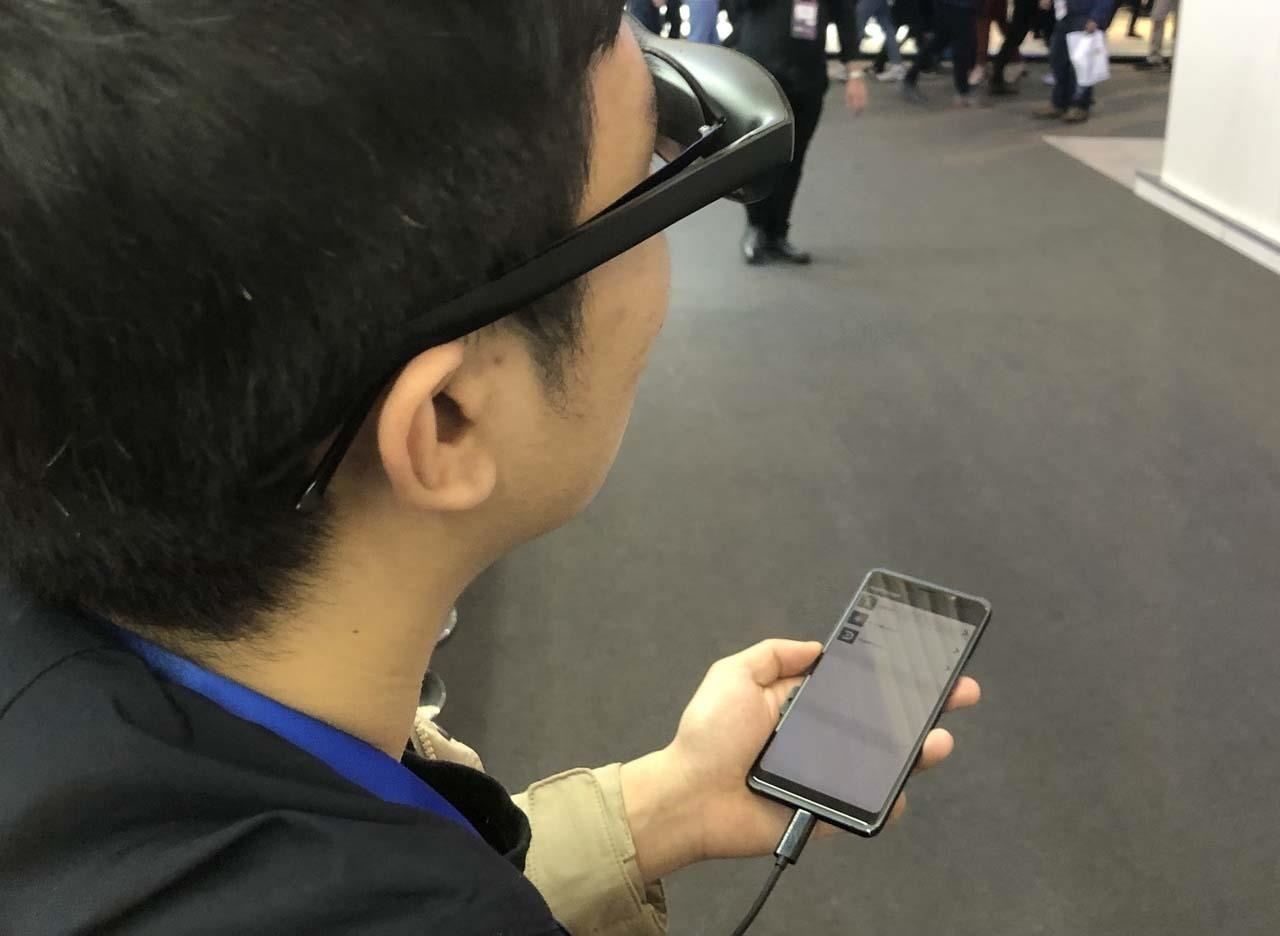 This week, China-based Nreal made the potential mass adoption of its Nreal Light AR smartglasses product a lot more likely by giving users the option of using a smartphone as the system's computer rather than the initial hip computer included in the first iteration of the product.
That announcement was paired with the news that the company had also secured additional investment funding to the tune of $15 million. This time around, the news is that Nreal will now pair the Nreal Light glasses portion of its system with smartphones powered by Qualcomm's Snapdragon 855 chip.
The list of devices using that chip primarily includes top tier Android smartphones including the Samsung Galaxy S10, Samsung Galaxy Fold, Xiaomi Mi 9, Xiaomi Mi Mix 3 5G, Sony Xperia 1, LG G8 ThinQ, and LG V50 ThinQ, among others.
...the company may be aiming to get the price of the glasses-only version of the Nreal Light system down around the $500 to $600 mark.
What AR Looks Like
... the Nreal Light version of AR is indeed immersive (52 degree field of view) and looks great, but it's not near the quality of interactivity of the Magic Leap One or the HoloLens 2.
Interface
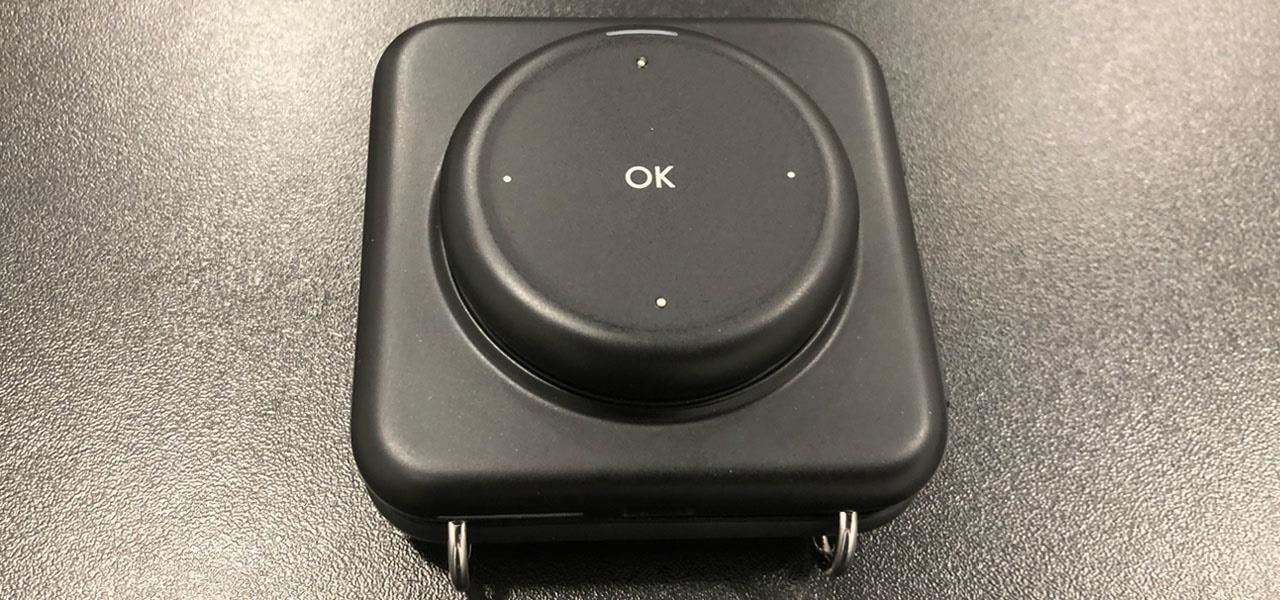 The primary mode of interface is via a circular 3DoF controller that's pressure and touch sensitive and fits in the palm of your hand.
Conclusion
This Nreal Light is by no means on par with the Magic Leap One or the HoloLens 1or HoloLens 2. Overall, I think it's really a bet on being "good enough," as well as small enough and stylish enough to attract those users without several thousand dollars to spend on higher-end AR, and haven't yet been captivated by smartphone AR.
A recent and very relevant example of this is the case of North and its Focals smartglasses. The company started out trying to sell the device for $1,000 with almost no advertising or marketing and just a couple brick and mortar stores. After failing to generate significant adoption, the team quickly cut the price by almost half, and now the company is suffering massive layoffs — all in just a few months.
On the other hand, Nreal has very big backers from the Chinese venture capital space, so it likely has more runway.
See the full story here: https://next.reality.news/news/hands-with-nreal-light-smartphone-powered-augmented-reality-immersion-0194315/
Cronkite School Awarded NAB Grant to Bring Augmented Reality to Weather Reports
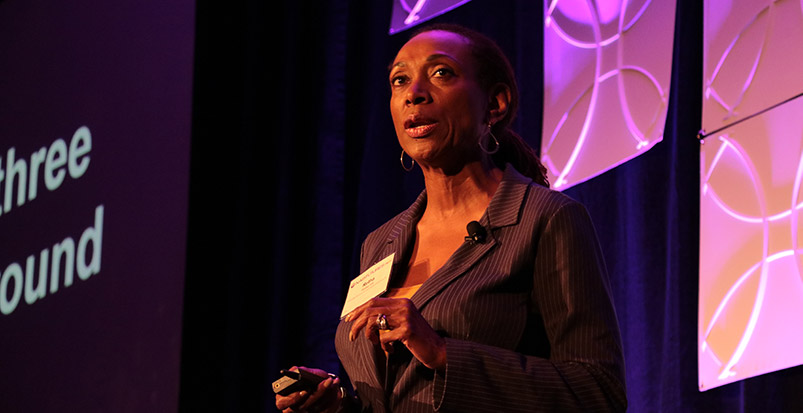 New Media Innovation and Entrepreneurship Lab Director Retha Hill presents "AR stories" during the 2019 PILOT Innovation Challenge in January 2019. (Photo courtesy of NAB PILOT Innovation Challenge).
The National Association of Broadcasters has invested in an innovative project at Arizona State University that will use augmented reality for television weather reports.
The experiment, called “AR Stories,” will give viewers enhanced weather reports either through broadcast television or smartphones.
Hill’s lab received a $15,000 NAB grant, supported by the John S. and James L. Knight Foundation, as part of its PILOT Innovation Challenge, an annual showcase featuring member organizations across the country that pioneer advances in news delivery, innovation and production.
A prototype of the project will be presented at the Broadcasters Education Association Conference April 8-11 in Las Vegas.
See the full story here: https://cronkite.asu.edu/news-and-events/news/cronkite-school-awarded-nab-grant-bring-augmented-reality-weather-reports
Time begins production on epic immersive, virtual reality experience
The new immersive, virtual reality project, The March, offers audiences the experience of the historic March on Washington for Jobs and Freedom, in a room-scale VR experience. The project is a partnership between Time, immersive media studio Ryot, V.A.L.I.S. studio, and the Estate of Dr. Martin Luther King Jr., which granted development rights to Time for the project.
Virtual reality is an incredible tool for historic re-creation and education, and a powerful vehicle for storytelling, according to Mia Tramz, editorial director of enterprise and immersive experiences at Time. “We've really tried to align what it is that the brand does best, which is putting an authoritative stamp on a moment in history, a news event or even a person, and marry that with the legacy of powerful visual storytelling that the brand has through photo and video. And now, with these new technologies.”
...
The March is a demanding project in terms of its vision and ambition, said Peter Martin, founder and CEO of V.A.L.I.S Studio, who is a producer on the project. “We're trying to do probably three or four things that have never been done before, certainly not at the same time,” he said. “Building the crowds of 250,000 people, being inside that, that has never been done in VR. You see this great crowd shots now in films like Bohemian Rhapsody, but you're flying over them, you're not inside them. Looking at an iconic speech, with a ringside seat eight feet away, that has never been done.” ...
 Jake Sally, head of immersive development at Ryot, explained that it's been interesting to problem solve across technology and the creation process. The March experience is designed to be for the people, he said, and just as important as the overarching message, is the diverse range of creators involved in it. “Each of us have worked on pretty far reaching, technologically difficult projects,” Sally said. “But this is, I think, definitely the paramount of all of those, across the board.”
See the full story here: https://www.fipp.com/news/features/time-epic-immersive-vr-experience
FTC Targets Anti-Competitive Violations, Fake Amazon Posts
 But the burden of proof of such harm has been a high bar. “The FTC, if it is to remain relevant, needs some way of assessing the evident competition problems in the tech sector and taking action when necessary,” said Columbia University law professor Tim Wu. “The FTC needs to get past its laser-focus on consumer prices, and figure out what competitive harm means in today’s tech markets.”
The European Union, meanwhile, has assessed Alphabet with “billions in fines for alleged antitrust violations.”
TechCrunch reports that the FTC’s case against Cure Encapsulations includes company owner Naftula Jacobwitz, who paid a website (amazonverifiedreviews.com) to “post favorable reviews in order to boost its rating.” Jacobowitz emailed that site’s operator to say “he’d pay a total of $1,000 for 30 reviews, three per day, with the goal of increasing its 4.2 rating to 4.3, which he claimed was necessary in order to have sales.” His second goal was to keep the product at five stars.
The site then posted such reviews, making “false claims, including that the pills were a powerful appetite suppressant, caused weight loss of up to 20 pounds, and blocked the formation of new fat cells.” Under the terms of the proposed settlement, the judgment of $12.1 million will be suspended “upon payment of $50,000 to the FTC and certain unpaid income tax obligations.”
See the full story here: http://www.etcentric.org/ftc-targets-anti-competitive-violations-fake-amazon-posts/
HTC’s blockchain phone can now be bought with real money
 HTC is taking its blockchain phone a little more mainstream. Today, the company has announced that the Exodus 1 can be purchased for 750 US dollars. That's right, traditional money. The kind that can be used in any store across the United States. Until now, the beleaguered phone manufacturer has only accepted Bitcoin (BTC), Ether (ETH) and Litecoin (LTC) as tender. Presumably, that was a choice (and not just a lame marketing stunt) to ensure early adopters were open-minded crypto enthusiasts. In addition to USD, the company is adding the Ethereum-powered Binance Coin (BNB) as a way to acquire the niche handset.
From afar, the Exodus 1 looks like a normal mid-to-high-end smartphone with a transparent cover. It has a 6-inch, Quad HD+ display and is powered by a beefy Qualcomm Snapdragon 845 processor, 6GB of RAM and a 3,500 mAh battery. The phone also ships with 128GB of internal storage and four cameras -- a dual system on the back (12MP and 16MP) and two selfie snappers (8MP and 8MP) with "natural bokeh," according to HTC.
The headline feature, though, is a "secure enclave" that's kept separate from the processor and Android operating system. It can be used to store crypto keys that are normally stored in a software wallet like Mycelium or USB-style devices built by companies such as Ledger and Trezor.
See the full story here: https://www.engadget.com/2019/02/26/htc-exodus-blockchain-crypto-phone-dollars/
Microsoft HoloLens 2 Offers AI Processor, Cloud Connection
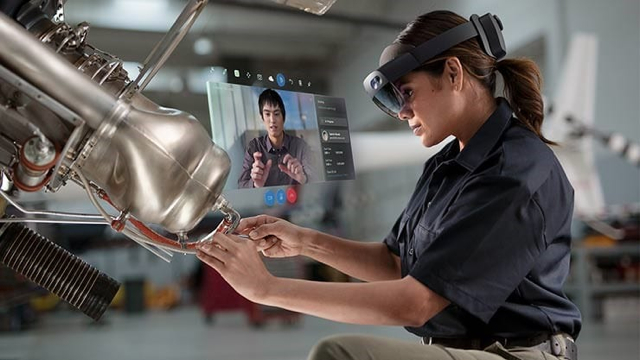 HoloLens 2 improves on the first version by being lighter, more comfortable to wear and offering twice the field of view. It did not introduce any games or apps.
With HoloLens 2, which is available for $3,500, Microsoft is betting on the growth of augmented reality in the enterprise space.
Wired goes into more details of what users will find with HoloLens 2. According to Microsoft AI/mixed reality technical fellow Alex Kipman, HoloLens 2 offers three improvements: “It’s more comfortable, it’s more immersive, and it offers more out-of-box value than the first HoloLens.” The field of view has “more than doubled,” it has an AI processing unit and also connects to Microsoft Azure, the company’s cloud service.
HoloLens 2 also offers eye-tracking technology and “cloud-based spatial anchors” which lets users “access holographic app features even if they’re not wearing a HoloLens.”
See the full story here: http://www.etcentric.org/microsoft-hololens-2-offers-ai-processor-cloud-connection/
Google Adopts Open-Source, Secure Password-Less Logins
 All variations of FIDO2 authentication “offer additional phishing protection by requiring user participation during sign-in (like doing a fingerprint scan or producing a dongle) so attackers can’t get as far with usernames and passwords alone.” Previously, FIDO2 and related standard WebAuthn “gained ubiquity through adoption by all the major browsers” — except Safari — although “Apple has hinted it will add support.”
See the full story here: http://www.etcentric.org/google-adopts-open-source-secure-password-less-logins/