Shakespeare in VR: Virtual reality ‘Hamlet’ puts you in the center of the action [column]
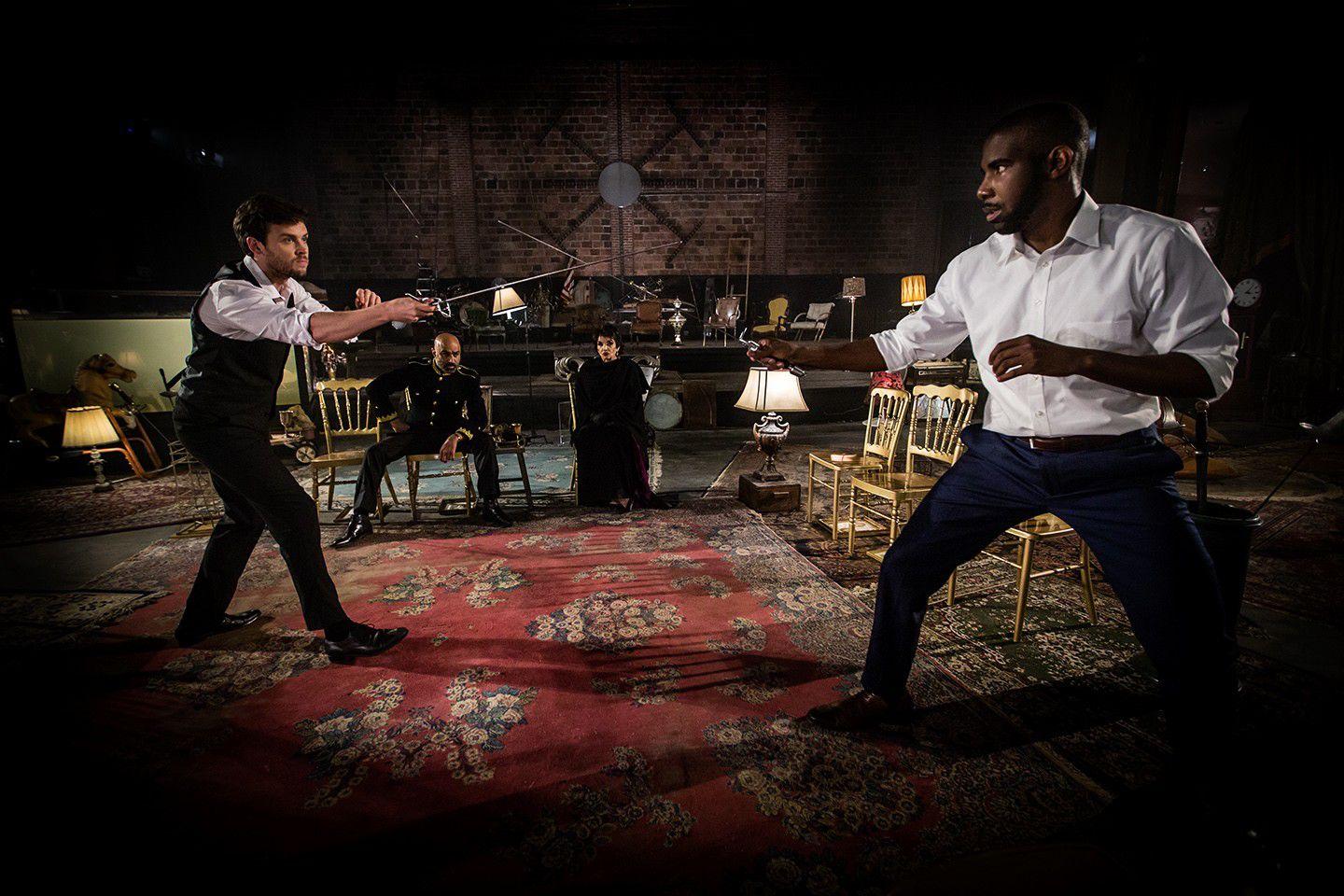 This was possible through virtual reality. Google, working with Commonwealth Shakespeare Co., created an hourlong VR version of “Hamlet.” “Hamlet 360: Thy Father’s Spirit” brings the tragedy written in early 1600s into the 21st century. It left me dizzy, literally and figuratively, and excited about the potential to bring more art alive.
This Boston-based Shakespeare group tried something new, complicated and pricey ($500,000) as a big way to grow.
“This allows us to scale that mission to the world and truly democratize Shakespeare and theater,” Steven Maler, the director of the film and the founding artistic company, told The New York Times.
WGBH, a PBS member station in Boston, shared the video for free on its YouTube page last month. With a cheap VR headset, you can be immersed in the world of “Hamlet.” It’s a world that VR pioneer Nonny de la Pena calls a visceral empathy generator.
See the full story here: https://lancasteronline.com/features/shakespeare-in-vr-virtual-reality-hamlet-puts-you-in-the/article_3b90ae4e-3634-11e9-a911-ab80ce82ea66.html
Odeon Cinema and Telia Test 5G-Connected Movie Theater
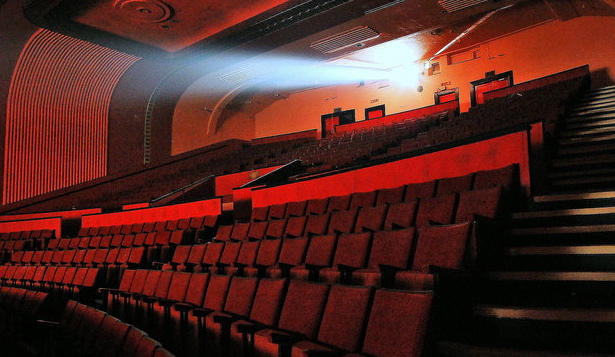 Odeon Cinema Center in Oslo and Norwegian mobile firm Telia teamed to operate the first 5G-connected movie theater, presenting films streamed over the next-gen network. The plan was announced in December, with the introduction of a 5G “test network.” The two companies are still in test mode with the launch of the 5G-enabled Odeon, to demonstrate how 5G will replace 4G and at least some wired broadband services. The Odeon is in fact using 5G to transfer the films to its own server, and said the system “works excellently.”
VentureBeat reports that, “the distinction is critically important as it demonstrates that responsive, high-bandwidth 5G wireless could be a viable alternative to local storage, even in commercial settings where buffering or audiovisual degradation would be problems for hundreds of viewers at once.”
In theaters, movies typically are projected at 4K or greater resolution, a problem since existing 4G LTE networks “may struggle to maintain fluid 720p video streams.” In tests, Telia’s 5G network achieved 2.2 Gbps speeds, “between five and 20 times the bandwidth of typical consumer 4G networks, and faster than the theater’s wired Internet lines.”
“participate in real time with live concerts or other events broadcast from remote locations.”
See the full story here: http://www.etcentric.org/odeon-cinema-and-telia-test-5g-connected-movie-theater/
How AlphaZero has rewritten the rules of game play on its own
 David Silver says the computer program that taught itself to be a chess grandmaster exhibits “the essence of creativity”.
In one famous game against possibly the best Go player ever, AlphaGo made a brilliant move that human observers initially thought was a mistake. Was it being creative in that moment?
“Move 37,” as it became known, surprised everyone, including the Go community and us, its makers. It was something outside of the expected way of playing Go that humans had figured out over thousands of years. To me this is an example of something being creative.
You’ve had AlphaZero play against the top conventional chess engine, Stockfish. What have you learned?
Stockfish has this very sophisticated search engine, but at the heart of it is this module that says, “According to humans, this is a good position or a bad position.” So humans are really deeply in the loop there. It’s hard for it to break away and understand a position that’s fundamentally different.
AlphaZero learns to understand positions for itself. There was one beautiful game we were just looking at where it actually gives up four pawns in a row, and it even tries to give up a fifth pawn. Stockfish thinks it’s winning fantastically, but AlphaZero is really happy. It’s found a way to understand the position which is unthinkable according to the norms of chess. It understands it’s better to have the position than the four pawns.
See the full story here:https://www.technologyreview.com/s/612923/how-alphazero-has-rewritten-the-rules-of-gameplay-on-its-own/
Microsoft Expands Its Augmented Reality App Portfolio from HoloLens to Android & iOS
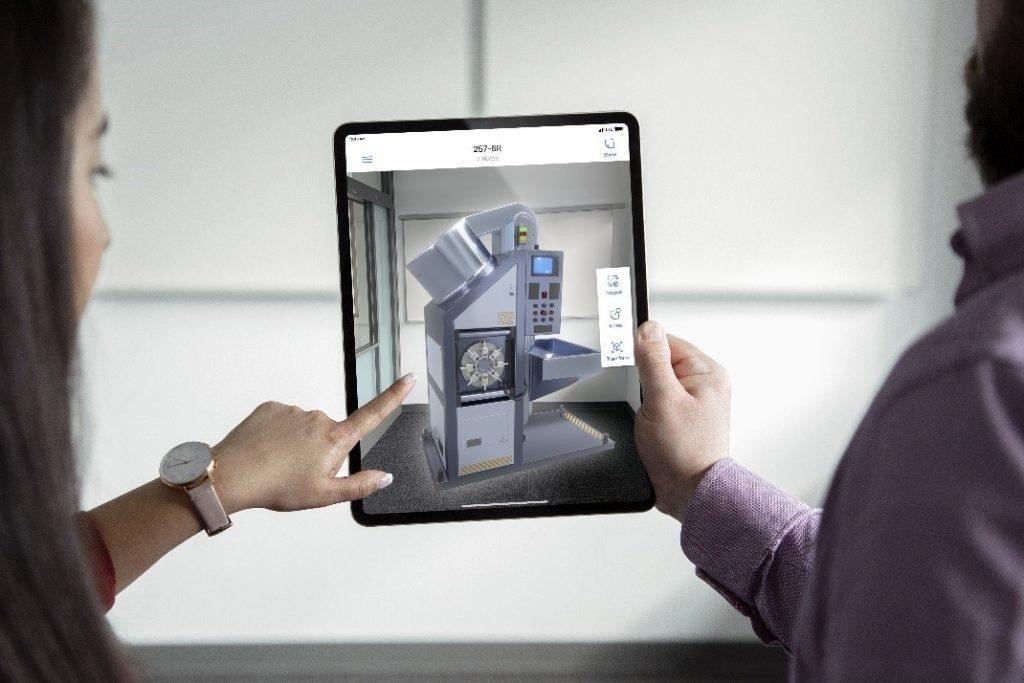 Under CEO Satya Nadella, Microsoft has shown a willingness to spread its software beyond its Windows ecosystem, so the adaptation of HoloLens apps for smartphones, where its own platform has faltered, aligns with its strategy. However, in the case of the HoloLens, the strategy also serves as a scaled down example of how HoloLens could provide a return on investment further down the road, particularly as its capabilities evolve and its price decreases.
See the full story here: https://hololens.reality.news/news/microsoft-expands-its-augmented-reality-app-portfolio-from-hololens-android-ios-0194047/
LA Kings Launch Augmented Reality and Blockchain Authentication App
The LA Kings have launched the first Augmented Reality (AR) Blockchain authentication platform in the world, specifically developed to help secure professional sports merchandise and memorabilia.
The Kings launched the AR Authentication App, in partnership with Pro Exp Media Inc., to make it easy for customers to ensure that the items they purchase are authentic.
 Once authenticated, customers will still receive a hard-copy Certificate of Authenticity (COA) even while using the app.
The app, which was recently featured on Fox Business Network's Varney and Co., is capable of discerning an authentic piece of registered game-used merchandise versus a non-authentic or unregistered (stolen) piece of game-used merchandise by utilizing AR technology and Blockchain technology.
See the full story here: https://www.nhl.com/kings/news/la-kings-launch-augmented-reality-and-blockchain-authentication-app/c-304994378
BAM Digital Exhibit Returns With ‘Virtual Reality Storytelling’
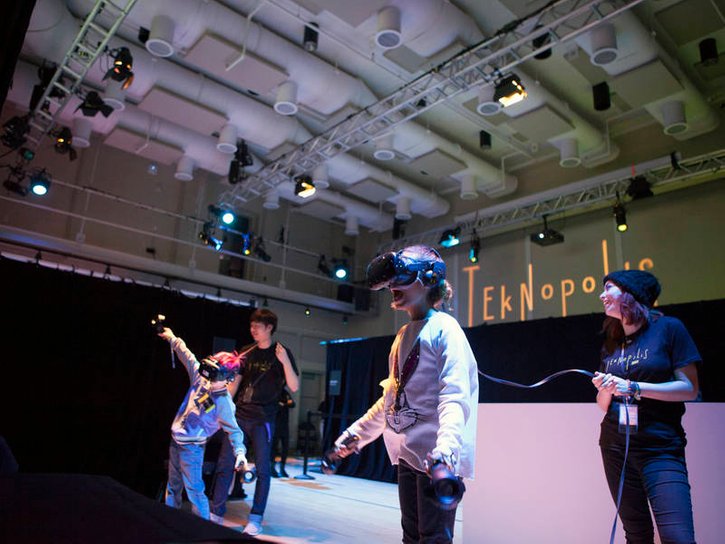 An interactive digital arts showcase at the Brooklyn Academy of Music will return this weekend with new additions that will let families step into the latest innovations in technology — literally.
The new two-hour timed-entry sessions will take place on the upper levels of the BAM Fisher building, located at 321 Ashland Place. Participants who sign up for the virtual reality options will also have access to the lower-level installations, such as a program that uses tracking and animated graphics to create a "living mask" based on the user's facial movements or an audiovisual concert created by shadow play.
The virtual reality contemporary dance exhibit, called The Hillman Studio, lets users inhabit full-body avatars that interact and communicate physically with each other in various performance landscapes.
Tickets for the regular exhibit are $16 for children ages 6 through 14 and $21 for adults. The TeknopolisTM + VR $35 for youth ages 9 through 14 and $45 for adults.
See the full story here: https://patch.com/new-york/fortgreene/bam-digital-exhibit-returns-virtual-reality-storytelling