Iridescent Rainbows and Virtual-Reality Skies: Spring/Break Art Fair Debuts in L.A.
 The fair’s first foray into Los Angeles opened with 40 largely L.A.-based exhibiting artists and curators occupying 1,000-square-foot stalls to stage their own exhibitions, all free of charge. The lineup, according to Gori, “came together spontaneously through a network of friends and word-of-mouth,” similar to the early days of Spring/Break as an upstart fair five years ago. Consequently, the lineup reads like a who’s who of emerging local spaces, many of them artist-run: Tin Flats, BBQLA, HILDE, and others.

Rain outside the stalls at Spring/Break in L.A.
JANELLE ZARA
In contrast to the grey skies, many of the stalls were filled with color. Desert Center’s presentation of “Nowhere Over the Rainbow” took up Spring/Break’s curatorial theme, “Fact or Fiction,” with a group show of artists who “employ the tropes and chromatics of gold, rainbows, hybrid identities and failed ideologies,” according to a statement by curator Michael Slenske.
See the full story here: http://www.artnews.com/2019/02/16/iridescent-rainbows-virtual-reality-skies-spring-break-art-fair-debuts-l/
Google’s AR tools make it easier for apps to apply face filters
 While Apple is already pushing ahead with AR and packed an entire Kinect-like camera into the front of its iPhone X family to support it, Google is enhancing its softwareto work even without capabilities like the LG G8's depth-sensing hardware.
The latest release of ARCore, version 1.7, can create a 468-point 3D mesh of a user's face from just the front camera alone, good enough to apply slick filtering effects like the ones seen in this GIF. The key is making sure apps can track where to put everything, and avoid weird artifacting like you sometimes see with things like Snapchat filters. Also, 9to5Google points out the the list of devices that can run ARCore is expanding, with new additions like the Moto G7 family and Vivo Nex Dual Display Edition.
Beyond just the Augmented Face API, with "ARCore Elements." Those allow developers to easily implement technology that helps software detect surfaces to place virtual objects on, and then use gestures to manipulate or resize them. So far, many AR-powered experiences in apps have launched on iPhone first -- AR+ mode for Pokémon Go took almost a year to make the jump -- but with improving software development tools hopefully we'll see more feature available to owners of varying Android devices.
See the full story here; https://www.engadget.com/2019/02/16/arcore-android-augmented-reality-face-filter/
India Proposes Chinese-Style Internet Censorship
 Under the proposed rules, Indian officials could demand that Facebook, Google, Twitter, TikTok and others remove posts or videos that they deem libelous, invasive of privacy, hateful or deceptive. Internet companies would also have to build automated screening tools to block Indians from seeing “unlawful information or content.” Another provision would weaken the privacy protections of messaging services like WhatsApp so that the authorities could trace messages back to their original senders.
The new rules could be imposed by Prime Minister Narendra Modi’s government anytime after the public comment period ends on Thursday night. The administration has been eager to get them in place before the date is set for this spring’s national elections, which will prompt special pre-election rules limiting new policies.
Civil liberties groups and other critics said the changes would violate constitutional protections for free speech and privacy and put India in the same league as autocratic countries like China and Russia. Some of them suggested that the Modi administration was rushing to adopt the regulations so it could more easily pressure the tech platforms to remove social media posts by political opponents in the coming election.
See the full story here: https://www.nytimes.com/2019/02/14/technology/india-internet-censorship.html
Maryland iSchool researchers link virtual reality with sight and smell to better understand data
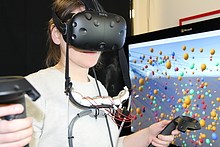 University of Maryland researchers in the Human-Computer Interaction Lab (HCIL) are linking virtual reality with sight and smell to help people better process information. HCIL is jointly supported by the UMD iSchool and the UMD Institute for Advanced Computer Studies.
HCIM student, Biswaksen Patnaik and PhD student, Andrea Batch are exploring ways to convey information with scent as a complement to the visual representation of data sets.
See the full story here: https://ischools.org/blog/2019/02/14/maryland-ischool-researchers-link-virtual-reality-with-sight-and-smell-to-better-understand-data/
“Information Olfactation: Harnessing Scent to Convey Data” lays out theories on the different ways people may perceive scent including intensity, direction and combined fragrances. The theories are based on benchmarks traditionally used in data visualization and previous literature in perceptual psychology, the researchers say.
The paper describes two prototypes the team has built—one for a desktop computer and one for a virtual reality headset—that disperse essential oils through diffusers. They also designed three different types of graph layouts in which smell can assist in conveying data visually to the user.
So far the researchers have been experimenting with ways to convey data via scent using the prototypes on themselves. They plan to recruit students for a user-study to test how effective their proposed olfactory encodings are in conveying and perceiving data with various scents.
See the full story here: http://www.umiacs.umd.edu/about-us/news/hcil-team-combines-smell-sight-better-understand-data
A VR ‘Doctor Who’ short film is coming to a headset near you
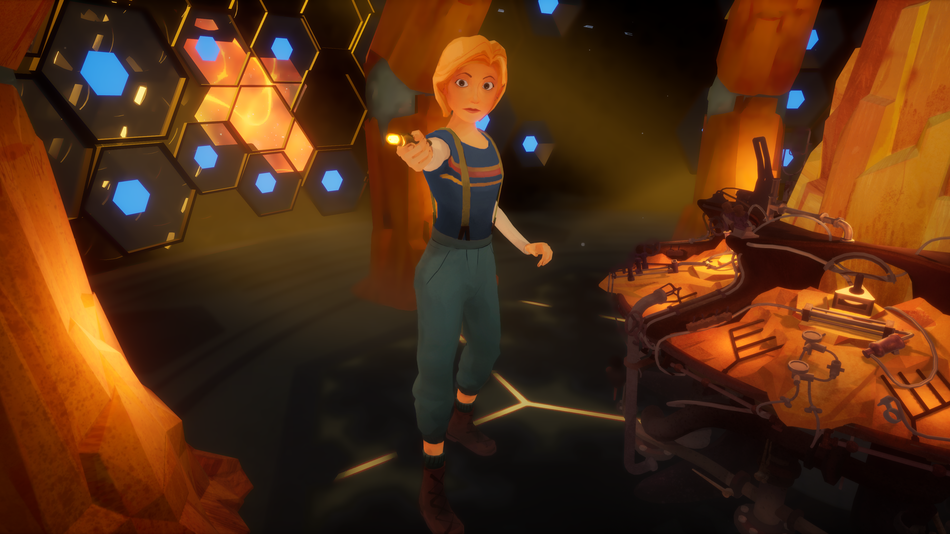 Doctor Who: The Runaway has a runtime of 12 minutes and will be an interactive virtual reality viewing experience, the BBC said in a press release. Fans will be put "at the heart of the story as they immerse themselves in this beautifully animated world," creative director for the BBC's digital drama team, Jo Pearce, said.
See the full story here: https://mashable.com/article/doctor-who-virtual-reality-experince/#hhcsrxBxjaqX
New LEGO augmented reality game has kids hunting ghosts
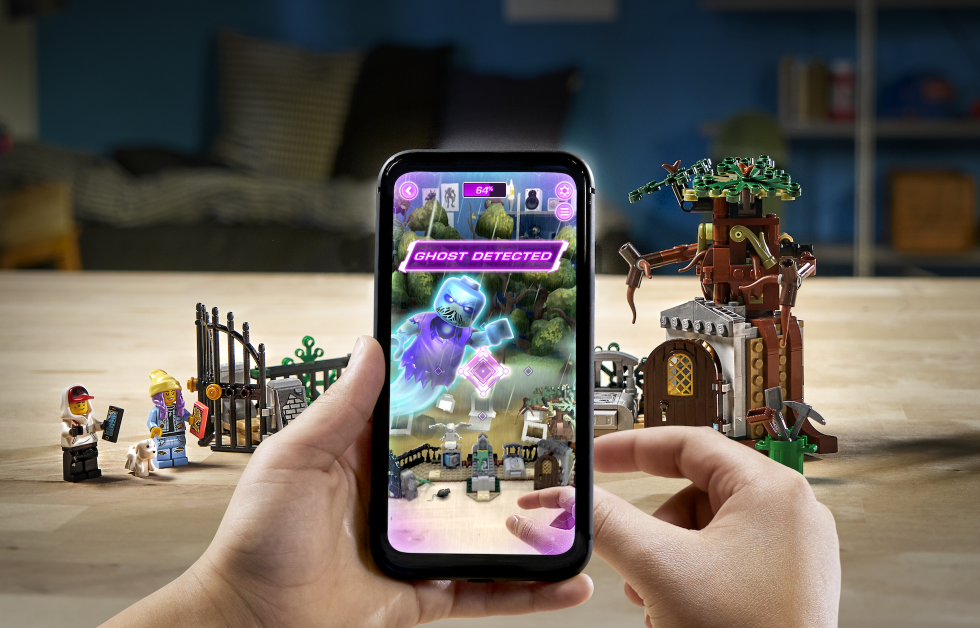 LEGO is asking kids to become ghost hunters with a new augmented reality app that will turn play sets into haunted spaces. Called Hidden Side, each of the eight kits will turn into a different item, a school, a bus and even, of course, a graveyard. But once you hold up a smartphone or tablet with the AR app launched, players will find ghosts milling about in a haunted scene only they can fix.
LEGO is launching the sets as part of New York Toy Fair, opening this weekend, where toy makers hawk their wares and show off what they hope will be the favorite play things of children for the coming year.
This new AR experience is designed for a specific group of sets, which together build a town called Newbury. In the app, players are teamed with two characters, Parker and Jack, both whom are from the town and need help to catch the ghosts that have taken over. The sets and the app are designed for children ages 7 and up, so the ghostly apparitions aren't expected to be too frightening for youngsters.
See the full story here: https://www.gearbrain.com/toys-lego-augmented-reality-2628961440.html
An AI that writes convincing prose risks mass-producing fake news
 A new algorithm that writes convincing prose could be used to automate the writing of fake news, Will Knight writes.
What it’s capable of: The program can make up realistic-seeming news reports on any topic you give it. It was developed by a team at OpenAI, a San Francisco-based research institute.
The dangers: This is a troubling example of just how good AI is getting at fooling us. It's so convincing that the researchers have chosen not to open source the code, to try and stall its weaponization as a way of automating and mass-producing fake news. “If this technology matures—and I’d give it one or two years—it could be used for disinformation or propaganda,” Jack Clark, OpenAI’s policy director, said.
How it was developed: Originally, the researchers aimed to create a general-purpose language algorithm to help translate text or answer questions. It could have beneficial uses, like summarizing text or improving chatbots’ conversational skills. But the potential for abuse could outweigh these for now.
See the full story here: https://www.technologyreview.com/s/612960/an-ai-tool-auto-generates-fake-news-bogus-tweets-and-plenty-of-gibberish/
HPA Tech Retreat: Take a Tour of the Netflix Media Database
 Puri defined the Netflix Media Database as “a multi-tenant data store for dynamic temporarily and spatially varying metadata for Netflix media assets.” The database supports “audio, video, text, images, and also answers spatio-temporal queries on the media timeline.”
User features include “authentication and authorization; content vault (e.g., firewalls for pre-release content); Datastore-based access control; and high read throughput.” “Every Datastore has a schema,” said Puri. “The developer defines the schema, which is a schema-on-write system. Schema updates can be applied on the fly; are capable of representing spatial (3D) and temporal metadata; and integer units for temporal and spatial dimensions enable full precision.”
Puri also showed an architectural view of the system, whereby the Netflix Media Database is depicted as implementing its features via a suite of micro-services, each of which has a specific responsibility. Those micro-services include validation, persistence, indexing and query, all of which can be orchestrated through a temporal plate.
See the full story here: http://www.etcentric.org/hpa-tech-retreat-take-a-tour-of-the-netflix-media-database/