Thinking and behaviour differs in virtual reality and real life, study claims
“People expect VR experiences to mimic actual reality and thus induce similar forms of thought and behaviour,” said Alan Kingstone, a professor in UBC’s department of psychology and the study’s senior author. “This study shows that there’s a big separation between being in the real world and being in a VR world.”
Previous research has shown that ‘social presence’ deters contagious yawning, with people yawning less or resisting the urge to yawn when they believe they are being watched.
Collaborating with Andrew Gallup from State University of New York Polytechnic Institute, the team from UBC tried to bring about contagious yawning in a VR environment, with participants in the study wearing an immersive headset and being exposed to videos of people yawning.
Results showed that in those conditions, the rate of contagious yawning was 38 per cent, comparable to the average real-life rate of 30-60 per cent.
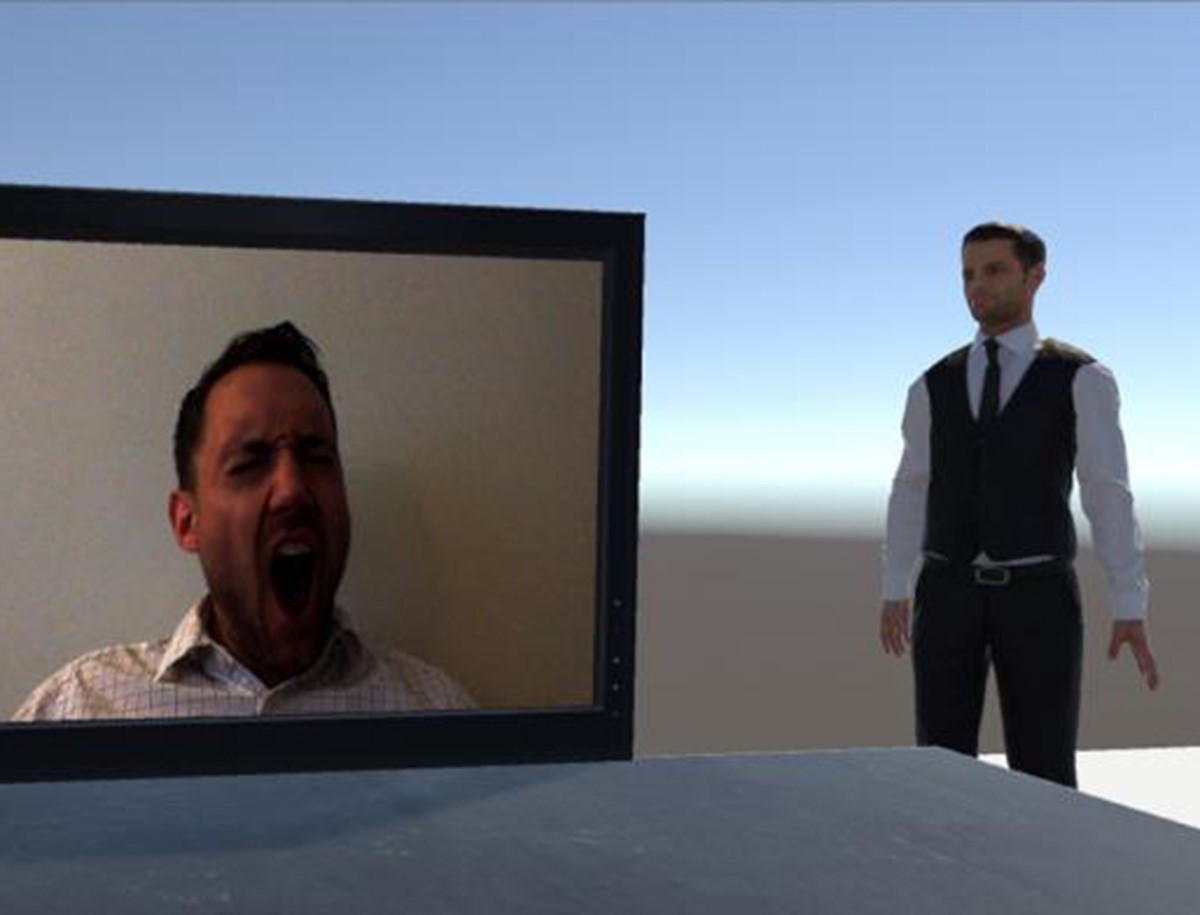 However when researchers introduced social presence in the virtual environment they found it had little effect, with the subjects yawning at the same rate, even while being watched by a virtual human avatar or a virtual webcam.
Researchers doing the study described the observations as an “interesting paradox”, saying that stimuli that trigger contagious yawns in real life did the same in virtual reality, but stimuli that suppress yawns in real life did not.
See the full story here: https://eandt.theiet.org/content/articles/2019/01/thinking-and-behaviour-differs-in-virtual-reality-and-real-life-study-claims/
Smart Glasses Aren’t on the Streets, They’re on Factory Floors
But that changes if you look to the factory or the shop-room floor. In such settings, augmented-reality smart glasses are already being deployed across a wide swath of industries. The high price of smart glasses looks much less imposing when it’s seen as a capital expense to help make a workforce more capable. More importantly, some companies are finding that equipping workers with augmented-reality smart glasses is providing immediate and obvious returns on investment in both time and safety.
It seems possible that the adoption of smart glasses by consumers may resemble that of computers: The mainframes used in the early days of computing were extremely expensive, and were strictly owned by companies. But as technology improved, computers became increasingly ubiquitous at workers’ desks. The PC revolution completed the process, leading to computers being found in the vast majority of American homes.
...
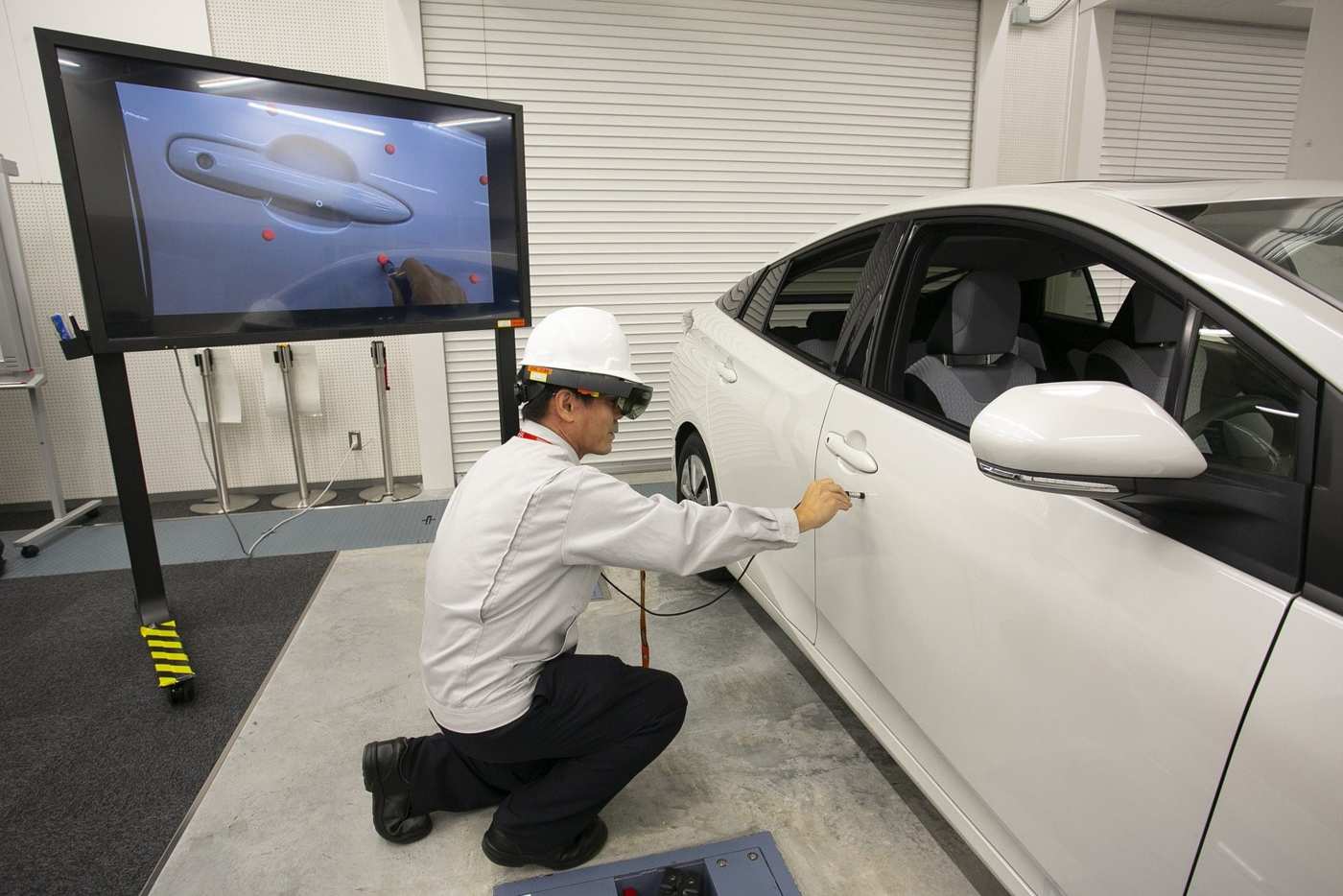 Enter the Microsoft Hololens, augmented-reality smart glasses capable of overlaying holograms on top of what the viewer sees. Instead of carefully applying the cardboard to each car, a tester could slip on a Hololens, which superimposed 500 dots in the same positions as the paper’s holes, and test for paint thickness.
...
“If you drop and break a pair of Glasses, the worst-case scenario, it’s $1,500. If you buy a rugged tablet and drop it on the floor and run over it with a tractor, it’s $4,000. So, that was a pretty easy business case to bring to my leadership,” says Gulick.
A host of other companies beyond Microsoft and Alphabet have developed niches for augmented-reality smart glasses within the industrial world. Epson has built smart glasses designed for use by professional drone operators which allow them to keep an eye on the drone and also see what the drone itself is “seeing” in a single glance. Vuzix smart glasses are designed to help keep supply-chain information in front of workers’ eyes while they’re in the warehouse. The DAQRI Smart Helmet helps architects and designers visualize their work in 3-D space.
See the full story here: http://nymag.com/intelligencer/2019/01/smart-glasses-arent-on-the-streets-theyre-in-factories.html
Microsoft’s patented augmented reality glasses are basically a miniaturized HoloLens
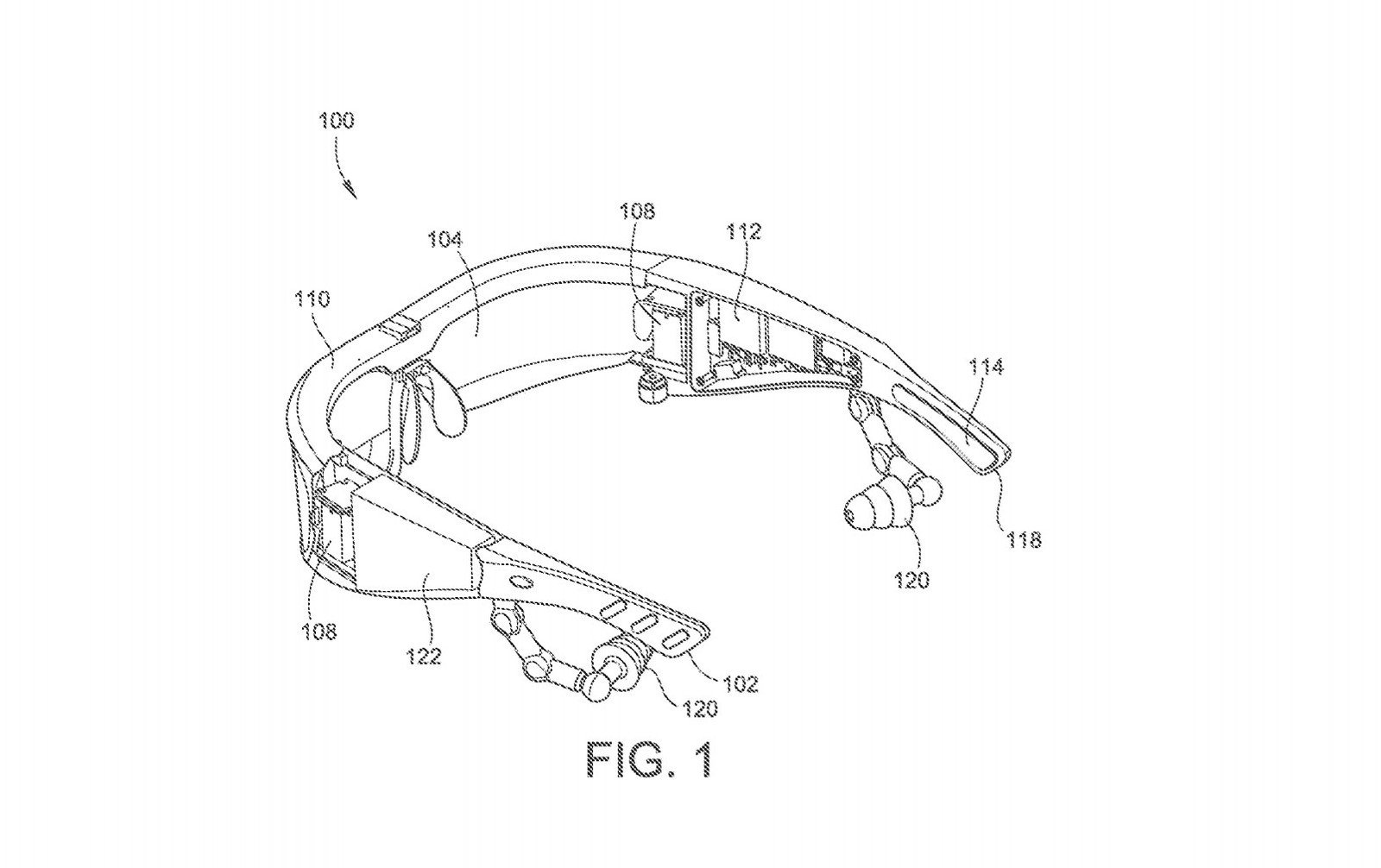 In non-patent speak, the AR glasses will be able to display and let you interact with digital content overlaid on the real world, much like HoloLens currently does. Where the glasses would set themselves apart is in size. Whereas HoloLens is currently a relatively bulky rig, Microsoft's proposal would pack the same capabilities into something the size of a large set of glasses.
See the full story here: https://www.windowscentral.com/microsofts-patented-augmented-reality-glasses-are-basically-miniaturized-hololens
Leap Motion Reveals Updated Project North Star AR Prototype Design
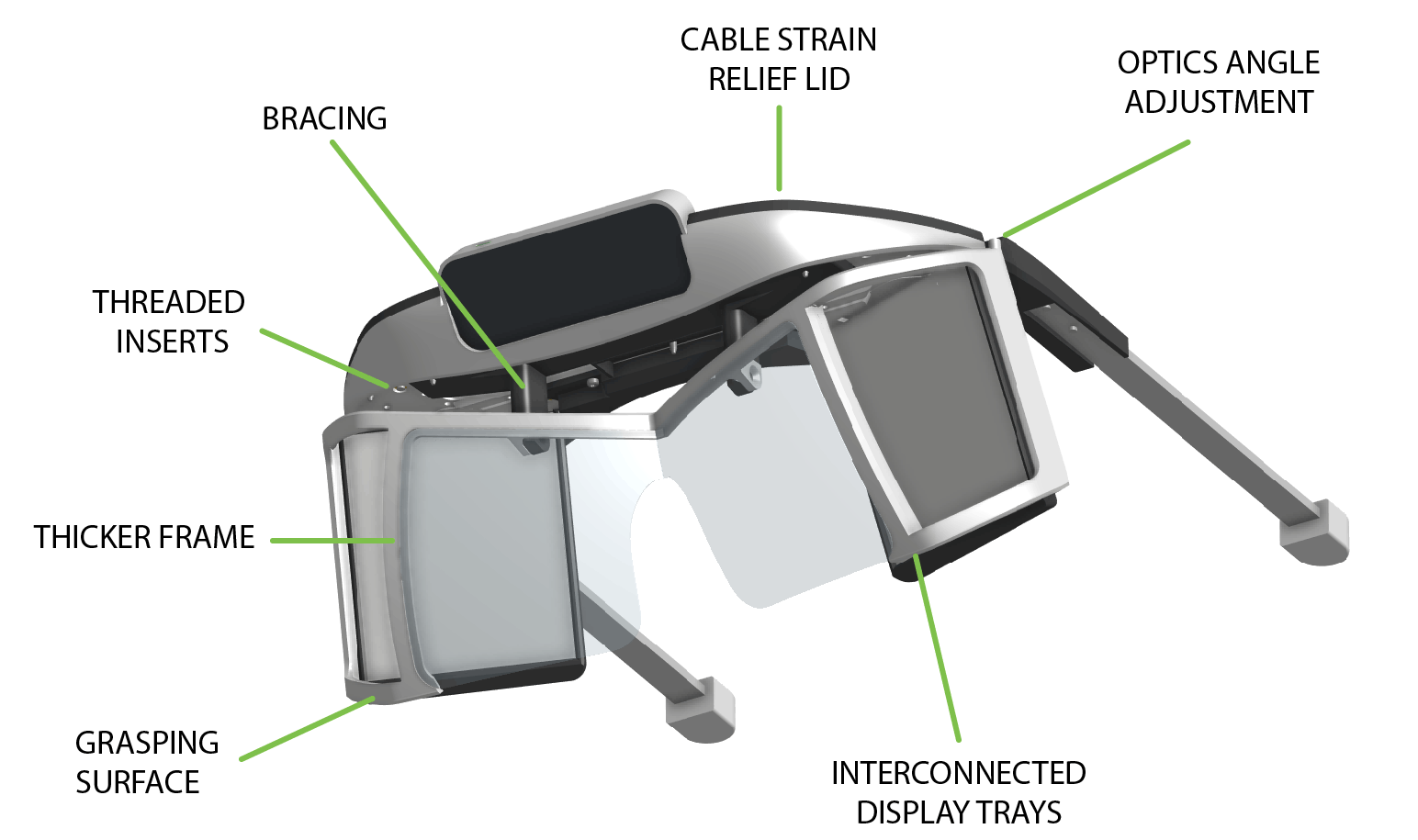 The Project North Star headset is bulky and largely impractical as a real product in its current form, but it’s designed primarily to be a platform that developers can use to experiment with the AR specs and features of tomorrow, today. Specifically, North Star offers a combined 100 degree field of view, 1,600 × 1,400 per-eye resolution at 120 FPS, and of course the company’s optical hand-tracking tech for input—far exceeding any standalone AR headset on the market today.
The latest update to the project, ‘Release 3’, was revealed this week offering a major design update which brings together “several months of research and insight into a new set of 3D files and drawings,” writes Leap Motion’s Florian Maurer. The updated design can be found at the Project North Star GitHub.
AiSolve launches WePlayVR at LA’s Two Bit Circus
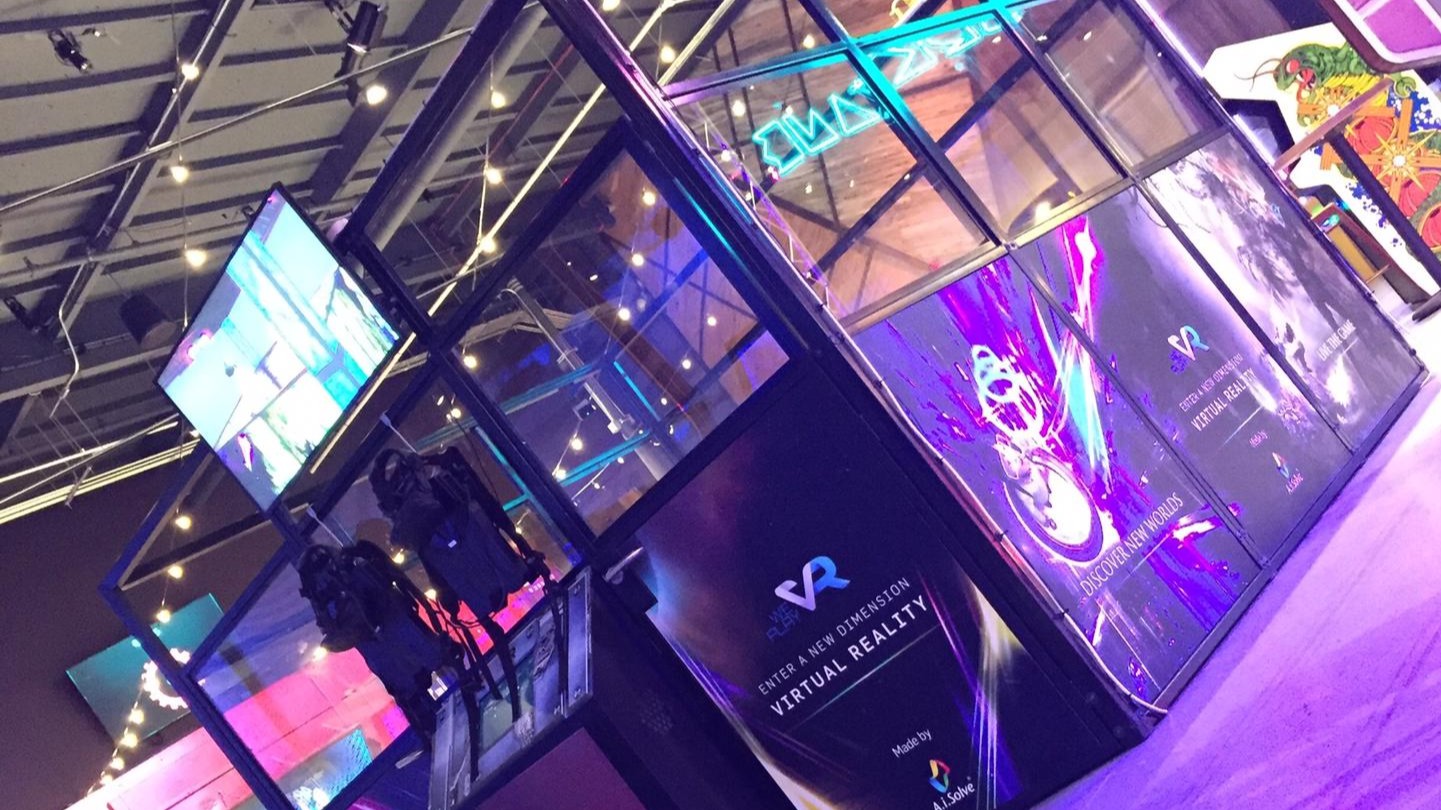 WePlayVR is our flagship LBVR attraction designed as a free roaming, turn-key, single operator arena offering infinite immersive experiences in a compact, finite 10×10 space. With four experiential titles already in the WePlayVR catalogue, Two Bit Circus will be able to offer their guests a wide range of highly interactive and immersive games specifically developed to showcase thrilling experiences within the WePlayVR platform. We’ve previously deployed WePlayVR in thirty locations across the globe, with the Two Bit Circus activation marking the first appearance of the LBVR attraction in Southern California, where we have an office.
Guests visiting Two Bit Circus will have access to WePlayVR’s most popular titles including ALIEN INVASION, CLOCK TOWER AND STAR DEFENCE, which is AiSolve’s newest multi-player experience.
See the full story here: http://www.aisolve.com/aisolve-launches-weplayvr-at-las-two-bit-circus/?fbclid=IwAR0EiMZTv6q296yrtq5dbDpCL406fuEjAP6_jSgeWfFrtltpDBnTElDxhQ4
How an ordinary camera can see around corners
 Several teams of researchers have demonstrated devices that could do similar things, but the latest technique is entirely based on an algorithm the team built and requires no special equipment.
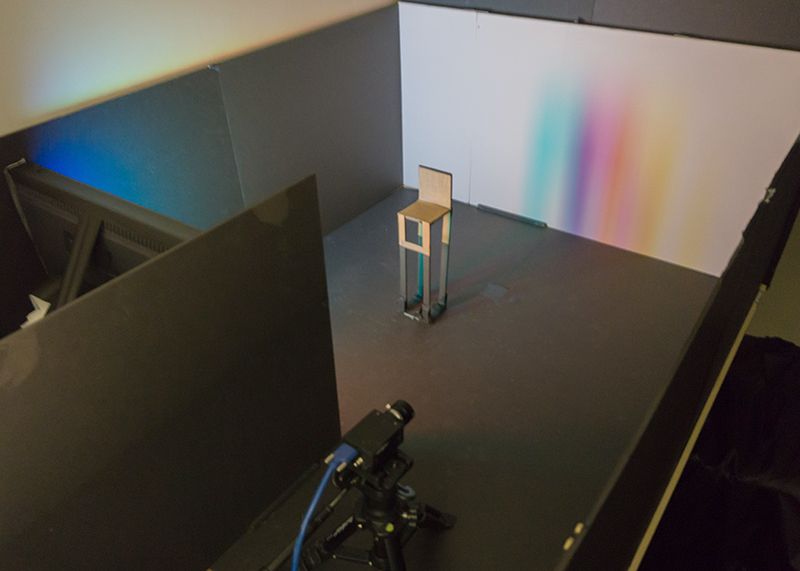
Goyal and his collaborators reconstructed images with a different trick. With a digital camera, they took pictures of light reflected off a wall that emanated from the computer screen hiding around the corner.
But they also placed an obstacle — a dark screen or a chair — in between the computer screen and the wall, and that obstacle blocked some of the light from reaching the wall. Counter-intuitively, the obstacle helps to keep the rays of light from getting too scrambled, which then makes it possible for the algorithm to reconstruct the images from information contained in the light particles that reach the camera. The principle is analogous to the one that allows pinhole cameras (and the eyes of certain molluscs) to produce sharp images without a lens: they block most of the light rays, except for those that go through a narrow hole.
Goyal and his collaborators demonstrated that the algorithm could then reconstruct various simple images displayed on the screen, and even an animation.
Fun for all
Because the team’s technique does not require special hardware, once perfected, it would be straightforward to turn it into a consumer product. “It’s completely plausible that this becomes a mobile-phone app,” Goyal says, although he has no plans to do so himself.
VR Studio Fable Relaunches With Focus on Virtual Beings
 The company will release a new chapter of VR experience, 'Wolves in the Walls,' at Sundance.
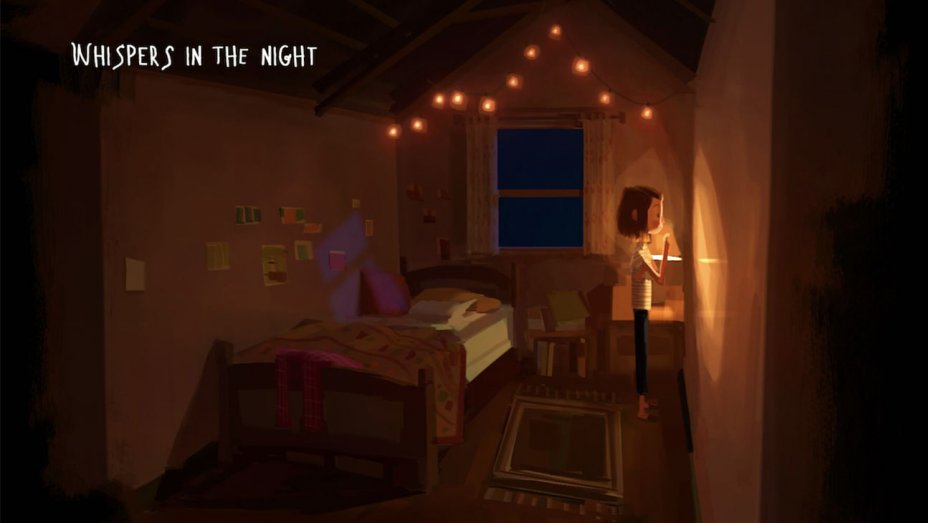
Virtual reality startup Fable is relaunching with a focus on interactive AI characters called virtual beings.
The company, which launched publicly in early 2018 from a team of Oculus Story Studio veterans, debuted a VR adaptation of Neil Gaiman's Wolves in the Walls at Sundance last year. But amid a changing VR landscape, the company is pivoting to focus on characters with which viewers can build a two-way relationship.
As the conversation progresses, Lucy will be able to offer objects and take them from the viewer, remember what has been discussed and interact in a seamless way that is unique to each participant.
Fable is one of a growing number of companies devoted to creating interactive virtual beings. Artie launched last year with a similar mission, while the startup Brud is behind CGI Instagram influencer Miquela, who has 1.5 million followers on the platform. Fable will bring these companies and others together this summer for the Virtual Beings Conference, which is expected to draw around 200 people working in the space.
See the full story here: https://www.hollywoodreporter.com/news/vr-studio-fable-relaunches-focus-virtual-beings-1178709