Despite limitations, publishers plot more augmented reality for 2019
 Ray Soto, the director of emerging technology at USA Today, has big plans when it comes to augmented reality.
Last year, Soto, along with three colleagues in the emerging technology department and a rotating cast of reporters and designers, created four AR projects, including “3, 2, 1 Launch,” a standalone app focused on spacecraft, and a separate AR experience designed to promote a new podcast, “The City.”
But more importantly, Soto’s team also spent its time laying a foundation internally so that any of the news publisher’s dozens of titles can create an AR project in an effort to help USA Today expand the kinds of AR content it can produce.
Years after AR and VR captured headlines in the industry, it’s finally starting to look like publishers are figuring out what format they’re going to bet on — and how it’s going to work.
It’s also benefited from the fact that augmented reality experiences require fewer resources to produce: A single person can whip up a simple augmented reality experience in the space of a few weeks, according to Dan Pacheco, the Peter A. Horvitz chair of innovation at the Newhouse School of Syracuse University. This past year, The New York Times’ AR team managed to produce an augmented reality component for a story about Syria in less than a week.
But more than anything, the thing holding AR back the most is the devices that people experience it through. “The phone is not naturally an AR device,” Roberts said. “I don’t think that in the version we have now, [AR]’s going to be mainstream,” he added. “But it’s evolving so quickly.”
Instead of phones, Roberts said, what augmented reality needs is for a device like the Magic Leap to take root as a mass consumer technology....
“I really feel like consumers are vain enough that until it really gets down to a look like a pair of Warby Parkers, you’re not going to see mass consumer adoption,” Zenith’s Archer said.
See the full story here: https://digiday.com/media/publishers-plot-augmented-reality-2019/
Senior Living Slow to Adopt Tech for Wellness-Focused Operations
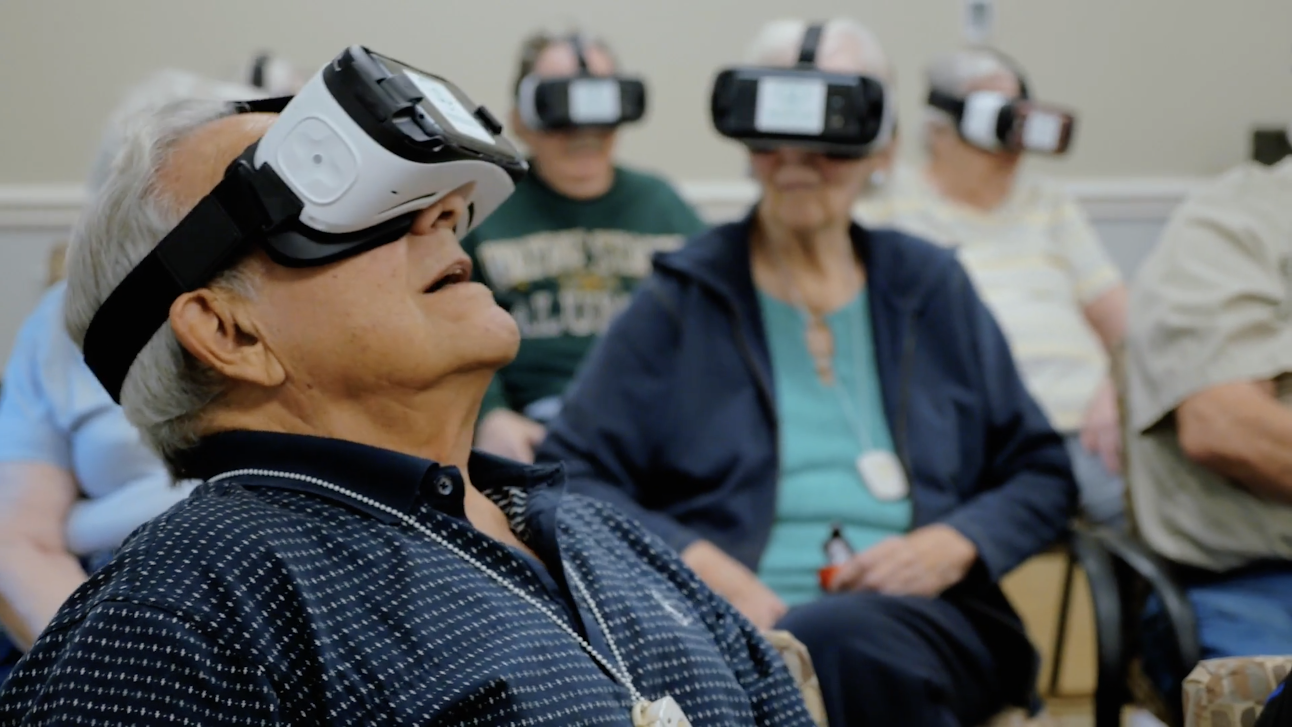 ...senior living providers are shifting away from a care-focused operational model to one that is focused on wellness. However, providers are not yet making significant investments in technology to drive this change, which involves programming targeted at multiple facets of wellbeing, such as physical, social, spiritual and intellectual dimensions.
There are myriad reasons for the slow adaptation. Senior housing operators must evaluate building infrastructure and geographic location, what tech devices and platforms are the best fit for residents and staff, software requirements for specific platforms such as electronic health records or fitness center attendance, adding layers of privacy for residents’ financial and health information, and costs for purchasing, implementing and maintaining devices and software.
While facing all these potential challenges to technology investments, this reluctance to embrace technology is attributable to a natural conservative hesitancy to avoid innovation until it is completely workable, Ziegler Link-Age Fund II Chief Investment Officer John Hopper told SHN. The fund, which closed with $37 million in capital commitments in May 2018, is an investment vehicle affiliated with specialty investment bank Ziegler focused on senior housing technology.
The biggest obstacle right now is wearables are made solely for individual use, Maplewood Senior Living VP, Clinical Innovation and Population Health Brian Geyser told SHN. Products like Apple Watch are a step in the right direction, but there needs to be a focus on developing software platforms to connect multiple individual accounts.
Ziegler, through its Link-Age funds, invested in companies that allow multiple individual wearables to be monitored through one platform, Hopper said. In 2015, Link-Age invested $2.1 million of seed funding in IncludeHealth, which makes exercise machines geared toward people with disabilities. IncludeHealth’s platform is compatible with Apple Watch.
Best Buy’s (NYSE: BBY) $800 million acquisition of senior-focused tech company GreatCall last August was made with an eye toward gaining market share in portable, affordable technology geared toward aging in place.
Subscription services are trending upward
Subscription-based services are growing in popularity with operators, and provide an inroad to incorporating tech into wellness. From a cost perspective, there is a smaller upfront investment, Hopper said. But subscription models allow residents to pay as they go and cancel a service at any time.
Westport, Connecticut-based Maplewood has a suite of technology platforms geared toward promoting socialization, better engagement during group activities and cognitive stimulation. The company is a partner in Live Living Network, a subscription-based streaming platform allowing seniors access to live and interactive programming, which launched in all of the company’s communities last November. The service gives residents access to concerts, travel programs, educational programs and activities at the control of a remote.
Expanding the capabilities of virtual reality
Virtual reality platforms have gained a foothold in the industry the past few years, and this is another tech with great promise in supporting wellness. Two years ago, Maplewood piloted Rendever, a VR platform primarily for memory care patients. Maplewood is now piloting VR as a physical therapy tool, allowing residents with mobility challenges to increase their range of motion and balance, Geyser said.
Ziegler Link-Age Fund II focuses on deploying capital into VR and artificial intelligence companies because those are the technologies developing faster, Hopper said. Ziegler invested in Embodied Labs, a VR platform geared to training caregivers to better treat their patients by immersing them in virtual simulations of what a senior goes through when their conditions deteriorate.
Selling tech’s benefits to staff
While seniors are demanding more tech-friendly devices and platforms to use, senior housing staff remain hesitant to fill the need, because they do not have specific tech adoption strategies in place, Milner said.
Training on tech platforms and devices also leaves something to be desired. ICAA’s research indicates that online tutorials are the most ineffective training tool: 87% of survey respondents said tutorials were offered, but only 27% of staffers believed it was effective.
The most effective training occurred when someone from the tech platform conducted the training. Seventy-one percent of communities surveyed by ICAA said they offered training by someone directly connected to a tech company. However, only 46% of staff said it was effective.
See the full story here: https://seniorhousingnews.com/2019/01/13/senior-living-slow-to-adopt-tech-for-wellness-focused-operations/
Virtual Reality continues Steady Growth at CES 2019
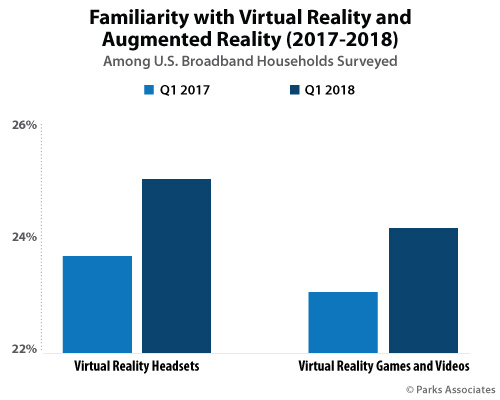 According to Parks Associates’ 360 Deep Dive: Ownership, Use, and Perception of Virtual Reality, roughly one-fourth of U.S. broadband households are familiar with virtual reality headsets, games, and videos. Additionally, 8% of U.S. broadband households actually own a headset, an increase since 2017, but still a relatively low adoption rate for the technology.
However, a number of companies the Parks Associates team spoke with at CES 2019 indicated that the VR ecosystem is far more prominent outside of North America. Asian markets have been key drivers of VR innovation over the past few years, especially in Japan, China, and Korea, where VR arcades attract millions of visitors every year. Many companies are looking to build off of this international success to make inroads in the U.S., so with that background, it comes as no surprise that in-home VR was a central component to many announcements at CES 2019.
Companies like VRLEO have produced retail-focused VR setups deployed in shopping malls across Shanghai, and the company displayed its VR products at CES with plans to enter the U.S. market this year.
NVIDIA’s CEO Jensen Huang indicated that four million PC-connected VR headsets have been sold globally in the past several years, indicating a steady base of users for a technology that remains very early in the adoption curve.
HTC led the charge for in-home VR announcements, revealing two new headsets in the Vive Pro Eye and Vive Cosmos. While the Pro Eye is targeted at the high-end consumer, the Cosmos will offer a more affordable option for PC-based VR users. The Pro Eye will employ HTC’s new eye-tracking technologies, providing greater accuracy and locus of control for users, who can now use their eyes, rather than the position of the headset, to navigate virtual spaces. Additionally, Vive announced partnerships with Ovation, Major League Baseball, and Lockheed Martin, who will all produce content for the headsets.
These CES activities come on the heels of the Oculus announcement for a Quest standalone headset, all of which will contribute to a growing number of products in the VR space, including VR accessories.
See the full story here: http://www.parksassociates.com/blog/article/virtual-reality-continues-steady-growth-at-ces-2019
Technology brings images of Holocaust survivors to life
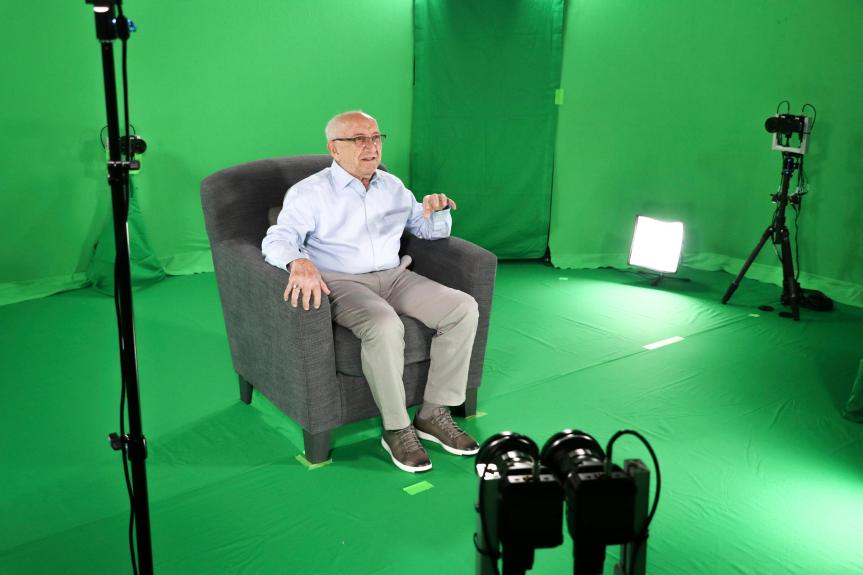 The recollections of the Dallas resident who as a Jew in Poland survived the Warsaw Ghetto and Nazi concentration camps are now being preserved in a way that will allow generations to come to ask his image questions. Glauben, who turns 91 on Monday, is the latest Holocaust survivor recorded in such a way by the University of Southern California Shoah Foundation. The Los Angeles-based foundation has recorded 18 interactive testimonies with Holocaust survivors over the last several years, and executive director Stephen Smith says they’re in a “race against time” as they work to add more, seeking both a diversity in experiences and testimonies in a variety of languages.
For more than a year now, the Illinois Holocaust Museum and Education Center has featured the survivors’ images in a special theater . Museum CEO Susan Abrams says that when visitors interact with the images, the impact is often obvious: “People get teary; people laugh.”
The Illinois museum is one of four currently featuring the images. Other museums are in Houston, Indiana and New York. The Holocaust museum in Dallas will start showing them starting in September, after it opens in a new location and with a new name — the Dallas Holocaust and Human Rights Museum.
The Dallas museum currently brings in survivors to talk to students and has found that’s often the most meaningful part of their visit, according to President and CEO Mary Pat Higgins. This technology ensures that can continue, she said.
“It’s actually video that responds to human voice commands,” he said. “And all that’s happening is rather than you watching a linear testimony, all the bits of the testimony are broken up, and then when you ask it a question it finds that piece of video and plays it for you.”
See the full story here: https://www.denverpost.com/2019/01/12/virtual-reality-holocaust-survivors/
VR gets reality check with significant decline in investment
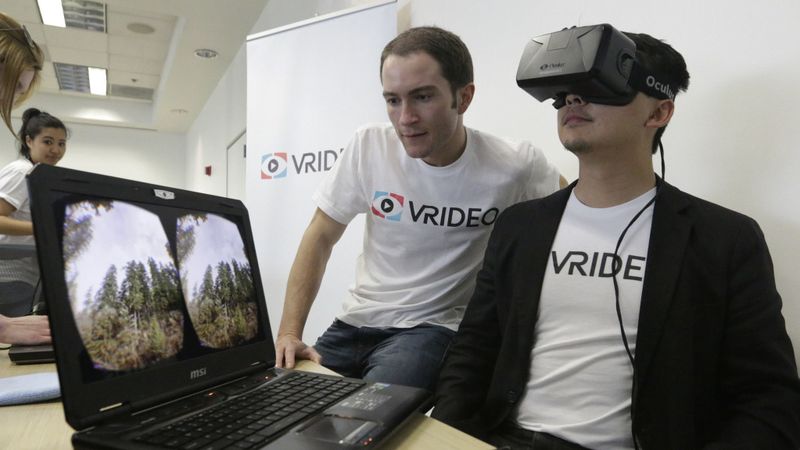 [Phil Lelyveld comment: This reporter does a good job of describing the current business climate for VR from the near-term returns investor perspective. What she misses is that the Hype Cycle is called a HYPE cycle for a reason. R&D, especially for emerging fields, doesn't follow a predictable path to product success just because it is being hyped.]
A few years ago, virtual reality was all the rage in Hollywood, helping to fuel the rise of Silicon Beach with the promise of reinventing the entertainment business.
At its peak, investors pumped $253 million into two dozen deals involving virtual and augmented reality start-ups in L.A. and Orange counties in 2016, hoping that pricey headsets projecting virtual worlds would become as popular as smartphones. But investment in the technology has slowed dramatically in recent years, and what seemed like a promising boom has largely fizzled.
Investment in seven augmented and virtual reality start-ups in L.A. and Orange counties plummeted 81% last year to $24.7 million compared to 2017. That’s just 10% of what venture capitalists poured into the local sector in 2016, according to the PwC/CB Insights MoneyTree Report, which tracks investment in virtual and augmented reality. Nationally, funding for augmented and virtual start-ups fell 46% to $809.9 million last year compared to 2017, according to the report.
ThreeKit Raises $10 Million To Turn Static Images Into ‘3D Experiences’
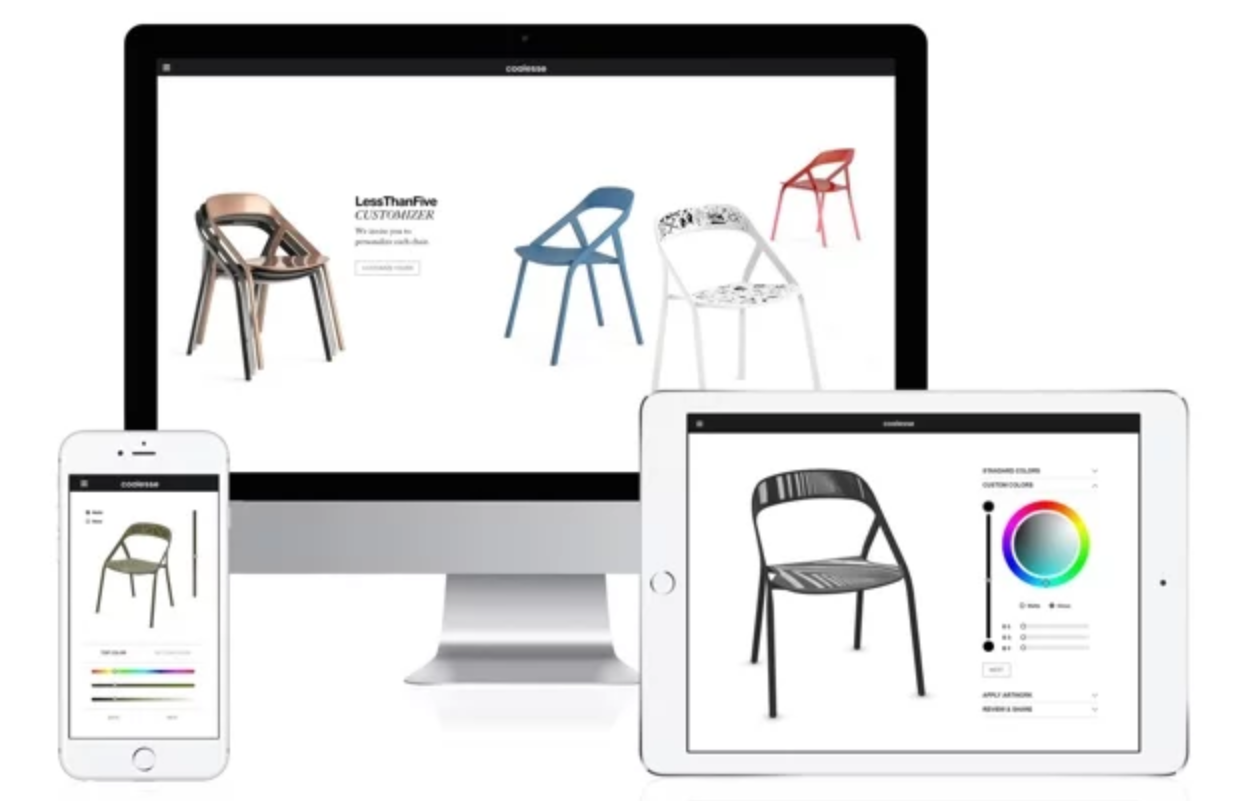 ...the cash would be used to fund talent acquisition and product and business development.
ThreeKit’s platform basically takes the grunt work out of computer modeling. Customers load their products in and tap a dashboard of options to create, edit, and optimize display content for use in product configurators, sales aids, or augmented reality and virtual reality apps. One use case ThreeKit touts pretty heavily is photorealistic images: With no more than a 3D model of a product, it says, brands can add colors, textures, and lighting; set camera angles; and generate images and thumbnails of “all product permutations.”
To display that and other generated content, ThreeKit makes use of WebGL, a JavaScript API for rendering interactive 2D and 3D graphics within compatible web browsers, without the use of plugins. It hosts assets on its servers and offers access to them through an API and embed code.
ThreeKit claims that a few of its ecommerce clients have experienced a 40 percent increase in conversions, an 80 percent reduction in returns, and 20 percent higher order value after trading out static product images for 3D visuals.
See the full story here: https://uploadvr.com/threekit-million-3d/
French Firm Shows a Robot Stylus That Demos Screen Apps
Key Infuser is demonstrating a cellphone-sized robot stylus called KiOne that can demo touch displays and the apps behind them. The full system includes a robotic arm, a video display screen, and a base containing the hardware and code to drive the demo. The entire unit is the size of a toaster oven and fits comfortably on a counter top. Retailers can use it to continuously demonstrate new products with touchscreen UIs, freeing up staff time for higher value customer service activities. Companies could use the technology to provide on-demand training of touchscreen-based applications to visual learners.
The robotic arm can easily work on a variety of touchscreens, including those on tablets, smartphones, even smartwatches (check out the video online).

The company “develops and sells innovative solutions, with a strong expertise in robotics, embedded computing, connected objects and 3D Printing.”
According to the Key Infuser site, “Customer’s usage statistics on the platform are recorded in the cloud, for the vendor or the distributor to observe their interest in real time: How many times the demonstrator is used, which demonstrations are most popular, timing of affluence, etc.”
The complete system being shown at CES, including programming the demo, costs approximately $3,000.
See the full story here: http://www.etcentric.org/french-firm-shows-a-robot-stylus-that-demos-screen-apps/