Audi Has Deployed 1,000 VR Showrooms in Dealerships Worldwide
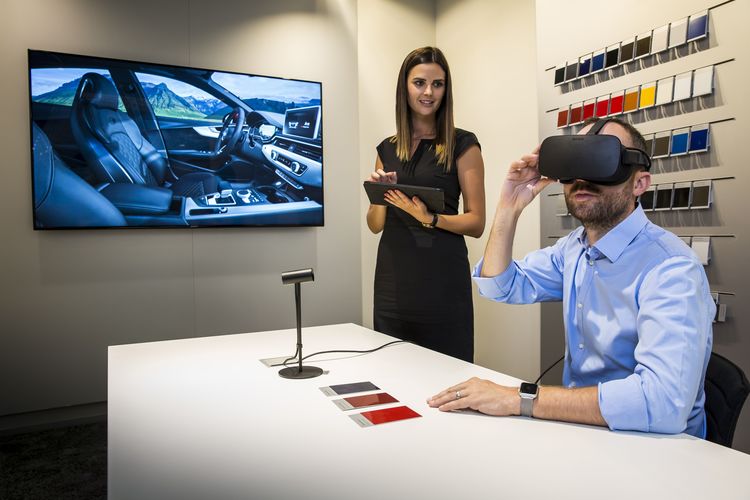
 German car maker Audi was quick to see the potential of VR and has been experimenting since the early days of VR’s resurgence to see how the tech could be used to enhance the car buying experience. Having introduced VR showrooms into dealerships as early as 2016, the company now has some 1,000 VR deployments in dealerships across the globe.
But that bottleneck—of converting each year’s new lineup of vehicles—was a pain point for making the company’s VR deployments effective. Schweiger and his team sought a means of automating the process of optimizing the models until they could be rendered in real-time.
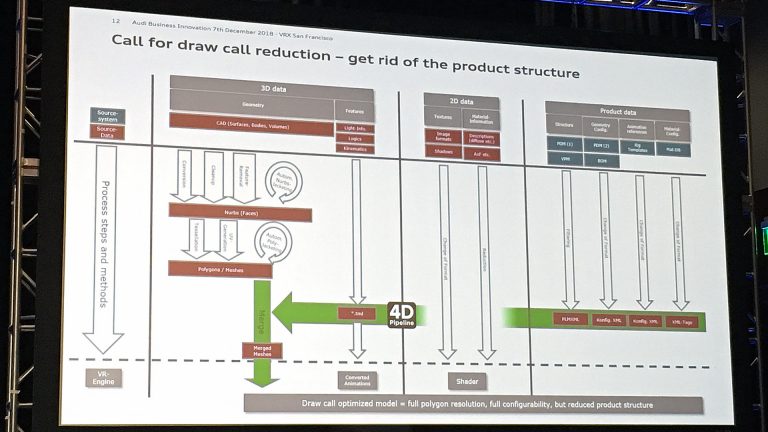
 Audi worked with a company called 4D Pipeline to develop a solution which would greatly reduce the complexity of the models by combining the many individual pieces into larger pieces, there by drastically reducing GPU draw calls while keeping geometric detail in tact.
And the results are very impressive indeed. Schweiger showed a handful of screenshots and flyby videos of the optimized models—which are ready to be rendered in VR at 90 FPS—revealing a very crisp look with realistic lighting, reflections, and interactions (like opening & closing doors and turning on & off headlights), both inside and outside of the vehicles.
See the full story here: https://www.roadtovr.com/audi-has-deployed-1000-vr-showrooms-in-dealerships-worldwide/
The rise of esports as a spectator phenomenon
 In October 1972 at Stanford University, the first known video game competition took place. A handpicked list of the best Spacewar! players at the school were invited to watch and compete, and the lucky winner would take home a subscription to Rolling Stone magazine.
Stanford was the location for the event because its Artificial Intelligence Lab was one of the few places with enough advanced hardware to run the game. According to event organizer Stewart Brand, very few people in the world even knew that they could play games on computers; the first Pong cabinet would not be installed until several weeks after the Spacewar! tournament.
For a game to become a sport, it needs three core components: competition, tournaments and spectators.
The world changed again in 1988 when Netrek, the first team-based internet game (and third internet game overall), was introduced.
Players no longer needed to track down a friend at the arcade to battle; their opponent could be on the other side of the world or in a house down the street.
Growth of esports
Three core elements are contributing to the esports industry’s rise as the next major spectator sport: streamed competitions with organized leagues, professional players that can be viewed anywhere, and live events in major offline sports venues. If you want to see how this plays out in real time, there’s no better place to go than Twitch, where people from all over the world can tune in and watch gamers, or “streamers,” play video games.
Today, Twitch has approximately 5 million active viewerswho spend 106 minutes each day watching live gaming, which ranks higher than prime time cable TV networks like CNN. Overall, the global esports audience is projected to double in the next three years from 300 million to more than 600 million viewers – and by the end of this year, 1.6 billion people will have some knowledge of esports.
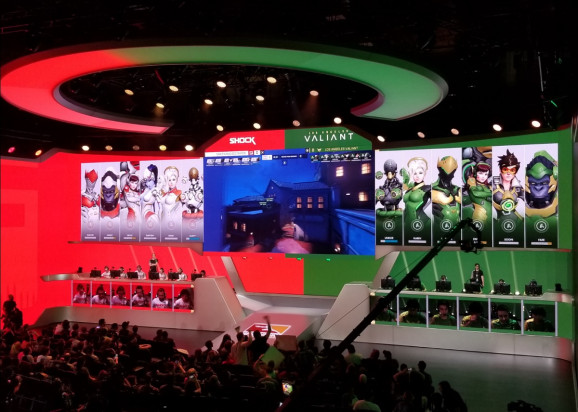
Headline esports tournaments fill major stadiums and draw traveling audiences and media like any marquee offline sporting event. In 2014, Seoul’s Sangam Stadium – a venue used in the 2002 FIFA World Cup — hosted 45,000 in-person attendees to watch the League of Legends World Final. More than 27 million additional fans watched online. The 2017 League of Legends World Final in Beijing was viewed by 60 million people, up from 43 million the previous year.
See the full story here: https://venturebeat.com/2018/11/30/the-rise-of-esports-as-a-spectator-phenomenon/
Target’s Christmas Tree Sales Aided by Augmented-Reality Feature
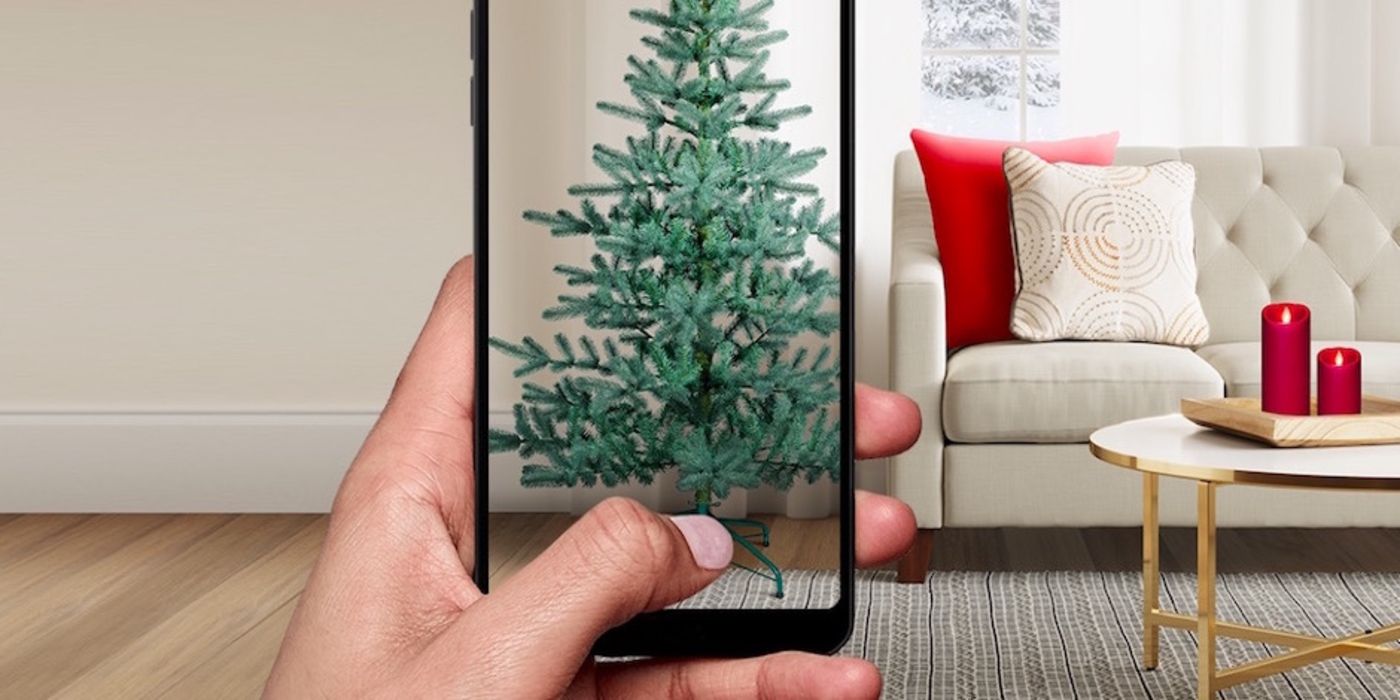 Target Corp.’s augmented-reality shopping tool has Christmas trees selling at twice the normal rate, according to a company official.
Chained mixes virtual reality and live actors to tell a dark Christmas tale
[Chained is currently sold out.]
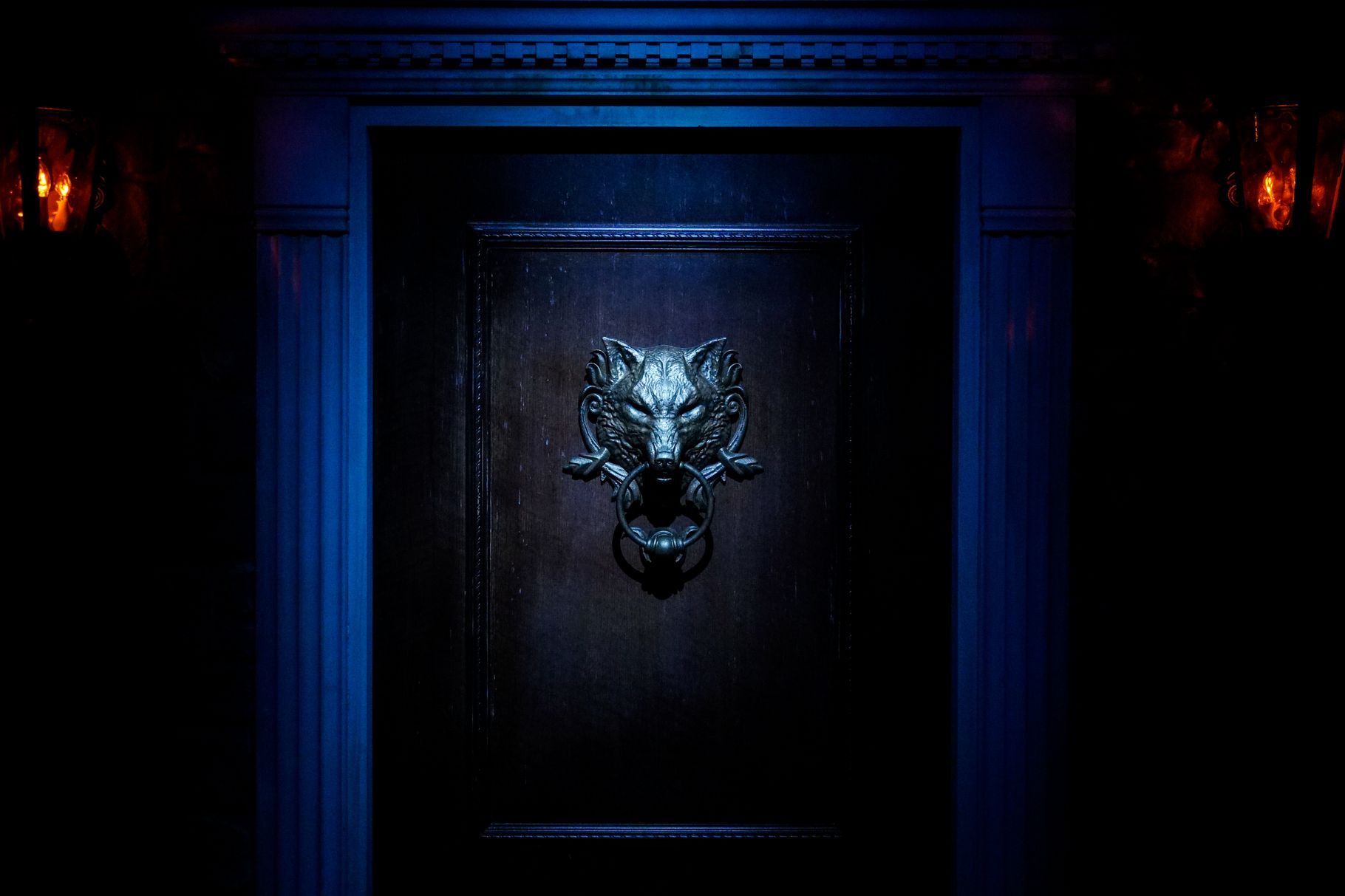 I was wearing a VR headset, standing in the middle of a dark, gothic take on A Christmas Carol. A grisly Jacob Marley asked me what I missed most about my childhood, and I told him I missed the hope and optimism of youth, when it seemed like anything was possible. When the Spirit of Christmas Past subsequently visited me, he pointed out a pair of ghostly, shadowy children chasing each other a few feet away. The spirit leaned in close. “Look at them,” he whispered, “so full of hope and potential.” It’s an easy trick, drawing a response out of an audience member and using that response to personalize their experience. But it worked — my own words coming back to haunt me drove home the sad longing in that scene and made it specific to my own thoughts.
As the experience moved toward its conclusion, I wound up in a cemetery with the Spirit of Christmas-Yet-To-Come. My brain knew that the thin, slightly pixelated figure in a shadowy cloak was just a digital character in a VR headset. But when he put his hands on my shoulders, his touch was real and weighty. And as the experience ended, he physically turned me toward a gravestone with a name I immediately recognized…
In Los Angeles, a virtual reality experience called Chained: A Victorian Nightmare is combining VR with live actors and motion-capture technology to create a new kind of hybrid show.
See the full story here: https://www.theverge.com/2018/12/5/18124726/chained-a-victorian-nightmare-virtual-reality-justin-denton-immersive-theater
YouTube and National Geographic team up for three VR series
 YouTube CEO Susan Wojcicki said earlier this year that the company was keeping a close eye on technologies like AR and VR, since they allow creators to establish an even closer relationship with viewers. In the past, Google has teamed up with Vogue, Major League Baseball and the NFL for VR series that have aired on YouTube. Last year, the company partnered with Discovery on a 38-episode virtual reality travel series that spanned all seven continents.
See the full story here: https://www.engadget.com/2018/12/05/youtube-national-geographic-three-vr-series/
Bose Frames combine headphones, sunglasses and… augmented reality?
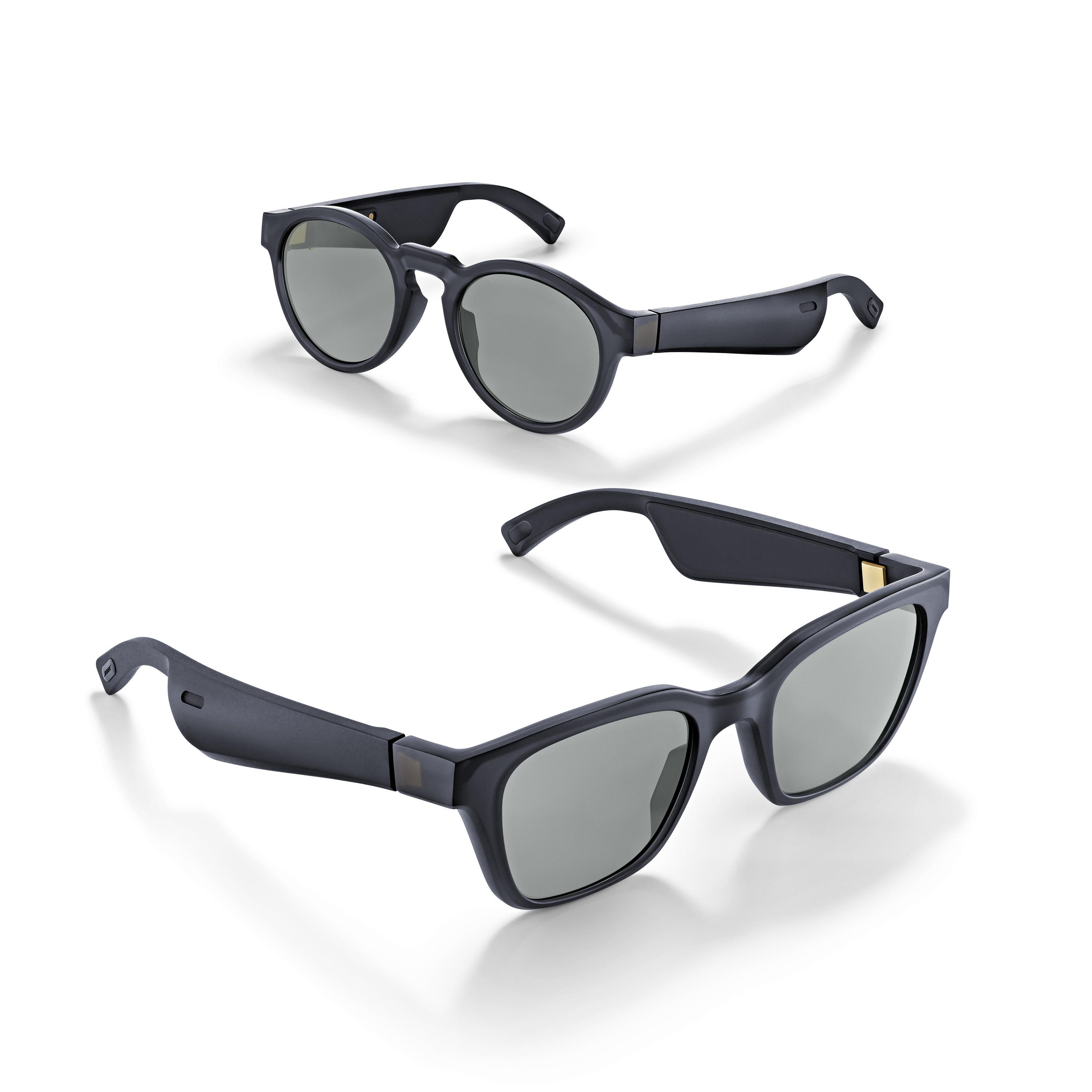
The most surprising part is that the Frames are the first component of the Bose audio AR platform, which offers an alternative to the visual AR systems like Google Glass and Microsoft HoloLens.
Bose didn’t provide an example of exactly how Bose AR will work, but the company noted that the tech "knows where you are and what you’re facing using a 9-axis head motion sensor and the GPS from your iOS or Android device — and automatically adds a layer of audio, connecting that place and time to endless possibilities for travel, learning, entertainment, gaming, and more.”
On paper, that sounds awfully intriguing — these smart sunglasses could give you a guided museum tour, for example, or help you navigate a new city with step-by-step directions without pulling out your phone, or provide information at the tap of a button. The possibilities for integration are endless and, depending on how it’s used, frightening.
The audio drivers are located inside the arms of the sunglasses that Bose claims will "produce discreet, jaw-dropping sound for the user, and no one else".
Finally, the Frames will be equipped with both a mini microphone and an assistant button that will allow you to summon Siri or Google Assistant.
See the full story here: https://www.techradar.com/news/bose-frames-combine-headphones-sunglasses-and-augmented-reality
Oculus Patents Use Of Light Field Cameras for Eye Tracking
 Facebook’s Oculus patented an eye tracking technique which uses light field cameras inside the headset. Most previous eye tracking systems used a regular or infrared camera combined with an IR illuminator to keep the eyes lit.
A light field camera differs from a regular camera in that it also captures the direction that light is travelling. This directional information can be used to understand the depth of the image, and thus 3D shape of the eye, instead of just the color and brightness. By knowing the 3D shape of the eye, the system can find out where the pupil is relative to the eye itself, and thus a more accurate estimation of the user’s gaze direction than with just the apparent 2D shape of the pupil.
Foveated rendering should one day enable much higher resolution VR headsets without requiring an expensive top of the line graphics card.
See the full story here: https://uploadvr.com/oculus-patents-light-field-camera-eye-tracking/
Framestore appoints Ian Bradley as design director
 Framestore has hired Ian Bradley as design director, based out of the company’s New York office.
Bradley has previously worked across projects at The Mill, Method, Psyop, McCann Worldgroup, AKQA, and 360i.
Bradley most recently art directed Magic Leap’s Mixed Reality home screen, as well as Accor Hotels’ biometric data-driven installation experience. He has also created concept art for film and advertising projects, including the Spider-Man: Homecoming title sequence, and 2017’s fully CG anthem spot for the US Marines.
His roles have ranged from concept artist across cinematic, commercial, gaming and AR experiences; illustrator and character designer for children’s entertainment; front-end interactive web design and development; and UX and UI designer for devices and applications created for non-verbal children with cerebral palsy and autism.
See the full story here: https://www.broadcastnow.co.uk/tech/framestore-appoints-ian-bradley-as-design-director/5134972.article