Politicians Team With Tech Industry on Internet Bill of Rights
 The New York Times reports that, although the Internet has operated “nearly unfettered” since its inception, “it has become ever clearer with every misstep — including but not limited to Russian interference on social media platforms, the amplification of hate speech and fake news, and the misuse of personal information — that tech’s freedom has come at a steep price to the American people.”
The first principle elucidates the right “to have access to and knowledge of all collection and uses of personal data by companies,” something that some companies already follow but none are required to do by federal law. The second “right” is that consumers should have to give permission (opt-in) before their data can be collected and shared, and that the process should be simple.
The third “right” is “to obtain, correct, or delete personal data controlled by any company,” or, what is called in Europe the “right to be forgotten.” This is trickier territory, so Khanna added that this principle should be followed “where context appropriate and with a fair process.”
The fourth focuses on “timely notifications in the case of breaches,” the fifth gives consumers the right to move their data, and the sixth “calls for making net neutrality a law rather than a regulation.” The seventh would stop big ISPs “from collecting more data than is necessary for the rendering of services,” and the eighth “addresses fostering competition.”
The ninth principle protects consumers from being “unfairly discriminated against or exploited based on your personal data,” and the tenth requires companies that collect personal data to demonstrate “reasonable business practices and accountability to protect your privacy.”
NYT dubs this “an admirable list,” but adds that turning it into law “will be like pushing back the ocean, especially since the business models of many of these companies are predicated on sucking up as much data as they can and exploiting it for gain.”
See the full story here: http://www.etcentric.org/politicians-team-with-tech-industry-on-internet-bill-of-rights/
and here: https://www.nytimes.com/2018/10/04/opinion/ro-khanna-internet-bill-of-rights.html
Pitch, from the founders of Wunderlist, raises $19M to take on Powerpoint in presentations

Portrait of cheerful businessman showing chart
Pitch is emerging from stealth with plans to challenge it, by making what CEO and co-founder Christian Reber describes as “a presentation tool for the Slack generation.”
The Slack reference is intentional, and not just because of how the product will be built (more on that below). Part of the funding is coming from the Slack Fund, the arm of the work-chat unicorn that makes strategic investments into like-minded startups.
The premise behind Pitch is to make “a presentation tool for the Slack generation,” he said, in reference to the workplace communications tool that became a runaway hit with organizations because of its ease of use, its speed, and the fact that it positions itself as a platform, integrating with just about any app that a person might use in the normal course of a working day, turning itself into a communication layer underpinning all those apps, too.
In the case of Pitch, users will be able to create documents for their own ends, but they can also use Pitch as a distribution platform, either to a selected group of users (for example, if you are pitching your startup to investors), or to a wider audience who are also Pitch users.
He noted that Pitch is built on Electron — the application framework that’s used for WhatsApp, WordPress and many other apps — to smooth out some of those bumps across platforms.
Pitch is most certainly going into business with its eyes open, knowing that even if you put Microsoft’s PowerPoint and SlideShare to the side, there are yet others, such as Keynote from Apple, the web-based Prezi, and Slides from Google. But there are plenty of precedents that nevertheless indicate opportunity.
See the full story here: https://techcrunch.com/2018/10/09/pitch-from-the-founders-of-wunderlist-raises-19m-to-take-on-powerpoint-in-presentations/?utm_medium=TCnewsletter
ILMxLab’s Next Augmented Reality Experiment Is…Porgs
 ILMxLab’s latest experiment in the world of mixed and augmented reality is coming in the form of a new experience dubbed, of course, Project Porg. Set to be officially unveiled at the upcoming Magic Leap Conference in Los Angeles, Project Porg tasks users, at the behest of C-3PO, with corralling a murder of Porgs (the official collective noun!) around their own real-world environment. Give them treats! Pet them! Love them! Acknowledge that as creations of pixels and polygons being beamed into your eyeballs by expensive virtual reality technology, they are not real. But they might as well be, thanks to the magic of augmented reality!
See the full story here; https://io9.gizmodo.com/ilms-next-augmented-reality-experiment-is-porgs-1829602110
Moverio BT-35E augmented reality (AR) smartglasses
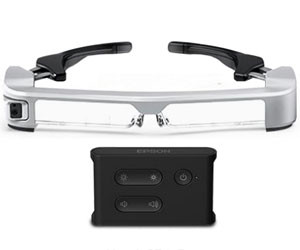 Epson Australia has launched its next-generation Moverio BT-35E augmented reality (AR) smartglasses with transparent Si-OLED display.
Designed for daily use, the smartglasses allow users to keep their display in front of them as they carry out their tasks allowing for increased productivity. Offering an out-of-box experience, the smartglasses provide plug-and-play operation with no special software required.
The new BT-35E features an interface unit with HDMI and USB Type-C ports to easily connect to popular output devices and seamlessly blend digital content into the real world. When used with a compatible USB Type-C output device, the interface does not require an external power source.
The smartglasses are designed to fit over the majority of eyeglasses comfortably and are ANSI Z87.1 Safety-Glass Compliant.
See the full story here: https://www.hospitalhealth.com.au/content/technology/hot-product/moverio-bt-35e-augmented-reality-ar-smartglasses-45614611#axzz5TRmrrjkW
Adult VR World ‘Fantasy’ Announces Partnership With Leading Adult VR Platform Velvet Reality
 FantasyCoin (FXXX), a digital currency supporting the virtual reality (VR) and augmented reality (AR) adult entertainment virtual worlds has announced a new partnership with leading VR adult content platform, Velvet Reality. Powered by Gaze Coin, a smart contract blockchain solution that measures and monetizes viewer attention, FantasyCoin is offering virtual real estate in a fantasy VR world for sale to investors who can earn revenue from engagement occurring on their property. This new partnership will see hundreds of hours of premium VR adult content fully integrated into FantasyCoin as a payment method for the platform.
Velvet Reality delivers fully immersive 4K content from the world’s biggest adult VR producers to all VR headsets and smartphones. Once the Fantasy land sale is complete, the integration of FantasyCoin will take place and allow landowners on the Fantasy platform to instantly distribute content to anyone with a mobile phone via a CDN solution using its pre-existing platform. Creators, performers, amateurs or simply those wishing to have fun can offer their own content on their Fantasy property via the fully-functional platform.
FantasyCoin is launching with a Fantasy virtual real estate sale on October 20th, 2018 with the sale establishing a fully functional virtual ‘Amsterdam’ on Mars – complete with a red light district.
See the full story here: https://www.vrfocus.com/2018/10/adult-vr-world-fantasy-announces-partnership-with-leading-adult-vr-platform-velvet-reality/