Can virtual reality help people become more compassionate? ( Stanford )
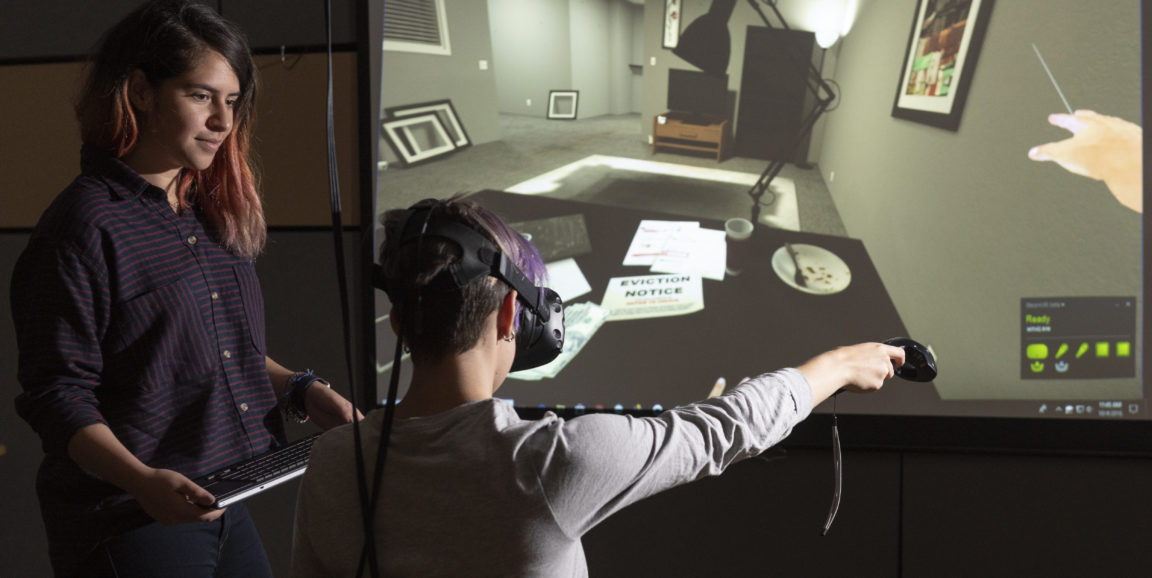
Fernanda Herrera, left, watches as fellow student Hannah Mieczkowski navigates through the VR experience that begins with an eviction notice.
Herrera helped to conduct a two-month-long study of over 560 participants from the ages of 15 to 88.
In two studies involving 560 participants, virtual reality was shown to affect people's level of empathy for others. More specifically, people who experienced via virtual reality what it would be like to lose their jobs and become homeless developed longer-term compassion for the homeless compared to those who were exposed to the information in different ways. Participants were also more likely to sign a petition in support of affordable housing after the study was over.
"Experiences are what define us as humans, so it’s not surprising that an intense experience in VR is more impactful than imagining something,” said Jeremy Bailenson, PhD, a professor of communication and a co-author of the paper.
See the full story here: https://scopeblog.stanford.edu/2018/10/22/can-virtual-reality-help-people-become-more-compassionate/