New Line of Augmented Reality-Powered Wines Celebrate Women’s Empowerment via Historical Figures
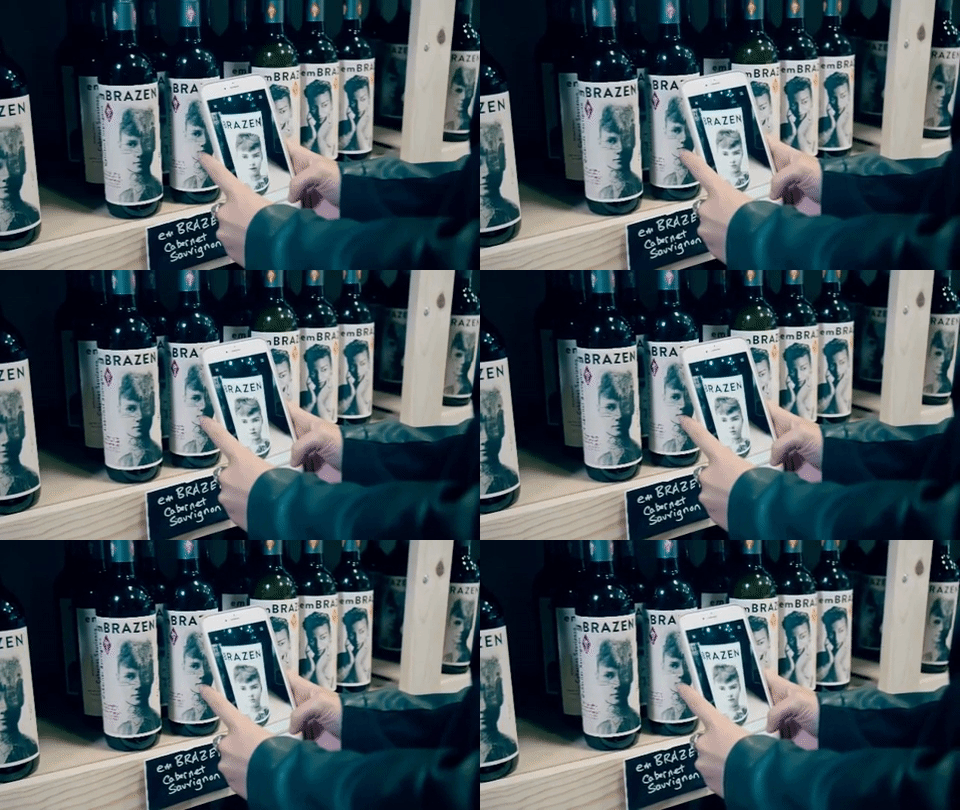 See the full story here: https://mobile-ar.reality.news/news/new-line-augmented-reality-powered-wines-celebrate-womens-empowerment-via-historical-figures-0186659/
German Soccer Jumps Off Page as Newspaper Pushes AR to Readers
 Soccer fans can now watch videos of Germany’s top league matches by leafing through Europe’s biggest-selling daily newspaper.
Axel Springer SE’s Bild has embedded a feature that turns pictures in the paper into 30-second clips when readers hover over them with their smartphone.
Publishers from Canada to Japan have dabbled with augmented reality, but without much impact beyond introducing readers to a new gimmick. Conde Nast’s New Yorker and Meredith Corp.’s Time are among U.S. publications that have featured the technology. Axel Springer says its push is unique among European peers because it offers exclusive sports content to readers that have a copy of the paper at no additional cost.
The AR push, which the company plans to expand to areas beyond soccer, is meant to make Bild’s print edition more attractive for tech-savvy readers. It also shows that Axel Springer is unwilling to leave its most popular print product behind as it shifts to digital publishing.
See the full story here: https://www.bloomberg.com/news/articles/2018-08-22/german-soccer-jumps-off-page-as-newspaper-pushes-ar-to-readers
How Hollywood Is Racing to Catch Up With Netflix
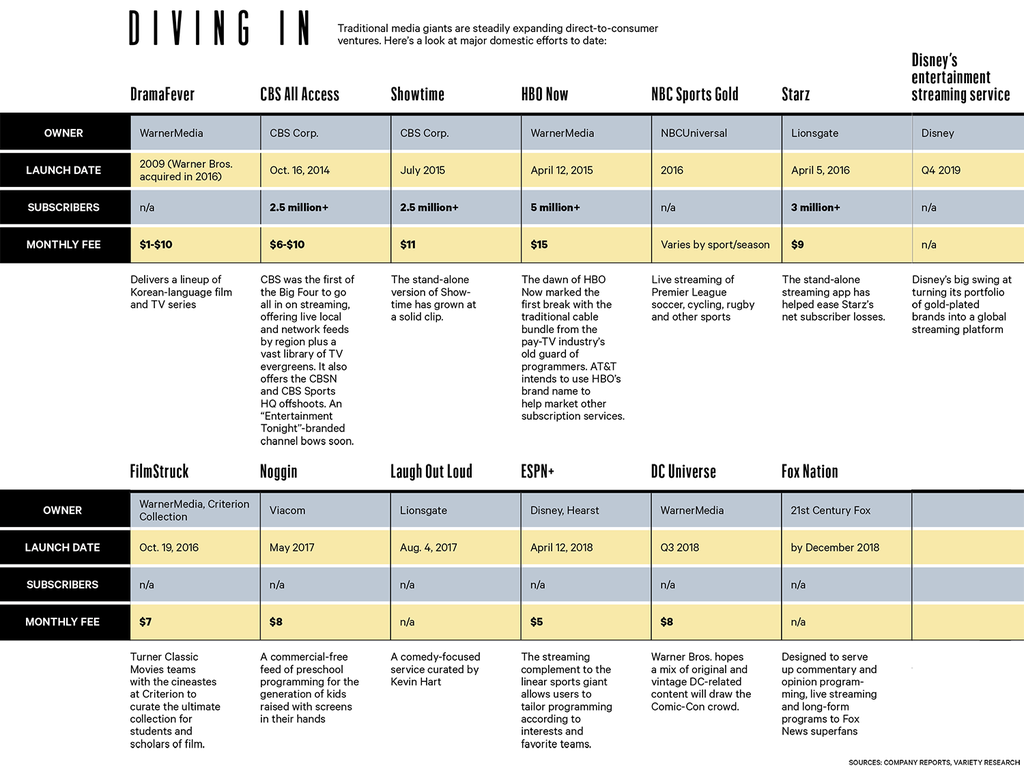 Netflix’s leap into the top echelon of the entertainment industry in just a few years has left Hollywood in a state of near bedlam. While the major studios were fighting with cable operators over carriage fees and retransmission consent deals, a company with roots well outside the Hollywood mainstream was unleashing the biggest innovations in the television-viewing experience.
In the process, Netflix has also rewritten the rules of TV and movie dealmaking, talent paydays, TV scheduling, film release windows and marketing campaigns. It’s an extraordinary level of influence exerted on a mature industry dominated by long-established stalwarts.
Consumers have voted with their wallets, taking Netflix from 27 million U.S. subscribers in 2012 to 56 million as of June. Around the world, the number has grown to 130 million as of June. Netflix keeps every penny of the $8 to $14 monthly fee that “members” pay for access to the service. Disney and its ilk, on the other hand, receive a small slice of the much larger check written every month by traditional MVPD subscribers.
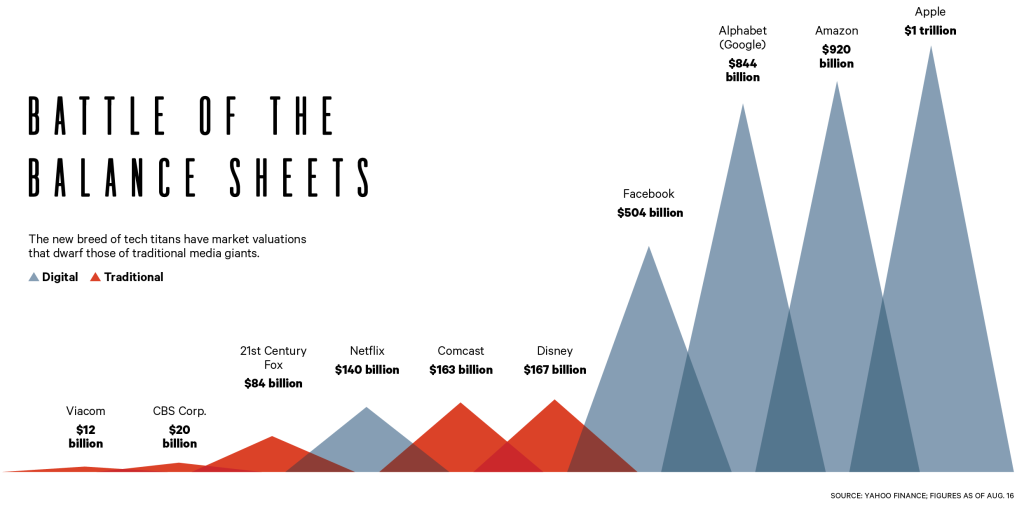 Netflix has set sky-high industry records for content spending — a projected $12 billion-$13 billion in 2018 — at a time when it is still in building mode.
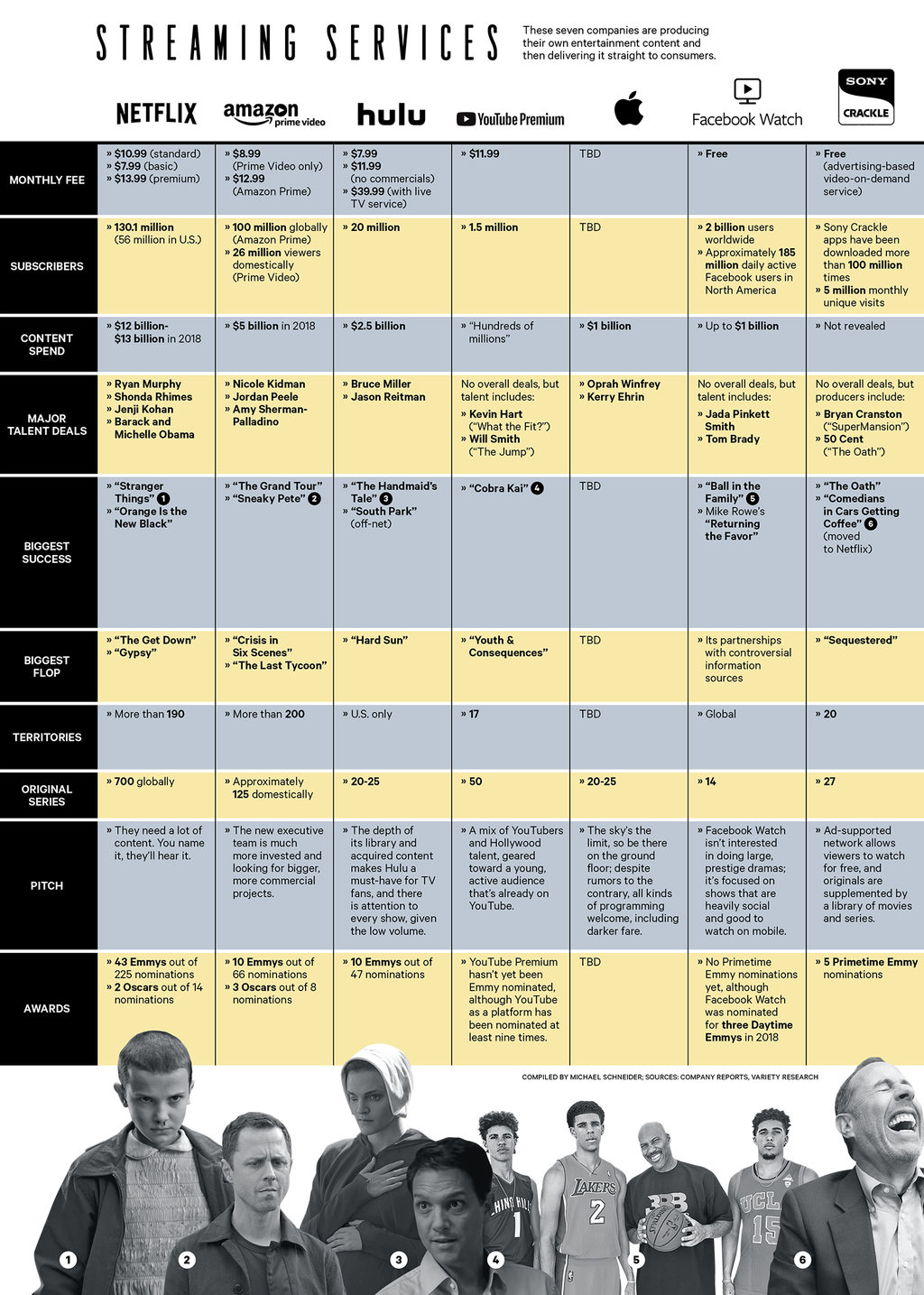
See the full story here: https://variety.com/2018/digital/features/media-streaming-services-netflix-disney-comcast-att-1202910463/
Sport or Sellout? Debate Rages Over Medals for Video Games
 For the first time, the Asian Games -- the Olympics equivalent for the world’s most populous continent -- will include computer game competitions alongside swimming and track-and-field. Contestants from Saudi Arabia to Japan will battle for national pride and bragging rights across six titles, including League of Legends and StarCraft II in a huge marketing coup for publishers like Tencent Holdings Ltd.and Activision Blizzard Inc.
Downtown LA’s Massive New Immersive VR Theme Park Might Just Blow Your Mind – Two Bit Circus
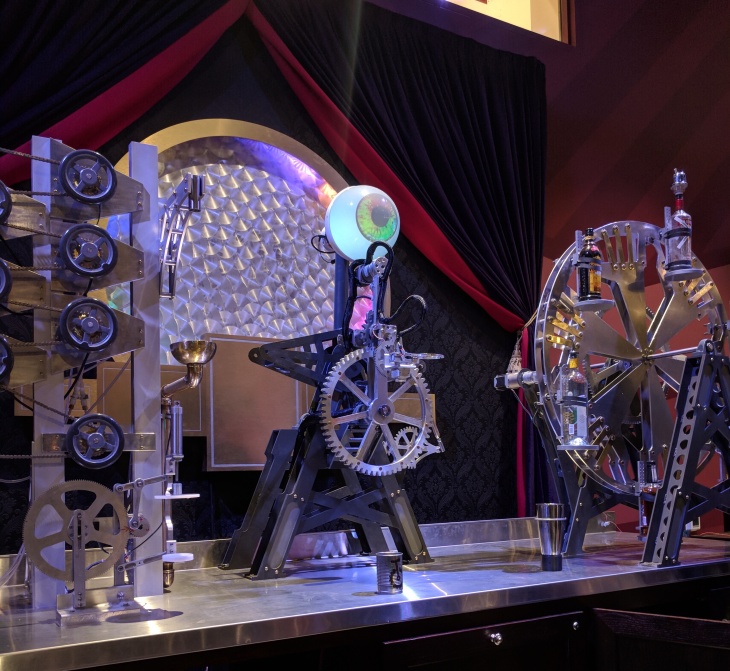
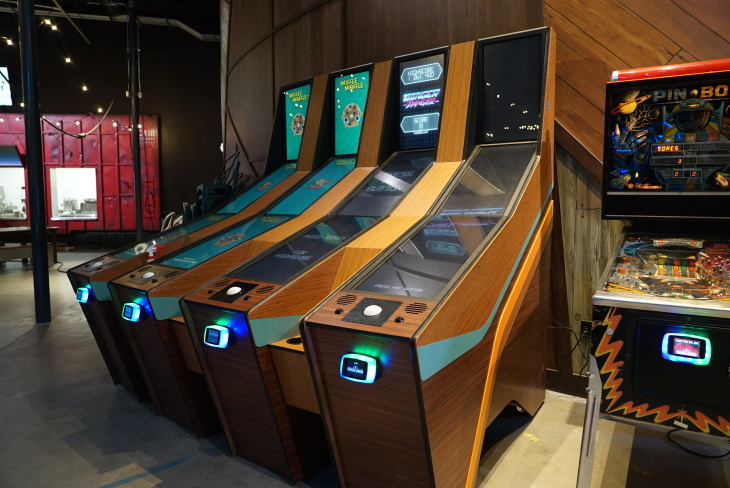 Founded in 2012 by Brent Bushnell and Eric Gradman, the company and its flagship "micro-amusement park" exist at the intersection of technology and whimsy. Two Bit Circus is known for a variety of amusements including a giant ball-in-a-maze game that requires people on teeter-totters to operate, a gunner turret simulator, a laser maze and Hexacade, a six-person arcade console. A few years ago, they built an "escape room" at their space in The Brewery's art colony. Unlike similar games, however, the goal wasn't to escape, but to cooperatively pilot a spaceship.
"Eric and I have always loved getting people playing together. We started to see an opportunity for a bigger venue, where you could go and have a reason to come back," Bushnell says.
"Maybe we're playing a third party developer or a student's game," Gradman says. "If it does well — and we're capturing data about how every game in this place performs — then it's going to start spreading to nearby Skidoos."
In the VR cabanas, which you can rent by the hour, you'll be able to karaoke and play more than 20 games, from cow milking simulators to first-person zombie shooters.
Then there are the Story Rooms, the three most immersive games in the park. Space Squad In Space is a 30-minute game where four to six players work together to repair their spaceship or face certain doom. Lost City begins in a mine as two to eight players players figure out how to access the secret temple hidden within. In The Raft, four players defend their raft against an onslaught of demons.
Club 01 serves as a high-tech interactive theater. The room accommodates 96 players, each one sitting at a table equipped with touchscreens. A variety of programs run on the tablets including trivia, puzzles and a wine tasting experience where participants check off what notes they've tasted after each sip.
"We try to take the idea of the game show and make it interactive again," Gradman says. "Everybody who comes here gets to play. Everyone here is playing both with the people at their table and [everyone else in the room]."
Bushnell hopes Two Bit Circus will also serve as a platform for immersive theater and alternative reality game creators, too.
"With immersive theater, there is no Pantages," he says. "Immersive theater is all over the place. It's in restaurants, it's overlaid downtown. We have white space areas, secret rooms, secret closets and secret hallways that can be used as activation spaces."
A CARNIVAL NEEDS CONCESSIONS
When all the monster-fighting and puzzle-solving makes you hungry, you can eat "farm-to-circus" fare like baked corn dogs, truffle fries and ice cream sandwiches. There's also a full bar where drinks often involve fire, dry ice and liquid nitrogen. At a second, smaller bar, a robot named Gearmo beeps and boops while shaking up signature cocktails.
See the full story here: http://www.laist.com/2018/08/22/downtowns_massive_new_immersive_vr_theme_park_might_just_blow_your_mind.php
Why This Reviewer Hails Mastodon as a Refuge From Twitter
 According to Nystedt’s review, “the system is designed to encourage thoughtful posting — not selfish or gratuitous posts … [and] it’s even simple to contribute descriptions of images you’re posting for the visually impaired, something Twitter doesn’t bother turning on by default.” The only thing Mastodon misses, he added, is his Twitter friends: “even though there’s a tool to help you find your Twitter friends on Mastodon, there aren’t too many so far.”
“More than anything,” he said, “the change in social networks has given me a new lease on digital life. After years of feeling anxious and unhappy checking my tweets and keeping up my personal brand, it’s like I’ve moved to a new town where nobody knows me, but everyone is looking to make new friends. Isn’t that why we all signed up for this stuff in the first place?”
See the full story here: http://www.etcentric.org/why-this-reviewer-hails-mastodon-as-a-refuge-from-twitter/
Virtual reality tool designed at USC corrects errors in brain scan data
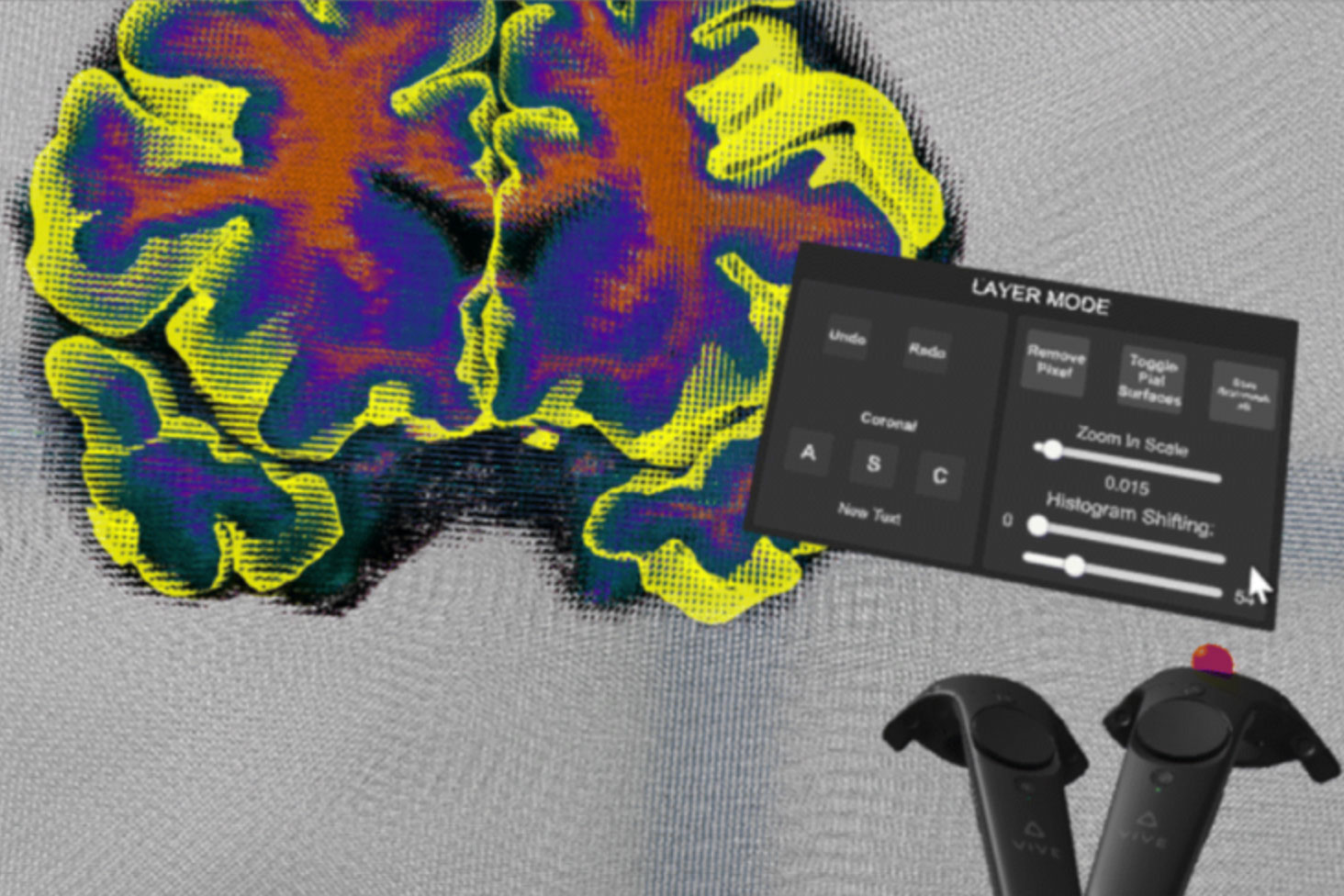 After researchers collect MRI data from study participants, the processing stage begins. During automatic processing, one step, called segmentation, separates the brain into labeled regions to facilitate close examination of various structures. But the automation isn’t perfect, and researchers must manually correct errors before moving forward with analysis.
The time-consuming work requires a trained hand, so most labs hire undergraduate research assistants to correct segmentation errors. But with the vast amount of data being collected, studies still tend to hit a bottleneck during the processing stage....
With this in mind, Duncan, Toga and Assistant Professor Tyler Ard launched an experimental trial to test the efficacy of VR in brain segmentation.
The experiment tested 30 participants, all new to brain segmentation, on two tasks: using a MacBook to perform a minor error correction in the classic data cleanup program FreeSurfer, and completing the same task in VBS, armed with the HTC Vive headset and two controllers.
On average, participants finished the correction 68 seconds faster using VBS compared with FreeSurfer, a highly significant time savings considering the task rarely took more than three minutes to complete.
See the full story here; https://news.usc.edu/147222/virtual-reality-tool-designed-at-usc-corrects-errors-in-brain-scan-data/
Using VR to Help Students Understand Cultural Differences
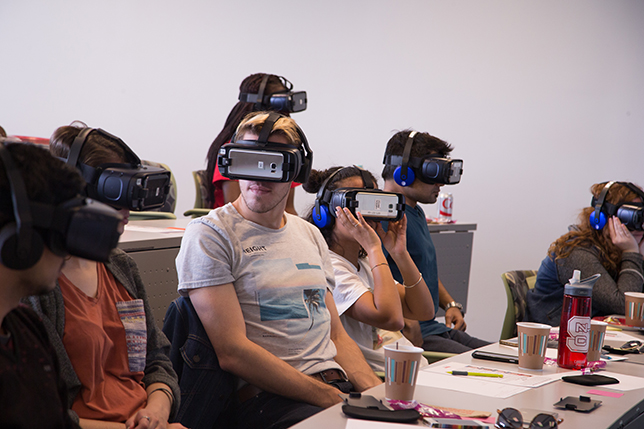 A virtual reality project at North Carolina State University is giving engineering students a safe space to explore the cultural assumptions that color global communication.
Category: Teaching and Learning
Institution: North Carolina State University
Project: GlobalVR: Teaching Cultural Competencies Through Virtual Reality
Project lead: Ilin Misaras, assistant director, Global Training Initiative
In an era ripe with mistrust and fear, it's easy to set empathy aside. But what if we could step into the eyeballs of another person to get his or her point of view from the inside? Could that lead to greater understanding? That's the idea for a project at North Carolina State University that uses virtual reality to help engineering students understand different cultural perspectives.
As part of a two-hour workshop, students pop on a virtual reality headset (most recently, that's the $199 Oculus Go) and attend a virtual meeting that brings together a small group of people from the United States, China, India and Singapore.
What those stop-action vignettes reveal, according to Misaras, are the cultural assumptions present in the communication. The discussion that follows then focuses on what the individual characters were thinking.
"It's a safe space. They're all fake characters, so you're not offending anyone," explained Misaras. GTI found that it was helpful for students because they were forced to "take a step back and say, 'OK, maybe there's something cultural going on here.
See the full story here: https://campustechnology.com/articles/2018/08/21/using-vr-to-help-students-understand-cultural-differences.aspx
Making the case for UX/UI design

Designers man drawing website ux app development. User experience concept.
This process has been scaled to the point that each of us is unknowingly subjected to dozens or even hundreds of A/B tests every day.
Prototyping rarely needs full-blown technology or connectivity. If you're spending more than a day or two generating a round of prototypes you're likely overcomplicating things.
Similarly, when testing your prototypes, you need not create a formal focus group setting with one-way mirrors and video facilities. Simply go to where your end users are, grab someone and ask for their feedback.
Once you get your "prototyping legs," invite in the bosses who will ultimately decide whether a budget's available to spend on design. We can talk until we are blue in the face about the benefits of design and how it will ultimately save money, but nothing makes the case better than a real live end user, staring at a prototype of a key business application and expressing utter confusion and frustration with how they'd interact with such a tool. Combine this sentiment with an experience in your company's recent past where system adoption faltered and training costs skyrocketed, and you'll quickly build a strong case for spending on design that even the boss will sign off on.
See the full story here: https://www.techrepublic.com/article/making-the-case-for-design/