The Art of Virtual Reality
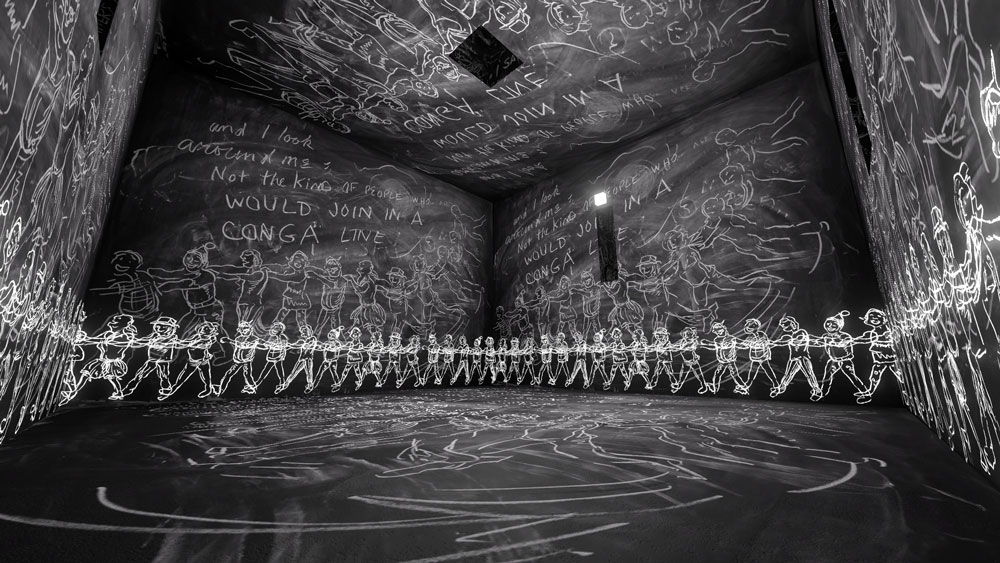 Once the preserve of game developers, space agencies, and military training facilities, virtual reality (VR) is fast becoming a formidable means for artistic expression, as evidenced by a suite of new works by notable artists making waves at museums over the past year.
These include Laurie Anderson’s story-centric The Chalkroom, which debuted at the Massachusetts Museum of Contemporary Art (Mass MoCA)in 2017, and Jon Rafman’s apocalyptic View of Harbor—in which an incoming tsunami sweeps viewers out to sea—at the Institute of Contemporary Art in Boston this past spring. And at Art Basel Hong Kong in March, a pair of immersive works by Marina Abramović and Anish Kapoor were presented by Taiwanese company HTC, maker of the Vive Virtual Reality System, a top-of-the-line consumer market headset.
Victoria Chang, director of HTC Vive Arts
“VR has become increasingly important in the museum setting, primarily as a didactic tool enabling us to re-create known places and provide visitors with virtual visits to distant or fragile places or places that no longer exist,” says Mass MoCA curator Denise Markonish, citing the Ochre Atelier at Tate as a prime example. “It’s only recently that we’ve begun to consider the medium as a means in itself to create original and often surreal environments born of an artist’s imagination.”
“What has made VR so exciting for me as an artist is its neural and muscular interface and the relationship it forges between my brain and my physical activity,” says the Danish-Icelandic artist Olafur Eliasson, whose Rainbow (2017) is among the VR Museum’s offerings. “Instead of being merely a consumer or observer of art, VR encourages you to become a producer and participant.”
See the full story here: https://robbreport.com/shelter/art-collectibles/art-of-virtual-reality-2813207/