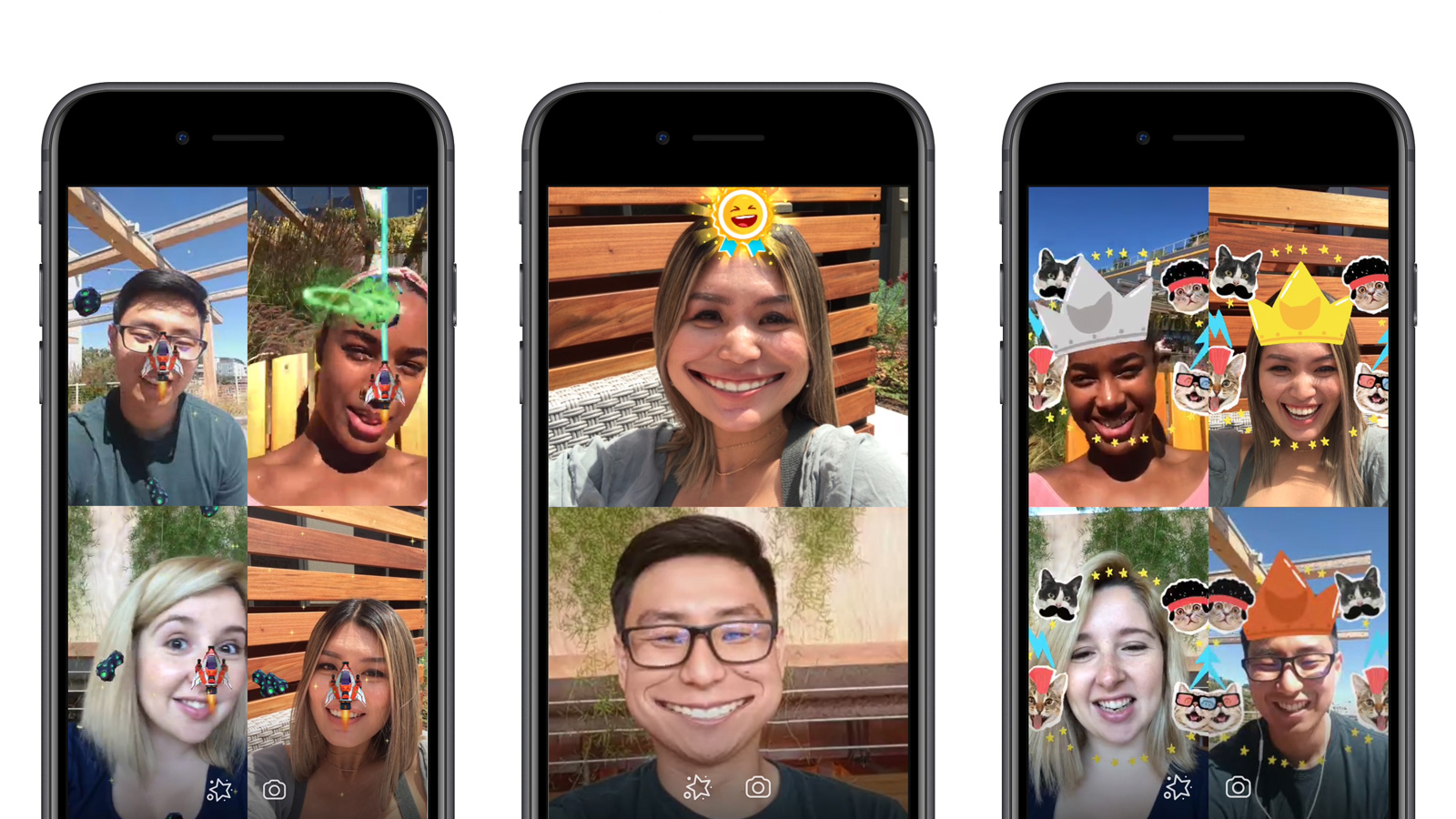
 Hours-long video chats can be great for staying connected to distant friends, but there's bound to be a lull in the conversation at some point. Facebook thinks it can liven up those quiet moments -- it's introducing augmented reality games to Messenger video chats in its mobile apps. As many as six people can play simple competitive titles that make use of your face. You just have to tap the star button and pick a game to let others know you'd like to play.
12Aug/18Off
Meet the Snap exec leading product strategy, driving monetization, and debunking myths on augmented reality
 Carolina Arguelles is Snap's head of augmented reality (AR) Monetization and Product Strategy.
- Arguelles told Business Insider that AR education, as well as tackling misperceptions about the space, are a core part of her role.
- Another focus is how to make AR into something that's accessible to more brands for more reasons.
- She also said that Snap welcomed competition in the space, and that she believes the company is in a good position because it was an early adopter.
The former Nielsen manager spends a lot of time thinking about how to make AR accessible to all brands, both big and small, giving them the measurement tools they need, and battling misperceptions about the nascent space.
One of our key areas of focus is education. Just trying to make people understand what it means to be in the camera. To advertise in the camera, how it is accessible, how it's not something that you should be super scared of — which, especially with a new audience is something that's just core to anything that we can try to build off of.
When I started at Snap, I was actually on our measurement team. I was previously at Nielsen for a long time, that really helped the transition into that. I was running all measurement for every kind of vertical, except for entertainment. And then I also started leading thought leadership and evaluation of all of our ads. That's how I really fell into AR. My job was figuring out how does AR really drive measurement results for advertisers, what works better than others, what are creative best practices. I was really passionate about that, I got close to the team, and then that's when they invited me to kind of come over and lead the AR product strategy on that side.
So, my main job is to bookend the product development process. I'm trying to understand industry trends: Where is the industry going, not just in tech, but actually just where is society going? How are social economic issues effecting how people are living their lives? And what are advertisers saying about what they need? That helps me understand where our priority should be, from a product development standpoint.
Yes, I help direct strategy for entire pricing teams. There's pricing experts, and they do the analysis around how we price things. What I do is I say, "Hey, this is what we're launching. Based on my analysis, this is what I'm recommending for pricing. Please look at this and give us your recommendation." That's really how it works.
Snapchat AR is not just upper funnel. We actually measured all these very upper funnel-flighted campaigns, these big national buys, and even those drove really strong sales results.
See the full story here: https://www.businessinsider.com/carolina-arguelles-snap-augmented-reality-interview-2018-8
12Aug/18Off
Tech dealmaker aims to turn start-up dreams into reality
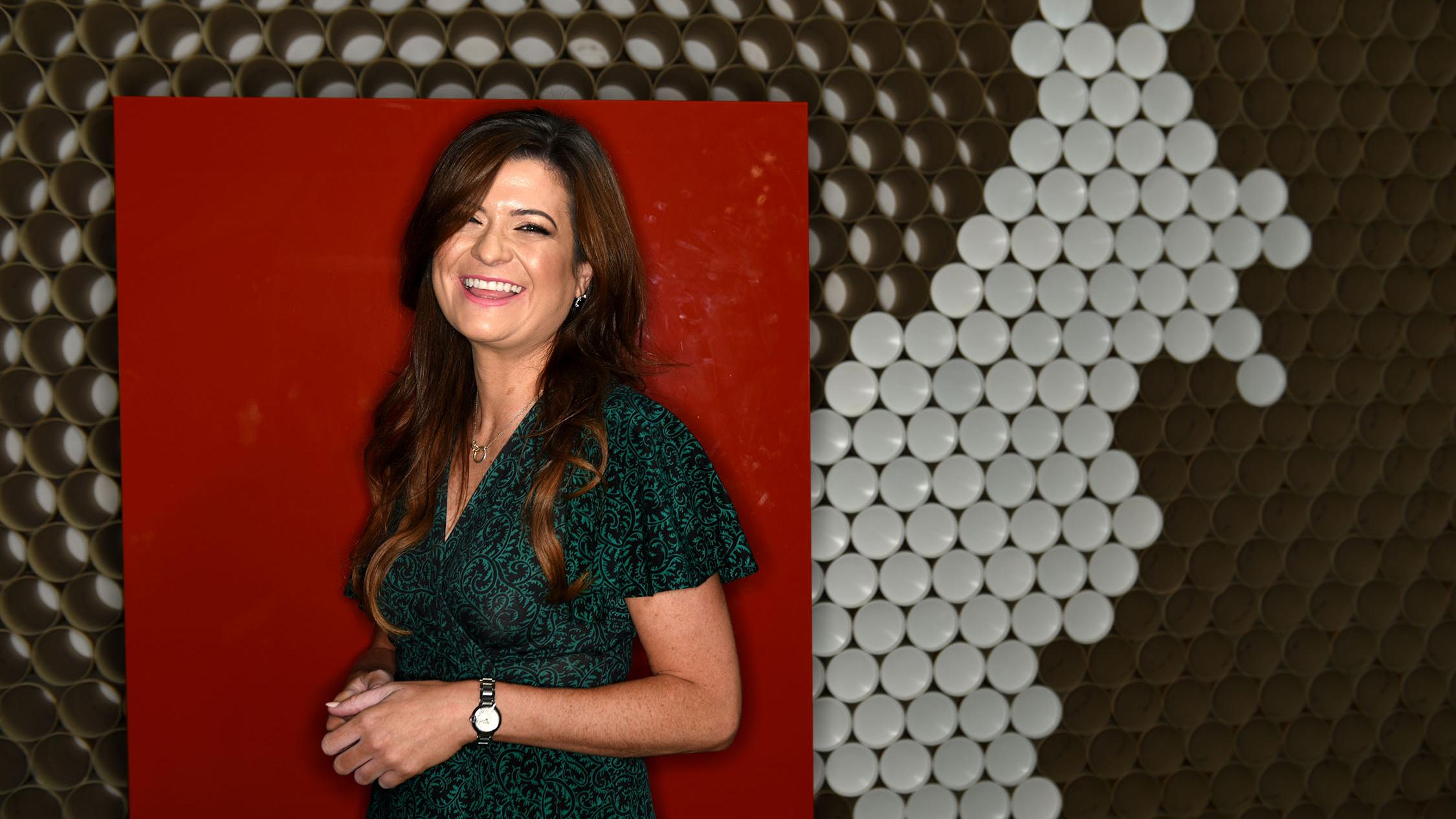 Having just returned to Dublin to hunt for investment deals on behalf of Suir Valley Ventures, Ireland’s newest tech investment fund, she took her seat in the former Guinness storehouse that now houses the National Digital Research Centre (NDRC).
See the full story here: https://www.thetimes.co.uk/article/tech-dealmaker-aims-to-turn-start-up-dreams-into-reality-62dxppvzn
12Aug/18Off
ILM’s New Chief Talks Deepfakes, A.I. and the Virtual Reality Used on ‘Solo’
 Rob Bredow, the visual effects supervisor on Solo: A Star Wars Story, took over the reins at Lucasfilm's Industrial Light & Magic when he was named senior vp, executive creator director and head of ILM in May. Having previously served as the company's chief technology officer, he brings with him expertise in both the art and science of VFX that he will be sharing when he delivers the Aug. 13 keynote address at Siggraph, the annual conference on computer graphics and interactive techniques, in Vancouver.
Deepfakes aren't a high enough quality for us to just run a deepfake algorithm and put it in one of our films. But we've identified what those limitations are, and it won't be too long before we'll be able to use something like that at much higher quality [in motion picture production]. I don't think we're 10 years away from that. We may only be one or two.
We see a lot of applications for processes both in filmmaking and outside of filmmaking, but from just the filmmaking perspective, there's nothing like getting people to walk through a virtual environment that is actually at scale [before a practical or digital set is built]. You can do that in virtual reality, but in augmented reality it even has more potential because you can still see the people around you and interact with them.
Can you cite an example of how you've used virtual reality on a production?
Yes, on Solo, we were working on the scale for that train heist sequence. We had a pretty good sense of what that train car scale needed to be, but VR really helped us tune those parameters.
See the full story here: https://www.hollywoodreporter.com/news/deepfakes-take-hollywood-says-ilms-new-chief-1132560
10Aug/18Off
AMPAS, Linux Foundation Team Up for Open Source Software
 The Academy of Motion Picture Arts and Sciences and The Linux Foundation announced this morning the launch of the Academy Software Foundation (ASWF) to create an environment for developers to contribute to open source software for the motion picture and related media industries. Industry partners funding and participating in ASWF include Animal Logic, Autodesk, Blue Sky Studios, Cisco, DNEG, DreamWorks, Epic Games, Google Cloud, Intel, Walt Disney Studios, Weta Digital, with Foundry and SideFX.
Andy Maltz, managing director of the Academy’s Science and Technology Council, explained that ASWF grew out of more than two years of investigation, sparked by Rob Bredow, senior vice president/executive creative director and head of ILM, who is also a member of the Sci-Tech Council.
“Rob thought that something was going on in the open source community,” Maltz explained. “There was the sluggish uptake of bug fixes and new features; and inconsistent versions and build platforms between packages as well as licensing issues. It was all a barrier to simple adoption.”
After hearing some of The Linux Foundation’s suggestions, the group decided that an industry-supported foundation to address governance, legal framework and a common build infrastructure was the best way to move forward. “This is the first time we’ve lent our [Academy] name to something we don’t fully control,” said Maltz. “That’s how important we think this initiative is.” Premier members not only contribute financially but commit a full-time engineer to the foundation.
The Academy Software Foundation will be in evidence at the annual SIGGRAPH conference next week; Bredow will give a keynote speech, and a “Birds of a Feather” is scheduled to connect with software engineers.
See the full story here: http://www.etcentric.org/ampas-linux-foundation-team-up-for-open-source-software/
10Aug/18Off
ModiFace – L’Oreal Teams Up With Facebook To Develop Augmented Reality Make-Up Tests
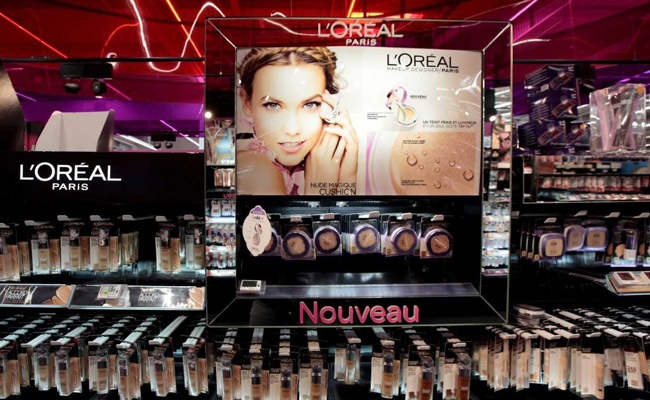 France's L'Oreal, the world's biggest cosmetics group, bought Canadian augmented reality and artificial intelligence specialist ModiFace in March.
The French company said e-commerce revenues reached 9.5 percent of all its sales in the first half of 2018, up from close to 5 percent three years ago.
The virtual testing technology should eventually be rolled out on Facebook's photo-sharing networking site Instagram, Rochet said. In China, where Facebook is blocked, Rochet said L'Oreal was also talking to other partners about similar deals, without naming them.
Luxury goods groups in China do a lot of business through Tencent's messaging and networking site WeChat.
Facebook said it had begun testing augmented reality in advertising as of July, with Sephora and brands like fashion group Michael Kors.
10Aug/18Off
AR in the field service industry

GN: Why is field service such an attractive sector for AR/VR?
MB: Field service is all about improving asset reliability and predicting failure before it even happens, while improving the customer experience and decreasing the costs of service. In an ideal world, live video and AR can be used to provide remote support to the customer, eliminating the need to dispatch a technician at all.
However, if a truck roll is required, augmented and virtual realities permit a service provider in the field to engage someone off-site into a firsthand projection of the project or scenario being handled in front of them.
This ability to tag additional knowledgeable team members, especially considering the increasing complexity of service products, enables a service provider to offer additional, valuable resources for a given project from a centralized source, at a lower cost and in a more efficient manner. In effect, AR and mixed reality can democratize knowledge, something that is especially important as the seasoned workforce ages and their knowledge can be relayed to the more tech-savvy younger workers.
According to a study by The Service Council on the feasibility of AR for the service enterprise, 41% of incomplete service visits would benefit from the use of live video or AR sessions.
The same study by The Service Council found 72% of respondents were already using or evaluating AR, so the technology's deployments have proven to be widespread.
AR software comes in various forms, ranging from consumer-oriented and conferencing solutions used for live video, such as Webex and GoToMeeting, to more purpose-built platforms. We're especially interested in XMReality, SightCall, XOi Technologies and PTC Vuforia.
See the full story here: https://www.zdnet.com/article/what-hype-field-service-workers-rapidly-embracing-ar-vr-to-democratize-knowledge/