USC’s Bravemind gives OC Fair attendees firsthand look at how VR can help with PTSD
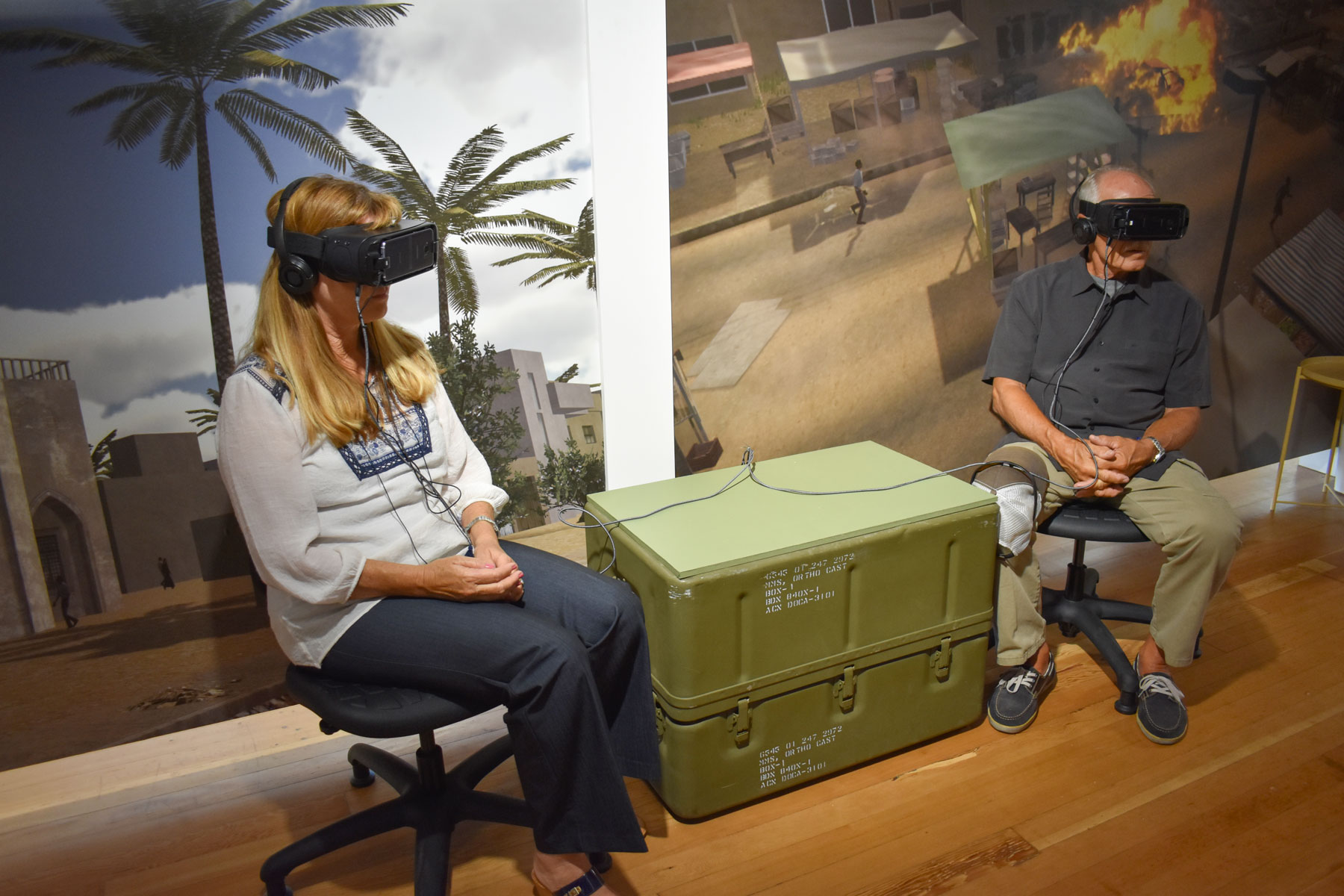
Fairgoers can try "Bravemind," the therapeutic virtual reality tool to get an idea what an Iraq veteran's combat experience was like. (Photo/Courtesy of Terry Moore)
Also on display are items donated by Chris Merkle, an Orange County-based Marine who served 14 years in Iraq and Afghanistan. Among the items: helmets, body armor, personal photos and even a flag confiscated from Saddam Hussein’s house.
Firsthand look at using VR to treat PTSD
Merkle used Bravemind for his PTSD. It wasn’t easy at first.
“It took six months for me to say ‘OK,’ ” he said about trying it the first time. “I don’t want to be immersed in my worst nightmare.”
...
Merkle, who used to describe himself as an “angry guy” because of his PTSD, is now hoping to help others. He’s halfway through a PhD in clinical psychology. He said he’s kept at it because of the mental health professionals who helped him.
“My hopes are that it reduces the stigma of PTSD,” he said of the exhibit. “There’s the physical wounds of war and the invisible wounds of war. And it’s like an infection. If you don’t treat it, it will get worse.”
See the full story here: https://news.usc.edu/145925/usc-bravemind-oc-fair-attendees-look-at-using-vr-to-treat-ptsde/
Mixed reality art is lost in the madness of Times Square
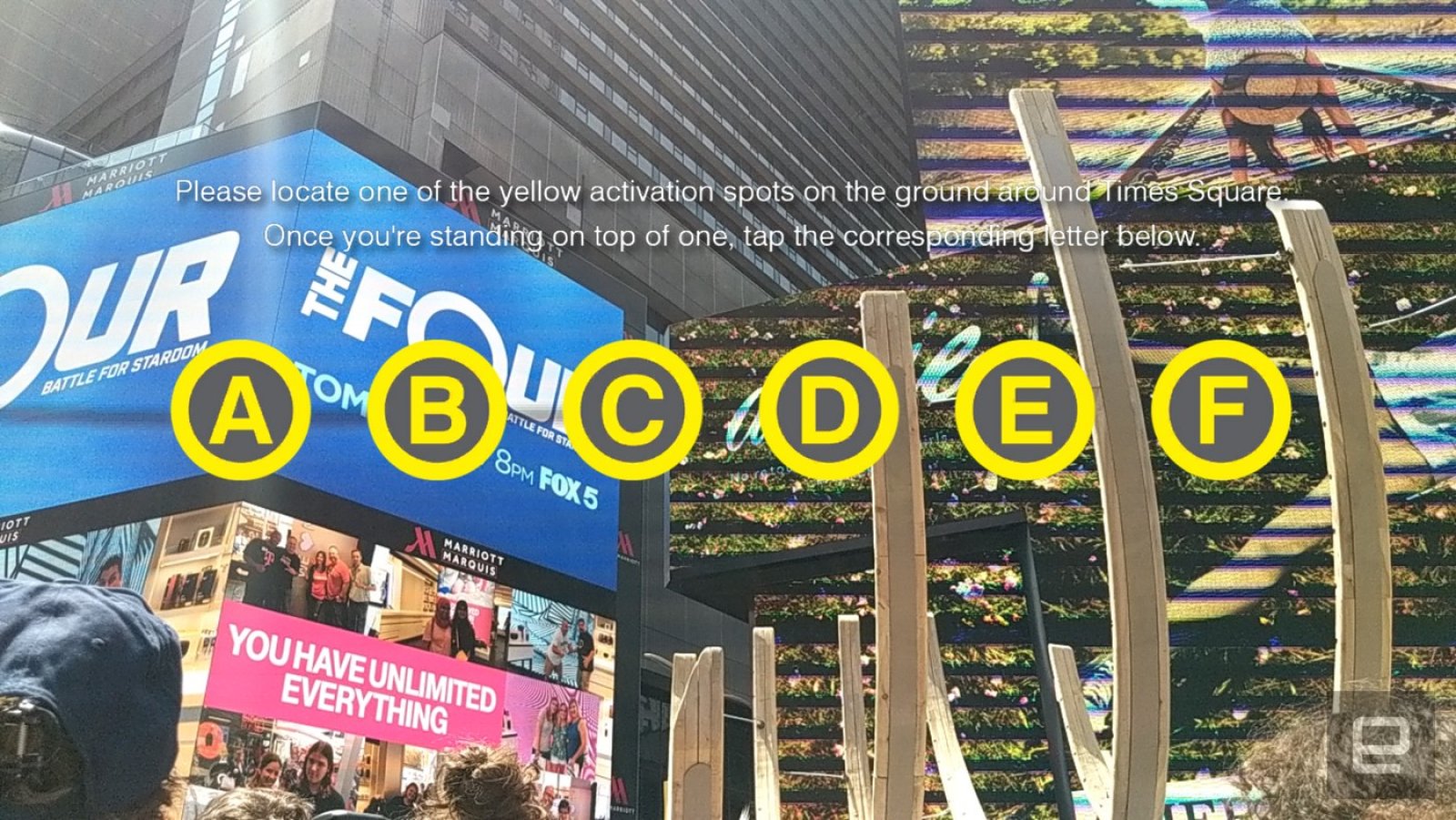 Unmoored is largely the same across both the app and HoloLens versions, especially if you plug in your earphones. The main difference is the headset offers a slightly more immersive experience as you won't have to hold up a phone.
's a familiar scene, one that seems plucked right out of movies like The Day After Tomorrow and 2012.
Thankfully, Unmoored isn't as heavy handed. Chin told Engadget that while the piece is in part about the impact of climate change, he's more interested in how people make sense of what they see. He wants the viewer to walk away wondering what the installation was about, and to discover the answer for themselves.
around Times Square for an extended period) is in the late afternoon, when the sun's relentless rays are blocked by buildings on the west. Tourists will have a fun time taking in the spectacle and marveling at the tech -- a combination that is undeniably New York. Those seeking a deeper meaning may be better off waiting for Unmoored to move to a quieter location.
See the full story here: https://www.engadget.com/2018/07/13/unmoored-mel-chin-hololens-augmented-reality-times-square-nyc/
and here: https://archpaper.com/2018/07/mel-chin-virtual-reality-times-square/
Seattle zoo turns to virtual reality and beacon technology to give visitors a closer look at animals
 In an effort to shed more light on animal behavior, their welfare and more, the zoo is testing two new technological initiatives in the new Assam Rhino Reserve — home to two greater one-horned rhinos named Taj and Glenn.
The first tech undertaking involves a virtual reality experience in partnership with Oculus and its team based in Seattle. A first-of-its-kind project, the experience features a 360-degree video showcasing a day in the life of the rhinos. From the viewpoint of a caretaker, users will get an exclusive look at everything from the rhino’s dietary needs to what it looks like in the “rain room” where it showers.
“The surprising part about zoos — not only this one, but almost all zoos — is that the most interesting part of what happens in the zoo — the care, the veterinary care, the trainer, the keepers — all that happens behind the scenes,” Grajal said.
That second tech feature, called Rhino Lookout, involves the use of Bluetooth beacons placed strategically and discreetly around the area where the rhinos are living. In partnership with Bellevue, Wash.-based Footmarks, the zoo is using the beacons to help push expanded digital content to the smartphones of visitors already using the zoo’s mobile application.
“Imagine a future in which you can explore Assam Rhino Reserve at your leisure or simulate care activities, regardless of where you are,” said Wei Ying Wong, the zoo’s vice president of learning and innovation. “VR allows us the promise of transcending time and distance — making the zoo experience possible for everyone.”
See the full story here: https://www.geekwire.com/2018/seattle-zoo-turns-virtual-reality-beacon-technology-give-visitors-closer-look-animals/
The future of senior living activities is virtual reality
 Interestingly, VR use in older adults helps combat the symptoms and development of Alzheimer's disease, which 50% of residents experience, according to the journal Frontiers in Aging Neuroscience. These impressive positive results also applied to senior motor control, balance, spatial waywardness and a host of other medical concerns.
The benefits are multiplied in residents who are bedridden or in wheelchairs by allowing them to relive the experiences of walking, skiing, swimming and other actions beyond their physical limitations. The power of instantly experiencing a wide range of new opportunities helps reignite residents' overall passions for life and mental engagement.
One of the most surprising discoveries is that VR provides twice the pain reduction as morphine, without any of the side effects of traditional pain medicine. In a breakthrough study by HIT Labs and Simon Fraser University, severe burn victims were given a snow themed VR experience during times of intense pain. Patients reported a 60% to 75% reduction in pain with VR sessions when using no painkillers compared with a 30% pain reduction when patients used only morphine.
See the full story here: https://www.mcknightsseniorliving.com/marketplace-columns/the-future-of-senior-living-activities-is-virtual-reality/article/779136/
Oasis Labs raises $45 million for ‘privacy first’ cloud on blockchain
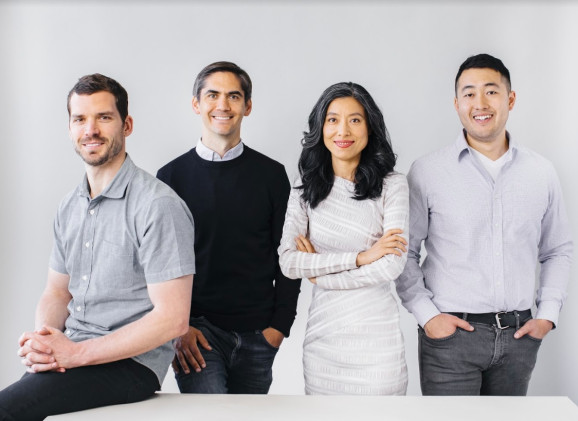 Oasis Labs has raised $45 million to build a “privacy-first” cloud computing platform with blockchain technology.
Berkeley, California-based Oasis Labs is designing a platform to overcome the performance, security, and privacy limitations that have hampered blockchain adoption to date. The aim is to make blockchain, a distributed secure ledger that powers cryptocurrencies such as Ethereum, more useful to a broader set of companies.
said Oasis Labs CEO Dawn Song, in a statement. “The Oasis platform aims to give users control over their data, and at the same time deliver superior performance and privacy capabilities. Our goal is to build the scalable and secure decentralized internet that puts users first.”
The first funding round included a16z crypto, Accel, Binance DCVC (Data Collective), Electric Capital, Foundation Capital, Metastable, Pantera, Polychain, and others.
See the full story here: https://venturebeat.com/2018/07/09/oasis-labs-raises-45-million-for-privacy-first-cloud-on-blockchain/
AT&T will support Magic Leap’s augmented reality glasses, once they actually exist
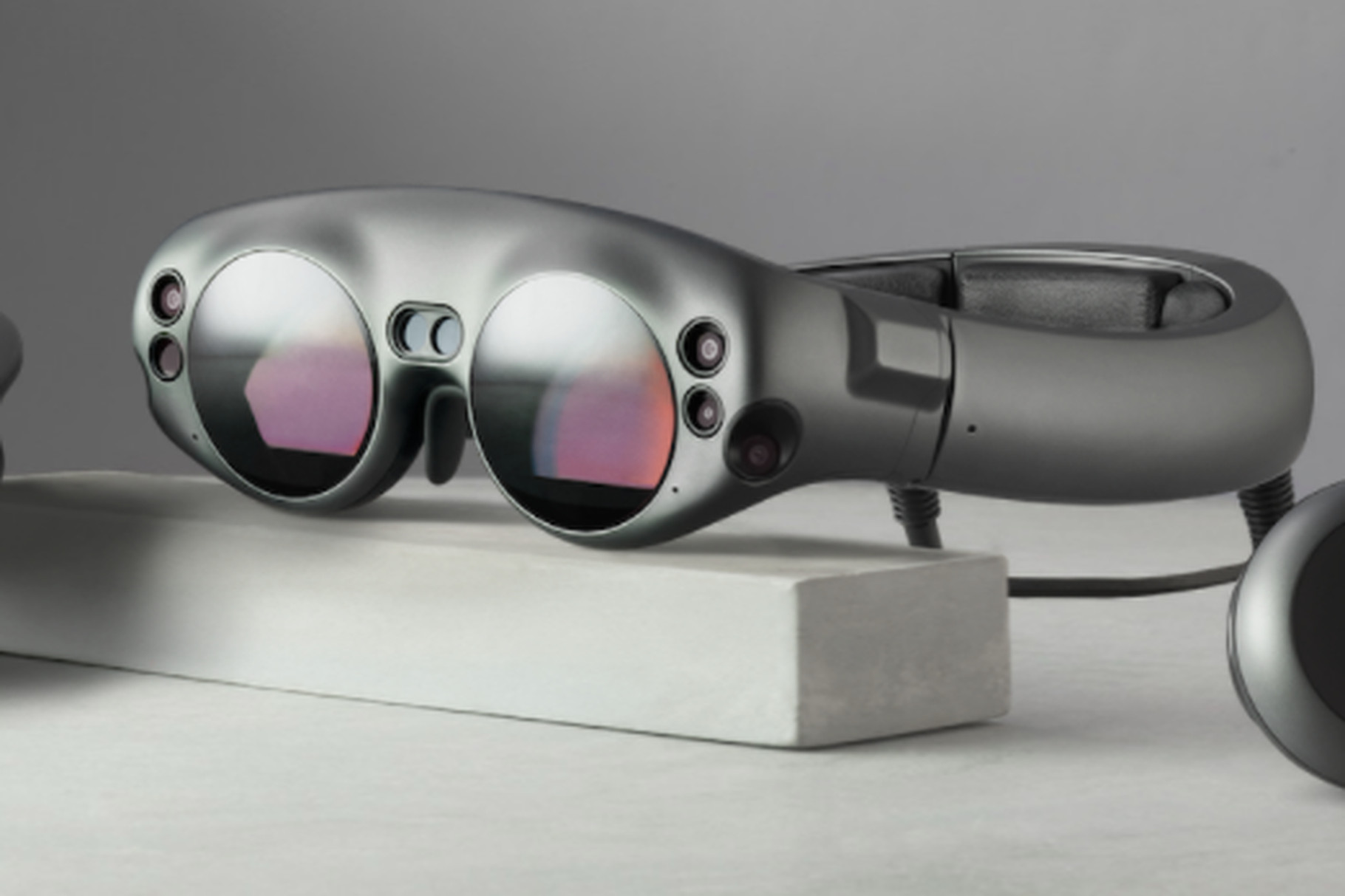 AT&T will provide mobile data service for Magic Leap’s augmented reality glasses, the company has announced. The carrier is getting an exclusive partnership with the startup. In addition to selling the Magic Leap One glasses, it will let customers demo them at some stores in Atlanta, Boston, Chicago, Los Angeles, and San Francisco — though most buyers will likely be waiting for Magic Leap to release a still-unannounced consumer version of its product.
It notes that AT&T will only distribute the glasses once they come to consumers, and Magic Leap hasn’t offered a road map for a headset that’s mainly aimed at consumers, although it’s positioned the Creator Edition in an ambiguous space that could include them. An AT&T spokesperson tells The Verge that headsets will be available to demo in stores this year.
For people who believe Magic Leap will — as AT&T puts it — “transform computing,” this will probably conjure memories of the carrier’s exclusivity deal for Apple’s iPhone. And a consumer Magic Leap One headset is supposed to cost about as much as a high-end smartphone, with additional models that are more expensive.
Unlike with the iPhone, however, there’s no indication that you’ll only be able to get the Magic Leap One through AT&T.
See the full story here: https://www.theverge.com/2018/7/11/17560130/att-magic-leap-one-augmented-reality-spatial-computing
Zero Latency offers advanced wireless technology and motion tracking for older players, while Sands Cotai Central’s Planet J theme park caters to all ages.
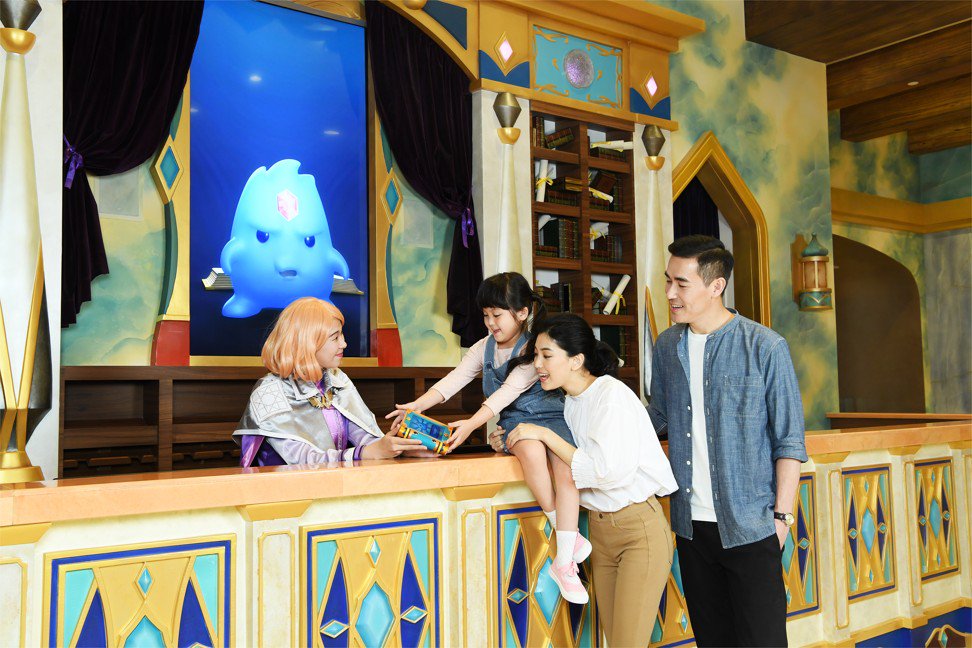
Zero Latency Macau, located in Broadway Macau in the Cotai resort area, is a 200-square-metre (2,150-square-foot) VR game space where up to eight players can play together at the same time.
Despite actually playing on flat ground in the real world, your mind is fooled by what you see in the VR world, as if you are really walking uphill, downhill and even upside down.
Do not be disappointed if you are too young for these immersive VR games, or if you want to bring along your young children.
The solution is Planet J, the 9,300-square-metre live-action role-playing theme park at Sands Cotai Central, which welcomes gamers of all ages.
It comprises eight themed zones, with 200 game installations, augmented reality (AR) and VR gaming facilities.
Throughout the game, players are adventurers whose mission is to save the Magic Stone Kingdom from a mystifying dark power.
See the full story here: https://www.scmp.com/magazines/style/tech-design/article/2154636/game-2150-square-foot-virtual-reality-space-opens-macau
The First Real Boom in Virtual Reality? It’s Pornography.
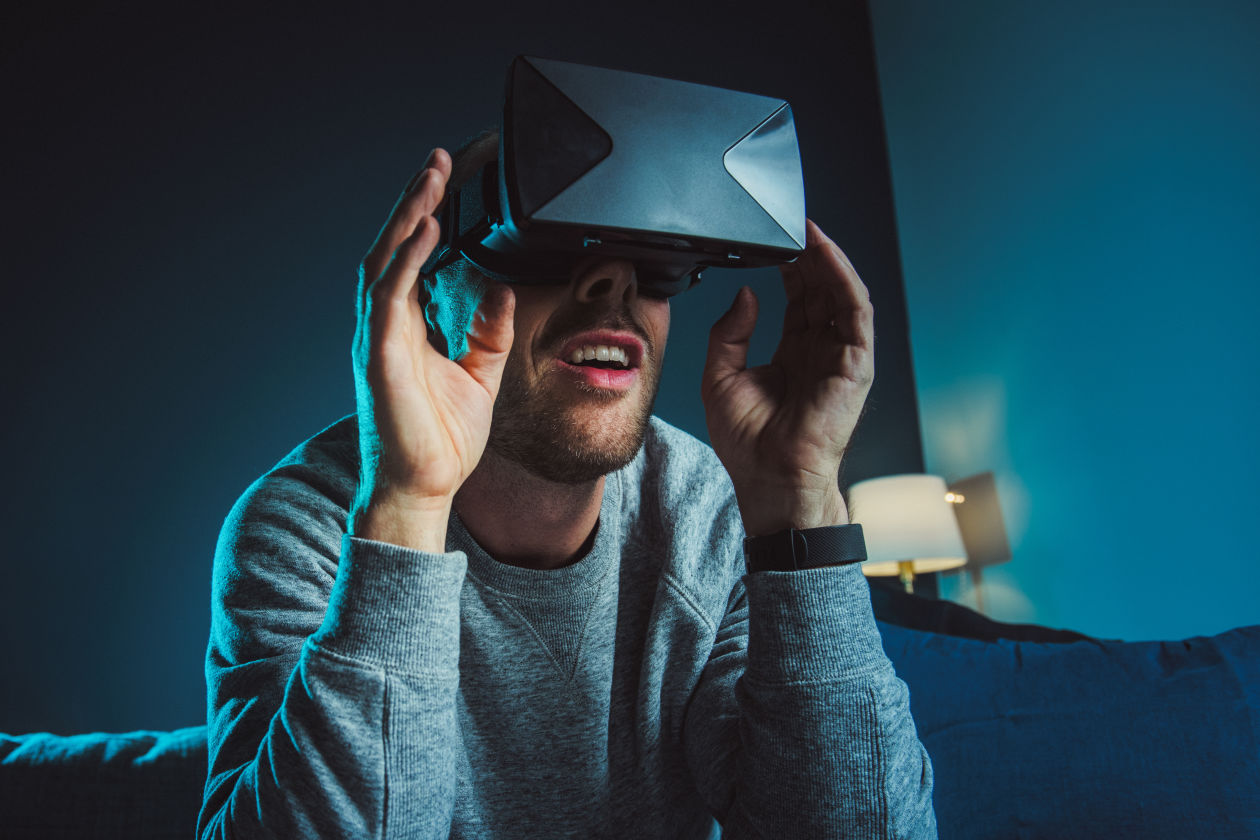
 Naughty America, one of the world’s most prolific producers of VR content, is at the forefront of a lucrative niche driving adoption of the technology
Jill the babysitter is walking across the kitchen when she notices someone sitting at the counter. “Oh my god!” she says, clutching the towel wrapped around her body. “Mr. Johnson! I hope you don’t mind I used the shower.”
In the 18 months after producing its first VR video, the San Diego-based studio released 108 more, making it one of the most prolific producers of VR content in the world. In 2017, the company operated a booth at the annual International Consumer Electronics Show in Las Vegas and became the first adult business allowed to exhibit in 19 years.
In December 2016 alone, Naughty America’s customers downloaded more than 20 million VR videos, the company said.
Subscriptions to Naughty America’s website grew 55% in 2016, its first full year of offering VR; customers paid $25 a month to access unlimited videos (including more than 7,500 traditional two‑dimensional movies), or $74 for a year. And in the 18 months since releasing its first VR video, Naughty America’s revenue increased more than 40%; for all of 2016, VR-driven revenue was up 433%, the company said.
Naughty America isn’t the only producer in the industry. Adult-entertainment giant Pornhub contracted with Rochester, N.Y.-based virtual-reality porn production company BaDoinkVR to produce videos for its websites. Smaller players include dedicated VR startups like VirtualRealPorn.com, as well as an increasing number of solo performers who offer one-on-one live VR videoconferencing to clients.
One of the most enterprising small businesses in the space is run by Ela Darling, an entrepreneur who produced and starred in original virtual-reality porn for her company VRTube.xxx.
“I think there’s concern about minors accessing the content, but we’ve had pay-for-view on cable systems for years, so it’s not like that problem can’t be solved technologically. There’s a way you can do verification to avoid that. So I think a lot of it is political.”
This article is adapted from David M. Ewalt’s book “Defying Reality: The Inside Story of the Virtual Reality Revolution,” to be published July 17 by Blue Rider Press, an imprint of Penguin Publishing Group, a division of Penguin Random House LLC.
See the full story here: https://www.wsj.com/articles/the-first-real-boom-in-virtual-reality-its-pornography-1531320180
THERE’S A NEW VIRTUAL REALITY ARCADE AT DENVER MUSEUM OF NATURE AND SCIENCE
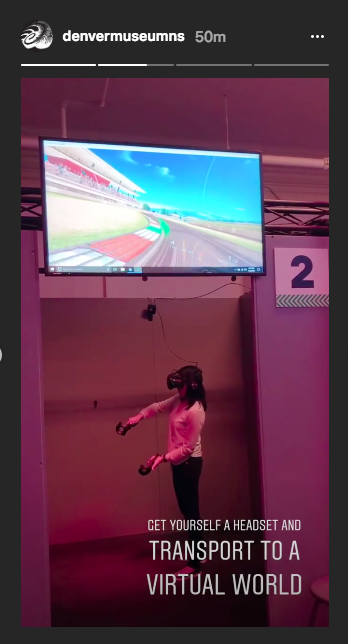 The new arcade — which is only considered a “pop-up” at the moment — will give visitors a chance to immerse themselves in 10 different experiences that ultimately relate to the other topics covered in the museum in some way. The only requirement is putting on a headset and holding a pair of controllers.
Though entrance to the arcade requires a separate ticket from the rest of the exhibits, the DMNS believes that these new technological additions will only heighten anyone’s enjoyment of the rest of the museum. And let’s be honest — anything that can be learned with an interactive game is going to be retained a little better, even if some of us have an odd affinity for those life-size dioramas.
The 10 games available to try are Google Earth VR, Beat Saber, V-Racer Hoverbike, Mars Odyssey, Plank Not Included, Eagle Flight, Job Simulator, Eleven: Table Tennis, Sea of Memories and Glider Island. To try one of the games, visitors will either use one of the six individual VR bays or form a team of four for the only group-oriented activity. Since the arcade only opened to the public on Monday, July 9 we can’t say for sure what each game is like but we can say that virtual reality is an experience that is adventurous yet safe, fun yet informative and a perfect topping to the educational cake that is the DMNS.
See the full story here: https://303magazine.com/2018/07/virtual-reality-arcade-dmns/
Facebook is testing augmented reality ads in the News Feed
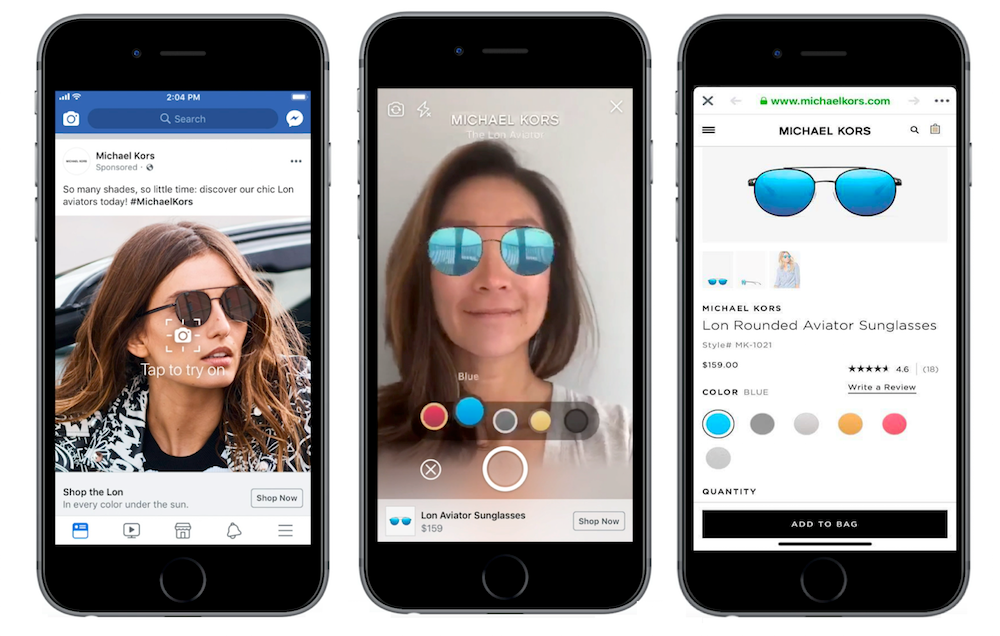 At its F8 developer conference earlier this year, Facebook announced that it was working with businesses to use AR to show off products in Messenger. Now a similar experience will start appearing in the News Feed, with a select group of advertisers testing out AR ads.
These ads look like normal in-feed ads at first, but they include a “Tap to try it on” option, which opens up the AR capabilities. And of course if you like the way it looks in AR, you can go ahead and buy the product.
See the full story here: https://techcrunch.com/2018/07/10/facebook-ar-ads/?utm_medium=TCnewsletter