Virtual Reality Preserves Disappearing Land
 It’s a sunny day in southern Louisiana, and I’m sitting on a porch listening to 91-year-old Wenceslaus Billiot, the oldest member of the Isle de Jean Charles band of the Biloxi-Chitimacha-Choctaw, describe how the island has changed throughout his long life.
“When I was a kid, my daddy and I would go to Montagut in a pirogue to get groceries,” he says, as a breeze stirs the wooden wind chime by my side. “We used to trap [muskrat]. Then when we sold the furs, we’d go make a grocery bill for the summertime.”
There is no trapping on Isle de Jean Charles anymore, and looking out from Billiot’s porch it’s easy to see why. Not even 100 meters away—beyond the protective ring levee that girds what remains of the island—is open water. The wetlands where Billiot and his father once hunted are gone. Since 1955, the island has lost 98 percent of its land to erosion, subsidence, and a rising sea. Soon it will lose most of its inhabitants, too.
Two years ago, the Isle de Jean Charles band received US $48-million from the federal and state governments to relocate the community to a new site about 50 kilometers inland, likely within the next few years. The move made the band the first government-recognized climate refugees in the country.
Albert Naquin, chief of the Isle de Jean Charles band, hopes the project will preserve memories of his community’s culture and connection to the land in a more meaningful way than a conventional historical archive. The virtual reality archive is “going to be a lot easier than reading,” he says, “when you hear it in words from some of the folks."
See the full story here: https://www.hakaimagazine.com/news/virtual-reality-preserves-disappearing-land/
Samsung Fund to Boost Startups with New Approaches to AI
 One of Q Fund’s first investments is Vicarious, a startup that wants to give machines “imagination” and is inspired by biology to make machines learn more quickly.
Quartz reports that Samsung Next director Ajay Singh noted that, “deep learning has its own baggage,” including “its propensity for bias and the amount of data needed.” Last July, Q Fund “participated in a funding round of Vicarious led by Khosla Ventures,” and “also invested in automation-robotics startup Covariant.ai, previously called Embodied Intelligence,” which was founded by noted AI researcher Pieter Abbeel.
The latter startup aims to use virtual reality and simulations “to reduce the amount of time robots need adjusting to their jobs in the real world.” To vet future investments, Q Fund relies on “a deep stable of industry and academic experts from MIT, Carnegie Mellon, Princeton, and Toronto’s Vector Institute.”
“We’re okay if it’s unproven,” said Samsung Next’s principal Vin Tang. “As long as the upside is big enough.”
See the full story here: http://www.etcentric.org/samsung-fund-to-boost-startups-with-new-approaches-to-ai/
Amazon’s Clever Machines Are Moving From the Warehouse to Headquarters
 The people who command six-figure salaries to negotiate multimillion-dollar deals with major brands are being replaced by software that predicts what shoppers want and how much to charge for it.
Machines are beating people at the critical inventory decisions that separate the winners and losers in retail. For the staffers deciding how many books, games or plastic pool toys to peddle, the tradeoff can be stark: Order too little and you miss out. Order too much and you’re forced into costly clearance sales. Amazon’s algorithms, refined through years of monitoring customer behavior, are getting the Seattle-based company out of the guessing game.
...Former and current employees say the retail group that used industry connections to lure brands to Amazon and helped create an e-commerce colossus is now being merged with the team that runs the marketplace, an automated platform that lets anyone with an internet connection price, market and sell their wares on Amazon without interacting with a single person. In recent months, several high-ranking executives have left for other jobs or been reassigned, but few express much surprise that a company with a cloud services division and prowess in artificial intelligence would put machines to work wherever it makes sense.
“We’ve been working for some time on standardizing the products, tools and services we offer to the brands and resellers that sell on Amazon, and have made some organizational changes as a result,” the web retailer said in a statement, adding that it has more than 16,000 corporate jobs open worldwide and created 130,000 jobs last year.
“We’ve been working for some time on standardizing the products, tools and services we offer to the brands and resellers that sell on Amazon, and have made some organizational changes as a result,” the web retailer said in a statement, adding that it has more than 16,000 corporate jobs open worldwide and created 130,000 jobs last year.
A key turning point came in 2015 when the value of goods sold through the marketplace exceeded those sold by the retail team, the people say.
See the full story here: https://www.bloomberg.com/news/articles/2018-06-13/amazon-s-clever-machines-are-moving-from-the-warehouse-to-headquarters
The Current Reality of Augmented Reality
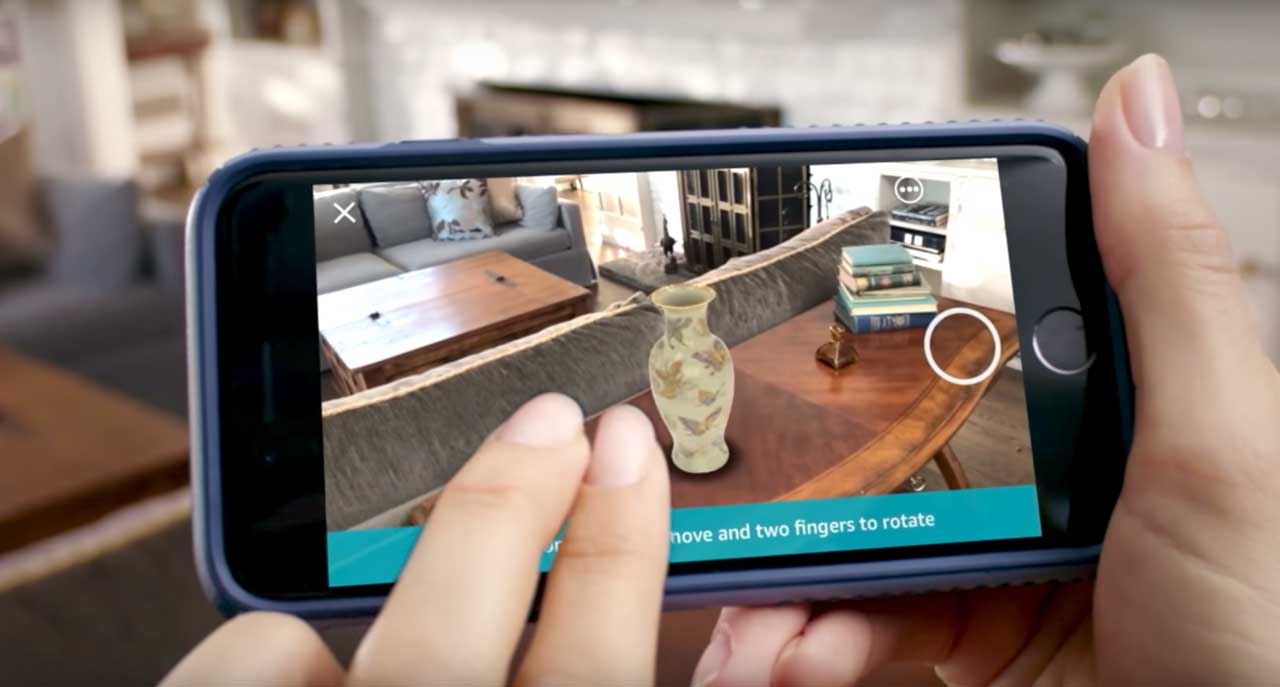 PhilNote: Shelly Palmer has compiled a really good survey of the current state of many AR products and commented on how they fit into the ecosystem.
Augmented reality (AR) is on the cusp of being one of the technological advances that are all but guaranteed to change our day-to-day behavior. Imagine living in a world filled with “movie magic.” A world so packed with computer-generated images, it’s hard to tell fantasy from reality. That’s the dream, but where are we now, and who is going to get us there first? Here’s a quick overview of the state of AR.
Within Debuts WebVR-Enabled Site for Broad VR Distribution
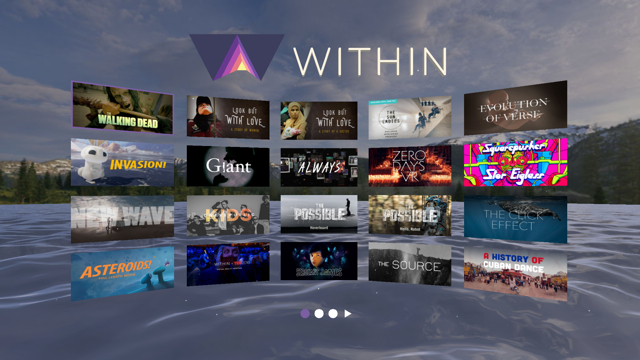 Within, a Los Angeles-based cinematic virtual reality startup, just unveiled a website that allows users to have a VR experience on any device, from a desktop PC or mobile phone to a dedicated VR headset. The company relies on WebVR technology that avoids the need to download additional software to be able to play VR experiences in supported browsers. Users without a VR headset can navigate the content via the web browser, and those with VR headsets use hand controllers and tracking tools.
The premise behind WebVR and the VR Within website is to feed VR headsets the audiovisual content and movement/positional data they need to display VR content accurately.
Because WebVR is still an early technology, most VR producers build experiences for specific VR headsets. Early adopters of WebVR include porn studios, “whose subscription services have been barred from distributing content via the app stores of the major headset makers.” But WebVR is likely to be appealing to many mainstream publishers since it offers “the promise of reaching the widest audience possible.”
Mozilla’s mixed reality director Lars Bergstrom said the company is excited about “such big platforms making a bet on WebVR.”
“As new devices reach more people, we expect the WebVR specification will continue to grow and evolve,” he said.
VentureBeat reports that, through Within’s WebVR site, “viewers without VR headsets can watch videos in a 2D form at up to 4K resolution, using a computer’s trackpad or mouse to navigate through 360-degree visuals.” WebVR also automatically detects connected VR headsets, enabling them “to display the VR videos as originally intended.”
See the full story here: http://www.etcentric.org/within-debuts-webvr-enabled-site-for-broad-vr-distribution/
Hyped augmented reality startup Blippar lost £34 million and warned it needs more money to stay afloat
 British augmented reality startup Blippar has warned that it needs more cash to stay afloat.
- The company posted a loss of more than £34 million ($45 million) for the year to 31 March 2017.
- Blippar blamed its losses on its technology investments — but has since shuttered its Silicon Valley office in an apparent bid to cut costs.
- The filings show that an exec from one of Blippar's biggest investors, Malaysia's sovereign wealth fund, has quit the board.
- See the full story here; http://www.businessinsider.com/blippar-lost-34-million-in-2017-and-needs-more-cash-2018-6

CEEK VR and Iconic Director Brett Leonard Announce Development of Scripted Virtual Reality Series and Movie “HOLLYWOOD ROOFTOP”
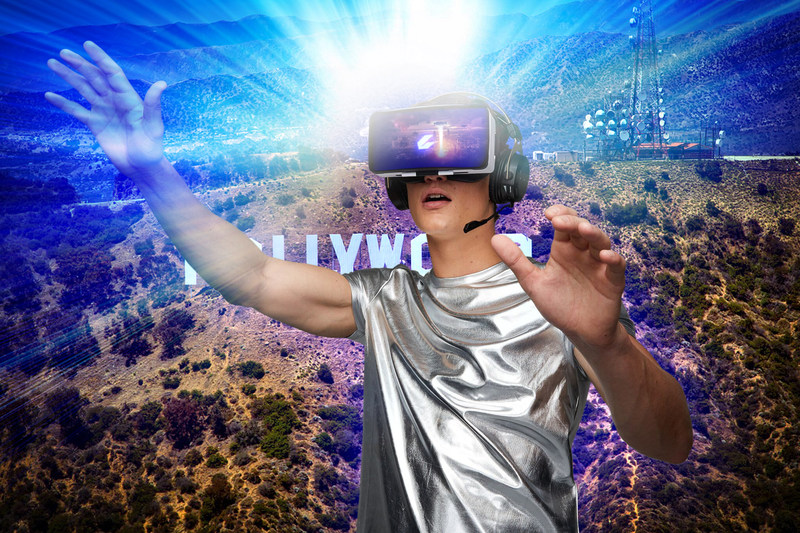
Hollywood Rooftop Virtual Reality VX360 Scripted Series by CEEK VR (PRNewsfoto/CEEK VR)
Taking the helm at revolutionizing and changing the face of storytelling through Virtual Reality, CEEK VR is in development with HOLLYWOOD ROOFTOP, a multi-conceptual film including a 10 episode VR FragFilm and a 2D feature film. The VR FragFilm (episodic content) will be filmed in Immersive Cinema VX/360, split into 10 fragments (Frags) while the 2D feature will be filmed simultaneously and serve as its companion, designed to stimulate the discussion of VR spatial storytelling and its connection with the language of cinema. As one of the original thought leaders in this discussion of VR content, producer/director Brett Leonard speaks all over the world on the subject.
Chronicling a group of young talented up-and-coming actors, and set entirely on a rooftop in Hollywood, each character is intertwined as they share their challenges, loves, failures, and successes as they all try to "make it" in Hollywood. This will be one of the first truly dialogue-driven feature VR projects.
About CEEK, VR:
CEEK VR is an award-winning developer of premium virtual and augmented reality experiences. CEEK VR pioneered the notion of virtual reality concerts. CEEK VR's mission is to make virtual reality experiences universally accessible and enjoyable. CEEK VR offers the first blockchain enabled social experience and marketplace for cryptographically authenticated content, celebrity merchandize and voting.