All We Want to Do Is Watch Each Other Play Video Games
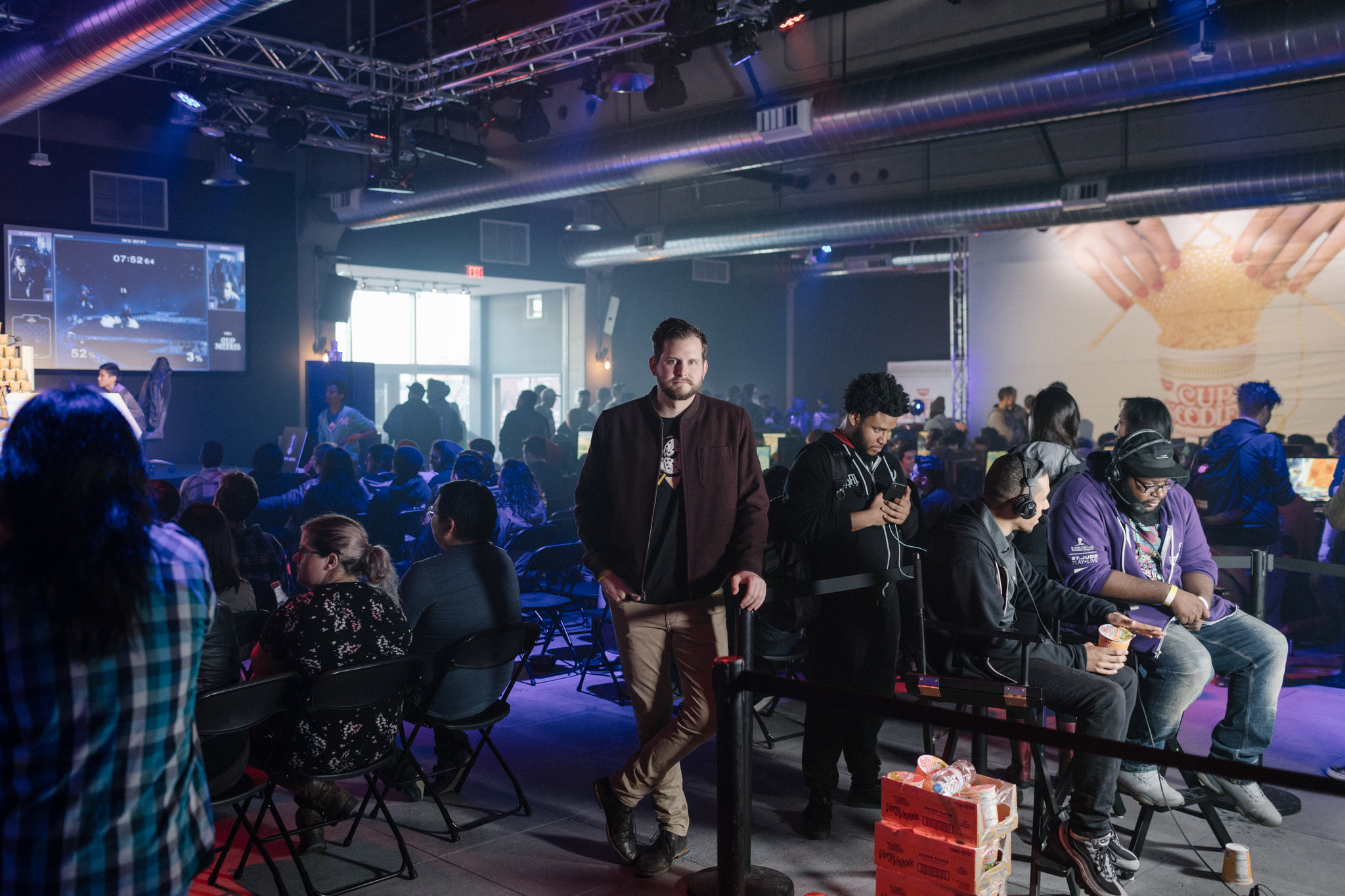
Across North America this year, companies are turning malls, movie theaters, storefronts and parking garages into neighborhood esports arenas.
At the same time, content farms are spinning up in Los Angeles, where managers now see gamers as some peculiar new form of famous person to cultivate — half athlete, half influencer.
And much of it is powered by the obsession with one game: Fortnite. Over the last month, people have spent more than 128 million hours on Twitch just watching other people play Fortnite, the game that took all the best elements of building, shooting and survival games and merged them into one.
How obsessed are people? After each of their wins this season, the Houston Astros — among many other sports teams — are doing a very specific dance, their arms in the air, fingers spread, their legs bent, toes tapping rapidly. It’s a Fortnite dance.
Gamers are coming together for practical reasons as well as social ones. Games are so sophisticated that they can overload home connections. And cryptocurrency miners have driven the price of crucial gear — like the graphics card gamers use to amp up their computers’ processing speeds.
“We’re seeing the rebirth of social gaming,” Luigino Gigante, 27, who opened a gaming center called Waypoint Cafe on the Lower East Side of New York late last year. “It’s bringing back the community aspect of gaming again. It’s like, ‘O.K., we’re still playing separately, but we’re together.’”
And there’s an underused asset already at hand.
“The movie theater!” said Ann Hand, the C.E.O. of Super League Gaming, which converts movie theaters into esports arenas, and has raised $32 million from investors. “It has that thunderous sound, and it’s empty a lot of the time.”
Two days a week, Ms. Hand and her crews convert about 50 movie auditoriums into esports arenas, where kids, mostly younger, compete and watch the game projected onto the big screen.
For the Super League Gamers, the events can accompany or replace traditional sports. It’s a new Little League and Minor League for today’s athletes. Each city plays together as a branded team — there’s the Chicago Force, the New York Fury, the San Francisco Ionics. So far, there are 50,000 players.
Parents accompany younger players, and the real-life experience opens their eyes. “The most common piece of feedback was that they knew their son or daughter loved this game, but they had no way to understand the game or know if they were any good at it,” Ms. Hand said. “Like, ‘I didn’t know my son or daughter was that competitive.’”
By 2019, she expects to be in 500 venues.
See the full story here: https://www.nytimes.com/2018/05/02/style/fortnite.html
Facebook Announces AR Support For Messenger & Instagram, Updates To AR Studio
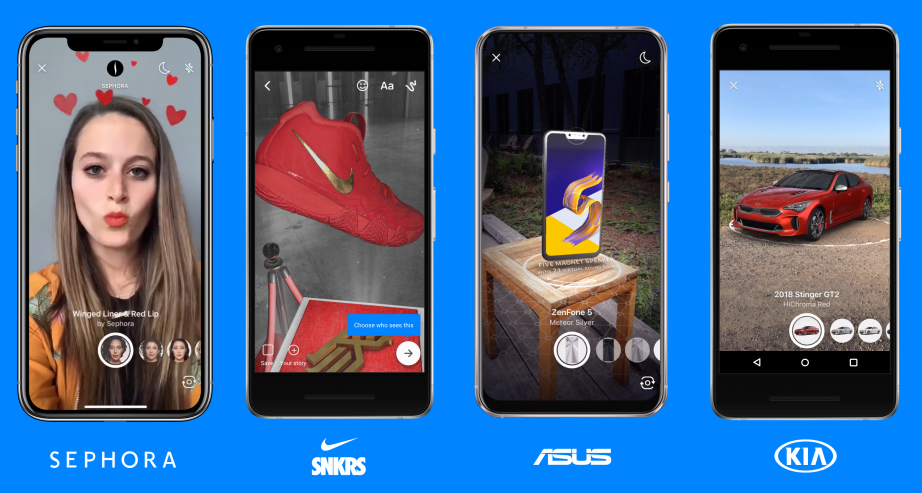 As part of an ongoing closed beta, Facebook has begun allowing select brands to begin implementing AR filters to the official Messenger smartphone app. By tapping on a specialized AR button located on the app, you open access to a variety of augmented filters from companies such as Nike, KIA, Sephora, and ASUS. Sephora’s filter for example lets you try on different styles of make-up and then upload photos or videos to friends and family.
Oculus Go Is the $200 Headset That Could Make You Try VR
In the middle, a new kind of headset is finally appearing. Devices like the Oculus Go and Mirage Solo don’t need a PC and don’t steal your phone. They have no cables. They can’t play intense games, but they’re great for casual use. And with web browsers and video players, they satisfy needs that border on the practical.
The Go reminds me of my first Amazon Echo. I owned better speakers, but I gravitated to the Echo because asking Alexa to play a song was so easy. Similarly, the Go is so simple I found myself using it most—more than the Vive Pro and Sony Corp.’s PlayStation VR, even though both have more impressive tech and better games. The Go makes VR feel less like an event you have to schedule and more like just picking up your phone.
The tech makes it possible to “hang out” in a more intimate and real-feeling way than a phone call or video chat. I like the premise, and was impressed by a demo of Oculus Rooms, where you join up with your friends to play games or watch videos. My room got a bit lonely, though. None of my friends was ever online.
Yes, the Go lacks crucial features. It doesn’t have controllers that track and mimic your hand motion like the Vive Pro or the Go’s expensive, PC-dependent sibling, the Oculus Rift. Instead, the Go uses a simple remote, similar to what you get with Nintendo Co.’s Wii consoles.
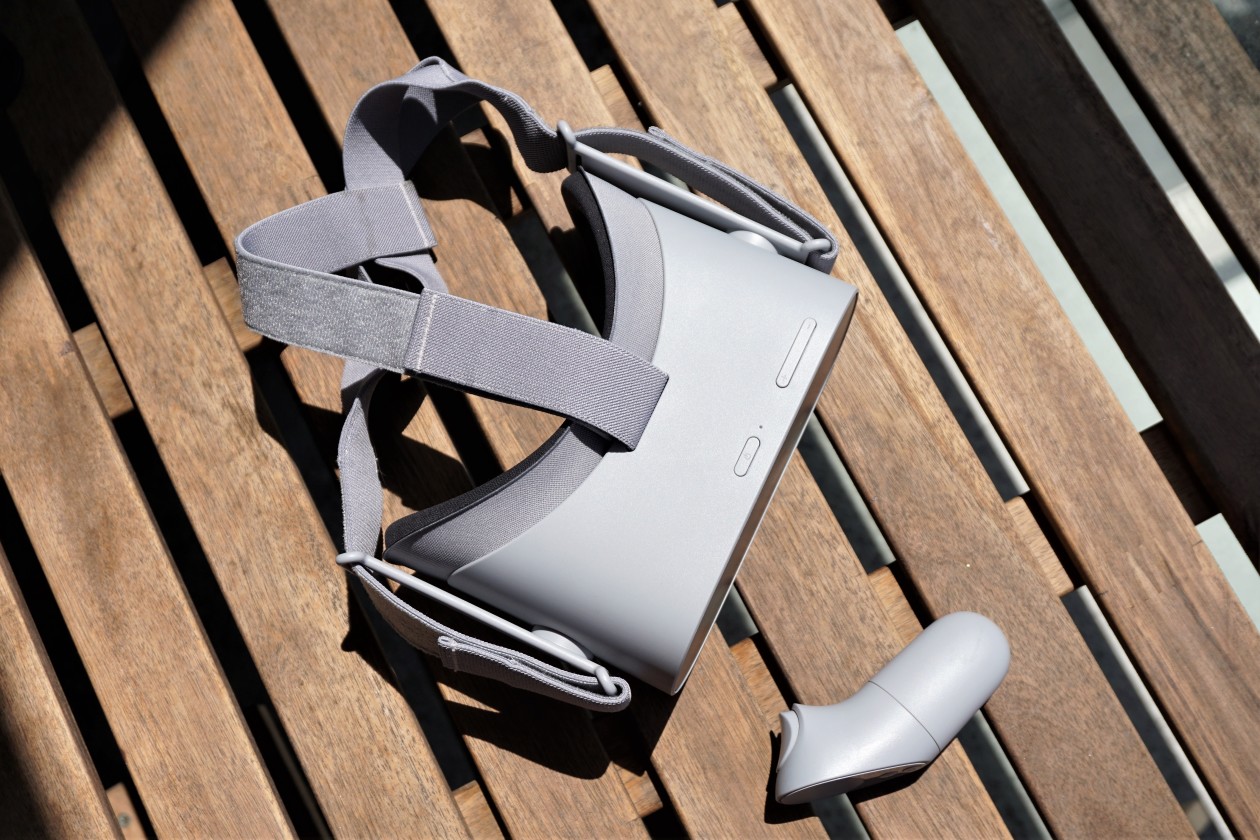 At $200, the Oculus Go finds a balance between features and price—it’s one of the easiest and most useful headsets available. PHOTO: DAVID PIERCE/THE WALL STREET JOURNAL
See the full story here: https://www.wsj.com/articles/oculus-go-is-the-200-headset-that-could-make-you-try-vr-1525195800
Oculus wants to make immersive virtual theater a reality
Yelena Rachitsky, executive producer of experiences at Facebook's VR giant, Oculus, describes it as indie video game phenom Journey meets immersive play Sleep No More. The project, tentatively expected for release next year, is inventing a new VR format that attempts to widen the audience for some of today's most exciting VR experiences -- installations with live actors.

"We're really interested in, how do you create that experience of live actors without needing to be in a site-specific location," Rachitsky said in an interview this month ahead of the Tribeca Film Festival. "It's a way to scale."
Earlier this year, Third Rail ventured into virtual reality, contributing to Wolves in the Walls, an experience that was also under Rachitsky's wing at Oculus. It premiered at the Sundance Film Festival in January.
CNET reports that Rachitsky noted such an experience is “a way to scale,” with the audience enjoying “the interactivity of a live actor without the limitations of a performance that occurs only in one place.”
And VR performances in real spaces with actors already exist, too, like Jack: Part One by Baobob Studios, and Draw Me Close, a coproduction between the National Theater and the National Film Board of Canada. Using motion-tracking in a space that's mapped onto a live performance area, audience and performers interact together as in immersive theater, but the audience's visuals are a virtual world instead.
see the full story here: https://www.cnet.com/news/oculus-wants-to-make-immersive-virtual-theater-a-reality/
Tribeca: VR Documentary ‘Vestige’ Explores Love & Loss
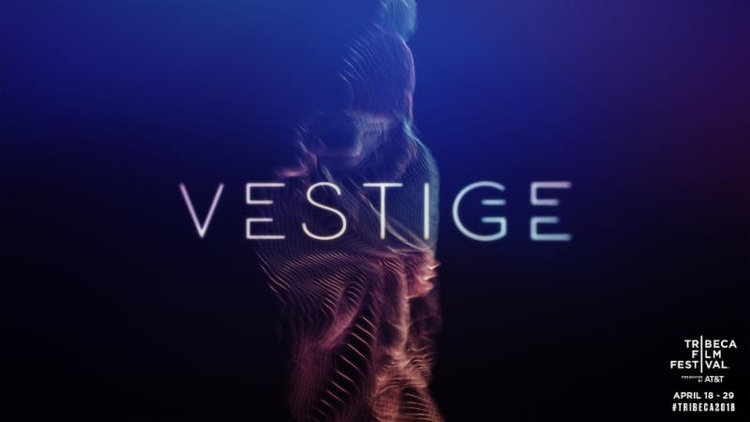 Premiered earlier this week at the Tribeca Immersive Virtual Arcade, Vestige is a nonfiction room-scale VR journey through the memories of Lisa Elin as she recalls both the best and worst moments of her time with Erik.
Starting my experience in a pitch black void, Lisa’s narration began to illuminate my surrounding as fragments of her past memories were manifested as moving images via colorful volumetric capture. As the multi-narrative journey continues, more memories are unlocked, activating new pathways through Lisa’s memory as she recalls her defining moments with Erik.
“Initially, when I got to speaking with Lisa, it was really research for a fictional piece,” spoke the project’s director Aaron Bradbury in an interview with VRScout. “It was probably the third interview in, and our interviews were really quite long (between 3-5 hours), and I had cut together bits of each interview and had started building a narrative and started to kind of understand how a multi-narrative would work within it.
Eventually however the good times end and we’re lead to the sobering conclusion of the experience that culminates in Erik’s tragic death. All of this visualized, thanks to some impressive use of volumetric capture and a whole bunch of green screen.
Vestige is much more than just a VR experience. The full installation presented on the Tribeca show floor consists of three main areas designed to keep the user immersed before and after they put on the headset.
Composed of two layers of projection mapped semi-transparent surfaces using 4 different HD projectors, the “pre-experience” surrounds the user in a colorful LED sphere capable of casting their shadow onto the screens depending on their physical position. This gives the user an external connection to the art piece as well as a visual spectacle for spectators on the show floor. Most interestingly however are the conventional telephones dangling from the installation by their cords. Each of which are playing an audio recording of a previous user recalling their own memories of lost loved ones.
Finally there’s the “post-experience.” A powerful look into the passionate recollections of Lisa’s fondest memories, Vestige was a real tear-jerker on the show floor.
Vestige was a joint effort by immersive studio NSC Creative, VR firm Atlas V, VR network Kaleidoscope, Other Set and musician Starkey.
John Travolta Stars in “SPEED KILLS VR,” now available on several platforms.
 Staring John Travolta, Kathleen Winnick, Kellan Lutz, and many other stars, the 360 degree experience was shot alongside the feature film, which will be out in the coming months, and offers a unique perspective inside the life of a notorious speed boat builder, who at one time made the fastest boats alive used by both the US Coast Guard and drug smugglers in the late 60's, 70's and early 80's. Inspired by a true story the experience covers the rise and fall of this world champion and multi millionaire whose life showcased in VR is one of the first VR period drama's to ever be released.
Apple Patent Reveals New AR Headset Details, and It Looks Incredible
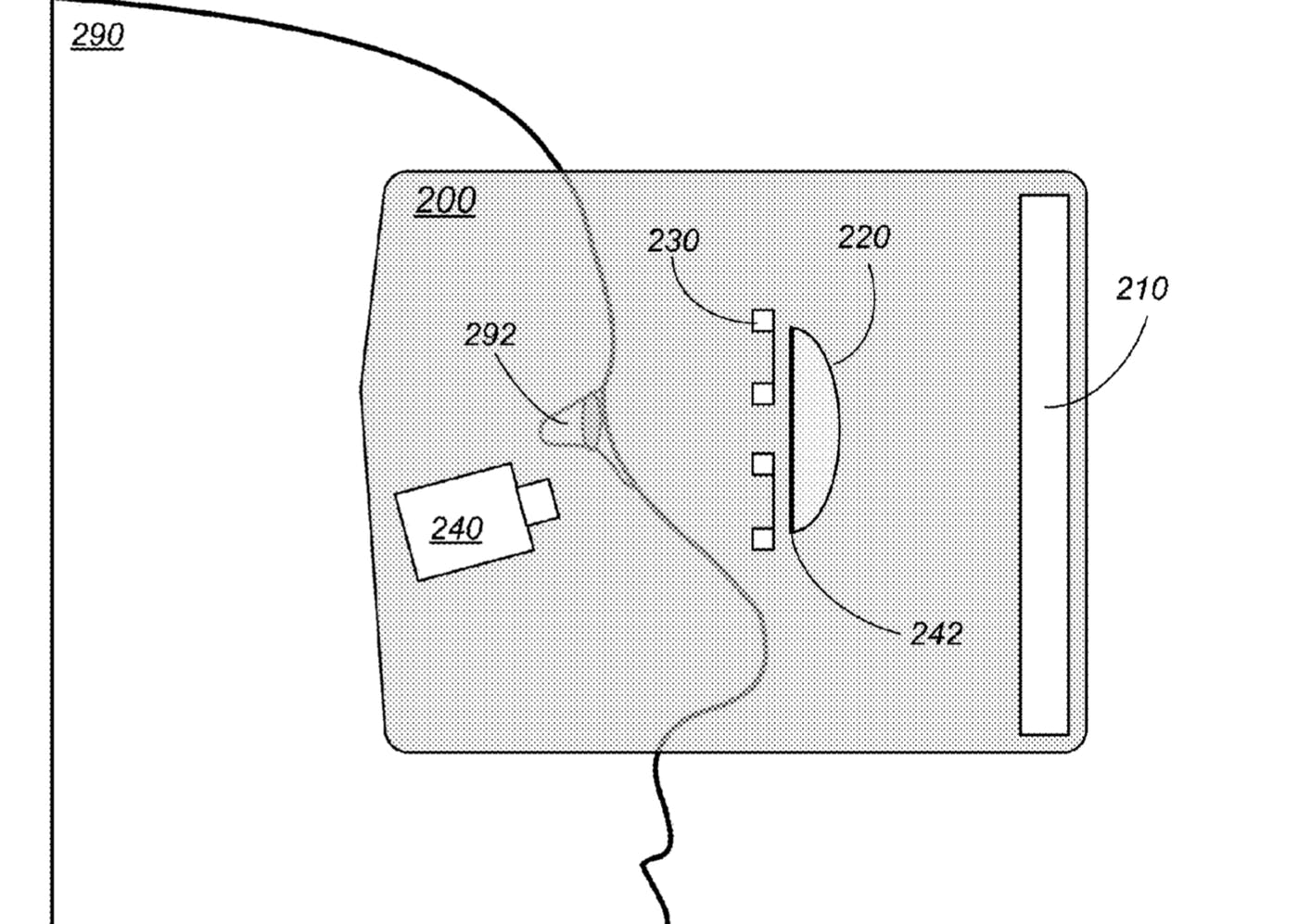 Recent reports suggest the company is working on a headset under the codename “T288”. The headset, rumored to run an operating system called “rOS,” is intended to play back 3D content in a package with respectable battery life, potentially launching in 2020. In Apple’s patent, a headset would use near-infrared cameras on either side of the wearer’s face, emitting infrared light and bouncing it off a mirror to allow the camera to track movement.
Apple has doubled down on its support for augmented reality in recent years. iOS 11, a free software update that launched last year, brings a set of developer tools called “ARKit” that makes it easier for app makers to produce AR-supported games for the iPhone 6S and later. Cook proclaimed augmented reality, which mixes a view of the real world with virtual objects, as an ideal technology for maintaining human contact.
See the full story here: https://www.inverse.com/article/44239-apple-ar-headset-details