VRstudios makes a compact virtual reality experience with VRcade Atom
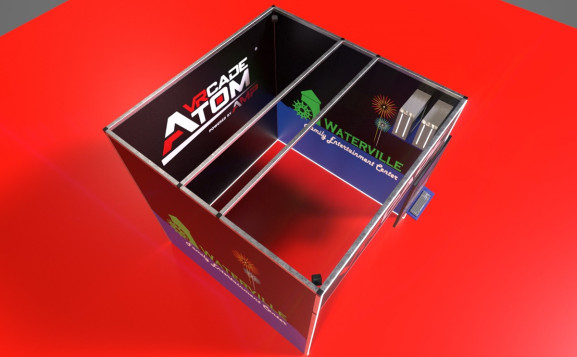 The VRcade Atom is a commercial wireless VR system built for location-based entertainment (LBE) arcades, and it costs less compared to previous systems. It’s a turnkey system that includes everything a VR arcade business needs to add room-scale, free-roaming, multiplayer VR attractions.
Built on the VRcade Attraction Management Platform (AMP), the Atom is the first VR arcade solution integrating best-in-class computing power, head-mounted display technology, wireless transmission, and positional tracking from industry leaders including Hewlett-Packard, HTC, and TPCAST.
... the Atom runs experiences from the company’s portfolio of VRcade wireless, multiplayer attractions expressly built for commercial arcade operations. This includes: VRcade’s classic Time Zombies, Barking Irons, planktOs and Drone Storm.
The Atom is easy to set up, take down, relocate, or reconfigure. Installations can be done quickly with no special facility requirements or additional infrastructure, such as rigid truss systems. The standard configuration requires only a 10 foot x 10 foot footprint for a multiplayer system,...
The VRcade Atom is available to demonstrate and order directly from VRstudios. VRstudios launched in 2014, and it has 55 VRcade installations in 14 countries. The company has 24 employees.
See the full story here: https://venturebeat.com/2018/04/25/vrstudios-makes-a-compact-virtual-reality-experience-with-vrcade-atom/
A universal infrastructure for augmented reality is closer than you think
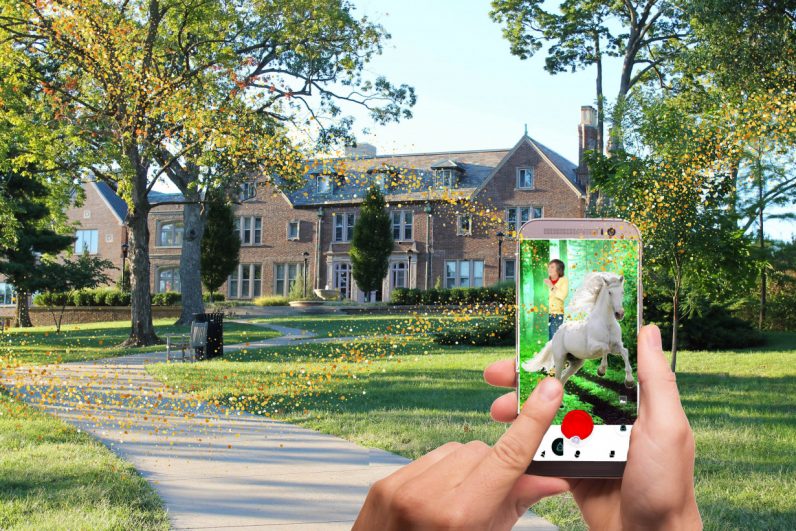 The AR Cloud, or Digital Land, as some experts call it, is getting ever closer to reality thanks to the innovative minds at Arcona, a startup creating a layer of AR on the surface of the planet. The company has already developed several algorithms to facilitate a massive adoption of mobile AR.
According to Hanke, the basic idea is that augmented reality would be even more intertwined with the real world. Even at a small coffee shop, patrons could receive virtual tasks or quests or interact with friends who are hundreds of miles away — and not exclusively for gaming, either.
The primary goal of Arcona’s team is to create a Digital Land of the world using a series of state-of-the-art algorithms. As Alexander Emelyanov, the company’s R&D Lead explained, “Our algorithms, based on neural networks and AI, allow for a much faster analysis of a huge amount of data and images to create the most accurate virtual impression of any physical environment in real time.”
“Our first joint projects will focus on tourism and entertainment. We’ll start from various historical reconstructions, presenting iconic landmarks, as well as ambitious construction sites, which are yet to appear in Dubai,” Daniil said.
He believes Arcona’s innovative AR technology will stimulate tourism and bring significant commercial and advertising revenue to the Middle East.
“The land in the central districts of Dubai has already been reserved for us. As soon as we complete ICO, our partners will start working on some large-scale AR projects. We expect they’ll be available for users in 2019.”
As Connor Blenkinsop explains, there are plenty of straightforward (and realistic) applications for this tech. “The construction sector could use AR to show their clients how a project will look upon completion, while the tourism trade has the opportunity to enthrall visitors by recreating lost historical objects.”
Tech pioneers are even looking into ways to incorporate AR technology into car windshields and medical training, highlighting how AR could soon be integrated into all aspects of daily life.
See the full story here: https://thenextweb.com/augmented-reality/2018/04/25/universal-infrastructure-augmented-reality-closer-think/
Aion launches first public blockchain network

A concept showing a network of interconnected blocks of data depicting a cryptocurrency blockchain data on a dark background - 3D render
If you believe blockchains will proliferate in the coming years, it stands to reason that you will need some sort of mechanism to move information between them — a network of blockchains with bridges and processes for sharing information between entities. That is exactly what The Aion Network is providing with a new blockchain network released today.
The company wants to be the underlying infrastructure for a network of blockchains in a similar way that TCP/IP drove the proliferation of the internet. To that end, the company, which originally began as a for-profit startup called Nuco, has decided to become a not-for-profit organization with the goal of setting up protocols for a set of interconnected blockchains. They now see their role as something akin to the Linux Foundation, helping third-party companies build products and creating an ecosystem around their base technology.
“The core design of network we have been building is to connect various networks, and route data and transactions through a public network. We are launching that network today. It allows you to build bridges to other blockchain networks. That public network acts as relayer between blockchains,” Matthew Spoke, CEO and co-founder at Aion Networks told TechCrunch.
While there clearly could be security concerns with a public by-way for blockchain data moving between systems, Spoke says that can be minimized. Instead of transmitting a medical record between a hospital and insurance company, you send a proof that the person had an operation, which the insurance company can check against the coverage rules it has created for that individual and vice versa.
The idea behind this venture is to provide the underlying plumbing to encourage more highly scalable blockchain use cases. Spoke and his team once ran the blockchain practice at Deloitte before starting this venture, and they saw roadblocks to scaling first-hand.
In order to drive adoption, the company is introducing a token or cryptocurrency to be used to move data across the network and build in a level of trust. Spoke believes if the users have skin in the game in the form of tokens, that could create a higher level of trust on the system.
“Instead of paying for infrastructure, you are going to pay to be part of a common trusted protocol.
“We still need a few years of pure focus on infrastructure to make sure we are getting these layers right. Every time you move data of any kind there are security vulnerabilities, and we need to make sure there are good specs and comfort in using it,” he said.
See the full story here: https://techcrunch.com/2018/04/25/aion-launches-first-public-blockchain-network/
Piracy 3.0: The Good, the Bad and Kodi (Guest Column)
 by Mitch Singer
When Hollywood filmmaker Jeremy Culver releases his next movie – the romantic indie comedy “No Postage Necessary” – in June, he will take title to having the first feature distributed with the help of blockchain technology.
As Culver put it in a press release announcing his movie, “There are many advantages to blockchain distribution, including immutable proof of intellectual property rights, transparent royalty payments and, since all data on the blockchain is resistant to duplication, we can now envision a world where films are no longer pirated.”
...it is ineffective as an anti-piracy tool.
That’s because humans are analog beings...
And if I can see it, I can copy it.
Welcome Kodi, which takes piracy to a whole new level. Let’s call it “Piracy 3.0” – after the earlier eras of Piracy 1.0 for discs and Piracy 2.0 for p2p/torrents – by offering an open-source streaming media player giving users a simple, easy-to-use media center to organize and access all of their digital media content.
As a media center application, there is nothing illegal about Kodi software, which provides plug-ins for you to add YouTube and other OTT channels. Regrettably, however, there are also downloadable add-ons that take advantage of Kodi’s open-source platform. They enable users to get free access to copyrighted live sports, pay television series such as “Game of Thrones,” along with unlimited Hollywood movies and television shows.
To make matters worse, the piracy-enabling add-ons are fairly easy to install and use – made even easier by the abundance of YouTube instructional videos showing you exactly how to install them. One notable example is “Exodus,” an add-on that gives you access to all new movies and TV shows. It is an app that locates versions of the movie or television content for which you are searching across thousands of global Internet servers. Looking for 1080p? 5.1 surround sound? No problem.
Take-downs of these add-ons are especially ineffective because they are not “channels” streaming content in the traditional sense. Rather, they are pirate directory services to provide only Internet links. Get rid of one “channel” and there are 10 more just like it with the same exact links.
See the full story here: http://variety.com/2018/digital/opinion/piracy-3-0-the-good-the-bad-and-kodi-guest-column-1202785603/
PTC Explores the Use of Augmented Reality Technology for Autism
 A team of PTC employees volunteered countless hours to research and understand autism and the requirements for an effective AR solution. Once the team understood how to best develop applications for an autistic child, they quickly reached a project milestone by completing a prototype solution. In the next phase, an app, created for children with autism and a developmental age of three to five years old, will be clinically tested and evaluated for continued improvement. Dr. Shane will discuss the project in more detail for media and analysts in a session at the upcoming LiveWorx conference held in Boston on June 17-20th.
See the full story here: https://www.businesswire.com/news/home/20180424005921/en/PTC-Explores-Augmented-Reality-Technology-Autism
U2 Kicks Off Latest Tour with Augmented Reality App Experience
 Once the app recognizes the album cover image, the image transforms into an AR object and then dissolves as it's replaced by a singing, virtual Bono (the lead singer of the group).
Oddly, although the app has a built-in function to allow you to save photos of the AR experience, the app doesn't allow you to record video of the AR animations (you can use screen record on your iOS device for that).
The band is also promising an additional live AR component that will be available to fans who bring the app to live U2 tour shows. Once fans get to the venue, they'll find a 100-foot-long LED wall with images that will serve as the triggers for a massive AR experience via their smartphones.
See the full story here: https://next.reality.news/news/u2-kicks-off-latest-tour-with-augmented-reality-app-experience-0184356/
The makers of the virtual influencer, Lil Miquela, snag real money from Silicon Valley
 The account “hack” was architected by brud as part of an ongoing virtual reality drama playing out on Instagram and other social media platforms between avatars it had developed, all designed to attract media attention, according to people with knowledge of brud and its plans. It worked.
One Los Angeles investor familiar with the company said brud was “using conflict to introduce new characters… same as the Kardashians always have.”
The investor added that two years into the development of the Miquela persona, brud‘s founders knew that the fad could lose some of its luster as the is-she-or-Isn’t-she-real tension dissipates under the weight of continuously thwarted expectations
In the High Snobiety profile-as-honors-senior-English-thesis on Lil Miquela published yesterday, the avatar’s own spokesperson was quoted as saying:
“The internet is endlessly powerful, and that power has been wielded in many ways. It feels like we’re not going to put the genie back in the bottle, so we’ve got to learn how to leverage these tools in positive ways. I’ve used my platform to raise real money for important organizations throughout LA and I’ve seen lives changed as a result. I think the only chance we’ve got is to collectively teach our loved ones how to think critically and how to spot misinformation. I know that we can manifest the change we want to see, and the internet can be a part of that.”
It’s a lofty goal backed by a number of inarguably good works. However, lying to reporters may not be the best way to continue trying to achieve it.
See the full story here: https://techcrunch.com/2018/04/23/the-makers-of-the-virtual-influencer-lil-miquela-snag-real-money-from-silicon-valley/
SingularityNet – The Global AI Network
 SingularityNET is the decentralized protocol for accessing a network of AI algorithms, services, and agents. Through the combination of open source principles, blockchain integration, and leveraging the leading minds in machine learning, we will make AI accessible as a global commons for all.
HTC Debuts New Vive Pro Virtual Reality Kit in Big Business Push
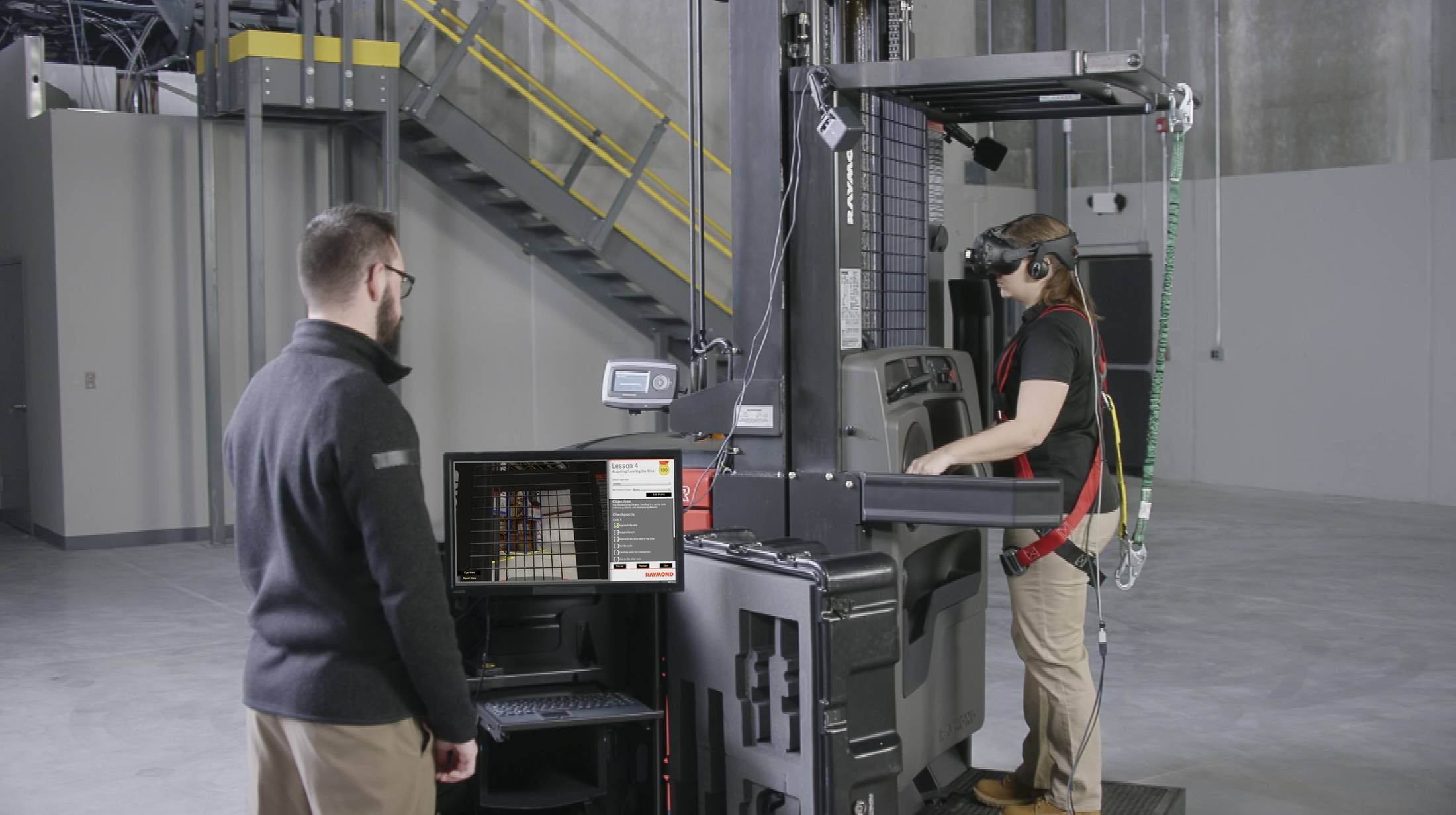 HTC’s new Vive Pro 2.0 Kit, which costs $1,399 and includes the new Vive Pro HMD VR headset, two revamped base stations for tracking movements, and two controllers. HTC released the Vive Pro VR headset, which costs $799, earlier in April. Companies will be able to buy the new Vive Pro 2.0 Kit, which costs $200 more than HTC’s previous VR bundle for businesses, as of Monday via HTC and other retailers.
Some recent examples of companies using VR technology include Farmer’s Insurance, which is using Facebook’s Oculus Rift headsets to train its claims adjusters and PG&E, which also uses the Rift headset to help train workers in inspecting electrical equipment.
The VR forklift tutorials also let people experience what it’s like to be hoisted 30 feet up in the air, which can happen when operators must place cargo in high-up locations, Field said.
“It’s a little unnerving if they aren’t good at heights,” Field said of the task. With VR, however, trainees can get more easily acclimated to the feeling of being high above the ground because it “really gives you the full sensation,” he said.
HTC is also selling newer versions of its enterprise service agreements, with the basic one starting at $199 that includes a two-year warranty. Another version that costs $299 includes the ability for companies to immediately receive replacement parts, like new controllers, without having to ship the broken ones back to HTC before they can be replaced, O’Brien said.
See the full story here: http://fortune.com/2018/04/23/htc-vive-pro-virtual-reality-business/
Poster – Believable virtual characters in mixed reality
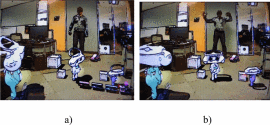 Abstract:
See the full story here: https://ieeexplore.ieee.org/abstract/document/8088462/figures