AUGMENTED REALITY IS TRANSFORMING MUSEUMS
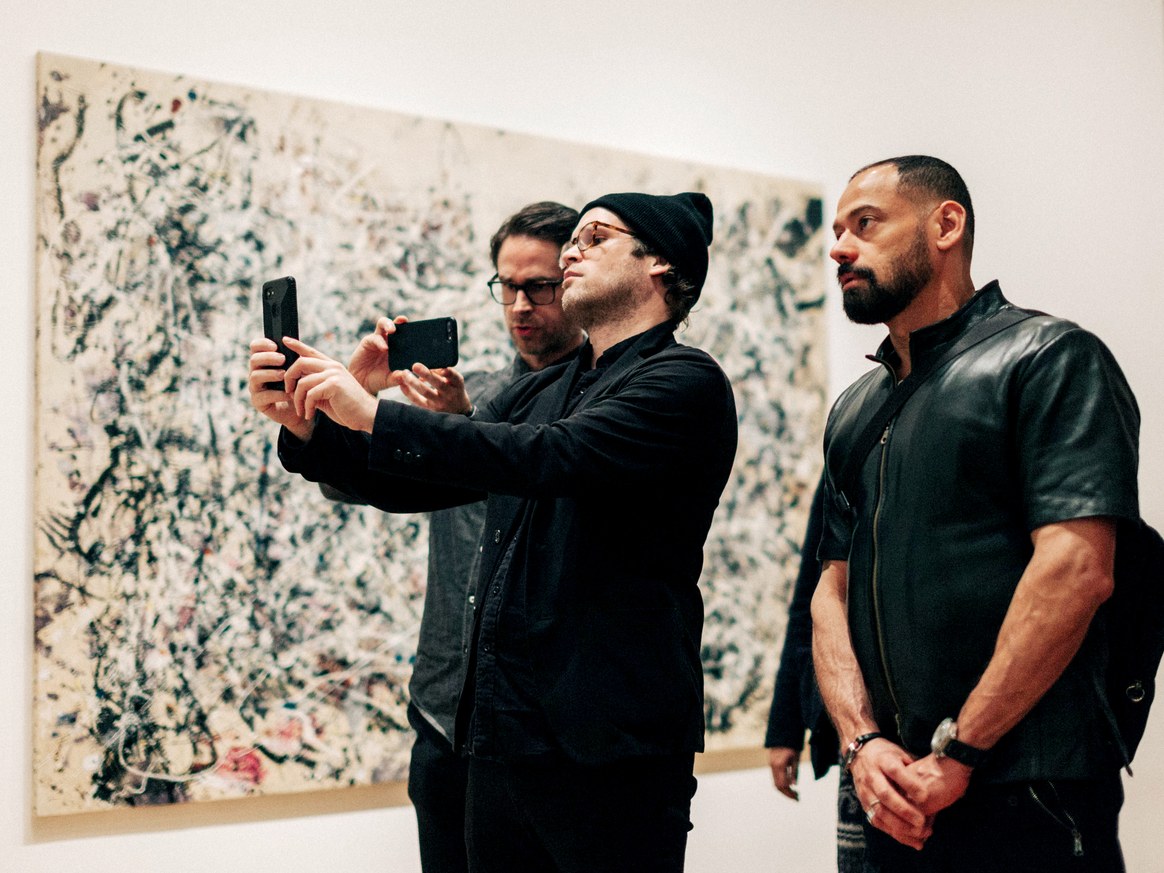 NEW YORK’S MUSEUM of Modern Art is under siege. Well, a virtual siege, at least. A group of renegade artists has co-opted the brightly-lit Jackson Pollock gallery on the museum’s fifth floor, turning it into their personal augmented reality playground.
To the uninitiated, the gallery remains unchanged; Pollock’s distinctive drip paintings are as prominent and pristine as ever. But to those that have downloaded the MoMAR Gallery app on their smartphones, the impressionist's iconic paintings are merely markers—points of reference telling the app where to display the guerilla artists’ works. Viewed through the app, Pollock’s paintings are either remixed beyond recognition or entirely replaced. One artist has framed a Pollock painting in an interactive illustration of a smartphone running Instagram, allowing viewers to “heart” the work over and over again. Another has overwritten Pollack’s imagery with an artistic interpretation of the many conspiracy theories peddled by Q, a mainstay of the far-right on 4chan. Together, the eight works form a virtual exhibition dubbed “Hello, we’re from the internet,” which uses AR to challenge MoMA’s gatekeepers and museum curators at large.
...Despite the current lack of of clear laws around what can and cannot be done to virtually augment art, museums aren’t entirely powerless. When visitors enter a museum, they agree to whatever rules that institution has set out—no photography, for instance, or no touching the paintings. Museums could begin to add “no AR apps” to their rules, or ban the use of phones outright—though doing so might seem like a step backwards, considering that many museums only recently began embracing smartphones as a way to engage their visitors. Artists, too, could begin negotiating more complex contracts with museums, spelling out what can and cannot be done to augment their works. The latter may become more common as museums follow in the Pérez Art Museum Miami’s footsteps, experimenting with their own AR exhibitions. “There are a lot of interesting IP questions we have to navigate,” says Christina Boomer Vazquez, deputy director of marketing and public engagement at PAMM. “There’s also the issue of respecting the artists that are on view and the impact that [augmentation] would have on that artist and that work. [Augmentation] can alter the whole context and conversation of that artist’s work.”
See the full story here: https://www.wired.com/story/augmented-reality-art-museums/
How the New LED Cinema Screen Could Change Filmmaking and Moviegoing
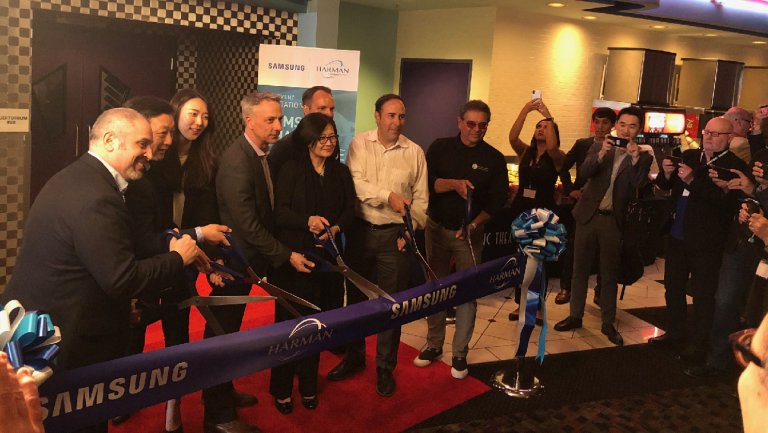 The first LED cinema screen in the U.S. was unveiled Friday at Pacific Theatres Winnetka in Chatsworth, California, a suburb of Los Angeles, where Warner Bros.’ Ready Player One will be the first movie offered on the new exhibition system, starting Saturday.
So far, the images that the screen produces have impressed many in Hollywood, including Jerome Dewhurst, senior color scientist at postproduction facility Roundabout Entertainment. He contends that the LED screen’s “pure black is much deeper" than other systems.
In order to prep movies for exhibition on the new LED screen in theaters, Samsung hopes to outfit postproduction facilities so that filmmakers can view their work on an LED display. The first color grading (digital intermediate) postproduction suite to offer a Samsung LED Screen in North America has now opened at Roundabout’s Santa Monica facility. It offers a 17-foot screen that can play 2K resolution, standard or high dynamic range, 7.1 surround sound and offers a Blackmagic DaVinci Resolve color grading system. Samsung hopes to add its screens in more post houses.
The new Samsung LED Cinema Screen in Chatsworth is 34 feet wide and 18 feet high, with all of the features of the smaller screen at Roundabout, but it can additionally support 4K resolution.
Ready Player One was screened on the Samsung system at 24 frames per second, the standard in cinema. But the tech manufacturer contends that it’s working to get the system up to a high frame rate of 60 frames per second.
Harman’s cinema solutions manager Dan Saenz explained that the new configuration places the front speaker directly above the screen and incorporates some filtering technology, designed to make it appear as though the sound was coming from the screen; and it places an additional speaker in front that bounces high frequency sounds off the screen and into the audience, also aimed at creating the sonic experience of a traditional theater.
Still, the biggest hurdle to a rollout could come down to the cost. Samsung said the cost of a screen could run anywhere from $500,000 to $800,000, a hefty price for a theater owner. Pete Lude, chief technology officer of engineering firm Mission Rock Digital, estimates that in comparison, top-of-the-line laser projectors generally cost between $150,000 to $300,000.
See the full story here: https://www.hollywoodreporter.com/behind-screen/how-new-led-cinema-screen-could-change-filmmaking-moviegoing-1104745
The problem with ICOs is that they’re called ICOs
 What do you think are the main misconceptions about ICOs?
The problem with ICOs is they want to ride two horses. The use of the word “coin” implies that the tokens being sold are money. The phrase “initial coin offering” is deliberately evocative of “initial public offering,” which is about a company selling shares to the public. They want to ride the Bitcoin horse by saying, “We’re not a security—it’s just money,” but they also want to ride the “You’re buying into a future enterprise that will be worth a lot of money” concept that’s inherent in the sale of shares. That’s one of the big tensions with ICOs, that lack of clarity, and that’s something that needs to be fixed.
... On the supplier side, if you see that you can write a white paper, put up a website, put up a Bitcoin address, and people will send you millions of dollars, that’s a very big temptation. You can essentially get the exit before you’ve built the product. ...
What would you rather call it?
When I think about how to apply this technology in the future to make a better system, I think about shares. The term IPO is perfectly fine for me. But IPOs are only for very big companies right now. The question is how to get the barrier to an IPO down much further. ... This is almost like going back to the past, of local exchanges and the buttonwood tree [where the New York Stock Exchange was formed]. That’s the sort of world I think we should be aiming for. The whole ICO craze at best is a catalyst; at worst it’s a really deliberately misleading concept and phrase.
Magic and AI are mixing to create tricks you won’t believe
 “What people don’t realise is any sufficiently deceptive magic is indistinguishable from technology,” he says. “So with a little bit of magic, you can make people believe that technology is better than it really is.”
See the 30 minute video here: http://www.wired.co.uk/article/tom-london-magic-thomas-webb-hacker-ibm-samsung-microsoft
Industry Interview: Gambling – Play’n GO Says the Future is in Augmented Reality
 Q: Is VR really the next big thing for the igaming industry?
A: VR has been pushing at the door for a couple years now and is still failing to get a foothold in the slots space and wider gaming industry.
Q: How do you think augmented reality could be harnessed by the gambling sector?
A: Augmented reality is far more accessible than the virtual kind, and with the success of Pokemon Go last year, it looks like there could be space for growth in the area.
We’ve experimented with AR in recent months and have recently put further investment into it, culminating in the recent demonstration of our AR roulette at ICE, which saw very positive feedback across the board.
See the full story here: https://www.casino.org/blog/playn-go-interview/
Experience the power of Virtual Reality in the entertainment industry with CEEK and blockchain technology
 What is CEEK?
CEEK is and has been for some time, one of the leading fabricants and distributors of virtual reality experiences around the world, in the form of software and hardware designed for that matter. It has earned numerous awards over time.
They commercialize these gadgets and software to various partners worldwide. CEEK offers several virtual reality content channels, which can be independently created or with licenses. They use the CEEK VR Platform and their outstanding headsets.
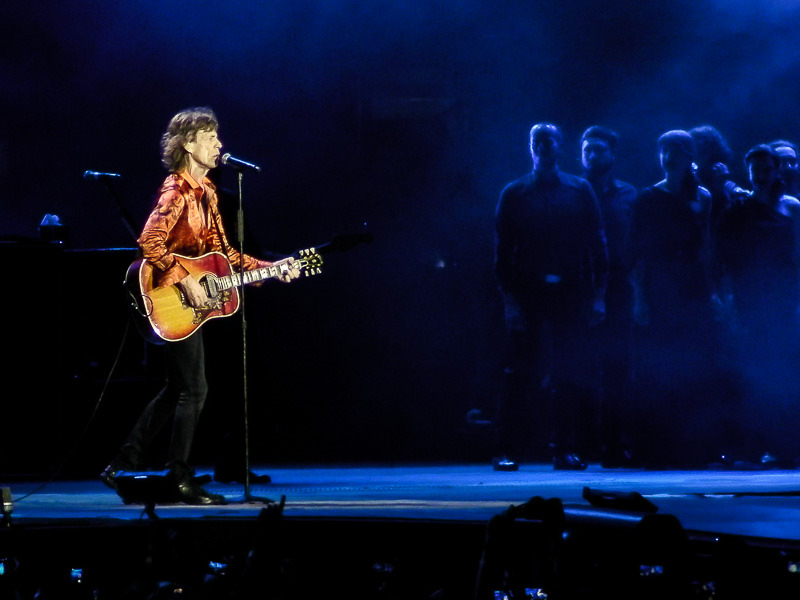
The problems that CEEK looks to solve are the missed revenue opportunities for artists and labels, as well as connecting fans all over the globe with the chance to see their favorite celebrities in live events. CEEK VR has partnerships with relevant and prominent companies such as Universal Music, T-Mobile, Baptist Health, and Apple to search for solutions.
Blockchain technology applied to entertainment
The CEEK network, with an app powered by blockchain technology, plans to extend the reach of events in global scope for sold-out shows, as well as offer artists the ability to sell an unlimited amount of virtual tickets and digital merchandise.
With the CEEK-powered Celebrity Coin Mint, artists can issue custom minted coins, which will be used as tickets for events, opening up a world full of possibilities when it comes to earnings and revenue.
The token
With the intention of promoting the sale of tickets for concerts and events on a worldwide platform, the CEEK technology works with a native cryptocurrency that is ERC20 compliant. It is the CEEK token, and it combines another ‘special’ protocol that expands its’ functionality within CEEK virtual reality environments.
Token distribution
50% – CEEK will sell 50% of the CEEK Tokens during the private, pre-sale and public sale. Unsold tokens will be used for future Celebrity Coin Cast token.
20% – reserved to incentive the development community.
20% – reserved to the company, early contributors, and advisors.
10% – locked for three years as reserves and future reserves.
See the full story here: https://globalcoinreport.com/experience-power-virtual-reality-entertainment-industry-ceek-blockchain-technology/
Global AR Online Pitch
 Global AR Online Pitch Event is made up of The GFR Fund, Super Ventures and The Venture Reality Fund (The VR Fund) who are all come together to put on the Global AR Online Pitch Event. Though the deadline for submissions is April 23rd, the contest is still to run until late May as a number of different stages of review must be carried out until the winner is announced live on stage at the Augmented World Expo (AWE) USA 2018 in Silicon Valley on May 31st, 2018.
In order to participate in the Global AR Online Pitch Event, startups must meet the following criteria:
- Pre-seed, seed or Series A investment
- Working on a product(s) in AR space
- Has at least an MVP (Minimum Viable Product)
See the full story here: https://www.vrfocus.com/2018/04/investors-holding-contest-for-best-augmented-reality-pitch/
Virtual reality game shows Wellington after sea level rise
 It's hard to imagine sea level rising and creeping over city streets, but if you live in Wellington you don't have to.
The city council has developed a virtual reality simulator, allowing users to travel anywhere in the city, stand on the street, and see the impact of the rising sea levels.
You can stand in the shadow of Te Papa and watch as the whole area is swallowed by the ocean.
See the full story here: https://www.stuff.co.nz/technology/gadgets/103246531/virtual-reality-game-shows-wellington-after-sea-level-rise
The Future of Augmented Reality (Infographic)
See the full infographic here: https://www.entrepreneur.com/article/312271
