New neuroanatomy lab bridges virtual reality, operating room
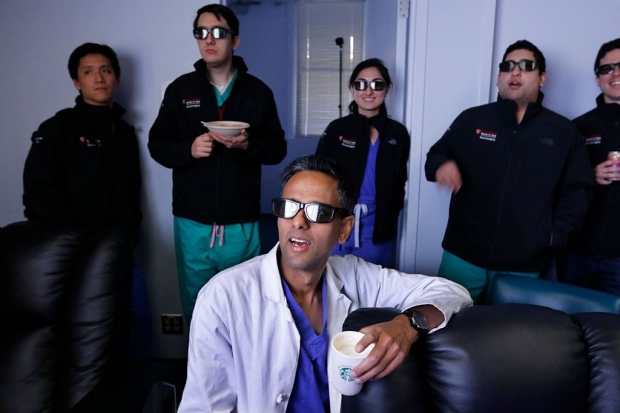 Stanford’s Department of Neurosurgery has a new anatomy lab next door to its virtual reality center. Together, the labs are a valuable resource for trainees and surgeons alike.
“Our anatomy labs have all been coordinated at outside facilities, and for people on call, they can’t just go 30 minutes away to do a lab,” said neurosurgery resident Linda Wei Xu, MD. “It’ll be great to have our own lab for day-to-day use.”
The off-campus labs focused on theoretical cases. With their own lab on the Stanford campus, residents will be able to practice for specific cases, Xu said.
By donning virtual-reality goggles and using handheld controllers, residents can navigate through an actual patient’s neuroanatomy, manipulating it — rotating structures, removing obstructing tissues — as they explore.
The operating system can also travel beyond the simulation lab, wheeled on to operating rooms and clinics. Surgeons can use the system to plan operations and guide their instruments during surgery, like a 3-D GPS system. In the clinic, patients are able to visualize their conditions in a new, totally customized way.
See the full story here: http://med.stanford.edu/news/all-news/2018/03/new-neuroanatomy-lab-bridges-virtual-reality-operating-room.html
Law schools dive into virtual reality experiences for their students
 “I was walking past the courtroom one day and saw students just waiting to use it … I also have spoken to attorneys in big firms who don’t have places to practice,” said Jennifer Wondracek, director of legal educational technology at University of North Texas Dallas College of Law. “My thought was, well, why not create a virtual courtroom?”
Wondracek served as a panelist for the “Virtual Reality: Opportunities for Teaching and Using it in Law Practice” presentation at this year’s ABA Techshow along with Kenton Brice, director of technology innovation at the University of Oklahoma College of Law and Ayyoub Ajmi, digital communications and learning initiatives librarian at University of Missouri Kansas City School of Law. They spoke about the advances their respective institutions have made in bringing virtual reality to their students and colleagues.
According to Ajmi, trial advocacy classes at UMKC Law have been incorporating cameras that shoot videos with a 360-degree angle. He argued that these cameras are helping students self-assess their public speaking capacities better than ever.
...
One of the biggest challenges that these law schools have faced in implementing virtual reality technology into their teachings are the hardware limitations.
For instance, Ajmi pointed out how the difficulties of using 360-degree videos come about when they are rendered, which takes almost as much time as the video itself. “The 360 video is really difficult because there is a lot of data in the files,” Ajmi said. “The files that they generate are huge and take up a lot of space.”
Moreover, there is a limited availability of readily available technical expertise at these law schools. Most law students and professors are simply not versed in high-tech.
See the full story here: http://www.abajournal.com/news/article/law_schools_dive_into_virtual_reality_experiences_for_their_students
Is Virtual Reality Heading to Its Next Great Leap Forward?
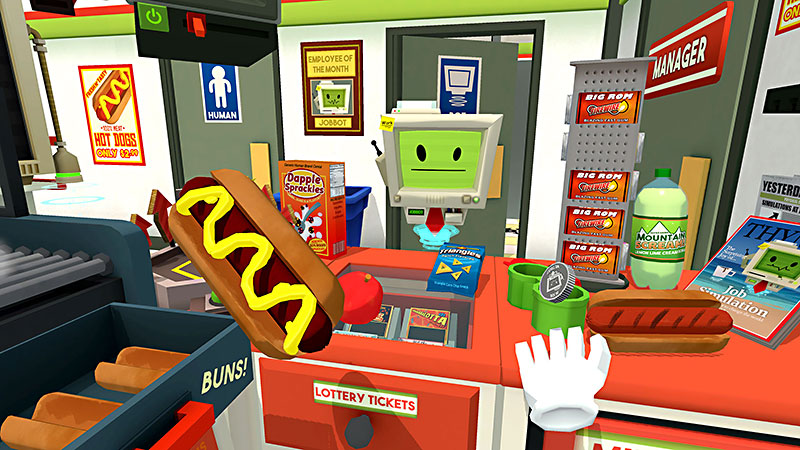 Tony Parisi, head of VR/AR strategy at 3-D tool set maker Unity, predicts that the imminent launch of standalone headsets – not reliant on beefy computers or locked into specific phone brands – could spark a surge in customer interest. "You can spend a few hundred bucks and get a good consumer VR experience," Parisi said. "So you're going to have an affordable device, and one that's portable, too."
See the full story here: https://www.austinchronicle.com/screens/2018-03-09/is-virtual-reality-heading-to-its-next-great-leap-forward/
Long Beachers To Step Into Virtual Reality At CSULB
 The goal is to highlight the school's and industry's diversity, including gender, intellectual and racial, and prepare minorities to be VR industry contributors, organizers said.
The idea was sparked when CSULB communication studies professor Ebony Utley said she consulted for a virtual reality company and attended a Wonder Women Tech conference last year. At the conference, Utley said she experienced UTurn's VR film, where people can see what it's like to be both male and female at a male-dominated floundering tech startup.
"I turned to one side and I was a man, and on the other side, I was a woman," Utley said. "Then, I looked down and saw I was white... It took me a moment to process it."
She added she's an African American woman and wasn't sure how she felt at first.
See the full story here: http://www.gazettes.com/entertainment/long-beachers-to-step-into-virtual-reality-at-csulb/article_6fddb7f6-129e-11e8-980a-2b6aa8569884.html
Is Virtual Reality The Ultimate Training Machine For School Shooters?
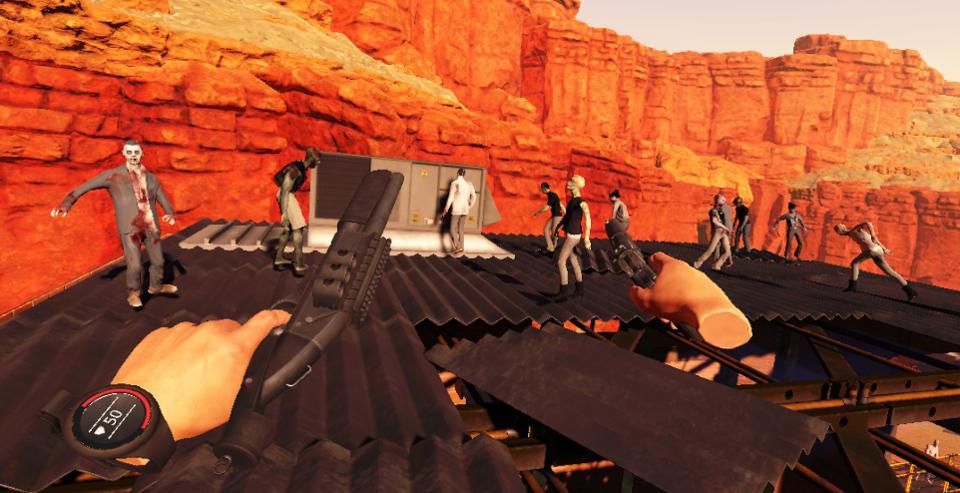 This is exactly what President Trump recently suggested. "I’m hearing more and more people seeing the level of violence in video games is really shaping young people’s thoughts," the president said in Florida recently. Thankfully, scientific studies---not to mention the Supreme Court---suggest otherwise. For the time being at least, the First Amendment remains outside Second Amendment hardliners' cross-hairs.
Writing at CNN, Jeremy Bailenson, author of Experience on Demand: What Virtual Reality Is, How It Works, and What It Can Do and director of Stanford's Virtual Human Interaction Lab, argues that VR could be a dangerously accessible way for mass shooters to learn how to kill more efficiently.
"if a possible mass-shooter wants to hone his craft, we shouldn't hand him an over-the-counter digital boot camp."
This is a rather extreme claim with frankly staggering implications. It's also incredibly silly, bordering on preposterous. Bailenson doesn't argue that we should censor or ban VR shooting games, but he does come up with some odd suggestions to make them less effective as "virtual bootcamps" despite, well, not being that at all.
Writing op/eds about virtual boot camps is only good for one thing: To provide virtual ammunition for the NRA and its toadies in government to steer the conversation away from guns and toward a scapegoat.
See the full opinion piece here: https://www.forbes.com/sites/erikkain/2018/03/08/no-virtual-reality-games-are-not-virtual-bootcamps-for-mass-shooters/#1e32a9646a2c
Virtual Reality Offers a World Without Rules for Filmmakers
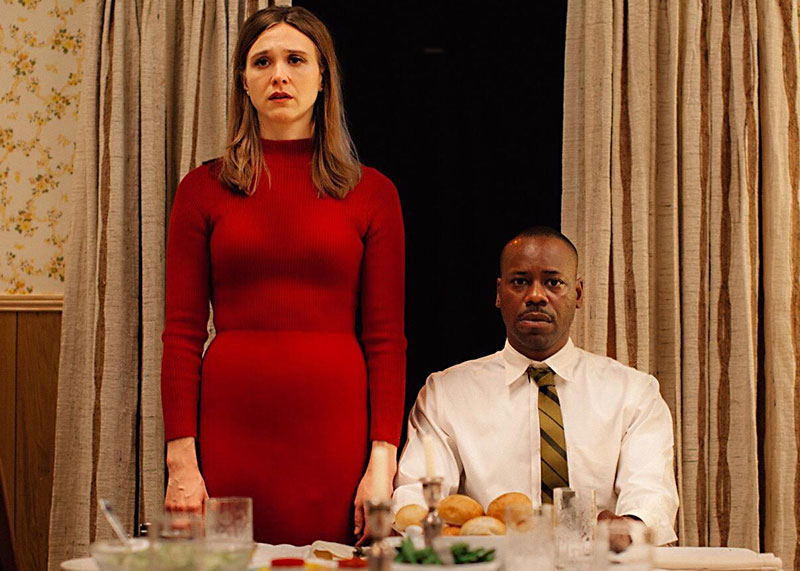 ... Angel Manuel Soto, director of alien abduction drama Dinner Party...
There was a learning curve. The continuous nature of VR required constant communication with his actors to keep their performances scaled to match their spatial relationship with the camera and the narrative importance of their scene.
This also meant no downtime for any of the performers, because the VR environment demands providing audiences with something to look at in all directions, even as the director tries to redirect their attention to what's truly important.
See the full story here: https://www.austinchronicle.com/screens/2018-03-09/virtual-reality-offers-a-world-without-rules-for-filmmakers/
Invasive Use of Facial Recognition Tech Already Widespread
 Facial recognition is getting better by leaps and bounds, and some of the examples of how it is being used are disturbing. In Russia, the website FindFace matches submitted photos to VK, that country’s Facebook knock-off. Trolls are using it to identify and harass women who appear in adult videos. China uses cameras with facial recognition to tag jaywalkers, and, in Dubai, police wear Google Glasses to identify people. In the U.S., the government facial recognition system can already identify the faces of half of all American adults.
Psychology Today ticks off more of the ways that facial recognition is being developed, many times with sobering implications. “Now researchers are developing techniques that not only identify people by their faces but also infer what’s in their minds,” using facial expressions to identify emotions and “facial structure [to] hint at our genetic makeup.”
At Carnegie Mellon University, privacy researcher Alessandro Acquisti matched student photos to Facebook profiles to harvest names, interests and other information, then used these data points and “another algorithm” to find Social Security numbers. His team was able to successfully find the first five digits for about 25 percent of the participants. Next, Acquisti’s team created a demo iPhone app that, when the phone’s camera was pointed at a stranger, displayed his name, SSN, and date and state of birth.
“Informed consent” may be an illusion, says Psychology Today...
“It’s easy to see race and class biases becoming embedded and amplified,” concluded Psychology Today.
See the full story here: http://www.etcentric.org/invasive-use-of-facial-recognition-tech-already-widespread/
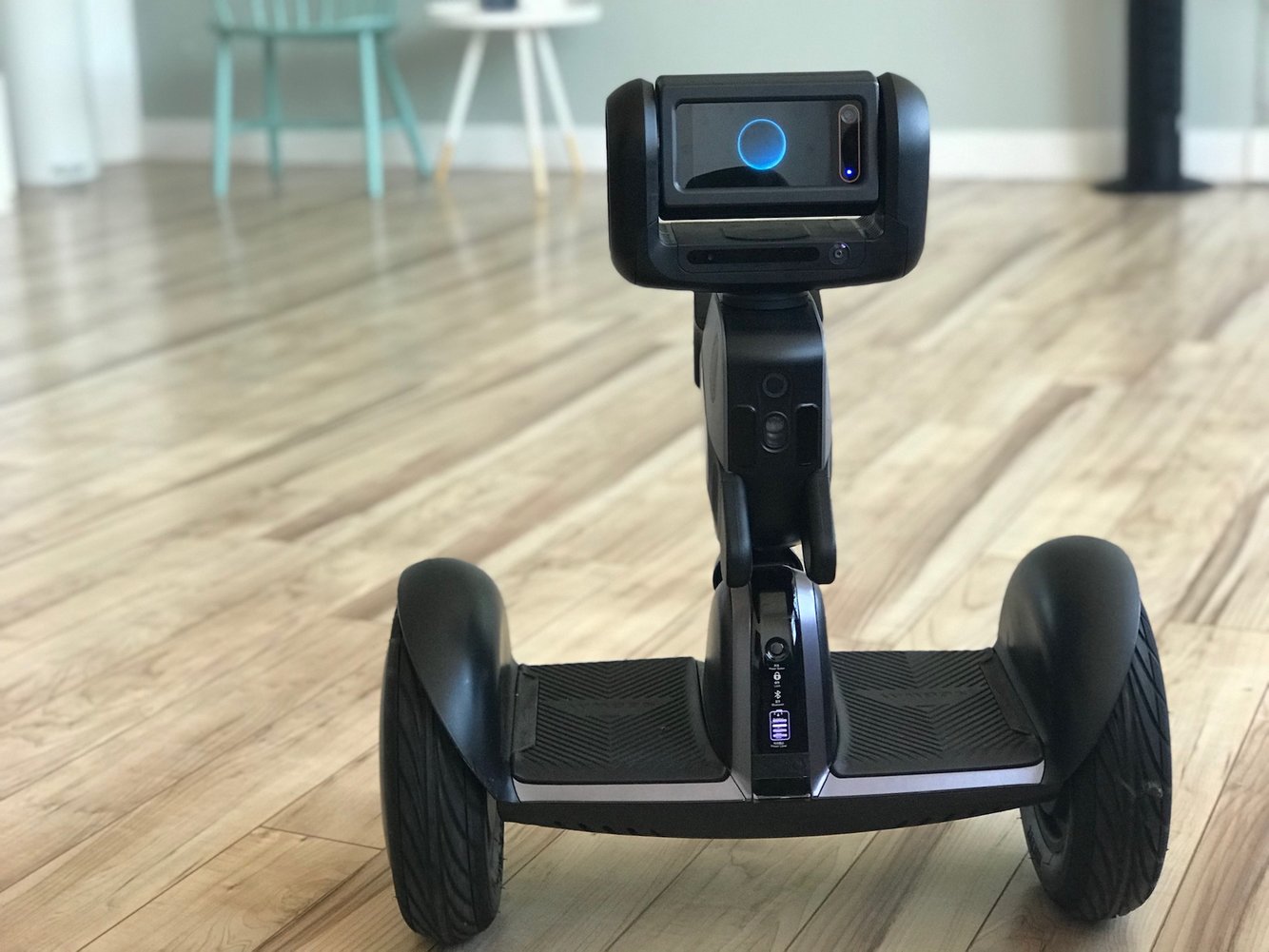
Segway’s new scooter is a cute, $1,300 rolling robot that carries your stuff and follows you around — and it’s straight out of science-fiction
- Segway Robotics is opening pre-orders for Loomo, a robotic scooter.
- A cross between a Segway scooter and an Amazon Echo, Loomo is a $1,300 two-wheel transport that responds to voice commands.
- In addition to transporting you, it can take your picture on command, automatically follow you around, and act as a telepresence robot that you control remotely.
 See the full story here: http://www.businessinsider.com/segway-robotics-opens-preorders-for-its-loomo-robotic-scooter-2018-3
VRcade PowerPlay enables location-based virtual reality esports
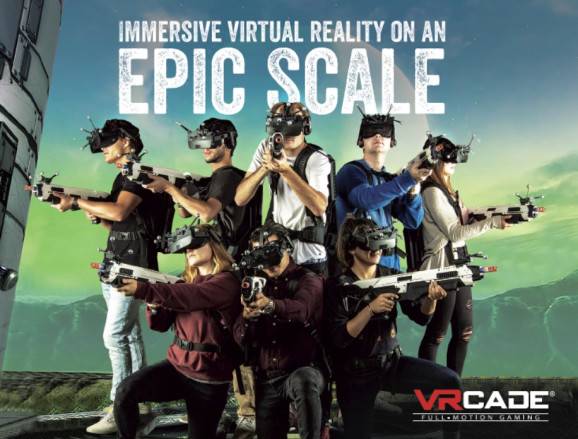 Today, the company is launching VRcade PowerPlay, an esport game built for location-based entertainment.
VRstudios has 55 VRcades in 14 countries, where players can line up in a pay-per-play experience, much like old video game arcades. The Bellevue, Washington-based company said, “VRcade PowerPlay is an intensely athletic team esport played in free-roaming, arena-scale virtual reality.”
It pits anywhere from two to eight players together in a 60 feet by 40 feet configurable VR battlefield. The competitive matches can be dynamically configured with millions of distinct combinations of multiplayer game modes, arm cannon presets, and battlefield configurations.
See the full story here: https://venturebeat.com/2018/03/07/vrcade-powerplay-enables-location-based-virtual-reality-esports/